
Introduction
Agile DevOps is the modern approach that unifies Agile development and DevOps practices to deliver software faster, smarter, and with greater reliability. It transforms software delivery into a continuous, automated workflow where collaboration, rapid feedback, and shared ownership drive performance. By aligning development sprints with deployment cycles, Agile DevOps enables teams to release high-quality software consistently. This model empowers organizations to scale innovation while maintaining operational stability and measurable results.
Building a High-Performance DevOps Model for Modern Teams
DevOps Is a Culture, Not a Job Title
DevOps general practices have evolved far beyond a technical function. In modern organizations, DevOps represents a shared mindset that unifies development, operations, quality assurance, and security into a single delivery ecosystem. We no longer treat DevOps as a standalone team or a set of tools; instead, it becomes the cultural backbone of how software is built, released, and improved. This cultural shift emphasizes collaboration, transparency, accountability, and continuous learning across all roles involved in software delivery.
A high-performance DevOps model breaks down silos that traditionally slowed innovation. Developers understand production realities, operations teams participate early in design decisions, and quality becomes everyone’s responsibility. This alignment reduces friction and creates faster feedback loops. Agile DevOps strengthens this culture by introducing short iterations, rapid validation, and constant reprioritization based on real-world feedback. Together, Agile and DevOps create an environment where speed and stability coexist.
Organizations that embrace DevOps culture see measurable improvements in delivery reliability, employee engagement, and customer satisfaction. Instead of reacting to failures, teams proactively design systems for resilience. This cultural maturity is what differentiates elite DevOps organizations from those merely adopting DevOps tools.
The Intersection of Agile and DevOps
Agile DevOps is the natural convergence of iterative development and continuous delivery. Agile focuses on how teams plan and build software, while DevOps extends those principles into deployment, monitoring, and operations. When combined, they form a DevOps framework that supports rapid experimentation without sacrificing control.
Agile ceremonies such as sprint planning and retrospectives feed directly into DevOps workflows. Each sprint becomes an opportunity to release, measure, and learn. This tight integration ensures that development velocity translates into real customer value rather than accumulating unfinished work.
Understanding the DevOps Workflow – From Code to Customer
The Continuous DevOps Workflow Explained
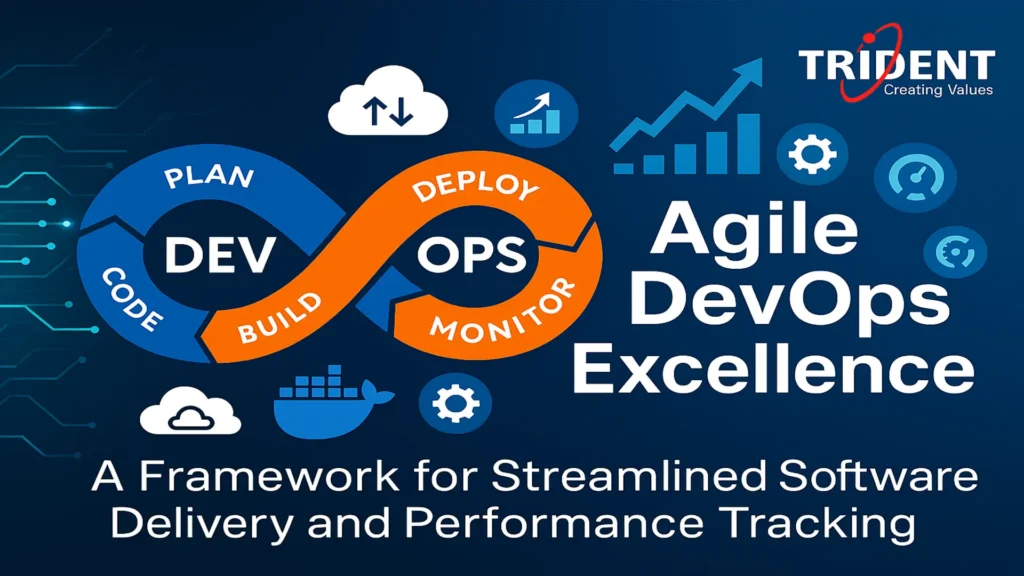
The DevOps workflow is a continuous loop that connects every stage of software delivery into a single, automated pipeline. Unlike traditional linear models, this workflow emphasizes constant feedback and incremental improvement. The core stages include plan, build, test, release, deploy, operate, and monitor.
Planning aligns business objectives with technical execution. Backlogs are refined continuously, ensuring that teams focus on high-impact work. During the build phase, standardized build tools in DevOps environments compile code and generate deployable artifacts with consistency and speed.
Testing is embedded directly into the pipeline using DevOps testing tools. Automated tests validate functionality, performance, and security early and often. This reduces risk and increases confidence in every release.
Release, Deploy, and Monitor
Deployment tools in DevOps enable frequent, low-risk releases through automation and version control. Continuous delivery pipelines ensure that code can move to production at any time. Once deployed, monitoring tools in DevOps collect metrics, logs, and traces to provide real-time visibility into system health and user experience.
This closed-loop DevOps workflow ensures that insights from production feed directly back into planning, creating a self-improving delivery system.
Agile DevOps – Syncing Development Sprints with Deployment Cycles
Aligning Sprints with Continuous Delivery
Agile DevOps eliminates the gap between development completion and production deployment. Each sprint is structured so that completed work is potentially releasable. This requires small batch sizes, strong automation, and disciplined backlog management.
DevOps automation tools play a critical role in synchronizing sprints with deployment cycles. Automated builds, tests, and deployments reduce manual effort and human error. As a result, teams can deploy multiple times per day without increasing operational risk.
Shared Ownership and Accountability
When sprints and deployments are aligned, teams take full ownership of their work throughout the lifecycle. DevOps engineer tools such as CI/CD platforms, infrastructure-as-code solutions, and artifact repositories support this ownership by making environments reproducible and transparent.
The Modern DevOps Toolchain and Technologies
DevOps Tools List Across the Lifecycle
A robust DevOps toolchain integrates multiple categories of tools, each serving a specific purpose. Typical components include source control systems, build tools in DevOps, DevOps testing tools, configuration management tools in DevOps, deployment tools, and monitoring platforms.
The best DevOps tools are those that integrate seamlessly and support automation at scale. Tool selection should prioritize reliability, extensibility, and ease of integration rather than individual features.
Configuration Management and Automation
DevOps configuration management ensures consistency across environments by treating infrastructure and configuration as code. This approach reduces configuration drift and simplifies scaling. Power platform build tools and cloud-native automation further enhance efficiency by abstracting infrastructure complexity.
DevOps Testing, Security, and Reliability
DevOps Testing Tools and Continuous Quality
DevOps testing transforms quality assurance into a continuous activity. Automated tests run at every stage of the pipeline, validating code changes immediately. This proactive approach reduces defect rates and accelerates delivery.
DevOps Security Tools and Shift-Left Security
DevOps security tools integrate security checks directly into development and deployment pipelines. Vulnerability scanning, dependency analysis, and compliance checks run automatically, ensuring security without slowing delivery. This shift-left approach embeds security into daily workflows.
Monitoring Tools in DevOps and Observability
From Monitoring to Observability
Monitoring tools in DevOps provide visibility into system performance, availability, and reliability. Modern observability platforms go further by correlating logs, metrics, and traces to uncover root causes quickly.
This performance intelligence enables teams to respond proactively, reduce downtime, and continuously optimize user experience.
Key DevOps KPIs for Performance Tracking
Core DevOps KPIs Explained
DevOps KPI tracking provides objective insights into delivery performance. Deployment Frequency measures how often value reaches customers. Lead Time for Changes reflects how quickly ideas are delivered. Mean Time to Recovery evaluates resilience, while Change Failure Rate balances speed with stability.
Tracking these KPIs aligns teams around outcomes and supports data-driven decision-making.
Choosing the Right DevOps Framework
CALMS Framework
The CALMS model emphasizes Culture, Automation, Lean practices, Measurement, and Sharing. It provides a balanced approach to DevOps transformation that scales across teams and departments.
The Three Ways of DevOps
The Three Ways focus on flow, feedback, and continuous learning. This framework optimizes delivery pipelines and reinforces experimentation and improvement.
CALMS vs Three Ways
While CALMS offers a holistic transformation lens, the Three Ways provide tactical execution guidance. Mature organizations often blend both into a customized DevOps framework.
Conclusion: Implementing a Feedback-Driven DevOps Platform
Agile DevOps excellence is achieved by integrating culture, automation, and measurement into a cohesive system. A feedback-driven DevOps platform enables organizations to deliver faster, recover quicker, and learn continuously. By aligning DevOps workflows, technologies, and KPIs, we create a sustainable model for modern software delivery and long-term performance.
Lastly, if you’re seeking a trusted partner in the realm of DevOps & IoT solutions, look no further than Trident Information Systems. As a distinguished Gold Microsoft Partner, LS Central Diamond Partner, and an IBM Gold Partner, we have a proven track record of successfully serving diverse and thriving businesses. Our commitment extends to the seamless integration of DevOps practices, ensuring the highest efficiency in your software development lifecycle. Feel free to reach out to us with any inquiries! Stay abreast of the latest trends and advancements in IoT and DevOps Tools by following our LinkedIn page.
FAQs
1. What is Agile DevOps and how is it different from traditional DevOps?
Agile DevOps is the integration of Agile development principles with DevOps practices to create a continuous, feedback-driven software delivery model. While traditional DevOps often focuses on automating deployment and operations, Agile DevOps goes further by synchronizing development sprints with deployment cycles. This means every sprint produces potentially releasable software. Agile DevOps emphasizes rapid iteration, shared ownership, and continuous improvement, ensuring that speed, quality, and stability are balanced throughout the DevOps workflow.
2. Which DevOps tools are essential for building a modern DevOps toolchain?
A modern DevOps toolchain typically includes a combination of tools that cover the entire software lifecycle. Essential categories include source code management, build tools in DevOps, DevOps testing tools, configuration management tools in DevOps, deployment tools in DevOps, and monitoring tools in DevOps. The best DevOps tools are those that integrate seamlessly, support automation, and scale with organizational growth. Tool selection should align with the DevOps model and workflow rather than focusing on individual features.
3. How do DevOps KPIs help measure software delivery performance?
DevOps KPIs provide objective, data-driven insights into how effectively teams deliver software. Key metrics such as Deployment Frequency, Lead Time for Changes, Mean Time to Recovery, and Change Failure Rate reveal the speed, reliability, and resilience of DevOps processes. Tracking these DevOps KPIs helps organizations identify bottlenecks, improve collaboration, and make informed decisions that enhance overall delivery performance without sacrificing quality.
4. Why is monitoring and observability critical in DevOps?
Monitoring tools in DevOps provide real-time visibility into application and infrastructure health, enabling teams to detect issues early and respond quickly. Observability goes a step further by correlating logs, metrics, and traces to explain why issues occur. This deep visibility supports faster troubleshooting, reduces downtime, and feeds valuable insights back into the DevOps workflow, making continuous improvement possible across the DevOps platform.
5. How do organizations choose the right DevOps framework?
Choosing the right DevOps framework depends on organizational goals, maturity, and scale. The CALMS framework is ideal for organizations focusing on cultural transformation and balanced adoption of automation and measurement. The Three Ways of DevOps are well-suited for teams aiming to optimize flow, feedback, and learning within delivery pipelines. Many successful organizations blend elements of both frameworks to create a customized DevOps framework that aligns with their unique needs and DevOps technologies.

