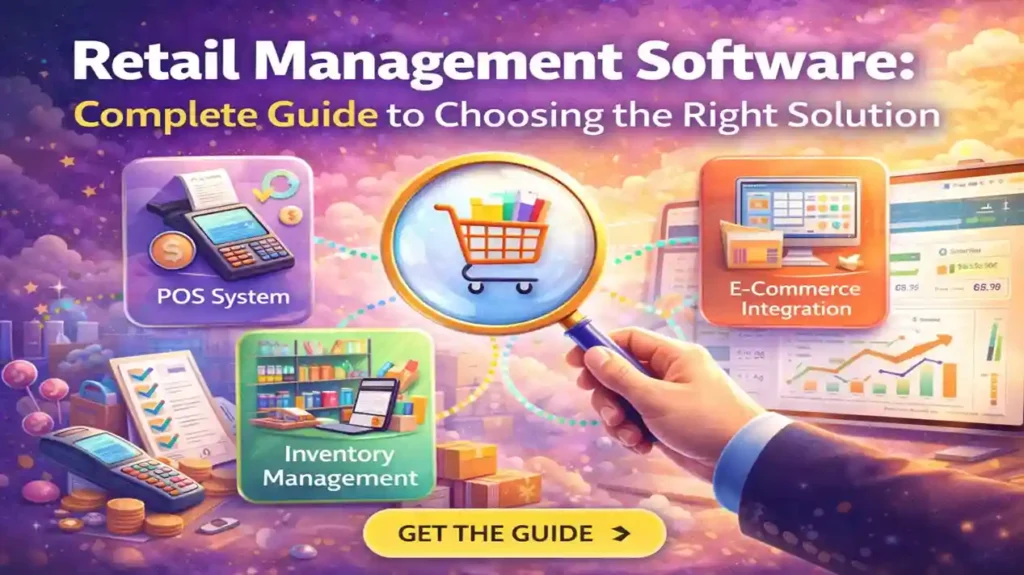
Everything you need to know about selecting retail management software in 2026 — from core features and pricing to Microsoft Dynamics 365 solutions, LS Central, and implementation best practices. Running a retail business in 2026 without modern software is like trying to compete in Formula 1 with a bicycle. Your competitors have real-time inventory visibility, omnichannel integration, AI-powered demand forecasting, and automated reordering. Meanwhile, you’re still counting stock manually, reconciling spreadsheets, and wondering why customers are buying online instead of in your store. The retail management software market is crowded with options: cloud-based platforms, legacy on-premise systems, industry-specific solutions, and everything in between. Pricing ranges from $50/month for basic POS systems to $500,000+ for enterprise implementations. Features vary wildly. And every vendor claims to be “the best.” This guide cuts through the noise. Whether you’re a single-store boutique, a multi-location chain, or a retail-manufacturing hybrid, you’ll learn exactly what to look for, which solutions dominate the market, and how Microsoft-powered retail solutions (Dynamics 365 Commerce and LS Central) stack up against the competition. 1. What Is Retail Management Software? (And What It Actually Does) Retail management software is a unified platform that connects all aspects of retail operations — from point of sale (POS) and inventory management to customer relationship management (CRM), e-commerce, and financial reporting — into a single system. Think of it as the operating system for your retail business. Instead of using separate tools for sales, stock tracking, customer data, accounting, and online orders, retail management software consolidates everything into one integrated solution. What Modern Retail Software Actually Does Point of Sale (POS) Process transactions, accept payments, manage discounts, print receipts, handle returns — all from in-store terminals, mobile devices, or web-based interfaces. Inventory Management Real-time stock tracking across all locations, automated reordering, transfer management, barcode scanning, lot/serial tracking, and stock level alerts. Customer Management (CRM) Customer profiles, purchase history, loyalty programs, personalized promotions, email marketing integration, and behavior analytics. Omnichannel Commerce Unify online and offline sales — buy online pick up in store (BOPIS), endless aisle, unified inventory, consistent pricing across all channels. Reporting & Analytics Sales dashboards, inventory reports, customer insights, profit margins, employee performance tracking, and predictive analytics. Financial Integration Automatic accounting sync, tax calculation, expense tracking, financial close automation, and compliance reporting. Why “Retail Management Software” vs. Just “POS”? A POS system handles transactions. Retail management software handles your entire business — sales, inventory, customers, employees, finances, and online/offline integration. If you’re running multiple stores or selling online, a basic POS won’t cut it. You need full retail management. 2. Why Your Retail Business Needs Modern Software in 2026 If you’re still using spreadsheets, legacy software from 2010, or disconnected point solutions for different parts of your business, you’re bleeding money and losing customers. Here’s why: 1. Customers Expect Omnichannel Experiences 72% of consumers shop across multiple channels before making a purchase (Google, 2024). They want to: Without integrated retail software, you can’t deliver this. You lose sales to competitors who can. 2. Manual Inventory Management Costs You 20-30% in Lost Sales Running out of popular items while overstocking slow-movers is expensive. Modern retail software uses AI-powered demand forecasting to predict what you’ll sell and when, automatically generating purchase orders before you run out. 3. Data-Driven Decisions Beat Gut Feel Every Time Which products are most profitable? Which promotions actually drive sales? Which employees convert best? Which store locations outperform? Modern software answers these questions with real-time dashboards and analytics — no more guessing. 4. Labor Costs Are Rising — Automation Is Essential Retail labor costs have increased 15-20% since 2020. Automating repetitive tasks (inventory counts, reordering, customer email campaigns, financial reporting) lets you do more with fewer staff hours. 5. Compliance & Security Requirements Are Stricter PCI-DSS for payment security, GDPR/data privacy regulations, tax compliance, and audit trails are mandatory. Modern retail software handles these automatically — legacy systems don’t. The Cost of Doing Nothing A mid-sized retailer (5-10 stores, $10M revenue) using outdated systems typically loses $150K-$300K annually in: stockouts and overstocking ($80K-$150K), manual labor inefficiency ($40K-$80K), customer churn from poor experience ($20K-$50K), and missed online sales opportunities ($10K-$20K). The software pays for itself in year one. 3. Core Features Every Retail Management System Must Have Not all retail software is created equal. Here are the non-negotiable features any modern solution must include: ✓ Essential Features Checklist Advanced Features (Nice to Have) 4. Cloud vs. On-Premise: Which Deployment Model Is Right for You? This is one of the first decisions you’ll face. Here’s the honest breakdown: Factor Cloud-Based On-Premise Upfront Cost Low ($0-$5K) High ($20K-$100K+) Monthly Cost $50-$500/month per location $0 (after purchase) Implementation Time 1-4 weeks 2-6 months Updates & Maintenance Automatic, free Manual, $5K-$20K/year Accessibility Anywhere with internet Only on-site or via VPN Scalability Add stores instantly Requires hardware/licenses Internet Dependency Required (offline mode limited) Works offline Data Control Vendor-hosted Full control on your servers Customization Limited to vendor options Unlimited (with developers) Our Recommendation For 95% of retailers, cloud-based is the right choice. Lower upfront cost, faster implementation, automatic updates, and no IT infrastructure to maintain. The only exceptions: 5. Microsoft Retail Solutions: Dynamics 365 Commerce & LS Central Microsoft offers two primary retail solutions built on the Dynamics 365 platform. Here’s how they differ and which one is right for you: Microsoft Dynamics 365 Commerce Best for: Mid-market to enterprise retailers with complex omnichannel operations, especially those already using other Dynamics 365 modules (Finance, Supply Chain, Customer Service). Key Capabilities: Ideal Customer Profile: Enterprise retailers (50+ stores or $100M+ revenue), omnichannel brands, B2C companies needing sophisticated digital commerce. Pricing: Custom enterprise pricing (typically $150K-$500K+ implementation, $5K-$20K/month ongoing licensing). LS Central (by LS Retail, built on Dynamics 365 Business Central) Best for: Small to mid-market retailers in specialized verticals (fashion, grocery, hospitality, fuel/convenience) who need industry-specific functionality out of the box. Key Capabilities: Ideal Customer Profile: Growing retailers (1-50 stores), fashion/apparel brands, grocery chains, specialty retail, hospitality businesses. Pricing: $50K-$150K implementation, $200-$500/user/month (typically 5-20 users). Which Microsoft Solution Should You Choose? Your Situation Recommended Solution 1-20 stores, fashion/apparel vertical LS Central Grocery,