Welcome to Trident Information Systems!
Write us to - info@tridentinfo.com
Let's Socialize

Manufacturing IoT

IoT solutions improving visibility and automation in retail and manufacturing.

The Ultimate Guide to IoT Across Retail and Manufacturing in 2026

The Internet of Things is no longer a futuristic concept—it’s the quiet engine driving some of the biggest transformations in retail and manufacturing today. In 2026, IoT for retail and IoT for manufacturing are not optional upgrades. They’re core business strategies. Whether it’s smart retail IoT reshaping how customers shop or smart manufacturing IoT redefining how products are made, connected devices are everywhere. Think about it: stores that know what customers want before they ask, factories that fix machines before they break, and cloud platforms that let you manage thousands of devices from a single dashboard. That’s not science fiction—that’s IoT in action. This guide takes a deep, practical look at how IoT applications in retail, manufacturing, and cloud services work together. We’ll explore real-world retail IoT applications, internet of things manufacturing systems, remote IoT platforms, and the cloud infrastructure that ties everything together. No jargon overload—just clear, useful insight you can actually apply. Understanding IoT: The Digital Backbone of Modern Industries At its simplest, IoT connects physical devices to digital systems. Sensors, machines, cameras, shelves, robots—all of them collect data and communicate through an IoT cloud. But in 2026, IoT is less about devices and more about decisions. What makes IoT powerful today is context. Data isn’t just collected—it’s analyzed, correlated, and acted upon in real time. A temperature sensor in a supermarket freezer can trigger alerts, adjust cooling systems, and notify maintenance teams automatically. A vibration sensor in a factory can predict equipment failure weeks in advance. For industries like retail and manufacturing, IoT becomes the nervous system of operations. It senses what’s happening on the ground and sends that information to the brain—the cloud—where smarter decisions are made. This shift from reactive to proactive operations is why IoT in retail industry and IoT in manufacturing industry continue to grow at record speed. IoT for Retail: Transforming the Customer Experience IoT for retail has completely changed how stores operate and how customers interact with brands. Smart retail IoT solutions turn physical stores into data-rich environments where every interaction tells a story. Imagine walking into a store where digital shelves update prices automatically, smart cameras analyze foot traffic, and personalized offers appear on your phone in real time. That’s smart retail using IoT. Retailers gain visibility into customer behavior, while shoppers enjoy convenience and personalization. IoT for retailing industry success comes from connecting everything—point-of-sale systems, inventory, lighting, HVAC, and security—into one intelligent ecosystem. Retail IoT applications don’t just boost sales; they reduce waste, cut operational costs, and improve employee productivity. In 2026, the best retail experiences are built as much with sensors and software as with shelves and products. IoT in Supermarkets: From Shelves to Supply Chains IoT in supermarkets is one of the clearest examples of practical IoT value. Supermarkets deal with thousands of products, tight margins, and constant customer demand. IoT applications in retail solve these challenges head-on. Smart shelves track inventory levels in real time. When stock runs low, the system automatically triggers restocking workflows. Cold-chain sensors monitor temperature for perishable goods, reducing spoilage and ensuring compliance. Cameras and weight sensors help prevent theft and reduce checkout friction. Beyond the store, IoT connects supermarkets to suppliers and distribution centers. This end-to-end visibility allows better forecasting, fewer out-of-stock situations, and smoother logistics. The result? Lower costs, fresher products, and happier customers—all driven by retail IoT applications working quietly in the background. Retail IoT Applications That Are Redefining Operations Retail IoT applications go far beyond inventory tracking. They touch every part of the business, from marketing to maintenance. One powerful application of IoT in retail is personalized engagement. Beacons and mobile apps detect customer preferences and deliver targeted offers. Another is energy optimization—smart lighting and climate systems reduce costs without sacrificing comfort. Loss prevention is also evolving. AI-powered cameras and sensors detect suspicious behavior without invasive monitoring. Combined with IoT cloud analytics, retailers gain actionable insights rather than raw footage. These iot retail applications don’t just improve efficiency—they fundamentally change how stores operate, making them smarter, leaner, and more responsive. Retail IoT Solutions: Building Smarter, Faster Stores Retail IoT solutions work best when built on a strong foundation. That foundation includes connected devices, a reliable IoT cloud, and scalable analytics. A typical retail IoT solution includes sensors, gateways, connectivity, cloud storage, and dashboards. The real magic happens when these components work together seamlessly. Cloud-based platforms allow retailers to deploy updates, monitor performance, and analyze trends across hundreds of locations. Choosing the right IoT cloud is critical. It determines scalability, security, and integration with existing systems. In 2026, successful retail brands treat IoT not as a one-time project, but as a long-term platform for innovation. IoT Services Powering Modern Businesses Behind every successful IoT deployment are specialized IoT services. These include IoT installation services, platform configuration, and ongoing support. A remote IoT platform allows businesses to monitor and control devices from anywhere. Whether it’s a smart shelf in a supermarket or a sensor in a factory, everything connects through the same cloud interface. This centralization reduces complexity and accelerates decision-making. IoT installation services ensure devices are deployed correctly, securely, and efficiently. With the right services in place, businesses can focus on outcomes instead of infrastructure. IoT services turn complex technology into usable business tools. Remote Management IoT: Controlling Devices at Scale Remote management IoT is the backbone of large-scale deployments. Managing thousands of devices manually simply isn’t realistic. IoT remote management software enables real-time monitoring, remote configuration, and over-the-air updates. If a device fails, the system detects it instantly. If firmware needs updating, it happens automatically—no site visits required. Remote IoT device management also improves security. Devices can be isolated, patched, or decommissioned instantly. In 2026, remote management IoT isn’t just about convenience—it’s about resilience and control in a connected world. IoT Device Management Companies and Ecosystems IoT device management companies play a crucial role in simplifying complexity. They provide platforms, tools, and expertise that help businesses scale faster and safer. The best providers offer device onboarding, monitoring,

The Ultimate Guide to IoT Across Retail and Manufacturing in 2026 Read More »

IoT dashboard monitoring connected devices, real-time analytics, and business operations.

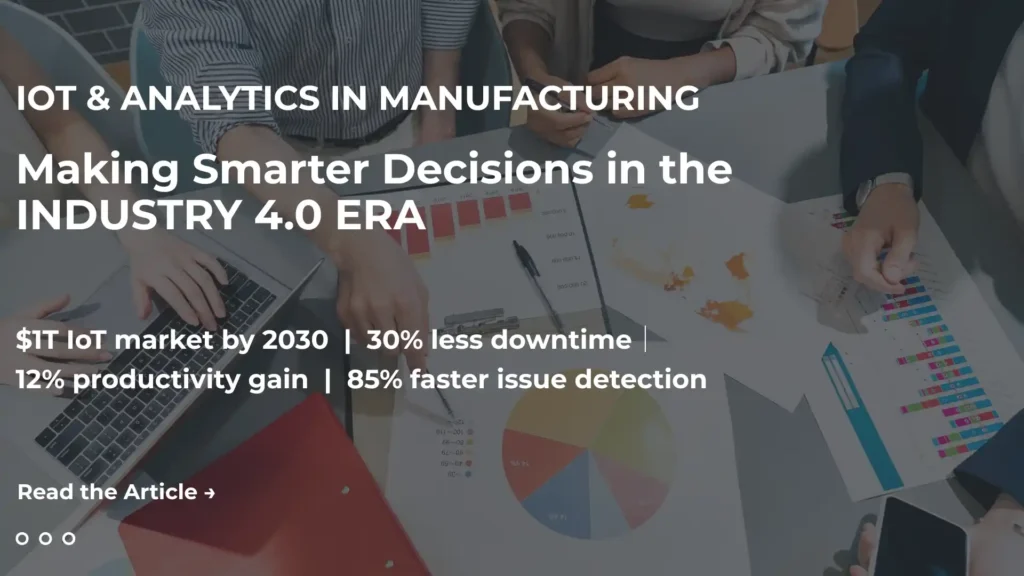
IoT Applications for Business: How the Internet of Things Is Transforming Operations Across Every Industry

Every physical object in your business — every machine, vehicle, sensor, package, and piece of equipment — is generating data. The question is whether your organization is capturing it, analyzing it, and acting on it. The Internet of Things (IoT) is the technology infrastructure that makes this possible. By embedding sensors, connectivity, and software into physical devices and environments, IoT creates a continuous stream of real-world data that organizations can use to operate more efficiently, respond faster to problems, serve customers better, and make decisions based on what is actually happening — not what someone reported happening yesterday. The business case for IoT is no longer theoretical. Organizations across agriculture, e-commerce, healthcare, manufacturing, transportation, and enterprise operations are deploying IoT applications to solve specific operational problems — and achieving measurable, documented results. Farmers are optimizing water usage through soil moisture sensors. Manufacturers are predicting equipment failures before they happen. Transport operators are tracking goods in real time across global supply chains. This guide covers the practical reality of IoT applications for business — what IoT is, how it works, where it is delivering the most significant value across six major industries, and how Microsoft Azure IoT provides the enterprise-grade platform that makes business IoT scalable and secure. What Is IoT and Why Does It Matter for Business? The Internet of Things refers to the network of physical devices — machines, vehicles, sensors, appliances, wearables, and infrastructure — that are embedded with software, sensors, and connectivity to collect and exchange data over the internet or a private network. In practical terms, IoT is about closing the gap between the physical world and the digital world. In a traditional business environment, data about physical operations — machine performance, vehicle location, inventory levels, environmental conditions — had to be collected manually, which meant it was always delayed, often inaccurate, and expensive to gather at scale. IoT eliminates this gap by making physical assets continuously self-reporting — feeding real-time operational data into business systems automatically, without human intervention. The Core Components of an IoT System Every IoT deployment, regardless of industry or application, consists of four fundamental components: 1. Devices and sensors — the physical layer that collects data from the real world. Temperature sensors, motion detectors, GPS trackers, RFID readers, smart meters, industrial monitoring equipment, and thousands of other device types. 2. Connectivity — the communication layer that transmits data from devices to processing systems. Wi-Fi, cellular (4G/5G), Bluetooth, LoRaWAN, Zigbee, and satellite connectivity are all used depending on the application’s range, power, and bandwidth requirements. 3. Data processing and analytics — the intelligence layer that receives raw sensor data, processes it, applies business rules and analytical models, and generates actionable insights. Cloud platforms like Microsoft Azure IoT Hub provide this capability at enterprise scale. 4. Applications and interfaces — the user layer where insights and controls are made accessible to the people and systems that need them. Mobile applications, dashboards, automated alerts, and integration with ERP and CRM systems like Microsoft Dynamics 365 all operate at this layer. How IoT Creates Competitive Advantage for Organizations Organizations that deploy IoT effectively gain advantages that compound over time — because the data generated by IoT systems becomes progressively more valuable as it accumulates and as analytical models are refined: IoT Business Applications Across 6 Major Industries 1. IoT in Agriculture: Precision Farming and Resource Optimization Agriculture is one of the sectors most profoundly transformed by IoT — moving from experience-based farming practices to data-driven precision agriculture that optimizes every input for maximum yield and minimum waste. Key IoT applications in agriculture: For a sector historically characterized by low technology adoption, IoT is delivering some of the most dramatic productivity and sustainability gains of any industry — with direct implications for food security at a global scale. 2. IoT in E-Commerce: Smarter Inventory, Logistics, and Customer Insights E-commerce businesses compete on speed, accuracy, and the quality of the customer experience — and IoT is a critical enabler of all three at scale. Key IoT applications in e-commerce: 3. IoT in Healthcare: Remote Patient Monitoring and Equipment Management Healthcare is one of the highest-impact domains for IoT — where connected devices can directly improve patient outcomes, reduce the cost of care, and enable healthcare delivery models that were previously impossible. Key IoT applications in healthcare: The growing market for IoT-based healthcare applications reflects both the scale of the opportunity and the maturity of the technology — with remote patient monitoring alone projected to be one of the fastest-growing segments of digital health investment globally. 4. IoT in Enterprise Operations: Connected Workforce and Process Intelligence For enterprises across every sector, IoT provides the visibility and automation capability to optimize operations, reduce costs, and improve employee productivity through connected workplace technologies. Key IoT applications in enterprise operations: 5. IoT in Transportation and Logistics: Real-Time Tracking and Fleet Management Transportation and logistics is one of the earliest and most mature IoT application domains — with GPS tracking and telematics predating the broader IoT movement. Modern IoT capabilities have dramatically extended what is possible. Key IoT applications in transportation and logistics: 6. IoT in Manufacturing: Industry 4.0, AI, and Machine Learning Manufacturing is the industry where IoT delivers the most direct and measurable ROI — and where the convergence of IoT with artificial intelligence and machine learning is creating the most transformative operational improvements. Key IoT applications in manufacturing: IoT and Mobile Applications: How They Work Together The relationship between IoT and mobile applications is increasingly central to how both technologies deliver value — particularly in enterprise and field service contexts. Mobile as the Interface for IoT Data and Control For many IoT deployments, the mobile application is the primary user interface — the means by which workers, managers, and customers interact with the data and control capabilities that IoT sensors and systems generate: Enterprise Mobile IoT Applications in Practice The convergence of IoT and mobile is particularly powerful in enterprise environments where workers are mobile and operations are

IoT Applications for Business: How the Internet of Things Is Transforming Operations Across Every Industry Read More »

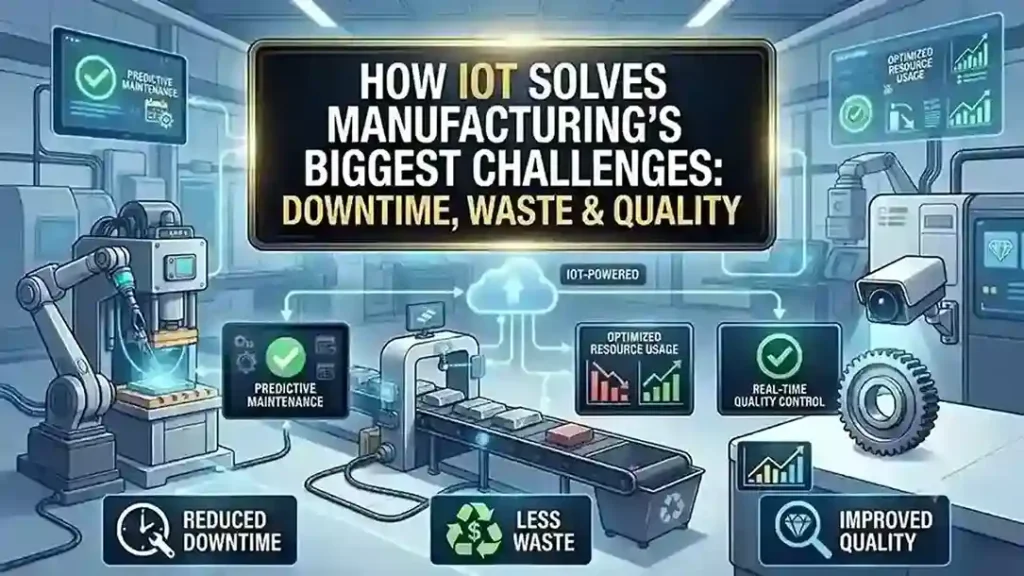
Smart factory using IoT devices and automation for real-time manufacturing monitoring.

How Smart Manufacturing and IoT Are Transforming the Factory Floor

Introduction Every unplanned machine breakdown costs a manufacturer time, money, and customer trust. Every quality defect that slips through costs even more. The hard truth is that most of these losses are preventable — if you have the right data at the right time. That is exactly what Smart Manufacturing and the Industrial Internet of Things (IIoT) are built to deliver. When machines, sensors, and systems are connected and sharing data in real time, manufacturers stop reacting to problems and start preventing them. Production lines run leaner. Quality becomes consistent. And the gap between what the factory floor produces and what management can actually see shrinks to almost nothing. This article breaks down how that works in practice — and why manufacturers who are not already investing in connected systems are falling behind those who are. What Is Smart Manufacturing? (And Why the Definition Matters) The term “IoT” was coined by Peter T. Lewis to describe “the integration of people, processes, and technology with connectable devices and sensors to enable remote monitoring, real-time control, and data-driven decision-making.” But here is the part most explainers skip: smart manufacturing is not about adding technology for its own sake. It is about closing the gap between what is happening on the shop floor and what decision-makers know about it. In a traditional factory, that gap is wide. A machine can be underperforming for weeks before a supervisor notices. A quality issue can affect hundreds of units before it is caught. A maintenance window gets scheduled on gut instinct, not data. In a smart factory, that gap is nearly zero. The Core Engine: Sensors, Connectivity, and Real-Time Data Smart manufacturing is built on three layers that work together: 1. Sensors — the factory’s nervous system Sensors attached to machines, conveyor belts, assembly stations, and environmental systems continuously collect data — temperature, vibration, pressure, speed, output rate, energy consumption, and dozens of other variables. They do this 24/7, without human involvement. The moment a reading drifts outside a set parameter, the system knows. Even if no one is watching. 2. Connectivity — getting data where it needs to go Raw sensor data is useless if it stays on the machine. Connectivity — whether via Wi-Fi, MQTT protocols, edge gateways, or cloud pipelines — moves data from individual devices to a central system where it can be processed and analysed. Every connected device on the floor contributes to a shared, factory-wide picture. Every disconnected device is a blind spot. For manufacturers managing sensitive production data, this also raises a critical question: where does the data live? On-premises, in a private cloud, or a hybrid setup? The answer depends on your security requirements, your IT infrastructure, and how quickly you need to act on the data. There is no universal right answer — but there is definitely a wrong one, which is not thinking about it at all. 3. Data analysis — where the value actually lives Collected data means nothing without interpretation. Modern smart manufacturing platforms apply analytics — and increasingly, machine learning — to turn streams of sensor readings into actionable intelligence: This is the shift from descriptive reporting (“here is what happened”) to predictive and prescriptive intelligence (“here is what will happen, and here is what to do about it”). Key Benefits of Smart Manufacturing — What Manufacturers Actually Gain Predictive maintenance that prevents unplanned downtime Unplanned downtime is one of the most expensive problems in manufacturing. Industry estimates put the average cost at thousands of dollars per hour — and in some sectors, far more. Smart manufacturing flips the model. Instead of waiting for a machine to break and then fixing it (reactive), or scheduling maintenance on a fixed calendar (preventive), predictive maintenance uses real-time sensor data to detect the early warning signs of failure — unusual vibration patterns, rising temperatures, changes in motor current — and flags them before they cause a breakdown. The result: maintenance teams intervene exactly when they need to, not before (wasted resource) and not after (costly downtime). Consistent quality and fewer defects Every production process has variables. Raw material variations, temperature fluctuations, operator differences, tool wear — any of these can push output outside acceptable tolerances. In a smart factory, quality monitoring happens continuously, at every stage of production. Statistical process control systems track output quality in real time and alert operators the moment a process starts drifting. Defects get caught at the source, not at final inspection — or worse, at the customer. For manufacturers in precision-sensitive sectors like automotive components, medical devices, or electronics, this is not a nice-to-have. It is a competitive requirement. End-to-end production visibility Smart manufacturing gives plant managers, production supervisors, and customers something that has historically been surprisingly difficult to obtain: an accurate, real-time picture of what is actually happening. When this information is available instantly — on a dashboard, on a mobile device, from anywhere — decision-making speeds up dramatically. Problems get escalated in minutes, not hours. Smart Manufacturing in Automotive Component Manufacturing Automotive component manufacturing deserves specific attention. It is one of the largest and most demanding sectors in global manufacturing, and it illustrates the value of smart manufacturing particularly well. Automotive components are complex, high-precision, and produced at scale. Tolerances are tight. Quality requirements are strict. And the supply chain consequences of a defect reaching an OEM can be severe. Smart manufacturing addresses this in two directions: For the manufacturer: Connected sensors and real-time analytics ensure maximum process consistency. Predictive maintenance reduces the risk of unplanned stoppages mid-production run. Data on machine performance, cycle times, and output quality gives plant managers the visibility to optimise continuously rather than periodically. For the customer: Real-time production data means customers are no longer in the dark about order status. Production milestones, completion estimates, and quality sign-offs can be communicated proactively, not reactively. That visibility strengthens the commercial relationship. What Needs to Be in Place Before You Connect the Factory Smart manufacturing does not require ripping out existing infrastructure and starting

How Smart Manufacturing and IoT Are Transforming the Factory Floor Read More »

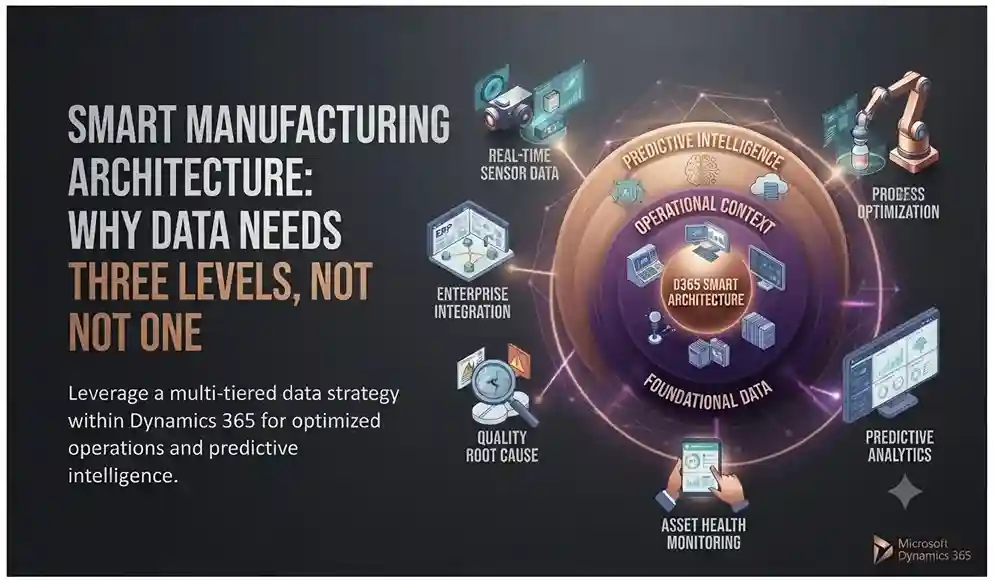
IoT device management dashboard monitoring software updates, device status, and security in real time.

IoT Device Software Management: Are You Doing It Right?

Every enterprise today runs on software – and nowhere is that pressure more intense than in IoT device software management. As connected devices multiply across factories, hospitals, logistics networks, and smart infrastructure, the stakes for getting software delivery right have never been higher. Yet most organizations are still managing IoT device software the way they managed desktop applications a decade ago – slow release cycles, siloed teams, reactive testing, and little visibility across the device lifecycle. That approach no longer works. Industry disruptors are not waiting. They are shipping faster, patching smarter, and scaling IoT fleets without proportional cost increases. Meanwhile, enterprises clinging to outdated development practices face a widening gap – in speed, in quality, and in customer satisfaction. The choice is now binary: modernize your IoT device software management strategy, or watch competitors who already have pull further ahead. Organizations that embrace lean, agile, and DevOps-driven approaches to IoT software delivery are not just keeping up – they are setting the new benchmark. What Is IoT Device Software Management? IoT device software management refers to the processes, tools, and strategies used to deploy, monitor, update, and maintain software across a fleet of connected devices – from sensors and edge nodes to industrial controllers. Unlike traditional software environments, IoT ecosystems introduce unique challenges: devices operate in remote locations, run on constrained hardware, and require Over-the-Air (OTA) update capabilities to stay secure and functional. Without a structured management approach, enterprises risk firmware drift, security vulnerabilities, and costly manual interventions at scale. As it pertains to the “new normal” DevOps standards, organizations now face many challenges such as cost overruns, software development projects that don’t scale in line with the enterprise growth, and increased market demands for speed. On top of that, the available outdated testing tools don’t offer visibility to ensure the right specifications get tested in the right time. How Lean and Agile Principles Transform IoT Software Delivery So, how can you make sure your organization is ready to manage unexpected changes, and deal with any dependencies that you already have under the hood? How do you ensure a strong balance between the existing business and the new development? Many of you may already be familiar with lean and agile principles and have probably even tried applying them in smaller teams. But what we’ve seen so far in the market is that many of you struggle to apply these principles across the entire organization. Lean and agile principles can help you reach your goals in today’s hyper-competitive world of digital product delivery. By becoming a lean and agile enterprise your organization will be able to adapt faster to the needs of the market by improving internal collaboration and communication. You will be able to learn in real-time from your clients to ensure that you are producing the prioritized set of features that drive economic value. By managing test labs, test planning, and ensuring the tight linkage between product demand and delivery, your organization will be able to reduce waste (time, effort, resources), while ensuring that your business strategy is aligned with the investment and development goals. The Numbers Don’t Lie: Agile IoT Transformation Results Let’s have a look at a few examples of what some of the industry leaders have achieved, using lean and agile processes. Nationwide achieved 50 percent improvement in code quality and 70 percent reduction in system downtime by applying lean principles to transform the software delivery lifecycle. Diagnostic Grifols, a world-leading healthcare enterprise headquartered in Barcelona Spain, increased the efficiency of development documentation by 30 percent-facilitating compliance, ensuring consistency of records across all product lines, and reducing operational costs. IoT Software Security: The Risk You Can’t Ignore A lean and agile development lifecycle isn’t just about speed – it’s about building security into every release cycle. According to industry research, over 57% of IoT devices are vulnerable to medium- or high-severity attacks due to unpatched firmware. Integrating automated security testing within your DevOps pipeline ensures vulnerabilities are caught before deployment, not after a breach. If your current IoT software management process doesn’t include continuous security validation, it’s time to close that gap. Start Managing IoT Software the Right Way — Here’s How It’s time to transform your organization into a lean and agile enterprise. It’s time to ensure that your firm can adjust to any market change, predict the unpredictable, keep costs low, deliver new features and offerings faster, and never lose a beat with your customers. If you would like to learn more, let’s get connected! Our IBM solution enables companies to improve visibility and transparency across the product delivery lifecycle by providing a single source of truth. It also enables enterprises to define a process custom to each organization, and it ensures quality and compliance. All using lean and agile processes.

IoT Device Software Management: Are You Doing It Right? Read More »