Welcome to Trident Information Systems!
Write us to - info@tridentinfo.com
Let's Socialize

Retail ERP Software

Why organizational change projects fail and how to prevent implementation disaster

New IT installations often fail. At least that’s the widespread belief surrounding organizational change initiatives today. One frequently cited study from the 1993 book Reengineering the Corporation goes as far as saying that as many as 70% of the organizations that undertake a reengineering effort do not achieve the dramatic results they intended. A more recent McKinsey survey of more than 1,500 executives who had undertaken a significant change effort in the past five years found that only 38% of respondents said “the transformation was ‘completely’ or ‘mostly’ successful at improving performance. After two decades of hearing about high failure rates related to change, it’s unsurprising that business leaders are wary of organizational change projects. Organizational psychologist Nick Tasler explained that these negative biases can create a toxic self-fulfilling prophecy. “When a change project falls a day behind schedule, if leaders and employees believe that successful change is an unlikely outcome, they will regard this momentary setback as the dead canary in the coalmine of their change initiative. (Never mind the fact that three other initiatives are still on time or ahead of schedule),” he wrote in an article for Harvard Business Review. “Suddenly, employees disengage en masse and then the change engine begins to sputter in both perception and reality.” Yes, change is hard, and complex IT implementation projects, particularly ERP installations, can be particularly challenging. But it doesn’t mean they are doomed to failure. So where do you start? How can you choose the right technology for your retail business, and ensure that the implementation project runs as smoothly as possible and you get the most from your investment? Here are some of the main causes for failure in any organizational change initiative, and how can you prevent them from happening: Mistake #1: Failure to plan Issue: An outdated legacy system is impacting business performance, and it needs replacing quickly. In their rush to get the project going, business management jump straight into the implementation without taking the time to develop a well thought-out organizational change management plan. Solution: Don’t be tempted to cut corners in your planning. Analyze your business, decide what should be prioritized, and understand all the different ways the project will impact your routines at every stage of the process. “Companies should start by analyzing their current and future requirements and processes,” says Gunnar Ingimundarson, Chief Consulting Officer at LS Retail. “How many software solutions are they currently using, and what are they used for? Map out the disparate solutions in the stack, alongside their dependencies and interconnections. The next step is to figure out where they can draw the biggest – or quickest – benefits. Is your POS system not generating the information you need on stock levels and product visibility? Or, are there integrations that repeatedly cause problems or break down? Do you experience missing data? Identify the area(s) where a new system would bring immediate value in terms of savings or returns. That’s where you should start, and that should determine your priorities.” Once the priorities are set, break the project down into manageable chunks, from pilot phase to initial implementation to company-wide rollout. Consider when it’s most appropriate to start each phase of the installation so you won’t place unnecessary strain on your business during busy times. Mistake #2: Key stakeholders aren’t onboard, or have unrealistic expectations Issue: Management want the new technology in place quickly and only focus on the end goals. They get frustrated by how long the project is taking and threaten to pull the plug. Or they wonder why the new software isn’t being adopted widely and successfully when they failed to communicate the changes to everybody in the business and get company-wide buy in. Solution: All stakeholders need to be committed to the project’s success right from the beginning, and to clearly understand the project’s scope and goals. “Internal resistance can kill even the best implementation project,” says Eric Miller, Regional Director for the Americas at LS Retail, building on his 13 years of experience in software implementations. “Get the buy-in from all stakeholders from the start, and make sure that the goals, objectives and expected end results of the project are clear and communicated from you to the stakeholders, and from the stakeholders to all the customer parties involved. It never pays off to sell a dream you can’t deliver on.” Bring together personnel from different departments to understand their requirements and what outcomes they hope to achieve from the implementation. Similarly, they need to understand how much time should be devoted to a project like this and ensure project teams are given sufficient time to carry out the work. Set realistic timeframes from the start, and ensure everyone knows exactly what’s required of them. Mistake #3: Unforeseen changes throw the project off track Issue: Even the best prepared projects encounter hurdles along the way, but if unforeseen issues arise and major milestones are missed, it can be tempting to throw in the towel and deem the entire project a failure. Solution: Know that when you’re dealing with a large-scale IT implementation, it’s hard to plan for every eventuality. Be willing to adapt and take a different approach if it ultimately means the project will be a success. “What was deemed to be the best approach initially may need to change – this might even happen after the pilot is completed. I have seen companies that went through multiple pilots before finding the right balance. It’s a learning process, and it’s never over,” says Miller. It’s worth learning everything you can from the pilot implementation. Instead of rushing on to roll out store #2, take a moment to see how the system is working and to identify any issues that you couldn’t have planned for in your testing environment. Success comes to those who take a considered approach. Mistake #4: Picking the wrong technology partner Issue: It may be tempting to go for the cheapest technology provider, but cheapest upfront may not necessarily deliver the long-term business value you hoped for. You quickly realize they can’t help you achieve your outcomes, because they lack drive,

Why organizational change projects fail and how to prevent implementation disaster Read More »

6 tips to help you win at omni-channel

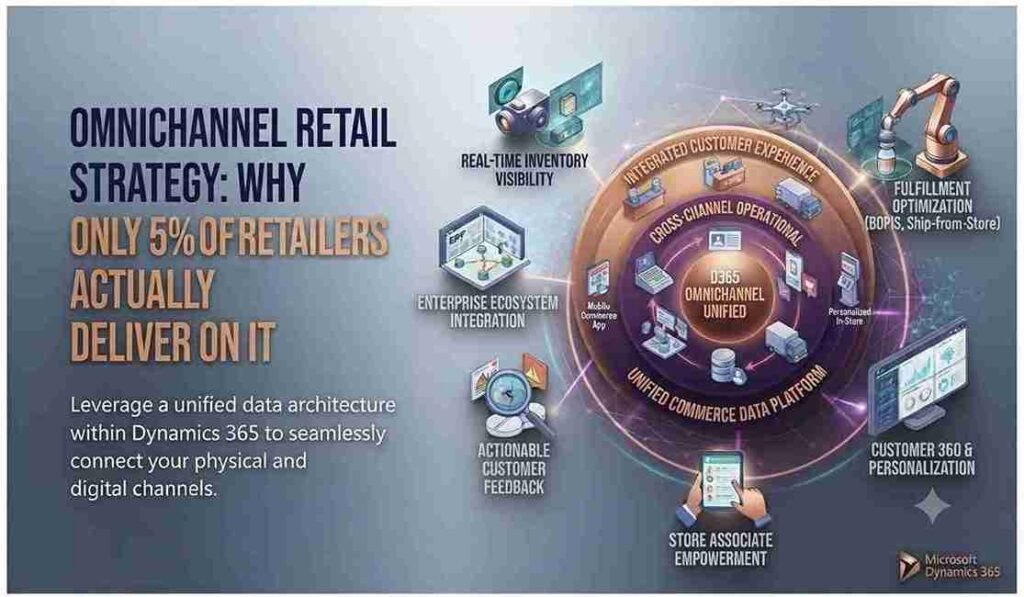
Even if retailers have been talking about investing in omni-channel for over a decade, many still lack basic omni-channel capabilities. For example, only 5 percent of retailers can successfully give consumers the ability to start and finish a sale in their preferred channel, Luxury Daily reports. But consumers aren’t waiting for retailers to get their act together. In the past year, almost 9 out of 10 (88%) shoppers have researched and selected options online before heading out to a store, the Ecommerce Foundation reports. And when in-store, Google reports, 50% of them turned to the internet: to research products they’ll then discuss with the sales staff, to remind themselves of what to buy, to see product specs, and more. Retailers have no time to waste. They need to be where their customers are, with answers to their questions, smooth and simple shopping journeys, and timely information and support. In your journey on improving your omni-channel strategy, here are seven points on which you should concentrate your efforts: 1. Be consistent with your branding There’s nothing worse for an omni-channel brand than to offer a disconnected experience across the different channels. Successful brands are consistent in both brand image (think color scheme, corporate story, style, products, voice) and quality of service (customer support, return policies, personalization, product suggestions) in-store, on their website, on the loyalty app and on social media. International coffee company Nespresso is a great example of cohesive visual branding. The graphic design and color palette are kept consistent throughout the channels, and they function as a common thread that guides every step of the customer journey, from e-commerce website, to mobile app, to the confirmation e-mail customers receive after placing an order — all the way to the package that arrives to the customer’s doors. If your offline presence is hip, youthful and colorful, but your app is dull and offers few options to interact with products; if you emphasize customer service, but then don’t respond timely (or don’t reply at all!) to customer queries on Twitter; if customers receive different information depending on which representative they contact – you will confuse and lose customers. 2. Unify the sales channels Customers want to be able to see on your website whether the latest smartphone model is available in gold in a specific store. They want to go on your e-commerce, and add to their cart that art deco lamp they saw in your shop while they were on holiday. They want to send back at their convenience the too-tight shoes they bought in one of your store locations. These are all common requests – and yet, too many retailers can’t fulfil them. That’s because many of them are still using separate best-of-breed, badly-integrated solutions. “Many retailers have pieced together disparate systems and processes to try and create a holistic shopping environment, but it really doesn’t provide what the customer is looking for,” says Kathleen Fischer, director of marketing at Boston Retail Partners, Boston. The result is Inability to see what products are available in real time – or where they are located; Inability to accept returns across channels; Risk of selling items that are not in stock; Inability to offer highly in-demand services like click & collect, ordering from store, or online inventory search. The only way you can fulfil these demands is by implementing technology that gives you centralized visibility and control over your stock, locations and sales. A unified commerce platform like LS Central gives you the visibility you need to know how many items are still available and where they are located exactly, and lets you easily accept exchanges and returns across your whole retail network. 3. Be honest and clear Research shows that seventy percent of online shoppers abandon their shopping cart before finalizing their purchase. The most common cause? Unclear or excessive shipping costs, which often become apparent too late in the buying process. Successful retailers display their sales conditions in clear and visible format on their website. Take, for example, sportswear and outdoors retailer Transa. When you browse the product selection, the key sales conditions (delivery time, shipping costs, return conditions) are stated clearly next to each item. Buyers know the conditions of the sale before they have added an item to their cart, so they can make an informed decision early in the shopping journey. To decrease the chance of shopping cart abandonment, create a relationship of trust with your customers, and be upfront about shipping prices and times, shipment restrictions and special conditions. You don’t want to tell a customer that their country is not eligible for delivery when they are ready to check out a full cart of products. 4. Let customers check product availability According to Forrester research, 71 percent of customers expect to be able to see available inventory online. Leading retailers are taking note, and even taking it one step further: on its e-commerce website, IKEA lists where each item is available alongside the quantity left in stock in each store. Even if you don’t want to go to such lengths, your product listing should at least: Be complete and updated. Customers should be able to see in which location the product they want is available, in their preferred variant. If you use a unified commerce system, you can maintain information in one database, and then distribute it to the e-commerce, POS and back office. This way, both staff and customers can access the same real-time data, and if the inventory changes, for example if an item is sold, this is instantly reflected on all touchpoints. Include detailed product information. When shopping for items online, customers don’t have the touch-and-feel element. Make up for it by including the item materials (or ingredients), any special care warnings, warranty information, and special return policies. If you stock similar products, you should ensure that you give enough information so consumers can make an informed choice. Better yet, include a comparison table. Feature clear, high-quality pictures. According to research by Field Agent, 83% of consumers believe product images are very important when selecting and purchasing a product. If you can, consider including videos: according to a survey by Wyzowl, 80% of people say that product videos give them more confidence when purchasing a product online. From showing

6 tips to help you win at omni-channel Read More »

How AI and AR can help retailers stay in business in moments of crisis

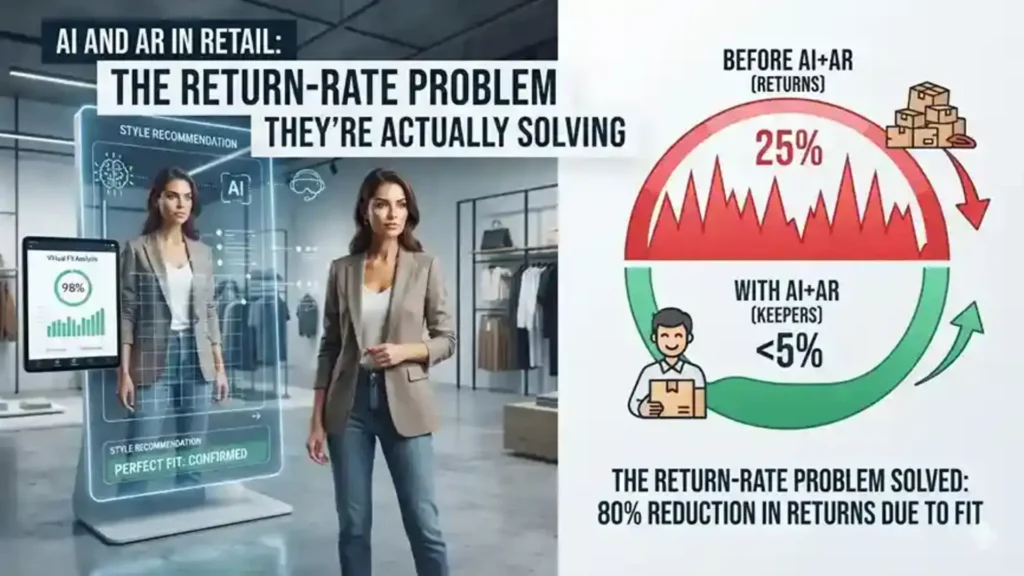
Store closures and social distancing have caused a rise in demand for virtual tools and technologies that bring the shopping experience into consumers’ homes. Beauty brands, which were among the first to try out AI and AR to enhance the consumer experience, are increasingly using the technology to suggest products based on people’s preferences and unique characteristics, including skin tone and face shape, as well as to help customers virtually try on products before committing to a purchase. Even before the Covid-19 crisis, the technology had already proved its worth. Figures from Perfect Corp, which develops virtual makeup technology, show that virtual try-on technology generated 2.5 times higher e-commerce conversions for brands and decreased return rates by more than 8%. Trident is offering Cloud Based Retail ERP Software to manager retail operations effectively As the technology develops and becomes more sophisticated, consumers are progressively trusting in AI to help them make purchase decisions. “Consumers trust AI to curate a choice of products, services and experiences that reduce complexity and make life more fulfilling,” writes Andrew Cosgrove, Global Consumer Knowledge Leader & Lead Analyst at EY. “AI knows its “owner” so well that it suggests new and unexpected product ideas or experiences they love.” Digital suddenly finds itself one of the main commerce channels for retailers. We expect AI and AR are here to stay, as more consumers become aware of their virtues when it comes to convenience, and as these technologies can help retailers to continue trading regardless of what happens in the real world. Here are four ways to make AI and AR work for your business: 1. Bring the in-store shopping experience to your customers’ homes AI and AR take online shopping to a whole new level by making it possible for consumers to choose from selected products picked out just for them, try out new experiences and test products in ways they wouldn’t have been able to previously – all from the comfort of their homes. Early pioneers of AI- and AR-powered online shopping include opticians, who realized that consumers still want the option to try on glasses and see what styles suit them before committing to a purchase. Virtual fitting technology has made this possible, with some retailers further elevating the experience using AI to automatically suggest the perfect frame to suit your face. Indeed, AI lends itself to verticals where consumers may find themselves bogged down in complex choices. Instead of having to scroll through hundreds and hundreds of beauty products, for example, new services such as My Beauty Matches use AI-powered algorithms, and using the consumer’s previous searches, purchases, and known preferences, they suggest items from large databases (in this case, there are over 400,000 products) that couldn’t be easily browsed by the consumer. Advances in machine learning help brands to identify consumer styles and preferences to gain a granular level of customer understanding, so they can optimize each customer’s individual journey. “In one of the worlds we modeled, consumers valued time much more than money,” Andrew Cosgrove, Global Consumer Knowledge Leader & Lead Analyst at EY, said. “Their personalized AI learned about their unique preferences and used those insights to buy most of the things they needed. This allowed them to spend their time shopping only with brands that reflected their values and purpose.” 2. Find the right items across infinite aisles of products The most successful AI and AR experiences today tend to be delivered by retailers that have large item assortments and the ability for consumers to personalize their choices. Home goods and furniture retailers are a clear use case, with many using the technology to help customers choose products that will fit beautifully into their homes and match their existing décor. Online furniture retailer Wayfair is known for using AI to target customers with personalized recommendations. The company’s search algorithm extracts the customer’s style preferences from their search history to present a selection of furniture that is likely to appeal. Another service allows customers to take a photo of a furniture piece they like and match it to a similar item in the Wayfair inventory, which holds millions of products. AR then takes this a step further by giving consumers the ability to virtually see how products will look in situ before committing to a purchase. Returns on investment have been demonstrated with increased conversion and reduced returns. AI is proving its worth in fashion too, helping customers choose clothing that will fit them best by analyzing previous purchases and suggesting sizing based on their profile. Iconic jeans brand Levi’s uses an AI-based chatbot to help customers find the perfect pair of jeans. It asks consumers their preferences when it comes to fit, rise, amount of stretch and wash, and asks what size they are in another brand to determine the best size in Levi’s and suggest the right pair. And in beauty, brands are using the technology to offer services such as instant foundation shade matching and advanced skincare analysis, as well as matching consumers with products and looks that will suit their complexion, style and occasion. 3. Anticipate consumer demands One of the major benefits that retailers can draw from AI and AR experiences is the amount of data they can collect about their consumers along the way. This data, if collected appropriately, can be used to improve the accuracy of stock and inventory requirements forecasts throughout the year. “As consumers browse, test features and make purchases, they are providing retailers with an entirely new set of data points,” writes Hamaad Chippa on Retail TouchPoints. Retailers can then use this information to rethink product assortments for a better shopping experience, or to develop highly targeted marketing campaigns that lead to greater conversion rates. For example, a customer who just bought a whole load of supplies from a pet store for their new kitten is likely to want to sign up for home deliveries of cat food. AI can also help retailers target consumers with promotions that are more likely to lead to purchases based on past browsing and purchase history.  “Whether that is 10% off online, 15% in-store or free shipping, customers automatically receive the

How AI and AR can help retailers stay in business in moments of crisis Read More »

7 tips to deliver better online grocery shopping

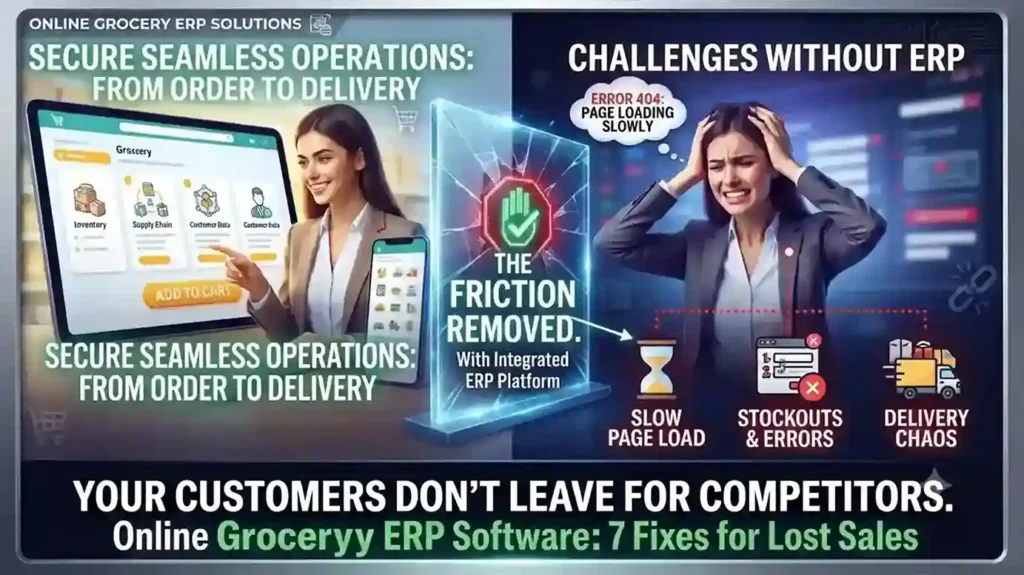
The boom of online grocery shopping has been a long time coming. In 2015, more than one third (37%) of shoppers in Asia-Pacific regularly shopped for food online, Nielsen reports. Although in the rest of the world online grocery shopping was less common, there was already a growing trend, which has only become more pronounced. According to projections by Deutsche Bank, online grocery shopping is expected to expand at a compound annual growth rate (CAGR) of 28.2%, which is significant if compared with a 2.5% CAGR for total grocery sales. Supermarkets have had time to prepare for the shift to online, but not all of them have stayed on top of trends. When, due to necessity, consumers worldwide moved massively towards online shopping, some supermarkets found themselves suddenly out of the race. Today, the businesses who didn’t believe and invest in omni-channel are facing the harsh consequences of their decisions. Online shopping has been gaining ground quickly among all ages and geographies, and there is no reason to believe this popularity will fade in the upcoming months. This means there is no better time than today to invest in improving your e-commerce capabilities. Here are seven tips to get you started. 1. Focus on speed and ease of use Simplicity and usability of the platform should be your top goals: Make it easy for people to register, find the products they need, add items to the cart, review and edit the order and pay. Enable filtering per sub-groups of items to speed up search. Your customers would rather not have scroll through a hundred-item long list of “bread and pastries” to find the apricot-filled croissants they are looking for. Make sure you include all relevant product information. Feature high-quality pictures, and clearly label brand names, price, ingredients with nutritional value and allergens, and pack size. Include expiry dates wherever possible. If a shopper knows that the Greek yogurt lasts three more weeks, they might buy three packs instead of one. Support returning shoppers. Give customers the possibility to recreate previous orders quickly and activate shopping lists where people can add staples and family favorites. Allow registered customers to see their buying history and to share the basket with other family members. Ensure short page load times. If your site is too slow to load, buyers may abandon their cart without completing the purchase. 2. State the important information up front How annoyed will your online shopper be when he finds out that his postcode is not eligible for delivery, after he spent a full hour adding products to the cart? For retailers, it pays off to be clear and provide all needed information from the start. Buyers should be aware of shipping prices and times, delivery restrictions, geographical areas included in the service and special conditions before they have added a single item to their cart. When it’s time to check out, make sure that all the steps are clearly labelled, and that shoppers know what’s coming up in the process. Consider adding lines that clarify where the customer is at, such as “You can still modify your order in the next step” or “By clicking here, you confirm your order and accept to pay. You won’t be able to modify your order afterwards”. Consider adding a progress bar that shows the various steps (“Customer details” -> “Shipping” -> “Payment information” -> “Review order” -> “Complete and pay”). Once the order has been placed, include an “order completed” page where all the key information is summarized: items purchased, delivery and payment information, time of order, and what the customer should expect (an email? A call? A link to track the shipment?). 3. Think of the different platforms Today, more consumers access websites from mobiles than from computers. According to data from marketing site The Drum, last year 63% of traffic and 53% of sales on retailers’ eCommerce sites happened via mobile. As the preference for mobile shopping is only going to get more common, you should ensure that your website performs well on mobile devices. Here are some questions you should ask yourself: Is my e-commerce site responsive? Are the buttons big and easy to tap? Are the text fields large and easy to type into? Are pictures clear? Can people easily zoom in to see extra details? Is it easy to move through different images? Is all information visible on small screens, or do some lines disappear or end up off screen? Can customers easily move between items and categories? Is the payment process simple and easy to follow? Many consumers start a transaction on a device and continue it on another one. If when they resume the transaction they lose all the items they had already added to the cart, they may not be bothered to start over again – and you’ll lose that transaction. Enable saving the cart for logged in customers, so they can easily pick up transactions on different devices, at their pace and convenience. 4. Make it easy to navigate On your e-commerce site you can easily display a larger product selection than in your physical locations. If you decide to go for the “endless aisles” style, make sure you organize the selection so that customers can easily find what they need. Offer top-level categories that can be accessed from the top menu. Enable customers to filter and sort items by price, brand, group, review scores, etc. Make sure information is easy to skim through. Use bullet points and organize information consistently (first ingredients, then package size, then weight, then expiry date…) so users can find what they need at a glance. Make sure the “buy” button is clearly visible. Add a checkmark or confirmation text to clarify when an item has been added to the basket. Include a search function with predictive suggestions and auto corrects (“Did you mean…?”). Your customer may call “cilantro” what you call “coriander” on your site; you wouldn’t want her to leave without it just because the search gave no results. 5. Offer flexible delivery Offer several delivery options and time slots, and be specific with your delivery times. The best practice is to offer precise delivery windows, and allow people pick the one that best fits their schedule. The more precise you are, the more likely you are customers will decide to shop with you. Nielsen’s “Global Connected Commerce Report” advises offering 30-minute interval windows – provided you can

7 tips to deliver better online grocery shopping Read More »

Retail ERP and e-commerce integration dashboard managing inventory, orders, and online sales.

7 Reasons Your Retail Business Needs a Unified ERP and E-Commerce Integration Solution

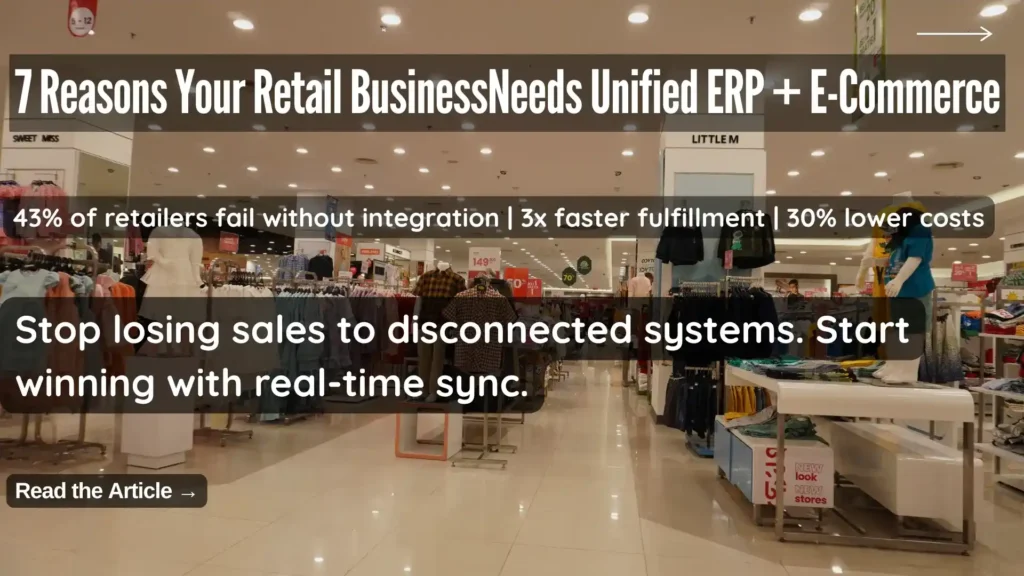
Here is a scenario that will feel familiar to most retail operators: a customer visits your website, sees a product marked as available, drives to your store to buy it, and finds out the shelf is empty. Your website still shows it in stock. Nobody knows why. Or this one: a loyal customer who buys from you in-store every week places their first online order — and receives a “welcome, new customer” email. No recognition of their purchase history. No loyalty points applied. No sense that the business they have been giving you for two years means anything in the digital channel. These are not technology failures. They are integration failures — and they happen every day in retail businesses running separate, loosely connected systems for their physical stores and online channels. The solution is retail ERP and e-commerce integration — specifically, a retail-oriented integration solution designed from the ground up for the way retail businesses actually operate, rather than a generic middleware tool that treats your retail operation like any other business. This article covers the seven concrete reasons why retail-specific ERP and e-commerce integration delivers outcomes that generic solutions simply cannot match — and what to look for when evaluating your options. Why Separate Retail Systems Are Now a Competitive Liability Brick-and-mortar retail is not dead — but purely physical retail without a connected online presence is becoming increasingly rare. Today’s retail customer moves fluidly between channels. They discover products on social media, research them on your website, check availability through your app, visit your store to see them in person, and expect to complete the purchase on whichever channel is most convenient at that moment. Research consistently shows that 81% of consumers use mobile devices as part of their shopping research — and the majority of purchasing journeys now involve at least two channels before a transaction is completed. For retail businesses, every additional sales channel represents a potential revenue stream. But it also represents a new source of operational complexity — unless every channel shares the same data, the same inventory, the same customer records, and the same pricing. When they do not, the experience falls apart. And in a market where customers have endless alternatives, an experience that falls apart drives them to a competitor without a second thought. The Real Cost of Running Disconnected ERP and E-Commerce The cost of disconnected retail systems is distributed across every channel, every function, and every customer interaction — making it easy to underestimate until you try to measure it: Why Generic Integration Tools Fall Short for Retail Many businesses attempt to solve the integration challenge with general-purpose middleware tools — platforms designed to connect any two applications regardless of industry. Generic integration tools can technically connect a retail ERP with an e-commerce platform. The problem is that retail has specific operational requirements — BOPIS fulfilment logic, zip-code-based inventory routing, loyalty program data synchronization, multi-currency retail pricing rules — that generic tools are not built to handle natively. The result is months of expensive custom development to configure a generic tool for retail-specific scenarios, followed by ongoing maintenance overhead every time either connected system updates. A retail-specific integration solution — or better, a unified retail platform — delivers all of this functionality out of the box. 7 Reasons to Choose a Retail-Specific ERP and E-Commerce Integration Reason 1: Consistent Products and Pricing Across Every Sales Channel The most fundamental requirement of a unified retail operation is consistency — every channel showing the same products, the same prices, and the same promotions at the same time. When your product catalog, pricing structure, and promotional mechanics live in your ERP and distribute automatically to every connected channel, consistency is structural — it happens automatically rather than requiring manual synchronization. A retail-specific integration solution enables: For retailers managing hundreds or thousands of SKUs across multiple channels, centralized product management is not just a convenience — it is a necessity. Reason 2: True Omnichannel Fulfilment — Buy Anywhere, Deliver Anywhere The modern retail customer expects to complete their shopping journey on their own terms — and that means the fulfilment model needs to be as flexible as they are. Buy Online, Pick Up In-Store (BOPIS) is now a baseline expectation for omnichannel retailers — customers order online and collect from their preferred store, combining the convenience of online shopping with the immediacy of in-store collection. But executing BOPIS reliably requires real-time integration between your e-commerce platform, your ERP, and your in-store systems. A retail-specific integration solution enables the full range of omnichannel fulfilment scenarios: Each of these scenarios requires real-time data sharing between the e-commerce platform, the ERP, and store-level inventory — which only a retail-specific integration solution delivers reliably. Reason 3: Real-Time Inventory Visibility Across Every Location Inventory accuracy is the operational foundation on which everything else in omnichannel retail depends. Without accurate, real-time inventory data across every location, BOPIS fails, online availability is unreliable, and customer trust erodes. A retail-specific integration solution delivers inventory visibility that generic tools cannot: The business impact of real-time inventory accuracy extends beyond customer experience. Buyers make better purchasing decisions. Markdowns are more targeted. Overstock and out-of-stock situations are identified earlier and resolved faster. Reason 4: Unified Customer Data Across Digital and Physical Channels A customer who has shopped with you for five years should feel known — regardless of which channel they use. Their purchase history, preferences, loyalty status, and contact information should follow them seamlessly across every interaction with your brand. This only happens when your ERP and every connected channel share a single customer database — updated in real time by every transaction, regardless of where it occurs. A retail-specific integration solution delivers: Reason 5: A Single Loyalty Program That Works Everywhere Loyalty programs are one of the most powerful customer retention tools available to retailers — but only when they work seamlessly across every channel a customer uses. A loyalty program that earns points in-store but cannot redeem them online,

7 Reasons Your Retail Business Needs a Unified ERP and E-Commerce Integration Solution Read More »

Redefining shopping excellence with an unified E-commerce solution

[vc_row][vc_column][vc_column_text]Over the last decade, the retail sector has experienced enormous change and transition. Many have suggested that conventional brick and mortar retail is dying and that for the everyday needs, consumers switch entirely to online platforms. However, this is not the case. As per a survey from the National Retail Federation, since 2010 retail storefronts in the US have continued to expand at approximately 4 percent annually along with the consistent double-digit growth of online shopping. Almost all of the top 50 online retailers have brick and mortar stores, as well. Although progress in e-commerce tends to outpace physical stores, the rate of progress in physical retail outlets is still much higher. E-commerce is also not a stand-alone medium in most cases but used in combination with conventional and new platforms to meet consumer needs such as buying online pick up in-store or Click and Collect. Physical outlets are still a big part of consumer spending patterns, but with this, we also have seen that consumer priorities have changed around shopping. Trident is offering Retail ERP Software for an outstanding commerce experience that helps in gaining maximum profits. Gone are the days when store employees are the only experts in information about goods. Consumers already have greater access to product details, price clarity, and accessibility. This means that retailers have to look at customer engagement across all platforms to make sure that their enterprise is capable of delivering on these recent high requirements. E-commerce will no longer be a major differentiator for retailers in the next few years, but will instead allow integrated retail trade to compete in the ever more challenging customer needs worldwide. So Trident ( dynamics 365 partner) & solution dynamics 365 for marketing not confined to e-commerce, but aims to streamline the process of unifying consumer shopping experiences through an end-to-end business framework that puts together e-commerce, in-store, back office, and call centre. Let’s discuss furthermore how Dynamics 365 for marketing solution helps retailers meet those dominant business requirements. 1)- Grant Excellent and Customized Consumer Experience Consumer experience is not only one of the top growth factors in the retail sector, but according to the recent survey by Microsoft and Forbes, 33 percent of retail managers are also considered a great business priority. The main task is to identify what constitutes outstanding customer experience for each individual business, as expectations of customers differ by micro-vertical retail, product category, and consumers themselves. It is up to the retailers to better define how their marketing commitment aligns with the experience. When customer experience is established, retailers need to be able to deliver on this commitment by providing technology that allows customer engagement in the next generation and does not limit their ability to evolve and build differentiating consumer experience. As per the report by Microsoft and Forbes, providing customized shopping has become increasingly popular and over 49 percent of customers aged between 18 and 24 stating they are more likely to purchase from retailers offering custom shopping experiences. The aim of personalization is to form a bond between both the retailer and the consumer by delivering goods and/or services across all retail channels based on past interactions. It enhances the relationship to an encounter more similar to an interaction with a trustworthy friend or partner than a simple transaction. There is a significant technological dependence to reach this next stage of customization. Networked and real-time visibility into consumers and activities are needed by retailers. Dynamics 365 put together all facets of customer interaction through e-commerce, call centre and in-store as well as simple incorporation into new channels to enable retailers to gain a holistic customer perspective. Couple this with out-of-the-box integration with Dynamics 365 Consumer insights and retailers can not only deliver AI-driven suggestions based on customer shopping history, likes, and patterns but also provide store agents with tools for presenting the customer’s 360-degree view and facilitating rich interaction throughout the selling journey.  2) Omni Channel Experience    Nowadays Customers expect to be able to purchase anywhere they want, and by whatever platform. Retailers also acknowledge the importance of Omni channel as one of their top three priorities, with 47 percent of Microsoft and Forbes survey executives rating this. Most retailers are still struggling in having an Omni channel experience because of the complexity of internal infrastructure and disconnected or fragmented systems. Trident’s Dynamics 365 NAV makes it much easier to offer a native Omni channel solution for retailers, as it was built in the cloud. 3) Flexibility An integrated solution is important not just for customers to engage and shop in retail, but also for how a unified solution can allow first-line employees to take part better and make sure ideal operational efficiencies across your supply chain. Dynamics 365 for marketing offers retailers the ability to streamline their operations with enriched knowledge that characterizes their business. Employees at the store can gain greater information and insight into stock availability, cross-application support for task management, as well as trade analytics that enable managers to monitor performance and insights to help them make informed decisions.[/vc_column_text][/vc_column][/vc_row]

Redefining shopping excellence with an unified E-commerce solution Read More »

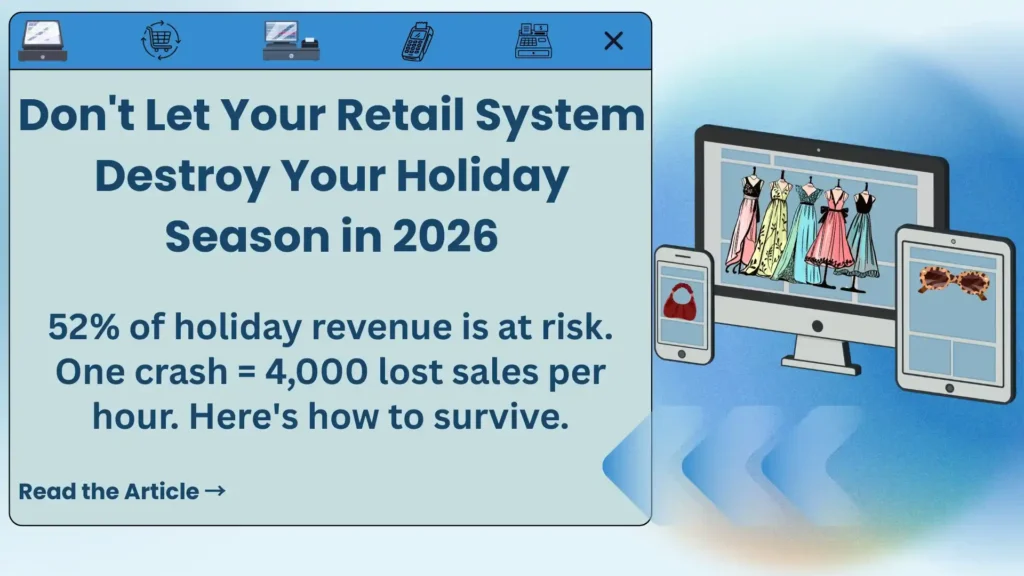
Don’t let your retail system destroy your holiday season – LS Retail

Holiday season trading is big business for retailers. As retailers up their efforts to draw in more shoppers and take full advantage of “the most wonderful time of the year,” it pays off to be prepared. NRF expects retailers to hire between 530,000 and 590,000 temporary workers during the holiday season, and to spend millions of dollars on window displays and marketing. But many forget one critical aspect that can make the difference between a profit-making and a loss-making season: the status of their technology. From slow e-commerce sites to out-of-stock scenarios, here are some disastrous but all-too-common seasonal-related problems that retailers face, what causes them, and what can be done to prevent them. Issue #1: Your technology can’t sustain the high volume of transactions/increased workload The cause: Tech outages can be extremely costly – but for many retailers, they are a familiar nightmare. A study by LogicMonitor found that 96% of organizations have experienced IT-related disruptions, and 10% of organizations have had 10 or more outages in a three-year period. Common causes of down systems include network failure, usage spikes, human error, software malfunction, hardware failure and third-party outages. An increasingly common cause of outages are disconnected legacy software systems. “One of the issues for some retailers is the fact that systems are, in fact, a patchwork of different technologies and functions added over time,” Neil Saunders, managing director of GlobalData, said to RetailWire. “As the demand put on them increases, they occasionally fall over. For others, it can be about capacity – which is why a lot of retailers have failures at peak times such as Black Friday.” The solution: Retailers should look to replace their technology siloes, which are complex to maintain and costly to support, with a single retail system. A unified system can provide them with a complete overview of their business and all its data. On top of that, the technology is delivered by a single provider, which means full support, and simpler and quicker upgrades. “The solution is unified commerce, one version of software servicing all channels,” retail industry thought leader Ken Morris said in the RetailWire roundtable. “Until retailers wake up and embrace this vision, we will continue to see these types of outages as it is almost impossible to keep this multi-tiered Frankenstein’s Monster running without more people or less complexity.” Issue #2: Part of your system goes down, and you can’t promptly pinpoint which part, or you don’t have the resources to fix it quickly The cause: Again, the cause are ageing, disconnected systems unable to communicate with each other, with unsupported hardware and software. Outdated tech will complicate the day-to-day running of your organization and put a strain on your resources. On top of that, if a part fails, it can be extremely hard to identify where your system is down. Without knowing what to fix or when the disconnection happened, how can you get your system back up and running, and minimize disruption to your business? One of our clients, discount fashion retailer Gallo Clothing, faced this exact scenario one Christmas eve – its busiest sales day of the year. The store was full of shoppers when suddenly the cash registers stopped working. Gallo’s systems had stopped communicating with each other, but where had the glitch happened? The company couldn’t identify and fix the problem straight away, so managers instructed staff to process all transactions manually. With cashiers forced to write every item and price and calculate the total for every single shopper down, each sales transaction became painfully slow, and the queues grew longer and longer. Customers began to complain, and others left the store to shop elsewhere. Some never returned, unwilling to give the business another chance. The solution: Retailers no longer need to put up with unreliable, siloed software systems that threaten the smooth running of the business. But they must be willing to invest in their future, rather than patching up old systems and hoping they won’t fail when they need them most. “Retailers have spent years not spending enough on technology and building a robust future-proof architecture,” roundtable panelist Oliver Guy said to RetailWire. The good news is that modern, unified commerce technology platforms aren’t as expensive as retailers may think, and they can also deliver a fast return on investment. Gallo Clothing now uses LS Retail technology as the foundation for its businesses. Not only has it not experienced any issues since the implementation of the solution, but it has also achieved record profits. The company says it’s because the system is so fast and efficient. Gallo’s president told us: “In the years since implementing the LS Retail software, we’ve seen more customers, sold more products and had much shorter lines.” Issue #3: You can’t react fast enough to customer demand, and end up disappointing customers with out-of-stock items The cause: Out of stock items are one of consumers’ biggest gripes. They’re also hugely damaging to a retailer’s bottom line. The “Out of stock, out of luck” study by global research and advisory firm IHL Group found that retailers are missing out on nearly US$1 trillion in sales because of out-of-stock items. And almost a third of shoppers ended up turning to Amazon when the product they wanted wasn’t in stock at their local store Many retailers admit that the reason they experience out-of-stock scenarios is because they don’t have a complete view of their inventory, their data is unreliable, and they lack the tools to analyze their data and make accurate forecasts. The solution: You can no longer get by with running weekly or even daily reports to keep track of their business. Today, you need a real-time view –  especially during busy trading periods. Luxury fashion retailer Club 21|Armani Exchange gained this visibility when they upgraded their financial, admin, warehouse management, buying & merchandising, CRM and POS systems to a single software environment. Clare Vella, retail director, told us about the first Black Friday after implementing their new LS Retail software. “It was 10pm on Friday evening. We were watching the sales hourly, and one store was seeing an enhanced level of

Don’t let your retail system destroy your holiday season – LS Retail Read More »

LS Hospitality dashboard managing restaurant POS, kitchen operations, inventory, and guest services.

LS Hospitality: The Restaurant Management Software That Connects Your Entire Food Service Operation on Microsoft Dynamics 365

Running a restaurant has always been demanding. Running one in 2025 — where customers expect online ordering, mobile payments, personalized loyalty rewards, and flawless service simultaneously — demands technology that was simply not available to most operators a decade ago. The gap between what guests now expect and what most restaurant technology delivers is widening. Customers who order through an app on Tuesday expect the same loyalty points when they walk in on Friday. A table of four who order separately expect the split bill to process in seconds. A kitchen managing 200 covers on a Saturday night cannot afford miscommunication between the floor and the pass. LS Hospitality — the restaurant and food service management solution built on Microsoft Dynamics 365 Business Central — is designed for exactly this operational environment. It connects your POS terminals, kitchen management, table service, menu configuration, loyalty programs, online ordering, and head office operations on a single unified platform — giving every member of your team the real-time information they need to deliver outstanding hospitality, every service. Whether you operate a single fine dining restaurant, a chain of quick-service outlets, a café group, or a multi-concept hospitality business, LS Hospitality delivers the operational intelligence, service speed, and customer engagement tools that modern food service demands. Trident Information Systems is a certified LS Hospitality and Microsoft Dynamics 365 implementation partner — helping restaurants and hospitality businesses across India implement and maximize the value of this industry-leading platform. Why the Restaurant and Food Service Industry Needs Smarter Technology Now The Five Forces Reshaping How Restaurants Operate in 2026 The restaurant industry is navigating a convergence of five simultaneous shifts — any one of which would require a technology response on its own. Together, they are making the case for a unified, modern hospitality management platform more urgent than ever: 1. The omnichannel expectation — online ordering, mobile payment, in-app loyalty, table ordering via QR code, and dine-in service are no longer separate experiences. Guests expect them to work together seamlessly — with their preferences, history, and rewards recognized across every format. 2. The experience standard — in hospitality, the product is the experience. Operators who deliver consistently high-quality, frictionless service build the loyalty and word-of-mouth that sustains a restaurant long-term. Operators who do not — regardless of food quality — lose customers to those who do. 3. The pace of change — consumer preferences, dietary requirements, delivery platforms, payment methods, and social media dynamics change faster than ever before. Restaurant operators need a technology platform that evolves continuously — not one that requires expensive custom development every time the market shifts. 4. The social dining phenomenon — from food photography on Instagram to review platforms like Google, TripAdvisor, and Zomato, dining has become a social experience that extends far beyond the restaurant walls. Operators who manage their digital presence actively and use data to improve the experience will consistently outperform those who do not. 5. The analytics imperative — the restaurants making the best decisions about menu engineering, staff scheduling, promotional pricing, and customer retention are the ones with access to real-time, accurate data about their operation. Analytics is no longer a back-office function — it is a frontline competitive tool. The Real Cost of Running a Restaurant on Disconnected Systems Most restaurant operations have grown their technology stack organically — a standalone POS here, a reservation system there, a separate loyalty app, an accounting system that receives a manual export at the end of the week. This fragmentation has hidden costs that compound over time: A unified hospitality management platform eliminates every one of these costs. What Is LS Hospitality? Restaurant Management Software Built for Every Format LS Hospitality is an end-to-end restaurant and food service management solution — connecting POS, kitchen management, table service, menu management, loyalty, online ordering, and head office operations within a single unified application built on Microsoft Dynamics 365 Business Central. From Fine Dining to Quick Service: One Platform for Every Hospitality Setup LS Hospitality is designed to serve the full spectrum of food service formats — with configurable workflows that adapt to the operational requirements of each format without requiring separate systems: LS Hospitality on Microsoft Dynamics 365 Business Central LS Hospitality is built on and powered by Microsoft Dynamics 365 Business Central — giving hospitality operators the combined benefit of deep restaurant-specific functionality and enterprise-grade financial management, supply chain, and analytics capabilities. This means your restaurant operation runs on a platform that: Point of Service — Not Just Point of Sale The POS in a restaurant is fundamentally different from a retail POS. It is not just a payment terminal — it is the primary communication hub between the guest, the floor team, and the kitchen. LS Hospitality is built with this reality at its core. A POS That Informs, Orders, Pays, and Manages — All at Once The LS Hospitality POS is designed as a complete point of service — not simply a point of sale. From a single interface, your floor staff can: Superior Customer Service From Every Corner of the Restaurant LS Hospitality’s mobile POS capability means the point of service moves with your staff — not the other way around. Orders can be taken tableside on a handheld device, payments processed at the table without the guest leaving their seat, and loyalty enrollments completed during the dining experience rather than as an afterthought at checkout. This mobility transforms the service dynamic — reducing the friction between guest request and staff response, eliminating the queues at fixed POS terminals, and giving your team the tools to deliver genuinely attentive hospitality rather than transaction-focused service. Table and Guest Management: Maximize Covers, Minimize Wait Times Effective table management is the operational foundation of a profitable restaurant. Every table turn represents revenue. Every guest left waiting represents a potential lost visit. LS Hospitality gives your front-of-house team the visual tools and real-time information to optimize seating, service, and turnover across every service. Graphic Table Management for

LS Hospitality: The Restaurant Management Software That Connects Your Entire Food Service Operation on Microsoft Dynamics 365 Read More »

Retail CEO analyzing unified commerce dashboard integrating data, strategy, and technology.

The Retail CEO’s Guide to Unified Commerce: Data, Strategy and the Technology That Ties It All Together

Only 31% of retail industry experts believe that today’s retail CEOs have the technical skills needed to lead a data-driven, unified commerce operation. That means nearly seven out of ten retail leaders are navigating one of the most complex, fast-moving industries in the world without the technology literacy or strategic tools they need to make confident, informed decisions. That gap is not just a personal challenge — it is a competitive vulnerability. According to the World Retail Congress’s DNA of the Future Retail CEO, the two most critical technical competencies for retail leaders — today and in the future — are a deep understanding of digital commerce and omnichannel strategy, and a genuinely data-driven approach to decision-making. Not data-aware. Not data-informed. Data-driven in the extreme. The good news is that no retail CEO has to master every technology trend personally. The right unified commerce platform does the heavy lifting — connecting every sales channel, every business function, and every data source into a single system that gives retail leaders the real-time intelligence they need to set strategy, track performance, and pivot confidently when the market demands it. This guide covers exactly what retail CEOs need to know — and do — to lead their organizations into a unified commerce future. What the Data Says About the Future Retail CEO The Two Technical Skills Every Retail CEO Needs Right Now Two independent bodies of research point to the same conclusion about what separates tomorrow’s retail leaders from today’s: The World Retail Congress identifies the top two technical skills for retail CEOs as understanding of digital commerce and omnichannel operations, and a data and insight-driven approach to strategy and decision-making. These are not IT skills — they are leadership skills, because the decisions that flow from digital commerce and data intelligence are ultimately strategic, not technical. The Korn Ferry Institute’s study of UK retail CEOs reinforces this, finding that the new retail CEO must be experienced across both budget management and strategic planning — a combination that is only possible when financial and operational data are fully visible, accurate, and real-time. Research at Harvard Business School adds a third dimension: the ability to cope with change and lead organizational adaptation is the defining characteristic of high-performing CEOs — and it is directly linked to better business outcomes. In retail, where technology, consumer behavior, and competitive dynamics shift constantly, this capacity for agile leadership is not optional. Why Only 31% of Retail CEOs Are Prepared — And How to Be in That Group The 31% statistic from the World Retail Congress is not just a data point — it is a strategic warning. The retail CEOs who are building unified commerce capabilities now are creating a compounding advantage: better data leads to better decisions, which leads to better performance, which creates the financial headroom to invest in further capability. The 69% who are not yet there are not necessarily failing — but they are accumulating a technology debt that will become increasingly costly to address as the gap between digital commerce leaders and laggards continues to widen. The path forward starts with the right technology platform — and the strategic clarity to use it. Why Unified Commerce Is Now a CEO-Level Priority What Unified Commerce Actually Means (And How It Differs From Omnichannel) Omnichannel retail means giving customers a consistent experience across multiple channels — online, in-store, mobile, social. It is a customer experience standard, and it is now the baseline expectation in most retail categories. Unified commerce goes further. It is not just about the customer-facing experience — it is about the technology architecture that powers it. A true unified commerce platform brings every sales channel, every business function, and every data source together on a single integrated system — eliminating the silos, the data lags, and the reconciliation headaches that plague retailers running separate e-commerce, POS, ERP, and inventory platforms. When your systems are unified, data flows freely across channels. When a customer returns an online purchase in-store, the inventory updates instantly. When a promotion launches on your mobile app, the margin impact is visible in your financial reporting in real time. That is what unified commerce delivers — and it is why it is now a CEO-level strategic priority, not just an IT project. The Real Cost of Pieced-Together Retail Systems Many retailers are operating on a patchwork of integrated-but-separate systems — an e-commerce platform here, a POS system there, an ERP that talks to both of them most of the time. The integrations work, mostly. But “mostly” is not good enough when strategic decisions depend on accurate, real-time data. Pieced-together systems cost more than a unified platform in ways that are easy to underestimate: A unified commerce platform eliminates every one of these costs — and replaces them with the real-time, reliable intelligence that enables genuine data-driven leadership. 4 Things Every Data-Driven Retail CEO Must Do in 2025 1. Unify Your Sales Channels on a Single Commerce Platform No matter what your retail business sells or where it sells it — physical stores, e-commerce, mobile commerce, marketplace, or social commerce — your technology should be a single-platform solution that manages every channel simultaneously. A unified sales channel platform gives your leadership team: 2. Connect Front-End and Back-End Operations Seamlessly Unified commerce is not just a customer-facing concept. The most powerful version of it connects your customer-facing sales operations directly to your back-office business functions — financials, inventory, supply chain, HR, and analytics — in a single, seamless system. What feels almost impossible when a business is running separate ERP, POS, and inventory platforms — consistent, real-time financial and operational reporting — becomes straightforward with the right unified technology. Data flows freely between functions. Financial results reflect operational reality instantly. And the retail CEO has a complete, accurate picture of business performance at any given moment, without waiting for someone to compile a report. 3. Set a Clear Vision — But Build in the Agility to Pivot Richard Branson,

The Retail CEO’s Guide to Unified Commerce: Data, Strategy and the Technology That Ties It All Together Read More »