Welcome to Trident Information Systems!
Write us to - info@tridentinfo.com
Let's Socialize

ERP Implementation

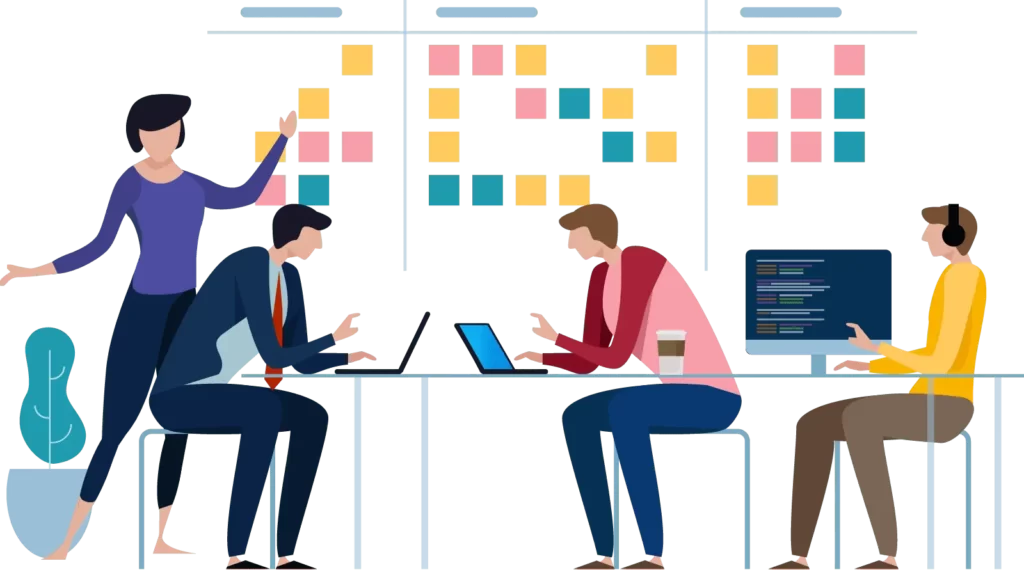
ERP implementation team planning business process integration and software deployment.

7 Steps to Implement ERP Successfully: The Complete Guide for 2026

Here is a sobering fact: 61% of ERP implementations take longer than expected and 74% exceed the original budget. These are not failures caused by bad technology. They are failures caused by poor planning, skipped testing, and undertrained users. Every single one is preventable. Follow these seven steps and your ERP project will not become another cautionary statistic. It will become the operational backbone your business needs to grow confidently. Why ERP Implementation Goes Wrong Before jumping into the steps, it is worth understanding the root causes of failure. According to Panorama Consulting, the most common reasons ERP projects fail are unclear scope, low user adoption, inadequate testing, and poor training. None of these are technology problems. They are people and process problems — which means they are entirely within your control. The seven steps below address each failure mode directly. 7 Steps to Implement ERP Successfully Step 1 — Define Your Objectives and Scope Clearly This is the most important step. And the one most commonly rushed. Before you evaluate a single ERP platform, answer three questions: What problems are you solving? What does success look like? What is in scope and what is not? Vague requirements are the single biggest cause of ERP projects running over time and over budget. Define your Key Performance Indicators upfront. Think about where your business will be in three to five years — not just today. A few extra days of clarity here saves months of costly rework later. Step 2 — Choose the Right ERP Vendor With over 500 ERP solutions available, vendor selection can feel overwhelming. But the framework is simple: focus on fit over features. Three things matter most: A vendor with deep experience in your industry will configure the system to match how your business works — not force your business to adapt to their defaults. Step 3 — Assess Your Technology Infrastructure Your ERP will only perform as well as the infrastructure supporting it. Before implementation begins, evaluate your network capacity, hardware, and connectivity. For cloud-based platforms like Microsoft Dynamics 365, Microsoft manages the servers and security — significantly reducing your infrastructure burden. But device compatibility and internet reliability still need to be confirmed for every user location. Choose a platform that scales with your growth. Replacing an ERP because it cannot handle your future business volume is expensive and disruptive. Step 4 — Prepare Your People for Change Technology is rarely why ERP implementations fail. People are. When major changes arrive without adequate communication, employees resist. They find workarounds. They enter data incorrectly. Adoption stays low and the business never captures the expected value. The solution is to involve people early. Explain why the change is happening, what it means for their daily work, and how the new system makes their jobs easier. Run open Q&A sessions. Identify internal champions who can influence their colleagues positively. Treat ERP implementation as a people and process transformation — supported by technology — and adoption will follow. Step 5 — Invest Seriously in Training 21% of ERP implementations fail to deliver significant business benefits — and inadequate training is one of the primary causes. Training is not a single day before go-live. It is a structured programme covering: The businesses that get the best return from ERP are those whose teams genuinely know how to use it. Step 6 — Test Thoroughly Before Go-Live 40% of ERP implementations cause major operational disruptions after go-live. The most effective prevention is comprehensive testing before you switch to the live system. Three types of testing are essential: Issues found in testing are cheap to fix. Issues found after go-live are expensive — in cost, in disruption, and in damaged user confidence. Never go live under pressure without completing testing. The cost of a failed go-live is always greater than the cost of a short delay. Step 7 — Plan for Ongoing Maintenance Go-live is not the finish line. It is the starting point. An ERP needs continuous attention to deliver its full value: Your ERP is a living operational platform — not a one-time project with an end date. ERP Implementation Timeline at a Glance Phase Typical Duration Discovery and planning 2–4 weeks Design and configuration 6–12 weeks Data migration 4–8 weeks Testing 3–6 weeks Training 2–4 weeks Go-live and stabilisation 2–4 weeks Ongoing optimisation Continuous Why Microsoft Dynamics 365 Is the Right ERP With hundreds of ERP options available, Microsoft Dynamics 365 consistently stands out for three reasons: Proven at scale — deployed across manufacturing, retail, logistics, hospitality, and professional services globally, with a two-decade track record businesses can trust. Cloud-native and always current — no on-premises maintenance burden, automatic updates, and new capabilities including Microsoft Copilot AI delivered continuously. Microsoft ecosystem integration — native connectivity with Microsoft 365, Power BI, Teams, and Azure means the ERP works seamlessly with tools your team already uses every day. Why Trident Is India’s Trusted ERP Implementation Partner As a certified Microsoft Dynamics 365 partner, Trident Information Systems has successfully delivered ERP implementations across manufacturing, retail, logistics, hospitality, and professional services in India, Africa, Middle east, USA, UK— following the exact methodology outlined in this guide. Our approach is built to deliver on time, within budget, and with adoption rates that turn ERP investment into genuine business transformation. Ready to implement ERP the right way? Book a free ERP assessment with Trident today. For more insightful content and industry updates, follow our LinkedIn page.

7 Steps to Implement ERP Successfully: The Complete Guide for 2026 Read More »

Enterprise ERP software dashboard managing retail, hospitality, and manufacturing operations.

Enterprise ERP Software for Retail, Hospitality & Manufacturing: 6 Benefits That Transform Your Business

Running a business in retail, hospitality, or manufacturing means managing a constant flow of moving parts — staff schedules, customer orders, inventory levels, supplier deliveries, and financial transactions — all happening simultaneously, every single day. When those moving parts are managed through disconnected systems — a spreadsheet here, a separate POS there, a standalone HR tool — the gaps between them create errors, delays, and blind spots that cost real money. Enterprise ERP software brings everything together. One platform. One source of truth. Every department — finance, operations, HR, sales, and customer service — working from the same real-time data. Here is how ERP transforms operations specifically in retail, hospitality, and manufacturing — and why Microsoft Dynamics 365 Business Central is the platform Trident recommends. Why Retail, Hospitality, and Manufacturing Need ERP Most These three industries share a common challenge: high operational complexity at every level. A retail chain manages hundreds of SKUs across multiple locations. A hotel or restaurant balances reservations, kitchen operations, staff rotas, and customer satisfaction simultaneously. A manufacturer coordinates raw material procurement, production scheduling, quality control, and order fulfilment — often across multiple sites. Without a unified system connecting all these functions, management is reactive. With the right ERP, it becomes proactive — with real-time visibility that enables better decisions at every level of the organisation. 6 Key Benefits of ERP for Retail, Hospitality and Manufacturing 1. Real-Time Data Across Every Department Business data changes constantly. Inventory levels shift with every sale. Staff schedules update daily. Customer orders flow in around the clock. Financial positions move with every transaction. Without real-time visibility, managers make decisions based on yesterday’s data — and the gaps between systems mean different departments often work from different numbers. ERP solves this fundamentally. Every transaction updates the central system instantly — so whether you are checking stock levels, reviewing sales performance, or approving a purchase order, you are always working from current, accurate information. No delays. No discrepancies. No guesswork. 2. Integrated Point of Sale In retail and hospitality, the POS system is the heartbeat of the operation. Every sale, every order, every payment flows through it — and what happens to that data after the transaction determines how well the rest of the business functions. A standalone POS that does not connect to inventory, finance, and customer management creates manual work and data silos. An ERP-integrated POS changes everything: For retail chains and multi-outlet hospitality businesses, this integration is particularly powerful — giving head office a live view of every location’s performance without waiting for manual reports. 3. Smarter Customer Management Your customers are your most valuable asset — and your ERP should help you treat them that way. An ERP system captures complete customer profiles: purchase history, preferences, communication records, loyalty points, and service interactions. This data enables: In hospitality especially, knowing your guest’s preferences before they arrive is a powerful differentiator. In retail, personalised offers based on real purchase data consistently outperform generic promotions. ERP makes both possible at scale. 4. Efficient Employee Management Managing staff across retail stores, restaurant shifts, or manufacturing shifts — potentially across multiple locations — is one of the most operationally demanding functions in any of these industries. ERP centralises employee management in one system: When employee data is connected to operational data, managers can make faster and fairer staffing decisions — and compliance documentation is always complete and current. 5. Streamlined Inventory Management Inventory management is the operational function where ERP delivers the most immediate and visible impact — particularly in retail and manufacturing. Without a connected inventory system, businesses either over-order (tying up cash in excess stock) or under-order (losing sales to stockouts). Neither is acceptable in competitive markets. ERP provides: For manufacturers, ERP takes this further — connecting inventory management directly to production planning and supplier procurement, ensuring materials are always available when production needs them. 6. Unified Financial Management Every operational decision has a financial consequence — and ERP connects the two in real time. Rather than waiting for month-end reports compiled manually from multiple systems, ERP gives finance teams live visibility into revenue, costs, margins, and cash flow across every business unit. Invoices are matched automatically. Budget variances are flagged immediately. Financial close processes that once took days are completed in hours. For multi-entity businesses — retail chains, hospitality groups, or multi-site manufacturers — ERP consolidates financial data across all locations into a single, accurate picture that leadership can act on immediately. Why Microsoft Dynamics 365 Business Central Microsoft Dynamics 365 Business Central is the modern, cloud-native evolution of Dynamics NAV — one of the most widely deployed ERP platforms in retail, hospitality, and manufacturing globally. It delivers all six benefits above in a single, integrated platform — with the added advantage of: Whether you are running a single restaurant, a retail chain, or a manufacturing facility, Business Central scales with your operation — without platform replacement as you grow. Why Trident Is India’s Trusted ERP Partner As a certified Microsoft Dynamics 365 Business Central partner, Trident Information Systems has helped businesses across retail, hospitality, and manufacturing in India implement ERP solutions that deliver measurable results — from initial assessment through go-live and ongoing optimisation. Ready to unify your business on one intelligent platform? Book a free ERP assessment with Trident today.

Enterprise ERP Software for Retail, Hospitality & Manufacturing: 6 Benefits That Transform Your Business Read More »