
Welcome to Trident Information Systems!
Any Query? Write us to - info@tridentinfo.com
Let's Socialize

manufacturing inspection software

Dynamics 365 for supply chain management

Supply Chain Pioneers: How Dynamics 365 Users Stay Ahead of Challenges

Introduction The global supply chain management landscape is rapidly evolving. With the rise of globalization, increased customer expectations, and the push for sustainability, supply chain leaders are facing more challenges than ever before. These obstacles demand innovation, efficiency, and adaptability. That’s where Dynamics 365 steps in, offering a comprehensive solution to help businesses stay ahead of the curve. What Is Dynamics 365? Dynamics 365 is a suite of enterprise resource planning (ERP) and customer relationship management (CRM) applications developed by Microsoft. It is designed to connect every part of a business, from finance to operations, customer service to supply chain management. In the realm of supply chain management, Dynamics 365 offers a powerful set of tools that can optimize processes, improve decision-making, and ultimately drive growth. Key Supply Chain Management Challenges Supply chains today are incredibly complex, stretching across countries and continents. Some of the key challenges supply chain leaders face include: How Dynamics 365 Empowers Supply Chain Leaders Dynamics 365 empowers supply chain leaders by offering tools that streamline operations and increase efficiency. It helps businesses automate routine tasks, allowing teams to focus on strategic initiatives. Furthermore, the platform provides real-time data and analytics, ensuring that leaders can make informed decisions quickly. Dynamics 365 Supply Chain Management Module The Dynamics 365 Supply Chain Management module is packed with features designed to tackle complex supply chain needs. It offers a centralized platform for inventory management, procurement, production control, and more. The module is highly customizable, making it adaptable to various industries, from manufacturing to retail. Enhancing Supplier Collaboration Dynamics 365 facilitates better collaboration with suppliers by improving communication and transparency. Through supplier portals and dashboards, businesses can share critical information, track order statuses, and manage contracts more effectively. This transparency helps to strengthen partnerships and minimize disruptions. Predictive Analytics in Dynamics 365 Accurate demand forecasting is essential for a well-functioning supply chain. Dynamics 365 leverages AI and machine learning to provide predictive analytics, enabling businesses to anticipate demand shifts and plan accordingly. This capability reduces the risks associated with inaccurate forecasting and helps maintain optimal inventory levels. Real-Time Inventory Visibility One of the key advantages of Dynamics 365 is its ability to provide real-time inventory visibility. This ensures that businesses can track inventory levels, locations, and movements in real time. With this information at hand, companies can reduce the risks of stockouts and overstocking, leading to improved cash flow and reduced waste. Improving Customer Satisfaction A customer-centric supply chain is crucial in today’s competitive market. Dynamics 365 enables businesses to align their supply chain operations with customer expectations. By improving service levels, ensuring on-time deliveries, and maintaining consistent product availability, businesses can enhance customer satisfaction and loyalty. Case Study: Dynamics 365 in Action Many companies have successfully leveraged Dynamics 365 to revolutionize their supply chains. For example, a leading manufacturing company used Dynamics 365 to gain better control over its supply chain, reduce lead times, and enhance supplier relationships. The result was improved efficiency, lower costs, and higher customer satisfaction. Future-Proofing the Supply Chain As global trade policies shift and economic landscapes change, supply chains must remain adaptable. Dynamics 365 is built with future-proofing in mind, providing tools to adjust to new regulations, changes in tariffs, and evolving market conditions. It helps businesses stay resilient in the face of uncertainty. Sustainability in Supply Chain Operations Sustainability is becoming a key focus for supply chain leaders. Dynamics 365 supports sustainable practices by optimizing logistics, reducing waste, and minimizing carbon footprints. Companies can track and report on their sustainability efforts, making it easier to align with environmental goals and regulations. Scalability and Flexibility with Dynamics 365 Whether you’re a small business or a large enterprise, Dynamics 365 offers the scalability and flexibility needed to grow. The platform can adapt to changes in business size, complexity, and market demands, ensuring that it continues to meet the needs of growing businesses. Dynamics 365 vs. Other ERP Solutions Compared to other ERP platforms, Dynamics 365 stands out due to its seamless integration with other Microsoft products, such as Office 365 and Azure. This integration makes it easier for businesses to connect all their systems and ensure a smooth flow of information across departments. Furthermore, Dynamics 365’s focus on AI and machine learning sets it apart from competitors, providing advanced predictive analytics and automation capabilities. Conclusion In today’s rapidly changing world, supply chain leaders need more than just traditional management tools—they need innovation, agility, and foresight. Dynamics 365 provides all of these in one integrated platform, empowering businesses to tackle supply chain challenges head-on and stay ahead of the competition. By embracing Dynamics 365, supply chain pioneers can navigate the complexities of globalization, adapt to technological advancements, and enhance both supplier and customer relationships. The result? A future-proof, sustainable, and resilient supply chain ready to meet the demands of tomorrow. Lastly, if you are Looking to optimize ERP implementation? and reliable implementation partner, you may as well contact Trident Information Systems. We are the Top Dynamics 365 Partners Being Gold D365 Implementation Partner and LS Retail Diamond Partner, we have a massive team of dedicated professionals. Our team is looking forward to serving your business and helping you grow. Contact Us for further information. For more insightful content and industry updates, follow our LinkedIn page. FAQs What industries benefit the most from Dynamics 365 in supply chain management?Industries such as manufacturing, retail, and logistics gain significant advantages from Dynamics 365 due to its robust supply chain management tools and customizability. How long does it take to implement Dynamics 365 for supply chain management?The implementation time can vary based on the size of the business and the complexity of the supply chain, but it typically ranges from a few months to a year. Is Dynamics 365 suitable for small businesses?Yes, Dynamics 365 is scalable and can be tailored to meet the needs of small businesses as well as large enterprises. How does Dynamics 365 handle supply chain disruptions?Dynamics 365 offers real-time data and predictive analytics, allowing businesses to quickly respond to disruptions and minimize their impact. Can

Supply Chain Pioneers: How Dynamics 365 Users Stay Ahead of Challenges Read More »

Automotive Industry increasing profit margins by detecting defects in manufacturing process

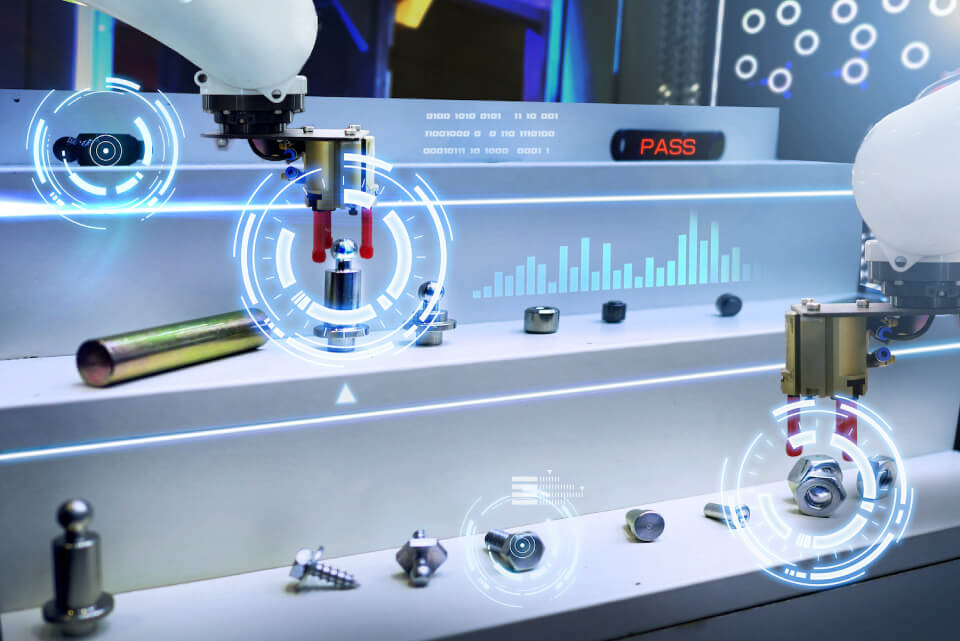
The automotive industry is one of the largest industries in the world, with millions of vehicles being produced each year. With such a large volume of production, it is important to ensure that the manufacturing process is as efficient and error-free as possible. Any defects in the manufacturing process can lead to costly recalls and a loss of customer trust. This is where Trident’s Vision Intelligence Systems come in. These systems use advanced technology to detect defects in the manufacturing process, which can help the automotive industry increase profit margins. Trident’s Vision Intelligence Systems are designed to inspect the quality of automotive components during the manufacturing process. The systems use high-resolution cameras, computer vision algorithms, and machine learning to detect any defects in the components. The technology can detect defects such as scratches, dents, cracks, and other imperfections that could affect the quality of the final product. The systems are capable of inspecting components at high speed, which means that defects can be detected quickly and efficiently, reducing the risk of defects being missed during the manufacturing process. One of the key benefits of Trident’s Vision Intelligence Systems is that they can help automotive manufacturers reduce the cost of defects. Defects in the manufacturing process can be costly, both in terms of the cost of repairing or replacing the defective components and in terms of the damage to the reputation of the manufacturer. By using Trident’s Vision Intelligence Systems, manufacturers can detect defects early in the process, before the components are integrated into the final product. This means that defective components can be removed from the production line, reducing the risk of costly recalls and minimizing the damage to the manufacturer’s reputation. In addition to reducing the cost of defects, Trident’s Vision Intelligence Systems can also help manufacturers improve the quality of their products. By detecting defects early in the manufacturing process, manufacturers can take corrective action to improve the quality of the components. This can help to reduce the number of defects that are produced, improving the overall quality of the final product. Improved quality can lead to increased customer satisfaction and loyalty, which can help to increase sales and profits. Another benefit of Trident’s Vision Intelligence Systems is that they can help manufacturers reduce the amount of waste generated during the manufacturing process. Defective components that are detected early in the process can be removed from the production line, reducing the amount of waste generated. This can help to reduce the manufacturer’s environmental impact and improve their sustainability credentials. Additionally, reducing waste can help to reduce costs, which can improve profit margins. Trident’s Vision Intelligence Systems are also highly scalable, which means that they can be used in large-scale manufacturing facilities. The systems can be integrated into existing production lines, and can be customized to meet the specific needs of each manufacturer. This means that manufacturers can benefit from the technology regardless of the size of their operations. Additionally, the systems are designed to be easy to use, which means that manufacturers do not need to have extensive technical expertise to implement the technology. Finally, Trident’s Vision Intelligence Systems are designed to be cost-effective. The technology can be integrated into existing production lines, which means that manufacturers do not need to invest in new equipment or facilities to benefit from the technology. Additionally, the systems are designed to be efficient, which means that they can help to reduce costs by detecting defects early in the manufacturing process and reducing waste. In conclusion, Trident’s Vision Intelligence Systems are a powerful tool for the automotive industry. The technology can help manufacturers to reduce the cost of defects, improve the quality of their products, reduce waste, and improve sustainability. Additionally, the technology is scalable and cost-effective, making it accessible to manufacturers of all sizes. By using Trident’s Vision Intelligence Systems, automotive manufacturers can increase their profit margins by improving the efficiency and effectiveness of their manufacturing processes. Contact Us.

Automotive Industry increasing profit margins by detecting defects in manufacturing process Read More »

Vision Intelligence System,

How Trident’s Vision Intelligence System Helps in Defect Detection for Automotive Manufacturing

In the automobile manufacturing industry, ensuring the highest level of quality in every product is of utmost importance. Even the slightest defect can have significant consequences, ranging from reduced customer satisfaction to serious safety concerns. Visual quality inspection plays a crucial role in detecting defects in automobile manufacturing, and Trident’s Vision Intelligence System is a game-changer in this aspect. Trident’s Vision Intelligence System is a cutting-edge technology that uses artificial intelligence and machine learning to detect defects in real-time during the manufacturing process. The tool uses high-resolution cameras and advanced algorithms to analyze images and identify defects, such as scratches, dents, and other imperfections that may affect the product’s quality. Here are some ways in which Trident’s visual quality inspection tool helps in detecting defects for automobile manufacturing: High Accuracy and Precision Vision Intelligence System is designed to be highly accurate and precise in detecting defects. The tool uses advanced algorithms that are trained on a vast database of images to identify defects with a high degree of accuracy. The tool can detect even the smallest defects that may be missed by human inspectors, ensuring that the final product is of the highest quality. Real-Time Defect Detection One of the biggest advantages of Trident’s visual quality inspection tool is its ability to detect defects in real-time during the manufacturing process. As soon as the product is manufactured, the tool scans it for defects and provides immediate feedback to the manufacturer. This allows manufacturers to take corrective action quickly, reducing the likelihood of defects in the final product and saving time and money on rework. Reduced Inspection Time Visual quality inspection is a time-consuming process that involves manual inspection by human inspectors. Trident’s visual quality inspection tool eliminates the need for manual inspection, reducing the time it takes to inspect each product. This allows manufacturers to increase their production rates while maintaining the same level of quality, ultimately resulting in higher profits. Consistent Quality Vision Intelligence System ensures consistent quality in every product manufactured. The tool follows a strict set of guidelines and algorithms to detect defects, which eliminates the possibility of human error. This results in consistent quality across all products, ensuring customer satisfaction and building a strong reputation for the manufacturer. Cost-Effective Trident’s Vision Intelligence System is cost-effective in the long run. While the initial investment may be high, the tool pays for itself in the long run by reducing the likelihood of defects, increasing production rates, and ensuring customer satisfaction. By reducing the need for manual inspection, manufacturers can also save money on labor costs. Improved Safety Defects in automotive manufacturing can have serious safety consequences. Trident’s visual quality inspection tool ensures that every product is defect-free, reducing the likelihood of safety concerns. This, in turn, can help manufacturers avoid costly recalls and litigation, ultimately saving money and preserving their reputation. In conclusion, Trident’s Vision Intelligence System is a game-changer in the automotive manufacturing industry. The tool’s high accuracy and precision, real-time defect detection, reduced inspection time, consistent quality, cost-effectiveness, and improved safety make it an essential tool for manufacturers who want to ensure the highest level of quality in every product. As the automobile manufacturing industry becomes increasingly competitive, Trident’s Vision Intelligence System can help manufacturers stay ahead of the curve and meet customer demands for high-quality products.

How Trident’s Vision Intelligence System Helps in Defect Detection for Automotive Manufacturing Read More »

Logistics and Supply Chain Management

5 Foolproof Methods to Optimize Logistics instantly!

Today’s businesses are aware of how critical effective supply chain management is. Nonetheless, it is equally crucial to comprehend how outbound and inbound logistics procedures affect the supply chain as a whole. Your Logistics and Supply Chain Management play a huge role in how your inbound and outbound will turn out to be.  Inbound logistics entails tasks like the delivery of goods and raw materials from suppliers to a business as well as the storage and transit of those materials. To prevent production line delays, coordinating transportation from many suppliers and ongoing communication are crucial. While outbound logistics concentrates on procedures necessary to transport finished items to final consumers. Some of the difficulties encountered when carrying out outbound logistics procedures include preparing cargo for tracking deliveries, distribution of goods, and enhancing routes for quick delivery.  The effectiveness of the supply chain depends on the success of both outbound and inbound logistics. If handled manually, these operations can be laborious and complicated. Logistics and Supply Chain Management technology can be used in this situation.  To effectively manage both inbound and outbound logistics and easily meet consumer expectations, modern logistics systems that combine AI, machine learning, and numerous algorithms have become essential.  How Inbound Logistics and Outbound Logistics Different?  The movement of raw materials into the company’s manufacturing facility from various suppliers is a part of the inbound logistics process. It may also involve managing inventories as well as tasks like locating raw materials and storing and delivering materials that will be used in the production process. The flow of the finished product from the company to its customers is referred to as outbound logistics. It comprises tasks related to packaging, shipping and delivery, and customer support.  While outbound logistics concentrates on the interaction between the company and its clients, inbound logistics is more concerned with the relationship between the company and its suppliers. Outbound logistics is primarily focused on customer service and distribution of finished goods, whereas inbound logistics is more concerned with material management and production.  Overall, inbound logistics have a direct effect on the company’s manufacturing processes. Since the final product depends on the raw materials that are used, it also affects the finished product that is offered to the clients.  Any inefficiency in the incoming logistics processes would result in delays in the delivery of goods and a halt in production, increasing losses and resource waste for the company. The best way to deal with the delay is to engage a Logistics and Supply Chain Management software such as D365 Transport Management were the   How to Optimize Your Inbound and Outbound Logistics?  Businesses may now more easily improve their outbound and inbound logistics operations thanks to Logistics and Supply Chain Management technology such as ERP for Logistics and the variety of possibilities it provides. The objectives are to improve productivity, reduce costs, and make processes run more smoothly. The following strategies can be used to optimize inbound logistics:  Encourage Logistics and Supply Chain Management Automation  The procedure can be automated by choosing ERP for Transportation that tells the best delivery routes utilizing intelligent route optimization software that uses analytics, machine learning, dynamic routing, and GPS tracking to give you the best options. Monitoring inbound delivery fleets, product unloading, and in-plant activities can assist in increasing efficiency and saving the company a ton of time and money by following schedules.  Using Logistics and Supply Chain Management Software  A company can keep up with the market environment for freight costs and other dynamic aspects that can negatively impact inbound operations with the use of Software for Transport Company. Businesses can save a lot of money by keeping up with the dynamic changes in the logistics sector and by having an appropriate awareness about the going rates as opposed to only adhering to the prices given by various suppliers.  Boosting Customer Experience   Today’s customers want complete transparency of the transportation processes involved in their deliveries. Businesses may give their customers pertinent information and track the progress of their orders at every stage by streamlining the inbound logistics operations.  An innovative, cutting-edge Logistics and Supply Chain Management software would enable the company to plan its production and ETAs properly, ensuring that there are no inconsistencies in their customer communications.  Build Strategic Relationships with the Third-party Vendors  To maintain effective logistics operations, it’s critical to develop strategic connections with ERP for Logistics Company providers, carriers, and suppliers. This can be accomplished by evaluating each company’s performance concerning important factors including on-time, complete deliveries, pricing schemes, the number of goods, business requirements, and other shipping activities. Businesses may keep track of these elements, identify which third-party providers are having what effects on their operations, and negotiate shipping rates using sophisticated logistics management software.  Enhance Communication   Effective communication techniques must be implemented since outbound logistics procedures include numerous stakeholders to guarantee that the movement of products proceeds as planned.  Constant communication with delivery drivers and warehouse management enables quicker decision-making and explains any ambiguities along the way. Logistics and Supply Chain Management systems also enable companies to track the locations of delivery vehicles and improve routes, ensuring greater transparency.  Logistics is one of the heaviest and most impactful assets a company has. They keep the supply chain flowing. Disruptions in logistics can cause delivery delays, unhappy customers, and an overall slowdown of a business. To prevent this, businesses must employ Logistics and Supply Chain Management software like Dynamics 365 for Finance and Operations. If you are looking to get TMS Software, Contact Trident. We are a D365 Gold Implementation Partner and LS Retail Diamond Partner.   

5 Foolproof Methods to Optimize Logistics instantly! Read More »

How to Boost Profit in Your FMCG Manufacturing Plant with Machine Vision Inspection?

Fast Moving Consumer Goods are demanded and sold rapidly. Since consumers are directly going to use them, it becomes mandatory to take extra care of the quality. Keeping the product good quality doesn’t mean you have to spend too much. You can instead cover it up by cutting down on wastage, and a few other steps. The best you can do is cut waste and only let the standard quality product pass through. You can use Machine Vision Inspection to cut waste and achieve good-quality production.   Consumers have become extremely picky due to the abundance of options available to them. And selling them a torn chip packet, or a broken chocolate can ruin it for you. Often, manufacturers find it hard to find the right strategy to cut waste and optimize their production. That’s why our team of experts found foolproof ways to produce FMCG items in the best way possible.  Employ a Machine Vision Inspection System  The first and most important step is to employ a Machine Vision Inspection that detects defects right on the conveyor belt. Robust technology is the only key that can assure fast and accurate results. In this highly competitive era where quality and quantity both matters, you must produce your FMCG products in such a way that they appeal to customers and bring you profit at the same time. It is important to thoroughly research and pick the one that suits you. For instance, with the Vision Inspection System by Trident Information Systems, you can achieve the best quality products out of your manufacturing plant. The items are scanned right on the conveyor belt and quickly removed when not meeting the set standards. You will never fear poor-quality commodities escaping through the conveyor belt and merging with the approved items.   Install high-definition cameras: While installing the right Defect Detection System, never undermine the camera you use. Saving yourself a few bucks to pick a cheap camera can cost you your productivity. Make sure you use a high-definition camera that instantly catches any defects in the product. It is no rocket science that without a good quality camera, your product will not be up-to-the-mark and you may lose customers for that matter. Even if you install the best Manufacturing Defect Detection, your product quality can still collapse in the absence of a high-quality camera.   Minimize/ eliminate human interference: Try eliminating human interference as much as you can. There will be many benefits to doing so, but the most important will be the elimination of human errors. Human errors delay the project and add to its costs. Try eliminating human interference with the help of Machine Vision Inspection.  A machine is less prone to errors and can work way more efficiently than a human being.   Report Promptly: Reporting on time makes the whole difference to the quality of your production. Your employees may miss out on a few defects and not report to you on time. This can result in defective items being mixed up with standard quality items. This can be dangerous for the overall reputation of your business. You should instead invest in a Visual Defect Detection like Vision Intelligence System which flashes an alert on the screen of the concerned authority as soon as it is needed. This way you can engage your existing employees in doing something more productive. This is the best way of boosting productivity on budget.  Be careful with the defects: There are several defects human eyes may miss despite being the most experienced in the room. To be more accurate you can employ more human defect debtors to see through a smaller batch but that will become a bit costly. On the other hand, a Machine Vision Inspection like the Trident offers can catch minute details such as improper packaging, small insects, small animals, dust, stones, glass pieces, etc.   Why Vision Intelligence System?  Vision Intelligence System is an IoT (Internet of Things) and AI-based Machine Vision Inspection which is designed specifically for manufacturers of different verticals. It can spot the smallest defect in your product and report it promptly. Being AI-based, it can adjust itself in similar environments without any extra modifications. You need least-to-no human interference once you decide to implement this Visual Quality Inspection.   This technology is helping manufacturers thrive in the market. For further inquiries or a demo, you can Contact Trident Information Systems.   

How to Boost Profit in Your FMCG Manufacturing Plant with Machine Vision Inspection? Read More »