Welcome to Trident Information Systems!
Write us to - info@tridentinfo.com
Let's Socialize

microsoft dynamics nav

How AI and AR can help retailers stay in business in moments of crisis

Store closures and social distancing have caused a rise in demand for virtual tools and technologies that bring the shopping experience into consumers’ homes. Beauty brands, which were among the first to try out AI and AR to enhance the consumer experience, are increasingly using the technology to suggest products based on people’s preferences and unique characteristics, including skin tone and face shape, as well as to help customers virtually try on products before committing to a purchase. Even before the Covid-19 crisis, the technology had already proved its worth. Figures from Perfect Corp, which develops virtual makeup technology, show that virtual try-on technology generated 2.5 times higher e-commerce conversions for brands and decreased return rates by more than 8%. Trident is offering Cloud Based Retail ERP Software to manager retail operations effectively As the technology develops and becomes more sophisticated, consumers are progressively trusting in AI to help them make purchase decisions. “Consumers trust AI to curate a choice of products, services and experiences that reduce complexity and make life more fulfilling,” writes Andrew Cosgrove, Global Consumer Knowledge Leader & Lead Analyst at EY. “AI knows its “owner” so well that it suggests new and unexpected product ideas or experiences they love.” Digital suddenly finds itself one of the main commerce channels for retailers. We expect AI and AR are here to stay, as more consumers become aware of their virtues when it comes to convenience, and as these technologies can help retailers to continue trading regardless of what happens in the real world. Here are four ways to make AI and AR work for your business: 1. Bring the in-store shopping experience to your customers’ homes AI and AR take online shopping to a whole new level by making it possible for consumers to choose from selected products picked out just for them, try out new experiences and test products in ways they wouldn’t have been able to previously – all from the comfort of their homes. Early pioneers of AI- and AR-powered online shopping include opticians, who realized that consumers still want the option to try on glasses and see what styles suit them before committing to a purchase. Virtual fitting technology has made this possible, with some retailers further elevating the experience using AI to automatically suggest the perfect frame to suit your face. Indeed, AI lends itself to verticals where consumers may find themselves bogged down in complex choices. Instead of having to scroll through hundreds and hundreds of beauty products, for example, new services such as My Beauty Matches use AI-powered algorithms, and using the consumer’s previous searches, purchases, and known preferences, they suggest items from large databases (in this case, there are over 400,000 products) that couldn’t be easily browsed by the consumer. Advances in machine learning help brands to identify consumer styles and preferences to gain a granular level of customer understanding, so they can optimize each customer’s individual journey. “In one of the worlds we modeled, consumers valued time much more than money,” Andrew Cosgrove, Global Consumer Knowledge Leader & Lead Analyst at EY, said. “Their personalized AI learned about their unique preferences and used those insights to buy most of the things they needed. This allowed them to spend their time shopping only with brands that reflected their values and purpose.” 2. Find the right items across infinite aisles of products The most successful AI and AR experiences today tend to be delivered by retailers that have large item assortments and the ability for consumers to personalize their choices. Home goods and furniture retailers are a clear use case, with many using the technology to help customers choose products that will fit beautifully into their homes and match their existing décor. Online furniture retailer Wayfair is known for using AI to target customers with personalized recommendations. The company’s search algorithm extracts the customer’s style preferences from their search history to present a selection of furniture that is likely to appeal. Another service allows customers to take a photo of a furniture piece they like and match it to a similar item in the Wayfair inventory, which holds millions of products. AR then takes this a step further by giving consumers the ability to virtually see how products will look in situ before committing to a purchase. Returns on investment have been demonstrated with increased conversion and reduced returns. AI is proving its worth in fashion too, helping customers choose clothing that will fit them best by analyzing previous purchases and suggesting sizing based on their profile. Iconic jeans brand Levi’s uses an AI-based chatbot to help customers find the perfect pair of jeans. It asks consumers their preferences when it comes to fit, rise, amount of stretch and wash, and asks what size they are in another brand to determine the best size in Levi’s and suggest the right pair. And in beauty, brands are using the technology to offer services such as instant foundation shade matching and advanced skincare analysis, as well as matching consumers with products and looks that will suit their complexion, style and occasion. 3. Anticipate consumer demands One of the major benefits that retailers can draw from AI and AR experiences is the amount of data they can collect about their consumers along the way. This data, if collected appropriately, can be used to improve the accuracy of stock and inventory requirements forecasts throughout the year. “As consumers browse, test features and make purchases, they are providing retailers with an entirely new set of data points,” writes Hamaad Chippa on Retail TouchPoints. Retailers can then use this information to rethink product assortments for a better shopping experience, or to develop highly targeted marketing campaigns that lead to greater conversion rates. For example, a customer who just bought a whole load of supplies from a pet store for their new kitten is likely to want to sign up for home deliveries of cat food. AI can also help retailers target consumers with promotions that are more likely to lead to purchases based on past browsing and purchase history.  “Whether that is 10% off online, 15% in-store or free shipping, customers automatically receive the

How AI and AR can help retailers stay in business in moments of crisis Read More »

When do you know that your business needs a CRM software?

[vc_row][vc_column][vc_column_text]Customer Relationship Management is a process of managing or organizing prospects throughout the sales life cycle. The more the advancement in serving the clients, the more will be the payment stream for the Company. Trident’s CRM software solutions happen to be one of the most effective and efficient CRM software that could easily cut overhead costs and give highlights which demonstrate helpful to different business firms. Many CRM software programs available have several features that can be used or restricted – so in effect a business can modify to make their own CRM software. However, utilizing CRM software gives various advantages to both organizations and customers and that is the reason each genuine business has implemented some of the other CRM applications. So who can opt for Trident’s CRM software? A simple response to that question would be “Any business with customers would utilize CRM“. However, in the real world, it is not just as simple as that. Choosing an appropriate CRM software solely depends upon the business process along with a range of profitable features. Below are the type of Businesses that could gain benefit from using Trident’s CRM software solutions. 1- The business that uses any form of Marketing:  For any business that uses marketing campaigns to promote, sell or advertise their products or services in the market through various communication mediums such as phone, email, etc. Reaching to customers in bulk within a short period as well as recording the response on the go makes it more effective to manage the marketing process. 2- A business that deals with B2B and B2C Sales: For any business that tends to cope up with the Customers to sell or cross-sell the products. Maintain relevant sales data such as documents, communication records, etc. Identify the process flow starting from Lead up to the deal gets closed. 3- A business that creates Quotations & Invoices:  Built-in invoicing module to track the quotations and invoices generated against an opportunity. Efficiency to merge the billing details into the document which can further be mailed to the customer right from the CRM software without any need to switch between the applications. 4 – A business that deals in Customer Service:  For any business that believes in increasing customer satisfaction by helping them in tracking as well as resolving the issues completely. Managing the cases within CRM as well as auto – escalations triggered on a timely basis not only guarantees better customer satisfaction but at the same helps the Management to track resource performance. 5- A business that wants to increase efficiency:  Well-organized business results in better output which can be ultimately tracked with the help of various Reports, Dashboards, etc. Well-improved or say the advance level of features incorporating in CRM with the latest release of versions has enhanced the CRM which has ultimately proved beneficial for Business growth. Thus using CRM software gives you numerous benefits to enrich both Business and Customer Relations by serving your customers better with stronger service and support. To know more about how can CRM software help you, you can check out our CRM software solution on https://tridentinfo.com/microsoft-dynamics-crm-software-solution/ and contact to our experts on https://tridentinfo.com/contact/.[/vc_column_text][/vc_column][/vc_row]

When do you know that your business needs a CRM software? Read More »

Redefining shopping excellence with an unified E-commerce solution

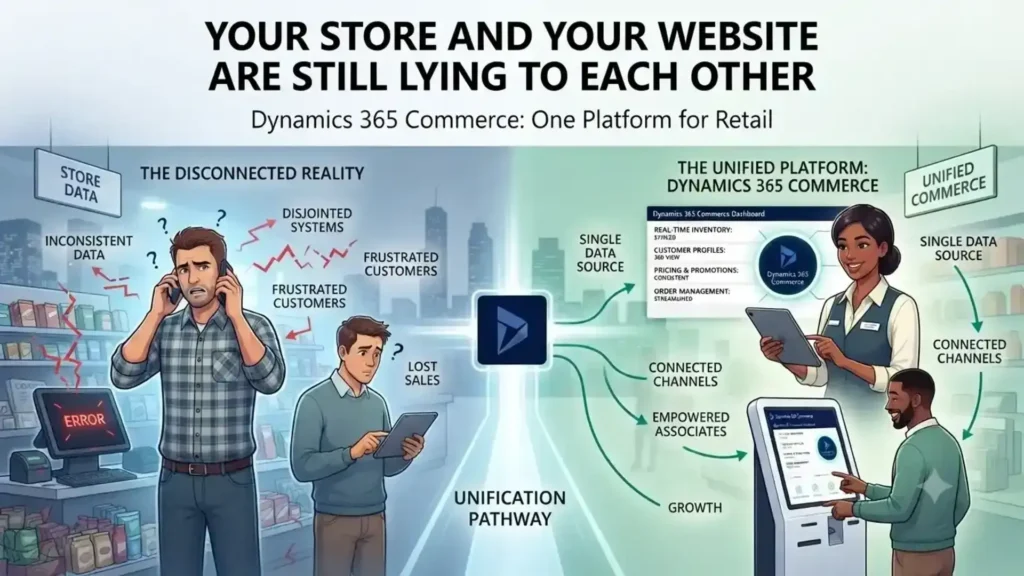
[vc_row][vc_column][vc_column_text]Over the last decade, the retail sector has experienced enormous change and transition. Many have suggested that conventional brick and mortar retail is dying and that for the everyday needs, consumers switch entirely to online platforms. However, this is not the case. As per a survey from the National Retail Federation, since 2010 retail storefronts in the US have continued to expand at approximately 4 percent annually along with the consistent double-digit growth of online shopping. Almost all of the top 50 online retailers have brick and mortar stores, as well. Although progress in e-commerce tends to outpace physical stores, the rate of progress in physical retail outlets is still much higher. E-commerce is also not a stand-alone medium in most cases but used in combination with conventional and new platforms to meet consumer needs such as buying online pick up in-store or Click and Collect. Physical outlets are still a big part of consumer spending patterns, but with this, we also have seen that consumer priorities have changed around shopping. Trident is offering Retail ERP Software for an outstanding commerce experience that helps in gaining maximum profits. Gone are the days when store employees are the only experts in information about goods. Consumers already have greater access to product details, price clarity, and accessibility. This means that retailers have to look at customer engagement across all platforms to make sure that their enterprise is capable of delivering on these recent high requirements. E-commerce will no longer be a major differentiator for retailers in the next few years, but will instead allow integrated retail trade to compete in the ever more challenging customer needs worldwide. So Trident ( dynamics 365 partner) & solution dynamics 365 for marketing not confined to e-commerce, but aims to streamline the process of unifying consumer shopping experiences through an end-to-end business framework that puts together e-commerce, in-store, back office, and call centre. Let’s discuss furthermore how Dynamics 365 for marketing solution helps retailers meet those dominant business requirements. 1)- Grant Excellent and Customized Consumer Experience Consumer experience is not only one of the top growth factors in the retail sector, but according to the recent survey by Microsoft and Forbes, 33 percent of retail managers are also considered a great business priority. The main task is to identify what constitutes outstanding customer experience for each individual business, as expectations of customers differ by micro-vertical retail, product category, and consumers themselves. It is up to the retailers to better define how their marketing commitment aligns with the experience. When customer experience is established, retailers need to be able to deliver on this commitment by providing technology that allows customer engagement in the next generation and does not limit their ability to evolve and build differentiating consumer experience. As per the report by Microsoft and Forbes, providing customized shopping has become increasingly popular and over 49 percent of customers aged between 18 and 24 stating they are more likely to purchase from retailers offering custom shopping experiences. The aim of personalization is to form a bond between both the retailer and the consumer by delivering goods and/or services across all retail channels based on past interactions. It enhances the relationship to an encounter more similar to an interaction with a trustworthy friend or partner than a simple transaction. There is a significant technological dependence to reach this next stage of customization. Networked and real-time visibility into consumers and activities are needed by retailers. Dynamics 365 put together all facets of customer interaction through e-commerce, call centre and in-store as well as simple incorporation into new channels to enable retailers to gain a holistic customer perspective. Couple this with out-of-the-box integration with Dynamics 365 Consumer insights and retailers can not only deliver AI-driven suggestions based on customer shopping history, likes, and patterns but also provide store agents with tools for presenting the customer’s 360-degree view and facilitating rich interaction throughout the selling journey.  2) Omni Channel Experience    Nowadays Customers expect to be able to purchase anywhere they want, and by whatever platform. Retailers also acknowledge the importance of Omni channel as one of their top three priorities, with 47 percent of Microsoft and Forbes survey executives rating this. Most retailers are still struggling in having an Omni channel experience because of the complexity of internal infrastructure and disconnected or fragmented systems. Trident’s Dynamics 365 NAV makes it much easier to offer a native Omni channel solution for retailers, as it was built in the cloud. 3) Flexibility An integrated solution is important not just for customers to engage and shop in retail, but also for how a unified solution can allow first-line employees to take part better and make sure ideal operational efficiencies across your supply chain. Dynamics 365 for marketing offers retailers the ability to streamline their operations with enriched knowledge that characterizes their business. Employees at the store can gain greater information and insight into stock availability, cross-application support for task management, as well as trade analytics that enable managers to monitor performance and insights to help them make informed decisions.[/vc_column_text][/vc_column][/vc_row]

Redefining shopping excellence with an unified E-commerce solution Read More »

What Considerations Should be taken into Account when Implementing the New ERP for Food Manufacturing?

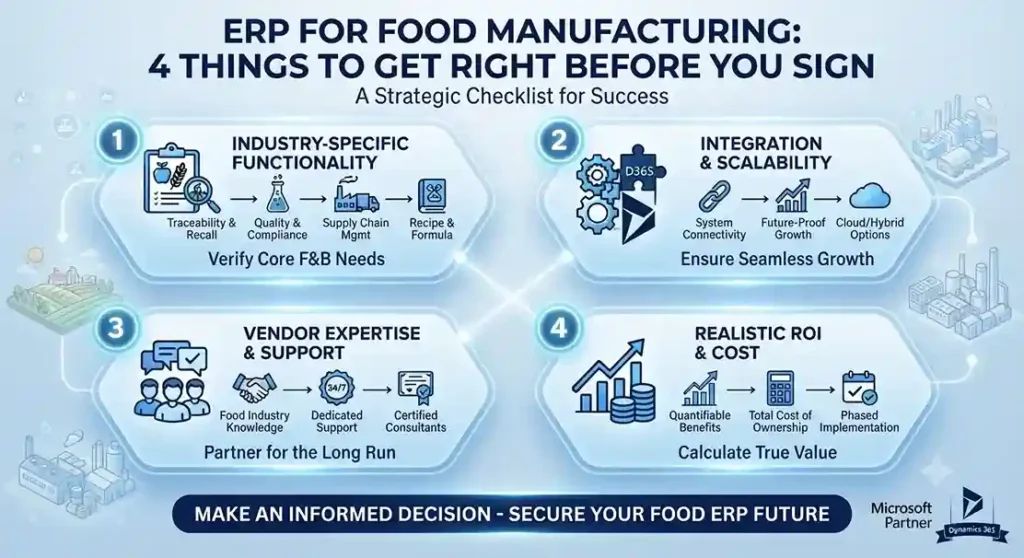
[vc_row][vc_column][vc_column_text]Usually, the decision-making process for ERP for Food Manufacturing is long and complex. From deciding which functionality is most vital to your business, to choosing a system that will make rapid and meaningful changes, it may seem daunting to decide on the appropriate ERP solution for your organization. But don’t worry, Microsoft gold partner Trident got you covered. As we have 20+ years’ experience and  implemented ERP food manufacturing various satisfied customers like Haldirams, Nik Bakers, etc. Through sharing tips on how to pick and incorporate the right food production ERP solution for your food company, we will make the decision-making process of implementing an appropriate ERP for food manufacturing a bit easier for your organization. 1) – Food Specific Approaches Tons of ERPs and business solutions are available to choose from. But as a food manufacturer or supplier, you should understand that it is complex to manage a food business effectively and comes with its own set of unique complexities. Many of the integrated software systems in the marketplace for small to medium-sized enterprises provide the functionality you would expect for sales, acquisitions, operations, accounting and inventory management only. But what about the extra features distinctive to food manufacturing? Once you settle on a standardized ERP solution, ask yourselves how much modification and flexibility a food-specific system will have to go into implementing the following characteristics: Food safety and compliance Manufacturing and quality Recipe development and management Food recall and trace-ability 2) – Functionality Recalling that not all food businesses run in the same manner is also relevant. A supermarket bakery operates much differently than a manufacturing frozen food, and a meat processor will have a completely different set of software specifications than a broad line dealer. So where are you going to start? Try to address the features and functions that your existing system currently lacks. Create a “wish list” of elements that would make operations run better if you had them in the spot. From there, you can filter a lot of ERP providers and can concentrate on only those solutions that are suitable for your organization. 3) –  Easy to Use Suppose: at your job you’re a warehouse worker or a machine technician. Now your management team has decided to introduce a new software platform throughout the organization, and you are responsible for learning it as soon as possible (and as precisely as possible). Too much load, right? Moving from manually managing stuff or from a legacy system to a fully integrated ERP solution can be terrifying for everyone in the company. The accounting department now needs to learn how to use a new system to enter figures and run calculations. The QA department now has a new way to set up quality controls and audits. If a new process is too complex, your staff might feel frustrated, disheartened, and underappreciated. Look for an ERP running on a system that is probably already familiar with most of your workforce (such as, for example, Microsoft Dynamics) 4) – Customer Support Working with a vendor of an ERP solution is so much more than just buying and using the product to run your business. The ERP solution is implemented, which usually takes five to nine months, and then continued support and facilities will proceed across your software’s life cycle. It is therefore essential to ensure that the ERP you choose is assisted by a team of people who are committed to ensuring that you are successful. This means for the food industry you need experts who are not only professionals in software but also food specialists. You wouldn’t recruit somebody to work in your warehouse that wasn’t a good choice, correct? Think the same way about the people who are working for your ERP provider. Because they are also responsible for your business ‘ success. It is easy to get confused as there are too many ERP for food manufacturing service providers, so remember to remain vigilant and consistent with what you want to get out of your solution. Selecting the right ERP means choosing software to help you enhance food security, simplify efficiency or productivity and handle the progress of the enterprise. If you still have any doubts left in your mind then you can contact to Trident’s ERP for food manufacturing providers on https://tridentinfo.com/contact/[/vc_column_text][/vc_column][/vc_row]

What Considerations Should be taken into Account when Implementing the New ERP for Food Manufacturing? Read More »

Problems Faced by POS System and Trident’s Solutions

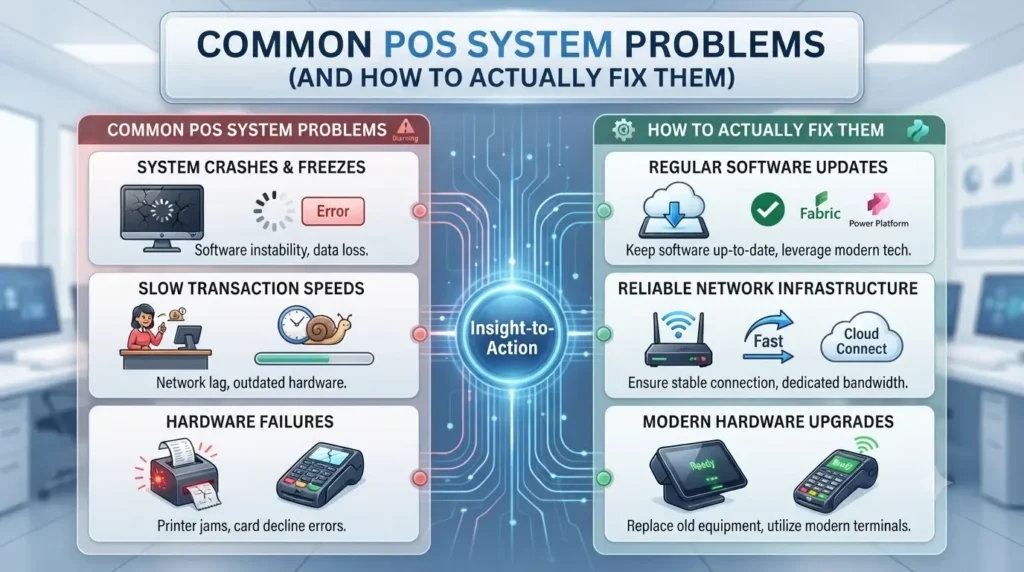
[vc_row][vc_column][vc_column_text]The modern point of sale systems is an easy and efficient way for merchants to trade their goods and services. It can help any business to get more sales, in business management, and also help in leveraging ecommerce features. Though, POS problems could face some problems which fortunately are avoidable if you choose the right pos system and implement it properly. So in the below context, we will discuss the problems while implementing a POS system and their solutions.[/vc_column_text][/vc_column][/vc_row][vc_row][vc_column width=”1/2″][vc_column_text] 1) Security Issues Even one breach to the customer’s confidential data is enough to ruin your reputation and trust that you have built over the years with your customer. To counteract this costly mistake and to safeguard your business, it’s crucial to invest in the good POS system that includes a hacker detection. You also have to keep in mind the following tasks: Protection and encryption of your Wi-Fi A strong password for your POS Different Wi-Fi network from customers [/vc_column_text][/vc_column][vc_column width=”1/2″][vc_single_image image=”7284″ img_size=”600×230″][/vc_column][vc_column][vc_row_inner][vc_column_inner][vc_column_text] 2) Adopting the Wrong POS System One of the key feature of the POS system is the breadth of reporting analytics that is made available for retailers. But if you skimp on implementing the POS system then that could lead to inaccurate reporting. So you don’t have to skimp on implementing it as it is a one-time investment with great ROI. 3) No Backup  Suppose you have selected a good POS system but what if the internet is down? How could you do a transaction? You need to ask these questions to yourself after implementing a POS solution. This is especially important if you choose a web-based system that can’t process payments without a Wi-Fi signal. So it is suggested you have a backup “hotspot” connection. Depending on your business’s requirements, you might also think to have a complete backup POS system. For example, some businesses keep a free POS system or mobile payment app handy for when they have problems with their primary POS. 4) Not Using POS Optimally Sometimes even if the merchants have a great POS system they don’t know how to use its advanced features like Sales reports, Email marketing, E-commerce, Employee management, etc. This means that they are wasting their money on the features they are not even using. 5) Proper Training of Employees Employees face troubles when the new POS system is installed in your business. So employees have to be trained thoroughly which will enable them to run different operations on the POS system smoothly and efficiently.[/vc_column_text][/vc_column_inner][/vc_row_inner][vc_row_inner][vc_column_inner width=”1/2″][vc_single_image image=”7292″ img_size=”500×300″][/vc_column_inner][vc_column_inner width=”1/2″][vc_column_text]Picking a POS system is the beginning of a long-term relationship, and you want to make sure that the company you choose will be there through thick and thin. You’re faced with a lot of options, and you want to make sure to partner with a strong company dedicated to the retail industry, therefore, we would likely suggest you go for the Trident Information Pvt Ltd which is the Microsoft Ls nav partner and can provide you an end-to-end retail POS solution for stores or chain of retails, which is powered by Microsoft Dynamics NAV. This integrated solution delivers completed and innovative functionalities to the busiest retailer without the need to build, manage and maintain multiple applications and interfaces. Its unique use of single application covers your whole retail business from the Point of Sale (POS) terminals to headquarter. The powerful functions including store management, inventory, merchandising, demand planning and all the back-office functions that you would expect to find at head office are available in LS Retail.[/vc_column_text][/vc_column_inner][/vc_row_inner][/vc_column][/vc_row]

Problems Faced by POS System and Trident’s Solutions Read More »