Welcome to Trident Information Systems!
Write us to - info@tridentinfo.com
Let's Socialize

Food Manufacturing ERP

Food manufacturing software managing sweet and namkeen production, inventory, and batch tracking.

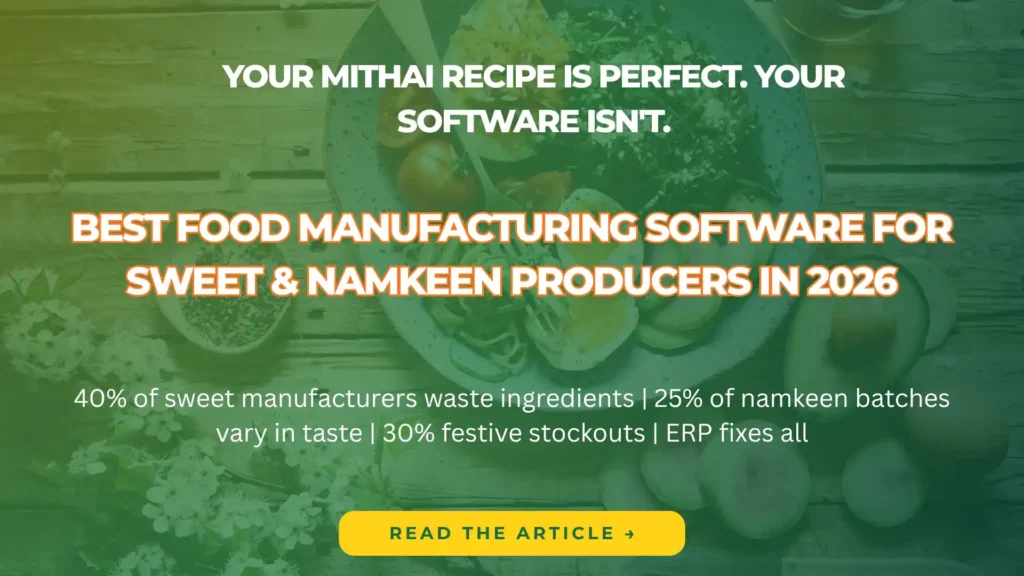
Best Food Manufacturing Software for Sweet & Namkeen Producers in 2026

If you’re still managing your sweet shop or namkeen production unit with notebooks and Excel sheets, you’re leaving money on the table. In 2026, food manufacturing software isn’t just for big FMCG brands — it’s the smartest investment a mithai or namkeen business can make. Whether you run a local halwai shop, a regional sweet brand, or a large-scale namkeen manufacturing unit, the right software helps you produce more, waste less, and sell smarter. Let’s break it all down. What Is Food Manufacturing Software? Food manufacturing software is a dedicated management platform that handles everything from raw material procurement and batch production to packaging, inventory, quality control, and sales — all under one digital roof. For sweet and namkeen producers specifically, it solves everyday headaches like: The right software answers all of these — instantly. Why Sweet & Namkeen Businesses Need Dedicated Software The food manufacturing industry is unique. You deal with perishable raw materials, variable recipes, seasonal demand spikes (think Diwali, Holi, Eid), and strict FSSAI compliance — all at once. Generic accounting or inventory tools weren’t built for this. You need software that understands: Key Features to Look for in Food Manufacturing Software 1. Recipe & Batch Management The foundation of any sweet or namkeen business is the recipe. Good software lets you: This alone can save significant cost by identifying where ingredients are being overused. 2. Raw Material & Inventory Management From ghee and sugar to refined oil and spices — your raw material costs directly impact profitability. The right software helps you: 3. Production Planning & Scheduling During festival seasons, production demand can triple overnight. Smart production planning features let you: 4. Quality Control & FSSAI Compliance Food safety is non-negotiable. Your software should support: 5. Sales, Distribution & Billing Whether you’re selling wholesale to distributors or retail from your own counter, integrated sales features give you: 6. Cost & Profitability Analysis This is where smart producers separate themselves from the competition: Benefits at a Glance Feature Business Impact Recipe management Consistent quality, reduced ingredient waste Batch tracking Full traceability, easy recall management Expiry alerts Less dead stock, better food safety Production planning Meet demand without overproducing FSSAI compliance tools Audit-ready at all times Profitability reports Data-driven pricing decisions Who Should Use Food Manufacturing Software? This software is a perfect fit for: What to Ask Before Buying Before you sign up, ask the vendor: Why Trident Is the Trusted Dynamics 365 Partner for Sweet & Namkeen Producers Implementing the right software is only half the battle — choosing the right partner to implement it is what truly determines success. When it comes to food manufacturing software built on Microsoft Dynamics 365, Trident Information Systems stands out as the partner sweet and namkeen producers trust most. Trident Information Systems is a globally recognized technology and consulting partner with proven expertise across Manufacturing, Food Production, Retail, and Supply Chain industries. With a presence in the U.S., UK, UAE, Africa, and Southeast Asia and over 250+ successful customer engagements, Trident has the scale, experience, and industry depth that food manufacturers demand. But numbers only tell part of the story. With over a decade of hands-on experience implementing Microsoft Dynamics 365 for food and manufacturing businesses, Trident understands the unique challenges sweet and namkeen producers face — seasonal demand surges, recipe-based costing, perishable raw material management, batch traceability, and FSSAI compliance — and builds solutions that address all of it, not just the basics. Here’s what food manufacturers get when they partner with Trident: Dedicated post-go-live support through Trident’s Managed Talent Services unit Industry-specific D365 configuration built around sweet and namkeen production workflows Recipe and batch management tailored to your actual production processes GST-compliant billing and financial integration from day one FSSAI audit-ready documentation built into the system Real-time inventory and expiry tracking across raw materials and finished goods Power BI dashboards for live production cost and profitability visibility Final Thoughts The sweet and namkeen industry in India is growing fast — and so is the competition. Producers who embrace food manufacturing software in 2026 will have a clear edge: lower wastage, better quality consistency, faster fulfilment, and stronger profit margins. Stop running your production on guesswork. The right software gives you control — over every ingredient, every batch, and every rupee. Ready to find the best food manufacturing software for your sweet or namkeen business? Start with a free demo and see the difference data-driven production makes. Follow our LinkedIn page for insightful updates on Retail ERP and the future of the retail industry.

Best Food Manufacturing Software for Sweet & Namkeen Producers in 2026 Read More »

A modern food and beverage manufacturing facility using ERP software to streamline brewing and bottling operations.

From Brewing to Bottling: Enhancing Efficiency with Food and Beverage Manufacturing ERP Software

Introduction The food and beverage manufacturing industry is one of the most demanding sectors, requiring precision, efficiency, and compliance with strict safety regulations. From brewing craft beer to bottling juices and soft drinks, every step of the production process must be optimized to ensure product quality and cost-effectiveness. However, managing these operations efficiently can be overwhelming, especially with challenges such as supply chain disruptions, waste management, and regulatory requirements. This is where Enterprise Resource Planning (ERP) software plays a crucial role. By integrating various business functions into a centralized system, ERP software helps manufacturers streamline operations, reduce waste, and ensure product consistency. But how exactly does an ERP system improve efficiency in food and beverage manufacturing? Let’s explore the key aspects. Understanding ERP Software in Food and Beverage Manufacturing What is ERP Software? ERP software is a comprehensive system that integrates multiple business processes into a single platform. It covers areas such as procurement, production planning, inventory management, compliance, and financial tracking. In the food and beverage industry, an ERP system ensures smooth operations by automating workflows, providing real-time data access, and improving decision-making. Why Traditional Management Systems Fall Short Many food and beverage companies rely on outdated or disconnected systems to manage production, inventory, and quality control. These traditional systems often result in data silos, inefficiencies, and errors. An ERP system eliminates these issues by providing a unified platform where all departments can access real-time, accurate information. Key Challenges in Food and Beverage Manufacturing Regulatory Compliance and Food Safety Manufacturers must adhere to strict food safety regulations such as FDA, HACCP, FSMA, and GMP. Ensuring compliance requires robust tracking and reporting mechanisms, which can be difficult without an automated system. Supply Chain Complexities Managing a supply chain that involves perishable ingredients, fluctuating demand, and global suppliers can be overwhelming. Without proper planning, companies may face stock shortages, expired raw materials, or excessive inventory costs. Inventory and Waste Management Food waste is a major concern in the industry. Expired raw materials, overproduction, and inefficient storage contribute to unnecessary costs. An ERP system helps by optimizing inventory levels and reducing waste through smart tracking and forecasting. Production Planning and Scheduling Balancing demand with production capacity is challenging, especially for manufacturers producing multiple product lines. Manual scheduling often leads to inefficiencies and bottlenecks, slowing down operations. How ERP Software Addresses These Challenges Automated Compliance and Traceability With an ERP system, manufacturers can track ingredients from sourcing to final distribution, ensuring full traceability. Automated compliance reporting also reduces the risk of regulatory violations and recalls. Real-Time Supply Chain Visibility ERP solutions provide real-time data on inventory levels, supplier performance, and order tracking, helping businesses manage their supply chain more efficiently. By automating procurement and vendor management, companies can avoid supply shortages and excess stock. Smart Inventory and Waste Reduction By integrating expiration tracking and demand forecasting, ERP software ensures that raw materials are used efficiently, reducing food waste and minimizing costs. Optimized Production Scheduling ERP systems use demand-driven production planning to schedule manufacturing processes based on real-time market trends, helping businesses reduce downtime and improve efficiency. Essential Features of a Food and Beverage ERP System Recipe and Formula Management ERP software ensures recipe standardization, allowing manufacturers to maintain product consistency while managing ingredient substitutions when necessary. Batch and Lot Tracking Tracking batches from raw material sourcing to finished product distribution is essential for traceability and quick recall management. ERP software provides automated batch tracking to meet regulatory requirements. Quality Control Automation Built-in quality control modules allow manufacturers to conduct automated product inspections, ensuring compliance with food safety standards and preventing defective products from reaching the market. Integrated Financial Management ERP systems also include cost analysis, pricing optimization, and financial reporting tools, helping manufacturers manage budgets and improve profitability. Benefits of Implementing an ERP System Enhanced Efficiency and Productivity By automating manual tasks, ERP software allows employees to focus on strategic operations, increasing overall productivity. Improved Compliance and Safety ERP ensures that businesses stay compliant with industry regulations, reducing the risk of fines and recalls. Cost Reduction and Waste Minimization Optimized inventory management prevents overstocking and waste, cutting unnecessary costs. Better Decision-Making with Real-Time Data Access to accurate, real-time data helps business leaders make informed decisions regarding production, inventory, and market demand. Choosing the Right ERP Solution for Your Business When selecting an ERP system, consider the following factors: Future Trends in Food and Beverage ERP AI and Machine Learning Integration AI-powered ERP systems can analyze historical data and predict future demand, helping manufacturers optimize production and reduce waste. IoT and Smart Sensors Integration with IoT devices allows real-time monitoring of equipment performance, improving maintenance and reducing downtime. Cloud-Based ERP Solutions Cloud ERP adoption is on the rise, offering businesses real-time access to data from anywhere, improving collaboration across departments. Conclusion In today’s competitive food and beverage industry, implementing an ERP system is no longer optional—it’s a necessity. From ensuring regulatory compliance to optimizing production and reducing waste, an ERP system provides manufacturers with the tools needed to operate efficiently. By investing in the right ERP solution, businesses can enhance productivity, improve profitability, and stay ahead in a dynamic market. Lastly, if you are looking for a reliable implementation partner, you may as well contact Trident Information Systems. We are the Top Microsoft Dynamics 365 Partners Being Gold D365 Implementation Partner and LS Retail Diamond Partner, we have a massive team of dedicated professionals. Our team is looking forward to serving your business and helping you grow. Contact Us for further information. For more insightful content and industry updates, follow our LinkedIn page. FAQs 1. What are the best ERP solutions for food and beverage manufacturing?Some top choices include SAP, Microsoft Dynamics 365, Infor M3, and NetSuite. 2. How long does ERP implementation take?Depending on the complexity, it can take 6 to 12 months. 3. Can ERP software help with sustainability?Yes, ERP optimizes resource use, reduces waste, and improves energy efficiency. 4. Is cloud-based ERP better than on-premise ERP?Cloud ERP provides better accessibility and lower upfront costs, while on-premise ERP offers greater control over

From Brewing to Bottling: Enhancing Efficiency with Food and Beverage Manufacturing ERP Software Read More »

Manage Your Inventory Effectively with Food and Beverage Inventory Management Software

Introduction Managing inventory in the food and beverage industry is no easy task. With perishable goods, fluctuating demand, and complex supply chains, keeping everything in order requires a lot of attention to detail. Effective inventory management can make or break your business, impacting everything from your bottom line to customer satisfaction. This is where food and beverage inventory management software comes into play, offering a modern solution to age-old problems. In this article, we’ll explore why inventory management is crucial in the food and beverage industry, the benefits of using specialized software, and how you can choose and implement the right system for your business. Why Inventory Management is Crucial for Food and Beverage Businesses Managing inventory in the food and beverage industry presents unique challenges. Unlike other sectors, you’re dealing with perishable items, which means timing is everything. Mismanagement can lead to significant losses, whether through spoilage, overstocking, or missed sales opportunities due to stockouts. On top of that, the food and beverage industry is highly competitive, and the ability to respond quickly to customer demands can set you apart from your competitors. Poor inventory management can lead to a range of issues—from excessive waste and increased costs to lost revenue and dissatisfied customers. In an industry where margins are often thin, every little bit counts. This is why more and more businesses are turning to technology to help manage their inventory more effectively. What is Food and Beverage Inventory Management Software? Food and beverage inventory management software is a specialized tool designed to help businesses keep track of their inventory in real-time. It goes beyond simple stock counting to provide a comprehensive view of your inventory levels, usage patterns, and ordering needs. This software is designed specifically for the unique needs of the food and beverage industry, taking into account factors like shelf life, seasonality, and supplier lead times. Unlike traditional inventory management methods, which often rely on manual counting and spreadsheets, inventory management software automates many of these tasks. This not only saves time but also reduces the risk of human error. Key Features of Food and Beverage Inventory Management Software Let’s dive deeper into the key features that make food and beverage inventory management software an essential tool for modern businesses: Automated Inventory Tracking One of the standout features of inventory management software is automated tracking. The software automatically updates your inventory levels as stock is received, used, or sold. This automation ensures that your inventory data is always up-to-date, helping you avoid the pitfalls of overstocking or understocking. Real-time Data Analytics Real-time data is invaluable in the food and beverage industry. Inventory management software provides instant access to data on stock levels, sales trends, and usage patterns. This allows you to make informed decisions quickly, whether it’s adjusting order quantities or identifying slow-moving items that need to be promoted. Supply Chain Management Integration Effective inventory management isn’t just about tracking what’s in your stockroom; it also involves managing your supply chain. Many inventory management systems integrate with your suppliers, allowing for automated ordering and real-time tracking of shipments. This integration can streamline your operations and reduce the risk of stockouts or delays. Waste Reduction Tools Food waste is a significant concern for many businesses. Inventory management software can help minimize waste by providing tools to track expiration dates, rotate stock, and forecast demand more accurately. By reducing waste, you not only save money but also contribute to a more sustainable business model. Reporting and Forecasting Accurate reporting and forecasting are critical to effective inventory management. The software can generate detailed reports on inventory turnover, waste, and profitability, helping you identify trends and make data-driven decisions. Forecasting tools can predict future demand based on historical data, helping you plan your orders more effectively. Benefits of Using Inventory Management Software Now that we’ve covered the key features, let’s look at some of the benefits of using food and beverage inventory management software: Increased Efficiency By automating many of the tasks involved in inventory management, the software frees up your time to focus on other areas of your business. Tasks that once took hours can now be completed in minutes, allowing your team to be more productive. Cost Savings Better inventory management leads to significant cost savings. By optimizing your stock levels and reducing waste, you can lower your overall expenses. Additionally, the software can help you identify cost-saving opportunities, such as bulk purchasing or finding alternative suppliers. Enhanced Accuracy Manual inventory management is prone to errors, which can lead to costly mistakes. Inventory management software significantly reduces the risk of human error by automating data entry and calculations. This enhanced accuracy can lead to more reliable inventory data and better decision-making. Improved Compliance The food and beverage industry is heavily regulated, and non-compliance can result in hefty fines or even the closure of your business. Inventory management software helps you stay compliant by keeping accurate records of your stock and providing alerts when items are nearing their expiration date. How to Choose the Right Food and Beverage Inventory Management Software Choosing the right inventory management software can be daunting, especially with so many options on the market. Here are some key considerations to help you make the right choice: Assess Your Business Needs Before you start shopping for software, take a close look at your business needs. What are the biggest challenges you face with inventory management? Do you need help with tracking, forecasting, or compliance? Understanding your specific needs will help you find a solution that fits. Consider Scalability As your business grows, your inventory management needs will likely become more complex. Choose a software solution that can scale with your business, adding new features and capabilities as needed. Look for User-Friendly Interfaces The best software in the world won’t be much use if your team can’t figure out how to use it. Look for software with a user-friendly interface that makes it easy for your staff to learn and use. Evaluate Integration Capabilities Your

Manage Your Inventory Effectively with Food and Beverage Inventory Management Software Read More »

Inventory-Management-in-the-Food-and-Beverage-Industry-with-ERP-Software

Enhance Inventory Management in the Food and Beverage Industry with ERP Software

Elevate your Food and Beverage business with cutting-edge ERP software. Optimize inventory management, streamline processes, and boost efficiency. Experience enhanced control and profitability. Revolutionize your F&B operations with ERP solutions.

Enhance Inventory Management in the Food and Beverage Industry with ERP Software Read More »