
Welcome to Trident Information Systems!
Write us to - info@tridentinfo.com
Let's Socialize

transport management software

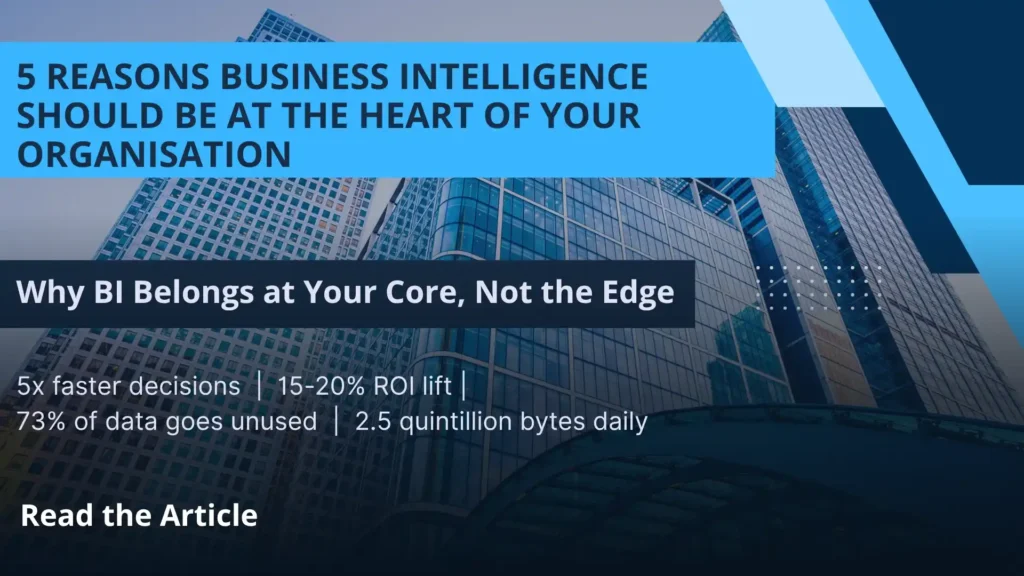
Business intelligence dashboard displaying real-time analytics, KPIs, and organizational insights.

5 Reasons Business Intelligence Should Be at the Heart of Your Organisation

Here is a question worth sitting with: how many decisions does your business make every week based on gut instinct rather than real data? For most organisations, the honest answer is — more than it should. Not because the data does not exist. It does. It sits in spreadsheets, CRM systems, ERP platforms, and finance tools across your organisation. The problem is that it is scattered, siloed, and impossible to see clearly as a whole picture. Business intelligence (BI) is what changes that. It connects your data, organises it into meaningful insights, and puts the right information in front of the right person at exactly the right moment. Here are five compelling reasons why BI should be at the heart of every modern organisation — and why 2025 is the year to make it a strategic priority. What Is Business Intelligence and Why Does It Matter Now? Business intelligence is the technology, processes, and tools that transform raw organisational data into clear, actionable insights. It covers everything from interactive dashboards and real-time reports to advanced analytics and predictive modelling. In today’s digital-first environment, business leaders face a paradox — they have more data than ever before, yet feel less certain about the decisions they are making. BI resolves that paradox. It turns data overload into decision-making clarity. 5 Reasons Every Organisation Needs a BI Strategy 1. Make Smarter, Faster Business Decisions Data is not the same as intelligence. A business manager can be surrounded by reports and spreadsheets and still have no clear picture of what is actually happening — because the data is fragmented, delayed, and inconsistent across systems. BI changes this fundamentally. It creates a single, unified source of truth — pulling data from every corner of your organisation into one place and presenting it clearly through real-time dashboards. Instead of waiting for someone to compile a weekly report, you see exactly where your business stands right now. The result is better decisions, made faster, with genuine confidence behind them. 2. Supercharge Sales and Marketing Performance Sales and marketing teams are most effective when they work from the same data — and when that data tells them exactly where the opportunities are. For sales teams, BI identifies trends in customer behaviour, highlights the accounts most likely to convert, surfaces upsell and cross-sell opportunities, and quantifies pipeline performance in real time. No more guesswork about where to focus time and effort. For marketing, BI makes campaign performance immediately visible — showing which channels, messages, and audiences are delivering results, and which are wasting budget. Teams can adjust campaigns mid-flight based on real evidence rather than waiting for a post-campaign review. When both teams work from the same BI platform, the alignment between sales and marketing improves dramatically — and so do the revenue results. 3. Eliminate Inefficiencies and Boost Productivity Every organisation has processes that consume more time and resources than they should. The challenge is that inefficiencies are often invisible — buried in the day-to-day routine and never questioned because “that is how we have always done it.” BI makes inefficiencies visible. It identifies bottlenecks in production workflows, reveals where time is being lost in sales cycles, highlights which processes are underperforming against targets, and automates the routine reporting tasks that consume hours of management time every week. The productivity gains from a well-implemented BI strategy are felt across every department — from customer service and operations to finance and product development. 4. Improve Data Quality and Accuracy Across the Business When data lives in separate systems — a CRM here, an ERP there, a spreadsheet somewhere else — inconsistencies multiply silently. The same customer appears in three systems with three different records. Sales figures differ between the finance report and the sales report. Nobody is sure which number to trust. This is not just an inconvenience. Poor data quality leads to wasted marketing spend, missed sales opportunities, flawed forecasts, and brand damage from miscommunication with customers. BI addresses this at the root. By centralising data and creating a single validated source of truth, it surfaces inconsistencies and gaps that would otherwise remain hidden — improving the accuracy and reliability of every business decision that depends on data. 5. Deliver a Measurable, Business-Wide ROI Every investment decision your organisation makes should have a measurable return — and BI investment is no different. The good news is that the ROI from a well-implemented BI strategy tends to be both significant and multi-dimensional. Better decisions lead to more revenue. Eliminated inefficiencies reduce costs. Improved data quality reduces waste. Smarter sales and marketing generates higher conversion rates. Together, these improvements compound — creating a measurable uplift in business performance that justifies the investment many times over. Organisations that treat BI as a strategic priority consistently outperform those that do not — not because they have access to different data, but because they use their data more intelligently. What Business Intelligence Looks Like in Practice The best BI implementations are not complex IT projects. They are practical, accessible tools that become part of how people work every day. A sales director starts each morning with a dashboard showing pipeline health, conversion rates, and this week’s revenue forecast — updated overnight from live system data. A marketing manager checks campaign ROI in real time — adjusting spend toward channels that are converting and pulling back from those that are not. A CEO reviews a single consolidated view of company-wide performance — financial, operational, and customer — in one place, in minutes rather than hours. This is what BI enables. And with modern cloud-based platforms, this level of insight is accessible to organisations of every size. How Microsoft Power BI Delivers All 5 Benefits Microsoft Power BI is one of the world’s most widely adopted business intelligence platforms — and for good reason. It connects natively to Microsoft Dynamics 365, Azure, Excel, SQL databases, and hundreds of third-party data sources — bringing all your organisational data into one unified analytics environment. Interactive dashboards

5 Reasons Business Intelligence Should Be at the Heart of Your Organisation Read More »
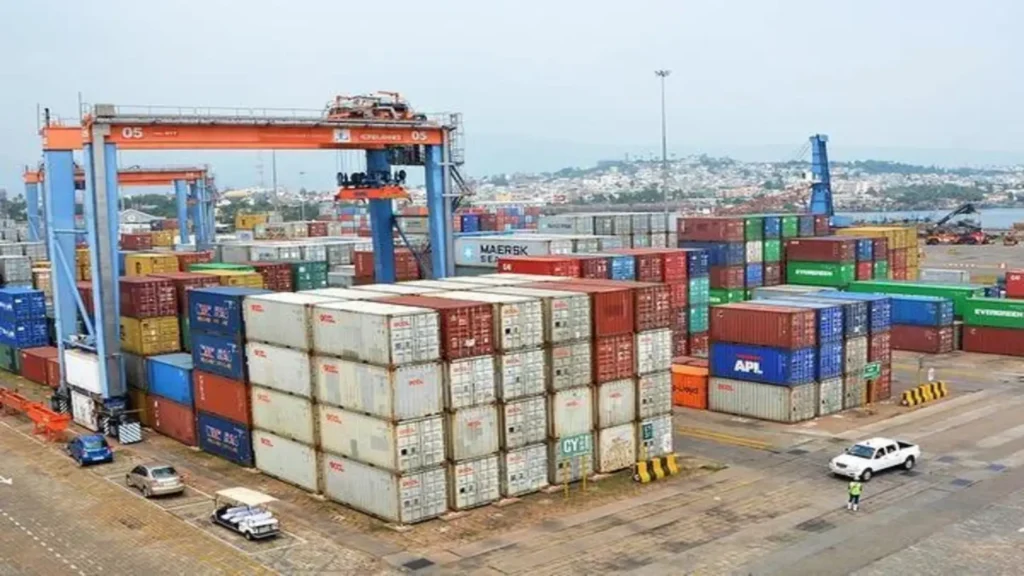
Microsoft Dynamics 365 dashboard managing transportation, logistics, and delivery operations in real time.

Microsoft Dynamics 365 for Transportation & Logistics: Smarter Operations, Lower Costs, Faster Delivery

The global logistics industry does not forgive inefficiency. With razor-thin margins, volatile fuel prices, increasingly complex regulatory environments, and customers who expect real-time visibility into every shipment — transportation and logistics businesses that rely on disconnected, outdated systems are fighting with one hand tied behind their back. Microsoft Dynamics 365 for transportation and logistics changes that equation entirely. By unifying fleet management, warehouse operations, yard control, rail logistics, billing, and financial management into a single intelligent platform, Dynamics 365 gives logistics organizations the real-time visibility, operational agility, and data-driven decision-making capability they need to compete — and win — in today’s volatile markets. Trident’s Logistics and Transportation Solutions, built on Microsoft Dynamics 365, have been helping organizations across the supply chain realize measurable value from their technology investments for over a decade. Whether you are a third-party logistics provider managing complex multi-modal operations, a fleet operator focused on on-time delivery, or a warehouse operator building toward smart fulfillment — Trident has the modular, scalable solution your operation needs. The Growing Challenges Facing Transportation & Logistics Businesses The transportation and logistics sector is under pressure from every direction simultaneously. Understanding these challenges is the first step toward building a technology strategy capable of addressing them. Rising Operational Costs: Fuel, Warehousing and Shrinkage Operational cost management is the defining challenge for most logistics businesses. Elevated warehousing costs, fluctuating fuel prices, product loss from errors and shrinkage, and the compounding effect of a stagnant economy on profit margins create a financial environment where inefficiency is simply not survivable. Even the best-managed logistics operations bleed revenue through manual processes, scheduling errors, poor route optimization, and inventory inaccuracies. The businesses that are protecting and growing their margins are those that have replaced manual intervention with intelligent automation — and reactive management with predictive analytics. Intensifying Competition Across National and Global Markets Across both domestic and international markets, competition in the transportation and logistics industry has never been more intense. Manufacturers, suppliers, and distributors are constantly evaluating their logistics partners — and they are increasingly choosing those that offer the best combination of speed, visibility, reliability, and cost efficiency. For 3PL companies in particular, the pressure to deliver innovative, cost-reducing solutions to clients while maintaining their own operational profitability requires a technology platform that scales with demand and adapts to shifting client requirements without constant reconfiguration. Regulatory Compliance: A Growing Cost of Doing Business Environmental regulations, cross-border customs requirements, driver hours-of-service rules, and government mandates at local, national, and international levels add layers of complexity and cost to every logistics operation. Non-compliance is not just expensive — it can ground fleets, halt shipments, and damage client relationships irreparably. The right ERP platform does not just help you comply with current regulations — it gives you the infrastructure to adapt quickly when regulations change, without rebuilding your operational processes from scratch. How Microsoft Dynamics 365 Addresses Logistics Industry Challenges Microsoft Dynamics 365 is not a generic ERP platform adapted for logistics — it is a powerful, configurable business management solution with deep capabilities across every function critical to transportation and supply chain operations. Real-Time Visibility Across Your Entire Supply Chain In logistics, information delayed is opportunity lost. Dynamics 365 gives every stakeholder in your operation — from dispatchers and warehouse managers to executives and end customers — real-time visibility into shipment status, asset location, inventory levels, and operational performance. When a delay occurs, your team knows immediately. When demand spikes, your system adapts automatically. When a compliance issue emerges, it is flagged before it becomes a crisis. That is the operational intelligence that separates logistics leaders from logistics laggards. Smarter Scheduling, Capacity Planning and Workflow Automation Manual scheduling, spreadsheet-based capacity planning, and paper-driven workflows are productivity killers in any logistics environment. Dynamics 365 automates the routine operational decisions that consume management time — optimizing routes, allocating resources, triggering reorder points, and flagging exceptions — so your team can focus on the strategic decisions that actually grow the business. Trident’s Modular Logistics Suite Built on Microsoft Dynamics 365 Trident’s Logistics Suite is modular by design — meaning your organization can implement the specific capabilities you need today, and scale into additional modules as your operation grows. Every module is tightly integrated with Trident’s globally recognized HCM and Finance modules, creating a single unified processing and analysis interface across every functional area of your business. Yard and Terminal Management: Put Productivity on the Fast Track Yard inefficiency is a silent revenue drain. Every minute a trailer sits in the wrong position, every gate check that requires manual processing, and every asset that cannot be located in real time costs your operation money. Trident’s Yard and Terminal Management solution — powered by Zebra’s electronic asset tracking — eliminates the manual processes that slow down yard operations and gives your team the live visibility they need to: Rail Operations: Connecting Shippers Without Direct Rail Access Rail transportation remains the most efficient and cost-effective mode for moving large quantities of bulk commodities over long distances. But not every shipper or receiver has direct rail service — and that gap creates significant logistical complexity. Trident’s Rail Operations solution transforms rail transload terminals into seamless links in the supply chain, enabling shippers without direct rail access to access the cost and efficiency benefits of rail transportation through a managed, technology-enabled transload operation. Warehouse Management: Enabling the Smart, Connected Warehouse Modern warehouse operations demand more than basic inventory tracking. From receiving and putaway through picking, staging, and loading — every process must be optimized, compliant, and connected to real-time operational intelligence. Trident’s Warehouse Management solution integrates your supply chain end-to-end, enabling: Fleet and Delivery Management: Nonstop Optimization for Any Operation Fleet performance is the heartbeat of any transportation business. Every vehicle off the road, every missed delivery window, and every compliance violation is a direct cost to your operation and a risk to your client relationships. Trident’s Fleet and Delivery Management solution keeps drivers on the road and assets moving with: Billing, HCM and

Microsoft Dynamics 365 for Transportation & Logistics: Smarter Operations, Lower Costs, Faster Delivery Read More »