Welcome to Trident Information Systems!
Any Query? Write us to - info@tridentinfo.com
Let's Socialize

erp for manufacturing industry

Manage Your Inventory Effectively with Food and Beverage Inventory Management Software

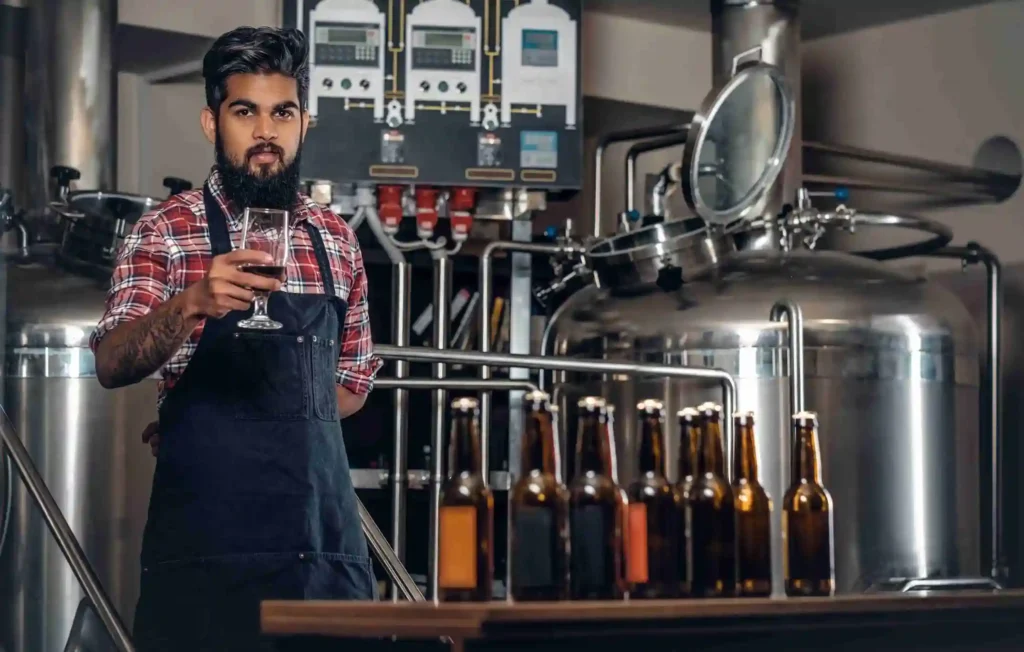
Introduction Managing inventory in the food and beverage industry is no easy task. With perishable goods, fluctuating demand, and complex supply chains, keeping everything in order requires a lot of attention to detail. Effective inventory management can make or break your business, impacting everything from your bottom line to customer satisfaction. This is where food and beverage inventory management software comes into play, offering a modern solution to age-old problems. In this article, we’ll explore why inventory management is crucial in the food and beverage industry, the benefits of using specialized software, and how you can choose and implement the right system for your business. Why Inventory Management is Crucial for Food and Beverage Businesses Managing inventory in the food and beverage industry presents unique challenges. Unlike other sectors, you’re dealing with perishable items, which means timing is everything. Mismanagement can lead to significant losses, whether through spoilage, overstocking, or missed sales opportunities due to stockouts. On top of that, the food and beverage industry is highly competitive, and the ability to respond quickly to customer demands can set you apart from your competitors. Poor inventory management can lead to a range of issues—from excessive waste and increased costs to lost revenue and dissatisfied customers. In an industry where margins are often thin, every little bit counts. This is why more and more businesses are turning to technology to help manage their inventory more effectively. What is Food and Beverage Inventory Management Software? Food and beverage inventory management software is a specialized tool designed to help businesses keep track of their inventory in real-time. It goes beyond simple stock counting to provide a comprehensive view of your inventory levels, usage patterns, and ordering needs. This software is designed specifically for the unique needs of the food and beverage industry, taking into account factors like shelf life, seasonality, and supplier lead times. Unlike traditional inventory management methods, which often rely on manual counting and spreadsheets, inventory management software automates many of these tasks. This not only saves time but also reduces the risk of human error. Key Features of Food and Beverage Inventory Management Software Let’s dive deeper into the key features that make food and beverage inventory management software an essential tool for modern businesses: Automated Inventory Tracking One of the standout features of inventory management software is automated tracking. The software automatically updates your inventory levels as stock is received, used, or sold. This automation ensures that your inventory data is always up-to-date, helping you avoid the pitfalls of overstocking or understocking. Real-time Data Analytics Real-time data is invaluable in the food and beverage industry. Inventory management software provides instant access to data on stock levels, sales trends, and usage patterns. This allows you to make informed decisions quickly, whether it’s adjusting order quantities or identifying slow-moving items that need to be promoted. Supply Chain Management Integration Effective inventory management isn’t just about tracking what’s in your stockroom; it also involves managing your supply chain. Many inventory management systems integrate with your suppliers, allowing for automated ordering and real-time tracking of shipments. This integration can streamline your operations and reduce the risk of stockouts or delays. Waste Reduction Tools Food waste is a significant concern for many businesses. Inventory management software can help minimize waste by providing tools to track expiration dates, rotate stock, and forecast demand more accurately. By reducing waste, you not only save money but also contribute to a more sustainable business model. Reporting and Forecasting Accurate reporting and forecasting are critical to effective inventory management. The software can generate detailed reports on inventory turnover, waste, and profitability, helping you identify trends and make data-driven decisions. Forecasting tools can predict future demand based on historical data, helping you plan your orders more effectively. Benefits of Using Inventory Management Software Now that we’ve covered the key features, let’s look at some of the benefits of using food and beverage inventory management software: Increased Efficiency By automating many of the tasks involved in inventory management, the software frees up your time to focus on other areas of your business. Tasks that once took hours can now be completed in minutes, allowing your team to be more productive. Cost Savings Better inventory management leads to significant cost savings. By optimizing your stock levels and reducing waste, you can lower your overall expenses. Additionally, the software can help you identify cost-saving opportunities, such as bulk purchasing or finding alternative suppliers. Enhanced Accuracy Manual inventory management is prone to errors, which can lead to costly mistakes. Inventory management software significantly reduces the risk of human error by automating data entry and calculations. This enhanced accuracy can lead to more reliable inventory data and better decision-making. Improved Compliance The food and beverage industry is heavily regulated, and non-compliance can result in hefty fines or even the closure of your business. Inventory management software helps you stay compliant by keeping accurate records of your stock and providing alerts when items are nearing their expiration date. How to Choose the Right Food and Beverage Inventory Management Software Choosing the right inventory management software can be daunting, especially with so many options on the market. Here are some key considerations to help you make the right choice: Assess Your Business Needs Before you start shopping for software, take a close look at your business needs. What are the biggest challenges you face with inventory management? Do you need help with tracking, forecasting, or compliance? Understanding your specific needs will help you find a solution that fits. Consider Scalability As your business grows, your inventory management needs will likely become more complex. Choose a software solution that can scale with your business, adding new features and capabilities as needed. Look for User-Friendly Interfaces The best software in the world won’t be much use if your team can’t figure out how to use it. Look for software with a user-friendly interface that makes it easy for your staff to learn and use. Evaluate Integration Capabilities Your

Manage Your Inventory Effectively with Food and Beverage Inventory Management Software Read More »
Inventory-Management-in-the-Food-and-Beverage-Industry-with-ERP-Software

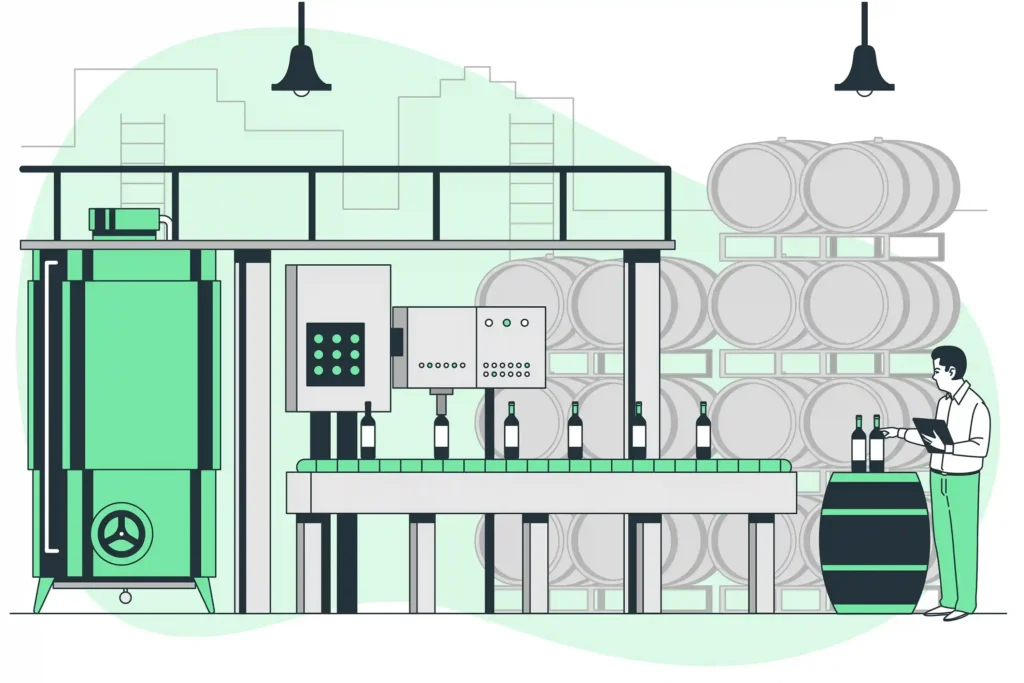
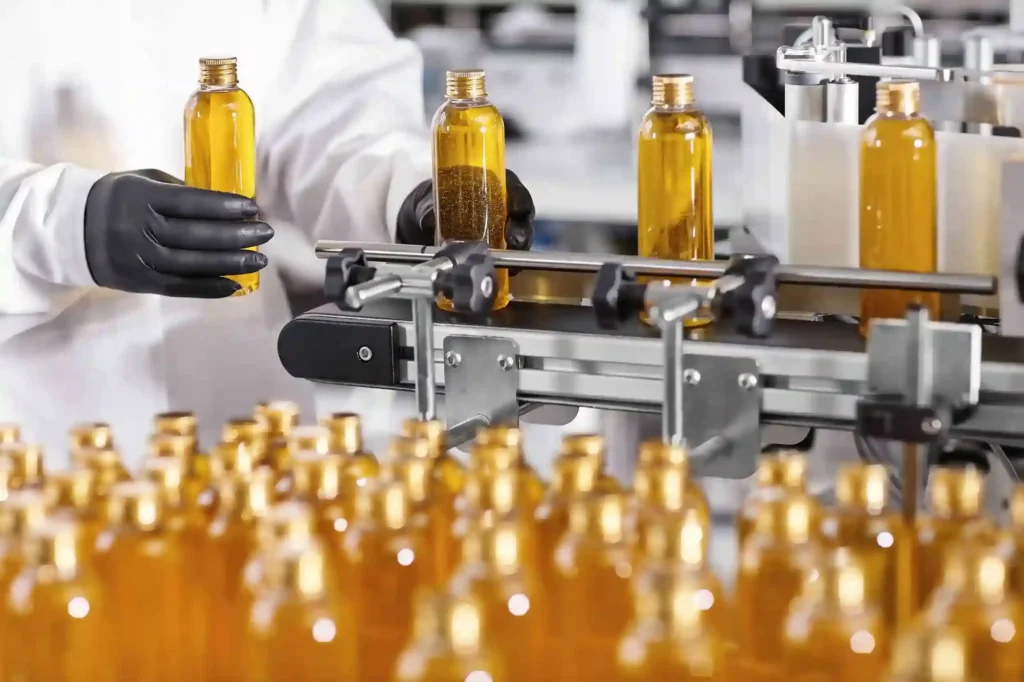
Enhance Inventory Management in the Food and Beverage Industry with ERP Software

Elevate your Food and Beverage business with cutting-edge ERP software. Optimize inventory management, streamline processes, and boost efficiency. Experience enhanced control and profitability. Revolutionize your F&B operations with ERP solutions.

Enhance Inventory Management in the Food and Beverage Industry with ERP Software Read More »

Beat the Skill Gap in Manufacturing

The manufacturing industry contributes a massive part to India’s GDP. India’s gross domestic products at current counts at Rs. 51.23 lakh crores (USD 694.93 billion). In the first quarter of FY22, according to the provisional estimates of gross domestic product for the first quarter of 2021-22. The manufacturing GVA at current prices was estimated at USD 97.41 billion in the first quarter of FY22.   This pandemic has pushed this sector back causing skill gaps. Unfortunately, various manufacturers were exposed to crisis fallouts. Despite manufacturing companies trying their hardest to strengthen and rebound in the post-COVID 19 eras, this has impacted hugely on the existing workforce. To overcome this scenario, manufacturers may opt for Manufacturing ERP Software like Microsoft Dynamics 365 which integrates every aspect of manufacturing under the same platform and hence provides a centralized and streamlined manufacturing experience.  There are multiple ways in which manufacturers have changed the way they operate their business. For example, Manufacturers all over the world had to cut budgets and let workers go to secure their bottom line. Apart from reducing the effectiveness of the remaining workforce, it fundamentally altered the functioning of the organization overall. With limited employees left behind, they have to pick up the slack. This leads to increased workload and adjusting with more than what they are assigned to. And not to mention employee safety becomes the top priority (an even bigger priority than it ever was).     Can Digitalization Address Skill Gaps As-Well-as Safety Compliance?  The manufacturing industry has been transforming even before the COVID 19 pandemic hits the world. It was so rapid that it was even tougher for your workforce to keep up with it. Rapid digital transformation contributes to the growing skill gap on the shop floor as well as brings new challenges to the worker’s safety and productivity.   In simple words, your workforce needs to transform to keep up with it. They need to embrace resilient technology like Microsoft Dynamics 365 that can attract, train, and retain the next generation of workers while embedding skills they need to recreate manufacturing and shape a sustainable future.   The talent hunt needs to be done keeping the uneven and protracted recovery environment to balance productivity and achieve desired business outcomes.   Manufacturers can rejoice now as by integrating suitable productive applications, intelligent cloud services, and security, the industry can easily set its workforce up for victory. This is how digital transformation can help employees fill the skill gap:   Connecting empowered technicians and remote assets security to troubleshoot issues, therefore dispatching technicians only when required.  Providing frontline workers with expert assistance remotely to avoid downtime while allowing them to do their best by unifying devices, relationships, processes, and data into intelligent apps, and guiding them securely through the compliance requirements and the most suitable practices.   Ensuring better productivity with team collaboration tools, remote assists, mixed-reality, AI-enhanced applications, and IoT-enables machines to keep up with the boosted process complexities and operational maintenance.   Technology Transforms Manufacturing Operations  Technology-centered agile businesses ensure business practices from anywhere. This is especially useful for businesses having a workforce scattered remotely and, in the workplace, globally. Research commissioned by Microsoft reveals that 97% of entrepreneurs require more agile and mongrel techniques for working in the longer run. With a dynamic as-well-as cohesive workforce all around the world, businesses have numerous opportunities to encompass a technology-centric approach like Microsoft Dynamics 365 for Manufacturing.  Manufacturers can balance productivity with remote work. They can reinforce their organizations and frontline workers with robust and intuitive tools delivering a remote, integrated as-well-as in resilient business experience.   COVID 19 pandemic has raised a grave concern about employee safety and health. As soon as they enter the workplace, their safety and health will be the major priority. Having such technology can help with the health and safety compliance set by the government.   With the rise of connectivity and mobility, security compliance becomes a big issue. Since the data is more prone to various malware, viruses, etc., manufacturers have to find new ways to keep their data safe. Microsoft Azure ensures bank-level security and backup.   As words, manufacturers have to deploy remote and more agile business practices and optimally boost their productivity. Microsoft Dynamics 365 allows manufacturers to grow and attain excellent customer service while:   Transforming your workforce by integrating intelligent cloud services, productive apps, and security to reimagine the way you operate your business.    Engaging more customers with innovation by delivering exponent customer experience throughout marketing, sales, and service channels.   Creating more robust, secure, and safe factories with IoT (Internet of Things), IT, and industrial IoT.   Building more flexible supply chains with intelligent supply chain planning ensures more resilient services and profitability.   The world is transforming, and therefore mounting pressure on the manufacturers to address skill gaps in their factories and deliver impeccable services. Centering trust, security, innovation, and compliance, Microsoft, ERP for Manufacturing Industry, enables the digital transformation of your business. Trident Information Systems is a Gold Microsoft Partner. If you are looking for Microsoft implementation, you may contact us.  

Beat the Skill Gap in Manufacturing Read More »

How Manufacturing Industry Transformed using Microsoft Dynamics 365

The future of manufacturing will be defined by the quality of investments companies are making today In the not too distant past, efforts in manufacturing to optimize productivity and increase customer satisfaction were viewed as separate endeavors. Today, the convergence of physical and digital trends is disrupting these kinds of assumptions. Manufacturers today care about integrated digital and physical systems, improved visibility, increased efficiency, additional flexibility, and lower costs. They want to connect equipment and factories, leveraging data from the factory floor to the customer call center to improve every aspect of their operations. But this is just the beginning. Digitization is fundamentally changing the way manufacturers do business, enabling a customer-centric approach while optimizing operations. Digitally empowered manufacturers engage customers throughout the product lifecycle from design to field service. They sell value-add services to complement the product sales, opening new revenue streams and strengthening their customer relationships. And they are revolutionizing delivery of these differentiated services, using technology like augmented reality to combine the eyes of a technician in the field with the insights of an expert back at headquarters. Capitalizing on these trends isn’t limited to large, well-resourced manufacturers. Across all kinds of manufacturing operations, the opportunity to digitize and transform your business has never been more accessible. Imagine your business transformed The Microsoft vision for supporting digital manufacturing embraces the seismic shifts in the industry today. We’ve created solutions that provide a unified and flexible approach across front office and production floor processes. Our approach enables transformation in six ways: Optimize supply chain operations through better visibility and collaboration By collecting, integrating, and visualizing global supply chain data worldwide, manufacturers gain better visibility into their operations from production to sales. For example, one of the world’s largest industrial automation firms found that by automating the collection and analysis of data from remote installations across the petroleum supply chain, they strengthened their competitive advantage with a faster time to market. Improved access to supply chain data is also the basis for better collaboration across production, supply, service, and sales.  Streamline the management of assets, products, and production With a consolidated view that unifies process oversight and provides real-time insight, manufacturers can institutionalize efficiency gains and use connected devices to monitor and resolve issues remotely. One leading manufacturer of industrial robots enabled 24-hour continuous uptime using this approach. The additional insights into production and customer usage also allow manufacturers to provide value-added services like ongoing monitoring and proactive support. Engage customers in powerful new ways To deliver personalized and contextual engagement across any channel, manufacturers must provide customers with more visibility and build trust through fast and convenient responses. This engagement approach is built on a combination of predictive analytics, the ability  to deliver value-added services at scale, and guided or self-directed service that’s relevant to customer needs. With the implementation of a connected platform for sales through service, a leading home technology manufacturer not only solved potential problems remotely before customers ever felt the impact, but provided custom differentiated offerings based on unique customer usage and purchasing history.  Transform service centers into profit centers Thanks to the ever-decreasing cost of IoT sensors, sophisticated mobile devices, and cloud-based data aggregation, manufacturers can improve service quality and margins by offering remote monitoring and proactive maintenance services that supplement break/fix support. By more intelligently coordinating technicians equipped with mobile and virtual reality tools, companies can leverage existing expertise and minimize costly engagements. A leading tire service and manufacturing company found that by combining customer records, technician availability, and back-end inventory in a single mobile-friendly system, it could provide a seamless user experience as well as improve its service delivery. understand their business more deeply, from customer usage through supply chain sourcing and production. With IoT-enabled parts, assets, and products, manufacturers can gain the insights needed to innovate. Data from connected products and equipment can empower developers, engineers, and technicians to collaborate. For example, teams can identify overengineered or faulty components and track product usage in the field to improve future designs. When a leading information and communication technology company implemented remote monitoring, they decreased time to production as well as accelerated the cycle of innovation using a data-driven approach. Empower employees to work more effectively When a company can provide 360-degree views of customer assets and work order history, technicians are empowered by a better understanding of not only the job in front of them, but of other similar and successful field service engagements. This goes hand in hand with empowering service agents to provide instant feedback, using machine learning to find and follow similar cases for successful troubleshooting, and scheduling a visit or evaluation. A leading auto manufacturer wanted to save money by unifying their siloed customer service and customer engagement while providing employees with better tools to understand customer sentiment. To accomplish this, it implemented a system to connect production and project management with their customer relationship management systems in order to deliver personalized service and recommendations to their customers.  Introducing Microsoft Dynamics 365 For manufacturers, Microsoft Dynamics 365 ends the artificial divide between CRM and ERP systems and supplements necessary capabilities with rich analytics, embedded intelligence, and the convenience people expect from consumer apps on their phone or tablet. Dynamics 365 unites the front office and the back office with a single end-to-end system for managing every aspect of your business, at the pace and scale that’s right for you. Digital transformation isn’t accomplished overnight and leveraging current investments is a key component of any successful approach. With Microsoft, you can optimize across all your processes while laying the foundation for connecting advanced technology in the future. Blog reference: https://cloudblogs.microsoft.com/dynamics365/bdm/2017/05/30/manufacturing-transformed-microsoft-dynamics-365

How Manufacturing Industry Transformed using Microsoft Dynamics 365 Read More »

When do you know that your business needs a CRM software?

[vc_row][vc_column][vc_column_text]Customer Relationship Management is a process of managing or organizing prospects throughout the sales life cycle. The more the advancement in serving the clients, the more will be the payment stream for the Company. Trident’s CRM software solutions happen to be one of the most effective and efficient CRM software that could easily cut overhead costs and give highlights which demonstrate helpful to different business firms. Many CRM software programs available have several features that can be used or restricted – so in effect a business can modify to make their own CRM software. However, utilizing CRM software gives various advantages to both organizations and customers and that is the reason each genuine business has implemented some of the other CRM applications. So who can opt for Trident’s CRM software? A simple response to that question would be “Any business with customers would utilize CRM“. However, in the real world, it is not just as simple as that. Choosing an appropriate CRM software solely depends upon the business process along with a range of profitable features. Below are the type of Businesses that could gain benefit from using Trident’s CRM software solutions. 1- The business that uses any form of Marketing:  For any business that uses marketing campaigns to promote, sell or advertise their products or services in the market through various communication mediums such as phone, email, etc. Reaching to customers in bulk within a short period as well as recording the response on the go makes it more effective to manage the marketing process. 2- A business that deals with B2B and B2C Sales: For any business that tends to cope up with the Customers to sell or cross-sell the products. Maintain relevant sales data such as documents, communication records, etc. Identify the process flow starting from Lead up to the deal gets closed. 3- A business that creates Quotations & Invoices:  Built-in invoicing module to track the quotations and invoices generated against an opportunity. Efficiency to merge the billing details into the document which can further be mailed to the customer right from the CRM software without any need to switch between the applications. 4 – A business that deals in Customer Service:  For any business that believes in increasing customer satisfaction by helping them in tracking as well as resolving the issues completely. Managing the cases within CRM as well as auto – escalations triggered on a timely basis not only guarantees better customer satisfaction but at the same helps the Management to track resource performance. 5- A business that wants to increase efficiency:  Well-organized business results in better output which can be ultimately tracked with the help of various Reports, Dashboards, etc. Well-improved or say the advance level of features incorporating in CRM with the latest release of versions has enhanced the CRM which has ultimately proved beneficial for Business growth. Thus using CRM software gives you numerous benefits to enrich both Business and Customer Relations by serving your customers better with stronger service and support. To know more about how can CRM software help you, you can check out our CRM software solution on https://tridentinfo.com/microsoft-dynamics-crm-software-solution/ and contact to our experts on https://tridentinfo.com/contact/.[/vc_column_text][/vc_column][/vc_row]

When do you know that your business needs a CRM software? Read More »

7 Reasons to have a Retail-oriented Solution to Unite E-commerce and ERP

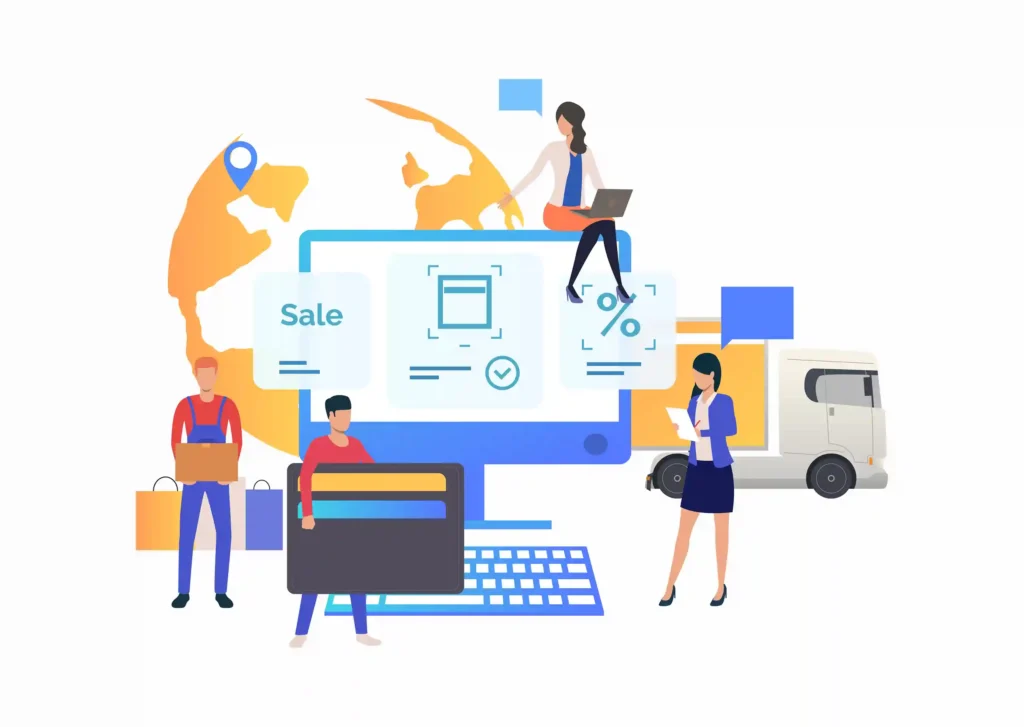
[vc_row][vc_column][vc_column_text]Solely brick-and-mortar retail is gradually have become the exception rather than the norm. Increasing numbers of consumers have welcomed the convenience of online retailers, allowing them to evaluate items in less time and make purchasing decisions rather than visiting various physical stores. In everyday market research, 81 percent of consumers use phones and tablets. In reply to these developments, businesses try to boost revenues by embracing ecommerce and spreading to other platforms. Yet each new site introduced by marketers raises the difficulty of their distribution chain. To integrate all channels information to make good enterprise-wide choices, they need new digital resources. To establish a consolidated database of all purchases, clients, and goods, several retail businesses prefer to incorporate their ERP implementation services with each of their distribution channels. There are however some clear benefits of using an integrated solution designed specifically for the retail sector over integration solutions for common use applications. Below are some features of built-in retail integration solutions that show the requirement of customization for a common integration framework: 1- Flexibility Over Retail Vhannels All businesses move toward cohesive user experiences. Retail-specific integration solutions enable different systems, like your point-of-sale (POS) and ecommerce system, to import and then use product descriptions into your Retail ERP Software. It means you have the same range of products throughout all the product lines, while constantly pricing and discounting those items. 2- Omni Channel Experience Retail integration solutions offer services for Omni channel purchase-online pickup-in-store (BOPIS) fulfilment which enables customers to buy an item from one channel and deliver it from another platform. They might buy a product at a retail outlet, for instance, and have it shipped to their house, or they might order it online and pick it up at a local retail outlet. The retail-specific integrated system manages ZIP-code searches for shop inventory, and shares shop pickup information between systems. 3 – Inventory Clarity Retail connectivity solutions provide an accurate representation of product availability by synchronization of inventory data throughout networks and systems on a routine basis. Entities can even merge individual warehouses and shops into satisfactory groups to enhance the control of the distribution chain. 4- Client Information Integration Your Retail ERP system will exchange customer data with your online store and other channels, using a retail-specific implementation solution. Customer data must stay consistent over digital and physical platforms and will avoid redundant information. Such knowledge could be used to generate and monitor purchase requests, and to improve loyalty program management. 5- Unified Loyalty Program A retail integration solution makes it much easier to operate a single loyalty program with consumer, pricing, and discount information integrated into your Retail ERP system. You will receive and redeem coupons, gift cards, and loyalty points across all platforms, creating better customer satisfaction and higher participation levels than a channel-specific rewards program. 6 – Single Integration Solution for Payment A retail-specific integration approach increases time to value by offering preloaded integration with major payment service vendors. The use of one integrated system for processing payments, order processing, customer data, and product inventory offers greater efficiency and lower production costs than multi-integrator dependence. 7 – Managing Multiple Languages and Currencies Retail integration technologies are planned for retail operations around the world. They have help for managing multiple languages and currencies, so you can quickly set up physical or online stores in new geographical regions. Conclusion Integration solutions intended for the retail sector provide many out of the box that would involve many months of costly customization to accomplish using platforms for general purpose integration. Trident Information Pvt Ltd provides a flexible and versatile integration solution which many international retailers use. For more information on the power of retail-specific integration, contact Microsoft ERP Partner Trident Information Pvt Ltd on https:/tridentinfo.com/contact/     [/vc_column_text][/vc_column][/vc_row]

7 Reasons to have a Retail-oriented Solution to Unite E-commerce and ERP Read More »