
Welcome to Trident Information Systems!
Write us to - info@tridentinfo.com
Let's Socialize

erp software for retail industry

Retail CEO analyzing unified commerce dashboard integrating data, strategy, and technology.

The Retail CEO’s Guide to Unified Commerce: Data, Strategy and the Technology That Ties It All Together

Only 31% of retail industry experts believe that today’s retail CEOs have the technical skills needed to lead a data-driven, unified commerce operation. That means nearly seven out of ten retail leaders are navigating one of the most complex, fast-moving industries in the world without the technology literacy or strategic tools they need to make confident, informed decisions. That gap is not just a personal challenge — it is a competitive vulnerability. According to the World Retail Congress’s DNA of the Future Retail CEO, the two most critical technical competencies for retail leaders — today and in the future — are a deep understanding of digital commerce and omnichannel strategy, and a genuinely data-driven approach to decision-making. Not data-aware. Not data-informed. Data-driven in the extreme. The good news is that no retail CEO has to master every technology trend personally. The right unified commerce platform does the heavy lifting — connecting every sales channel, every business function, and every data source into a single system that gives retail leaders the real-time intelligence they need to set strategy, track performance, and pivot confidently when the market demands it. This guide covers exactly what retail CEOs need to know — and do — to lead their organizations into a unified commerce future. What the Data Says About the Future Retail CEO The Two Technical Skills Every Retail CEO Needs Right Now Two independent bodies of research point to the same conclusion about what separates tomorrow’s retail leaders from today’s: The World Retail Congress identifies the top two technical skills for retail CEOs as understanding of digital commerce and omnichannel operations, and a data and insight-driven approach to strategy and decision-making. These are not IT skills — they are leadership skills, because the decisions that flow from digital commerce and data intelligence are ultimately strategic, not technical. The Korn Ferry Institute’s study of UK retail CEOs reinforces this, finding that the new retail CEO must be experienced across both budget management and strategic planning — a combination that is only possible when financial and operational data are fully visible, accurate, and real-time. Research at Harvard Business School adds a third dimension: the ability to cope with change and lead organizational adaptation is the defining characteristic of high-performing CEOs — and it is directly linked to better business outcomes. In retail, where technology, consumer behavior, and competitive dynamics shift constantly, this capacity for agile leadership is not optional. Why Only 31% of Retail CEOs Are Prepared — And How to Be in That Group The 31% statistic from the World Retail Congress is not just a data point — it is a strategic warning. The retail CEOs who are building unified commerce capabilities now are creating a compounding advantage: better data leads to better decisions, which leads to better performance, which creates the financial headroom to invest in further capability. The 69% who are not yet there are not necessarily failing — but they are accumulating a technology debt that will become increasingly costly to address as the gap between digital commerce leaders and laggards continues to widen. The path forward starts with the right technology platform — and the strategic clarity to use it. Why Unified Commerce Is Now a CEO-Level Priority What Unified Commerce Actually Means (And How It Differs From Omnichannel) Omnichannel retail means giving customers a consistent experience across multiple channels — online, in-store, mobile, social. It is a customer experience standard, and it is now the baseline expectation in most retail categories. Unified commerce goes further. It is not just about the customer-facing experience — it is about the technology architecture that powers it. A true unified commerce platform brings every sales channel, every business function, and every data source together on a single integrated system — eliminating the silos, the data lags, and the reconciliation headaches that plague retailers running separate e-commerce, POS, ERP, and inventory platforms. When your systems are unified, data flows freely across channels. When a customer returns an online purchase in-store, the inventory updates instantly. When a promotion launches on your mobile app, the margin impact is visible in your financial reporting in real time. That is what unified commerce delivers — and it is why it is now a CEO-level strategic priority, not just an IT project. The Real Cost of Pieced-Together Retail Systems Many retailers are operating on a patchwork of integrated-but-separate systems — an e-commerce platform here, a POS system there, an ERP that talks to both of them most of the time. The integrations work, mostly. But “mostly” is not good enough when strategic decisions depend on accurate, real-time data. Pieced-together systems cost more than a unified platform in ways that are easy to underestimate: A unified commerce platform eliminates every one of these costs — and replaces them with the real-time, reliable intelligence that enables genuine data-driven leadership. 4 Things Every Data-Driven Retail CEO Must Do in 2025 1. Unify Your Sales Channels on a Single Commerce Platform No matter what your retail business sells or where it sells it — physical stores, e-commerce, mobile commerce, marketplace, or social commerce — your technology should be a single-platform solution that manages every channel simultaneously. A unified sales channel platform gives your leadership team: 2. Connect Front-End and Back-End Operations Seamlessly Unified commerce is not just a customer-facing concept. The most powerful version of it connects your customer-facing sales operations directly to your back-office business functions — financials, inventory, supply chain, HR, and analytics — in a single, seamless system. What feels almost impossible when a business is running separate ERP, POS, and inventory platforms — consistent, real-time financial and operational reporting — becomes straightforward with the right unified technology. Data flows freely between functions. Financial results reflect operational reality instantly. And the retail CEO has a complete, accurate picture of business performance at any given moment, without waiting for someone to compile a report. 3. Set a Clear Vision — But Build in the Agility to Pivot Richard Branson,

The Retail CEO’s Guide to Unified Commerce: Data, Strategy and the Technology That Ties It All Together Read More »

Microsoft Dynamics 365 dashboard managing electronics manufacturing production, quality, and operations.

Microsoft Dynamics 365 for Hi-Tech & Electronics Manufacturing: Faster Decisions, Leaner Operations, Higher Quality

In hi-tech and electronics manufacturing, standing still is falling behind. Product lifecycles are shrinking. Customer demands for configure-to-order, make-to-order, and assemble-to-order products are accelerating. Global sourcing networks are more complex — and more fragile — than ever before. And all of this is happening against a backdrop of tightening financial regulations, escalating environmental compliance requirements, and relentless competitive pressure on cost and quality. The manufacturers winning in this environment are not working harder. They are operating smarter — with hi-tech electronics manufacturing ERP software that gives them real-time visibility across the entire value chain, intelligent demand planning that adapts to volatile conditions, and the operational agility to respond to market changes before competitors even see them coming. Microsoft Dynamics 365 for hi-tech and electronics manufacturing — implemented by Trident Information Systems — is built precisely for this environment. Whether you are managing multi-level bills of materials across a global supplier network, coordinating complex configure-to-order production schedules, or trying to bring R&D change management under control, Trident’s industry solution gives you the tools, the intelligence, and the implementation expertise to transform operational complexity into competitive advantage. The Unique Challenges of Hi-Tech and Electronics Manufacturing Hi-tech and electronics manufacturing presents a combination of operational challenges that generic ERP platforms were never designed to handle. Understanding these challenges is the foundation of building a technology strategy capable of addressing them. Shrinking Product Lifecycles and Increasing BOM Complexity In the electronics industry, product lifecycles that once spanned five years now compress into 18 months or less. Every new product generation brings with it a new bill of materials, new component sourcing requirements, new production configurations, and new quality specifications — all of which must be managed simultaneously with the ongoing production of existing product lines. Without a comprehensive, automated MRP planning process, the higher the product and BOM complexity becomes, the greater the risk of production delays, component shortages, cost overruns, and quality failures. Manual planning processes simply cannot keep pace with the velocity of change in modern electronics manufacturing. Global Sourcing, Regulatory Compliance and Cost Pressure Global sourcing gives hi-tech manufacturers access to competitive component pricing — but it also introduces significant supply chain risk. Geopolitical disruptions, supplier quality failures, customs delays, and logistics volatility can cascade quickly into production stoppages and missed customer delivery commitments. At the same time, ever-changing financial and environmental regulations across multiple jurisdictions add compliance complexity and cost. Manufacturers operating across multiple countries need an ERP platform that handles local financial requirements, environmental reporting, and cross-border trade compliance — natively, not through expensive customization. The Configure-to-Order Imperative: Meeting Modern Customer Demands Today’s global customers no longer accept standard configurations. They demand products built to their exact specifications — configured, made, or assembled to order — delivered on time, every time, without quality compromise. Meeting this demand requires complete real-time visibility into delivery dates, component availability, production capacities, and external manufacturer capabilities — so your production team can commit to customer requirements with confidence, and execute on those commitments without scrambling. How Microsoft Dynamics 365 Solves Hi-Tech Manufacturing Challenges End-to-End Value Chain Visibility Across Every Production Stage Microsoft Dynamics 365 gives hi-tech manufacturers a unified, real-time view across every stage of the value chain — from raw material procurement and supplier management through production scheduling, quality control, inventory management, and customer delivery. When a component shortage emerges, your planning team sees it immediately — and your MRP system adjusts production schedules automatically. When a customer requests a configuration change mid-order, your system models the impact on delivery dates, inventory, and cost in real time. When a regulatory audit requires documentation across multiple production batches, every record is available instantly — without hours of manual retrieval. Rapid Implementation That Reduces Time-to-Value and Deployment Risk Every day your organization operates without the right ERP platform is a day of preventable inefficiency. Trident’s implementation processes are specifically designed to reduce deployment time and risk — getting your manufacturing operation onto Dynamics 365 rapidly, with minimal disruption to ongoing production, and with the flexibility to build out additional capabilities progressively as your business evolves. Core Capabilities of Trident’s Hi-Tech Manufacturing ERP Solution Trident’s Hi-Tech Industry Solution is a comprehensive set of software and services built on Microsoft Dynamics 365, automating and streamlining every critical business process across the electronics manufacturing operation. Materials Management and Demand Planning In hi-tech manufacturing, conditions in materials management and demand planning change rapidly and without warning. New component requirements emerge constantly, order processes must be updated in real time, and production planning needs to respond quickly — and cost-effectively — to shifting market signals. Trident’s Hi-Tech Solution provides powerful, configurable MRP planning capabilities designed for the specific complexity of electronics manufacturing: Purchasing and Inventory Management Procurement in hi-tech manufacturing is not just about finding the lowest price — it is about managing the right balance of cost, quality, lead time, and supply security across a complex global vendor ecosystem. Trident’s purchasing and inventory management capabilities give your procurement team the tools to optimize every supplier relationship and every purchasing decision: Multi-Country, Multi-Product, Multi-Level Manufacturing For electronics manufacturers operating across multiple geographies, product lines, and production tiers, manufacturing visibility and coordination is the defining operational challenge. Trident’s multi-level manufacturing capabilities give your production management team complete control: Financial Accounting and Real-Time Cost Management Financial management in hi-tech manufacturing is inseparable from operational management. When a production order runs over budget, when a component price changes, or when a customer project hits a cost threshold — your financial team needs to know immediately, not at month-end. Microsoft Dynamics 365’s financial management capabilities — as implemented by Trident — deliver full real-time integration between operational and financial data: Engineering Change Management and R&D Project Control Research and development is the lifeblood of hi-tech manufacturing — but R&D without rigorous process management is a significant financial and competitive risk. Efficient quality, time, and budget management for R&D processes directly determines whether a new product reaches market ahead of or behind the

Microsoft Dynamics 365 for Hi-Tech & Electronics Manufacturing: Faster Decisions, Leaner Operations, Higher Quality Read More »

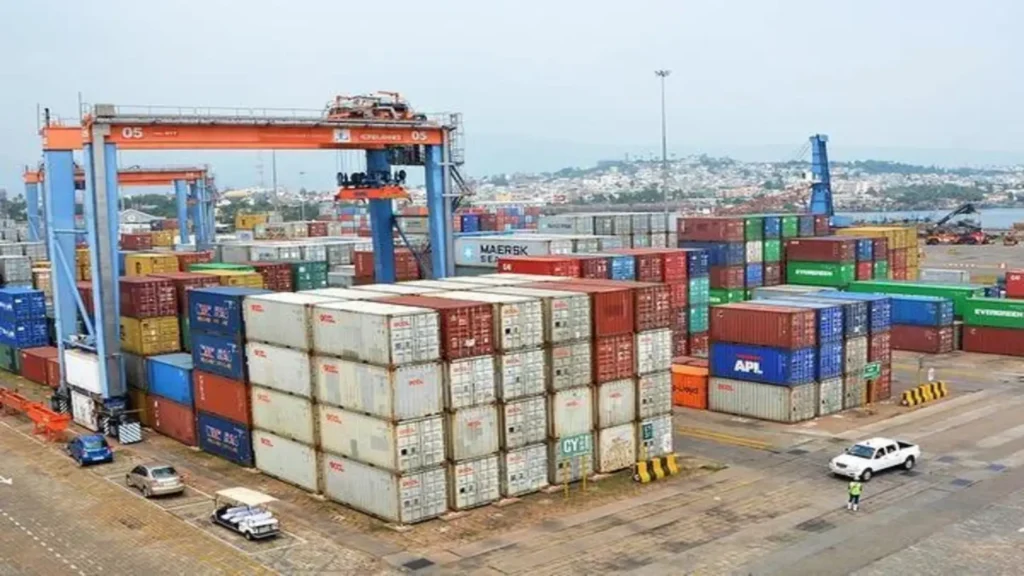
Microsoft Dynamics 365 dashboard managing transportation, logistics, and delivery operations in real time.

Microsoft Dynamics 365 for Transportation & Logistics: Smarter Operations, Lower Costs, Faster Delivery

The global logistics industry does not forgive inefficiency. With razor-thin margins, volatile fuel prices, increasingly complex regulatory environments, and customers who expect real-time visibility into every shipment — transportation and logistics businesses that rely on disconnected, outdated systems are fighting with one hand tied behind their back. Microsoft Dynamics 365 for transportation and logistics changes that equation entirely. By unifying fleet management, warehouse operations, yard control, rail logistics, billing, and financial management into a single intelligent platform, Dynamics 365 gives logistics organizations the real-time visibility, operational agility, and data-driven decision-making capability they need to compete — and win — in today’s volatile markets. Trident’s Logistics and Transportation Solutions, built on Microsoft Dynamics 365, have been helping organizations across the supply chain realize measurable value from their technology investments for over a decade. Whether you are a third-party logistics provider managing complex multi-modal operations, a fleet operator focused on on-time delivery, or a warehouse operator building toward smart fulfillment — Trident has the modular, scalable solution your operation needs. The Growing Challenges Facing Transportation & Logistics Businesses The transportation and logistics sector is under pressure from every direction simultaneously. Understanding these challenges is the first step toward building a technology strategy capable of addressing them. Rising Operational Costs: Fuel, Warehousing and Shrinkage Operational cost management is the defining challenge for most logistics businesses. Elevated warehousing costs, fluctuating fuel prices, product loss from errors and shrinkage, and the compounding effect of a stagnant economy on profit margins create a financial environment where inefficiency is simply not survivable. Even the best-managed logistics operations bleed revenue through manual processes, scheduling errors, poor route optimization, and inventory inaccuracies. The businesses that are protecting and growing their margins are those that have replaced manual intervention with intelligent automation — and reactive management with predictive analytics. Intensifying Competition Across National and Global Markets Across both domestic and international markets, competition in the transportation and logistics industry has never been more intense. Manufacturers, suppliers, and distributors are constantly evaluating their logistics partners — and they are increasingly choosing those that offer the best combination of speed, visibility, reliability, and cost efficiency. For 3PL companies in particular, the pressure to deliver innovative, cost-reducing solutions to clients while maintaining their own operational profitability requires a technology platform that scales with demand and adapts to shifting client requirements without constant reconfiguration. Regulatory Compliance: A Growing Cost of Doing Business Environmental regulations, cross-border customs requirements, driver hours-of-service rules, and government mandates at local, national, and international levels add layers of complexity and cost to every logistics operation. Non-compliance is not just expensive — it can ground fleets, halt shipments, and damage client relationships irreparably. The right ERP platform does not just help you comply with current regulations — it gives you the infrastructure to adapt quickly when regulations change, without rebuilding your operational processes from scratch. How Microsoft Dynamics 365 Addresses Logistics Industry Challenges Microsoft Dynamics 365 is not a generic ERP platform adapted for logistics — it is a powerful, configurable business management solution with deep capabilities across every function critical to transportation and supply chain operations. Real-Time Visibility Across Your Entire Supply Chain In logistics, information delayed is opportunity lost. Dynamics 365 gives every stakeholder in your operation — from dispatchers and warehouse managers to executives and end customers — real-time visibility into shipment status, asset location, inventory levels, and operational performance. When a delay occurs, your team knows immediately. When demand spikes, your system adapts automatically. When a compliance issue emerges, it is flagged before it becomes a crisis. That is the operational intelligence that separates logistics leaders from logistics laggards. Smarter Scheduling, Capacity Planning and Workflow Automation Manual scheduling, spreadsheet-based capacity planning, and paper-driven workflows are productivity killers in any logistics environment. Dynamics 365 automates the routine operational decisions that consume management time — optimizing routes, allocating resources, triggering reorder points, and flagging exceptions — so your team can focus on the strategic decisions that actually grow the business. Trident’s Modular Logistics Suite Built on Microsoft Dynamics 365 Trident’s Logistics Suite is modular by design — meaning your organization can implement the specific capabilities you need today, and scale into additional modules as your operation grows. Every module is tightly integrated with Trident’s globally recognized HCM and Finance modules, creating a single unified processing and analysis interface across every functional area of your business. Yard and Terminal Management: Put Productivity on the Fast Track Yard inefficiency is a silent revenue drain. Every minute a trailer sits in the wrong position, every gate check that requires manual processing, and every asset that cannot be located in real time costs your operation money. Trident’s Yard and Terminal Management solution — powered by Zebra’s electronic asset tracking — eliminates the manual processes that slow down yard operations and gives your team the live visibility they need to: Rail Operations: Connecting Shippers Without Direct Rail Access Rail transportation remains the most efficient and cost-effective mode for moving large quantities of bulk commodities over long distances. But not every shipper or receiver has direct rail service — and that gap creates significant logistical complexity. Trident’s Rail Operations solution transforms rail transload terminals into seamless links in the supply chain, enabling shippers without direct rail access to access the cost and efficiency benefits of rail transportation through a managed, technology-enabled transload operation. Warehouse Management: Enabling the Smart, Connected Warehouse Modern warehouse operations demand more than basic inventory tracking. From receiving and putaway through picking, staging, and loading — every process must be optimized, compliant, and connected to real-time operational intelligence. Trident’s Warehouse Management solution integrates your supply chain end-to-end, enabling: Fleet and Delivery Management: Nonstop Optimization for Any Operation Fleet performance is the heartbeat of any transportation business. Every vehicle off the road, every missed delivery window, and every compliance violation is a direct cost to your operation and a risk to your client relationships. Trident’s Fleet and Delivery Management solution keeps drivers on the road and assets moving with: Billing, HCM and

Microsoft Dynamics 365 for Transportation & Logistics: Smarter Operations, Lower Costs, Faster Delivery Read More »