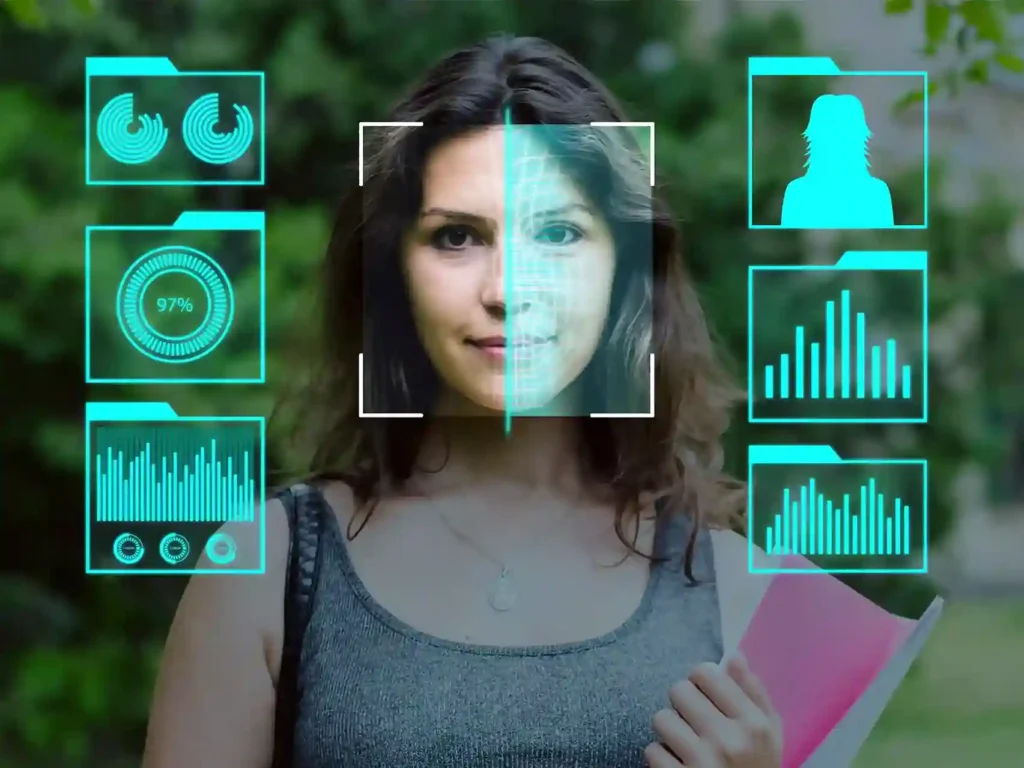

AI video analytics transforms surveillance from a passive recording archive into an active, decision-making system. Instead of relying on operators to watch dozens of feeds, analytics software detects, classifies, and alerts on events in real time—distinguishing a person from a shadow, flagging a perimeter breach, or identifying a safety violation the moment it happens. The technology has matured from a high-end extra into an operational baseline, with edge processing, cloud integration, and generative AI reshaping what security teams can realistically expect from their camera infrastructure.
The Uncomfortable Truth About Modern Surveillance
Most organizations do not have a camera problem. They have a footage problem.
A mid-sized facility running dozens of cameras generates thousands of hours of recording every month, and almost none of it is ever watched . It sits on disk, consumes bandwidth, and waits until an incident forces someone to scrub through it after the fact. By then, the recording serves only as proof of what went wrong—not as a tool to prevent it.
The human cost of this model is well documented. Research on operator attention spans shows that monitoring performance drops significantly after just twenty minutes of continuous viewing, leading to missed security breaches and safety violations . Traditional forensic review is equally punishing: locating a specific event can require fifteen to thirty minutes of manual timeline scrubbing for a single query .
AI video analytics exists to close that gap. It moves intelligence from the operator’s eyes into the system itself, turning the camera into a sensor that interprets what it sees and acts on it in the moment .
What AI Video Analytics Actually Does
At its core, video analytics software automatically analyzes video to detect, classify, and respond to events without continuous human monitoring. The distinction from conventional CCTV is not about image quality or camera count—it is about where the intelligence lives.
A traditional system captures and stores images; the operator supplies all the interpretation. An analytics-enabled system can tell that an object is a person rather than an animal, that a vehicle is traveling the wrong way, that someone has entered a restricted zone, or that a queue has grown past a safe limit—and it raises an alert when a defined condition is met .
The practical result is a shift from reactive security, where footage is examined after an event, to proactive security, where the system surfaces a developing situation while there is still time to act.
The Capability Stack
Modern platforms bundle several detection capabilities, and the mix an organization chooses depends on what it is protecting :
Object detection and classification. The foundational capability: distinguishing people, vehicles, packages, and animals from background motion. This is what filters out the branch moving in the wind and surfaces the person climbing the fence .
Intrusion and loitering detection. Monitoring defined zones—fence lines, rooftop access points, restricted storage areas—and alerting when someone enters without authorization, or lingers longer than a specified threshold .
Behavior and anomaly detection. Identifying unusual patterns for a location: someone running through a corridor where traffic is typically slow, an unexpected gathering, or a vehicle repeatedly circling a building. The system compares current activity against a learned baseline .
People and vehicle counting. Tracking occupancy, capacity, and traffic flow—and flagging unusual spikes or drops as potential early indicators .
Forensic search. Indexing footage by object, time, and location so investigators can search for “a red pickup truck between 6 and 7 PM” instead of scrubbing through hours of video .
Where the Processing Happens (And Why It Matters)
The clearest way to evaluate an analytics architecture is by where the computation runs, because that choice shapes speed, cost, resilience, and privacy .
On-device detection. Entry-level AI cameras handle core tasks—separating people from background motion, detecting tampering when a lens is blocked. The primary value is false alarm reduction, which is the single biggest reason teams stop trusting their systems .
Edge processing. Heavier AI models run on a dedicated camera or local appliance. The benefits compound: real-time decisions in milliseconds, resilience when connectivity drops, lower bandwidth costs because the system sends alerts and clips rather than raw video, and data staying local for privacy and compliance. For manufacturing sites, warehouses, and remote locations with patchy connectivity, edge processing is usually the most dependable approach .
Cloud analytics and storage. The cloud protects evidence against local device failure or theft, enables unified oversight across sites, and scales advanced analytics on demand—facial recognition, license-plate reading, cross-site forensic search—without replacing hardware .
In strong deployments, these layers are not rivals. On-device, edge, and cloud work together, each handling the part of the job it does best.
The Business Case: From Cost Center to Strategic Asset
For years, CCTV was viewed as a necessary expense: cameras to install, maintain, and review after an incident. That framing is shifting. The business case for analytics now combines physical security, operational safety, loss prevention, and workforce efficiency into a single infrastructure investment .
The return is clearest in specific operational contexts. In retail, the same cameras that provide security also deliver footfall counting, shopper heat-mapping, and queue management . In manufacturing, analytics enforces safety compliance—detecting people in hazardous zones or missing protective gear—while also providing perimeter intrusion detection . For monitoring centers, the value proposition is more direct: reducing the time operators spend managing false alarms and surfacing only events that warrant attention.
False alarm reduction has become the industry’s primary performance benchmark, with vendors claiming rates between 76% and 95% . But technical buyers should treat headline numbers with scrutiny. The real differentiator is transparency: vendors willing to publish their evaluation methodology—baseline used, measurement period, environmental conditions—are better positioned to withstand comparison .
A more telling metric may be operator fatigue. Milestone Systems reports that generative AI-powered alarm filtering in its XProtect platform reduced operator alarm fatigue by up to 30% in early results . That number matters because alarm fatigue is the mechanism by which analytics systems fail in practice: if operators stop trusting alerts, the system becomes noise.
The 2026 Technology Frontier
Three developments are actively reshaping what intelligent surveillance can do.
Generative AI for context and explanation. The newest systems do not just detect events—they explain them. A 2026 IEEE paper describes a framework where an AI model describes an abnormal event in plain language, adding time and location, so security teams receive instant, clear alerts they can act on rather than raw triggers . This addresses a persistent gap: detection without context still requires human interpretation, which reintroduces delay and inconsistency.
Predictive and intent-based analytics. Patent filings and research point toward systems that go beyond detecting what is happening to classifying intent and predicting what might happen next. One 2026 patent describes a system that uses trained AI models to identify a person’s intent, classify it into categories including “intent of concern,” and then generate a simulated video stream of predicted future activity for operator review . This remains early-stage, but it signals the direction of travel: from describing events to anticipating them.
Natural language querying. Investigators increasingly expect to ask questions rather than scrub timelines. A 2026 system architecture demonstrated the ability to answer queries like “Did I lock the door?” within three seconds while providing video evidence with 96% confidence, reducing manual review time from fifteen minutes to three seconds . Another approach uses retrieval-augmented generation to match natural language descriptions against generated video summaries, enabling precise frame retrieval by semantic query .
What Determines Success (And What Causes Failure)
The uncomfortable pattern in video analytics deployments mirrors what happens in enterprise software more broadly: projects fail on data quality and operational discipline, not on algorithm capability.
Camera health is an analytics problem. Many false alarms are not caused by poor detection algorithms but by suboptimal image acquisition—dirty lenses, water coverage, signal interruptions, poor network quality. Vendors are increasingly monitoring camera health with the same rigor as security events, reporting these metrics daily . Before blaming the analytics, verify the input.
Environmental noise must be actively managed. Vegetation moving in wind, reflections, changing sunlight, rain—these generate unnecessary alerts that erode operator trust. The system must understand and compensate for scene conditions, not just detect motion .
Privacy and governance cannot be retrofitted. AI-driven surveillance raises legitimate concerns about civil liberties, algorithmic bias, and accountability. Research on law enforcement applications identifies a trade-off relationship between operational efficiency and privacy risk, concluding that transparent governance, ethical AI design, and robust regulatory frameworks are necessary conditions—not optional additions . Practical controls include human-in-the-loop review for sensitive alerts, encrypted video and metadata, documented acceptable use policies, and vendor transparency requirements .
Interoperability protects the investment. Analytics that only work with one vendor’s cameras or one cloud platform create lock-in that undermines long-term flexibility. Requiring API support, ONVIF profiles, audit logs, and lifecycle cybersecurity updates is basic procurement discipline .
A Practical Selection Checklist
Before committing to an analytics platform, verify these capabilities against actual operating conditions:
Ask for a live demonstration in your environment. Vendor demos run in ideal conditions. Test detection performance with your lighting, your camera angles, and your environmental noise.
Demand methodology, not percentages. When a vendor claims 90% false alarm reduction, ask: against what baseline, over what period, under which conditions, measured by whom?
Clarify the processing architecture. Which analytics run on-device, at the edge, and in the cloud? What happens when connectivity drops? Where does data reside, and under what jurisdiction?
Test forensic search with a real scenario. Ask the system to find a specific event—a person matching a description, a vehicle at a specific time—and time how long it takes.
Review governance controls before deployment. Who can access footage? How long is it retained? What audit trails exist? How are alerts reviewed and escalated? These questions are easier to answer before cameras are live.
Final Thoughts
AI video analytics is no longer a speculative technology. The algorithms work, the hardware is affordable, and the operational case is proven in retail, manufacturing, logistics, and public safety contexts. The remaining risk is not whether the technology can detect what matters—it is whether the organization can configure, govern, and trust the system in daily use.
The most successful deployments treat analytics as an operational capability, not a product purchase. They start with defined use cases, audit their camera placement and image quality, establish governance before scaling, and measure success not by detection accuracy alone but by the time and attention the system returns to their security teams.
A camera that only records is a cost. A camera that detects, prioritizes, and helps prevent incidents becomes an investment. The difference is the analytics layer—and the discipline behind it.