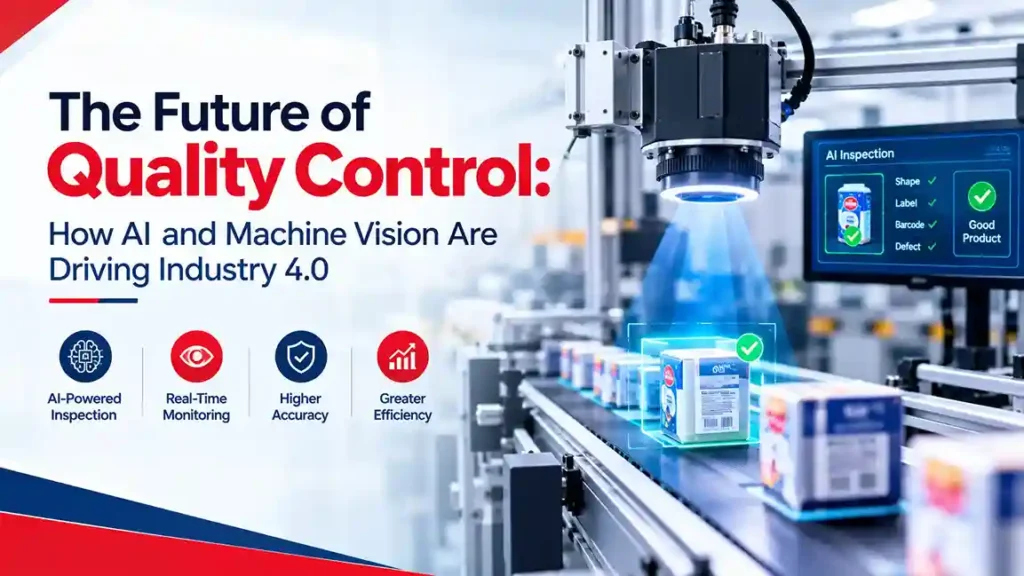
The Future of Quality Control: How AI and Machine Vision Are Driving Industry 4.0
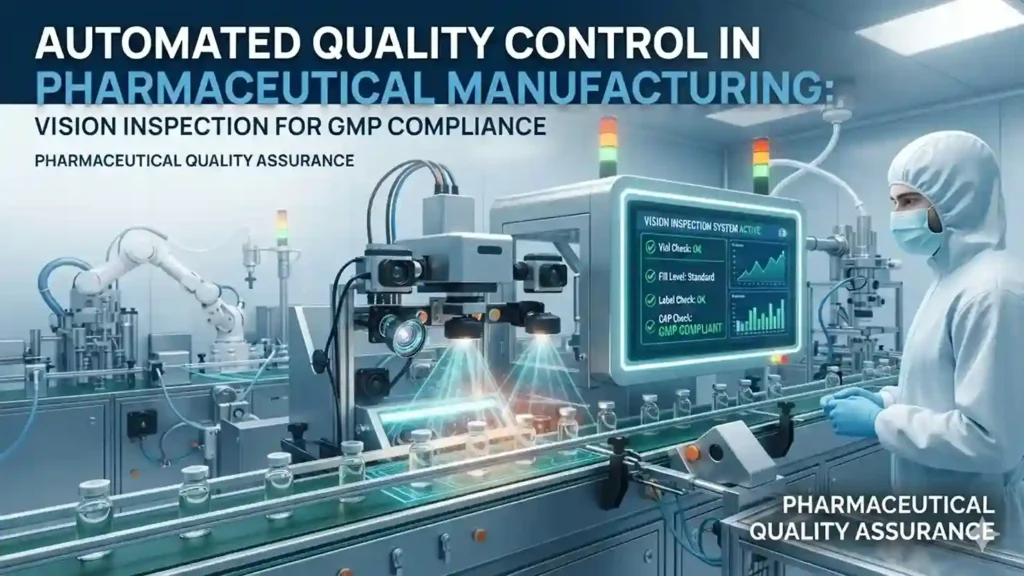
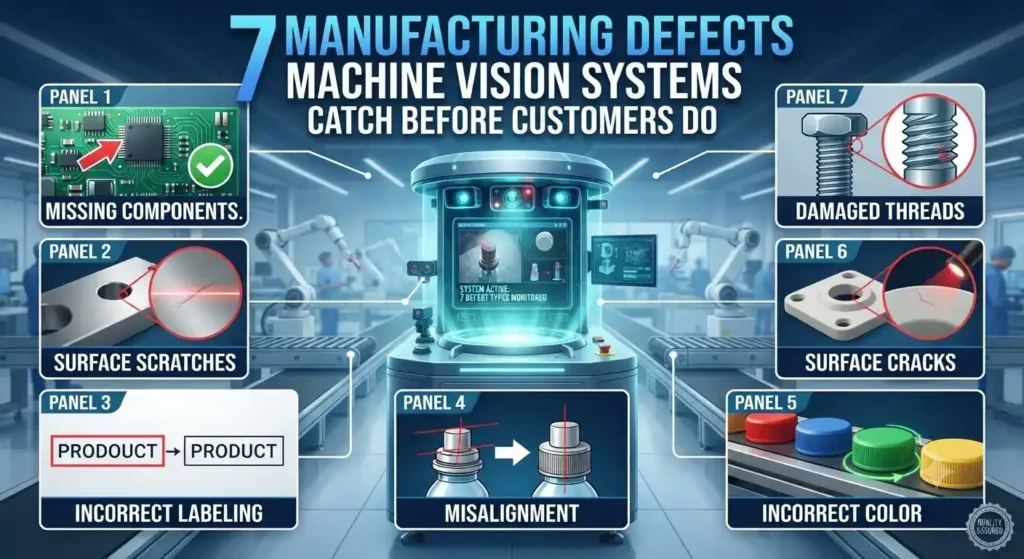
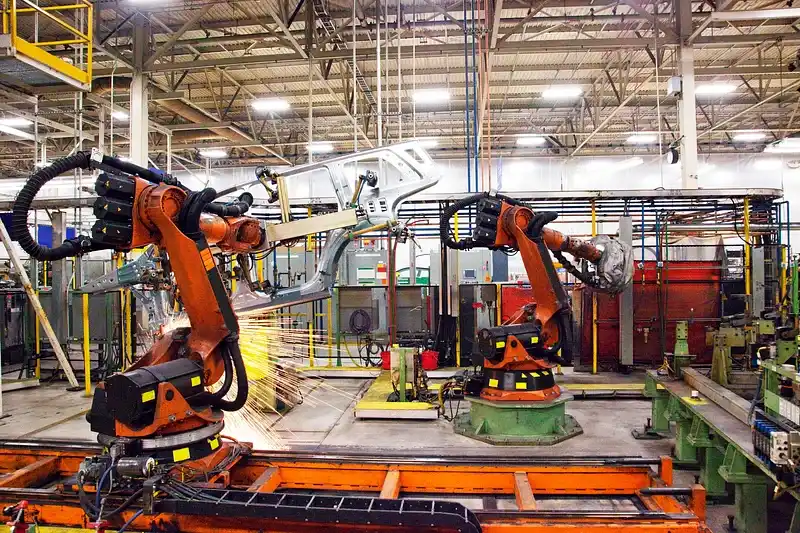
Quality control is the function that separates manufacturers who grow from those who recall, rework, and lose customers to competitors with better processes. For decades, quality inspection relied on human visual checks, statistical sampling, and rule-based camera systems that could only detect defects they were explicitly programmed to find. That model is being replaced — rapidly and permanently — by AI-powered machine vision that inspects 100% of production at full line speed, detects defects human inspectors miss, and feeds real-time quality data back into the manufacturing ERP that runs the plant. The numbers confirm the shift is already happening. The global machine vision market is projected to grow from USD 25.3 billion in 2026 to USD 61 billion by 2033 at a CAGR of 13.4%. AI vision inspection specifically — the deep learning layer on top of machine vision — reached USD 32.66 billion in 2025 and is projected to hit USD 256 billion by 2035 at a 22.88% CAGR. Nearly half of all manufacturers — 47% as of early 2026, up from 33% the year before — now use AI somewhere in their quality operations. Industry 4.0 is not a future state. It is the current competitive standard. And AI machine vision is its most commercially mature quality control technology. What Has Changed: From Rule-Based to AI-Powered Inspection The first generation of automated quality inspection used rule-based machine vision — pre-programmed algorithms that compared captured images against fixed parameters. It worked reliably on simple, predictable defects in controlled environments. It broke down every time production conditions changed, new defect types emerged, or product variation exceeded the programmed tolerance. The second generation — AI-powered machine vision using deep learning — works fundamentally differently. Instead of following rules, it learns from examples. Trained on thousands of real production images showing acceptable and defective parts, a deep learning inspection model generalises across variation, detects novel defect types without reprogramming, and improves with every production cycle as new data is added. The performance gap between the two generations is significant and growing. AI computer vision quality control systems have produced a 35% average reduction in defect rates across documented manufacturing deployments. In controlled studies, AI inspection detects 37% more critical defects than expert human inspectors operating under optimal conditions. And unlike rule-based systems, AI vision performance improves over time rather than degrading as conditions drift from the original programming. The Four Layers of AI Quality Control in Industry 4.0 Modern AI-driven quality control is not a single technology — it is four connected layers working together across the manufacturing process. Automated visual inspection is the foundational layer — AI cameras and deep learning models performing 100% inline inspection at production line speed. This replaces statistical sampling, eliminates manual visual checks, and generates objective inspection records on every unit produced. Quality assurance and inspection is the largest application segment in the machine vision market, holding the biggest share in 2025. Predictive quality analytics uses machine learning to analyse process parameter data — temperature, pressure, vibration, speed, humidity — and identify the conditions that produce defects before they occur. Instead of detecting defects after they are made, predictive analytics prevent them from being made at all. The global predictive maintenance market in manufacturing is projected to reach USD 66.5 billion by 2033 at a 23.1% CAGR — a figure that reflects how seriously manufacturers are treating prevention over detection. Edge AI processing moves AI inference to compute hardware at the camera rather than centralised servers — enabling real-time inspection decisions with zero latency, no cloud connectivity dependency, and full operation during network disruptions. Edge AI is the fastest-growing category in the machine vision market in 2026. The Industry 4.0 market overall is growing from USD 202.78 billion in 2025 to USD 238.89 billion in 2026 at 17.8% CAGR — and edge AI is among its fastest accelerating components. ERP-integrated quality management closes the loop between the production line and the business system. When AI inspection data flows directly into Microsoft Dynamics 365 Supply Chain Management or similar ERP platforms, quality events trigger automatic production adjustments, supplier quality records update in real time, and batch traceability documentation is generated without manual data entry. This integration is what transforms AI quality inspection from a standalone machine to an intelligent node in a connected manufacturing operation. Industry Applications Leading Adoption in 2026 Automotive remains the highest-volume deployment sector for AI machine vision — driven by zero-defect supply chain requirements from OEMs, multi-model production line complexity, and the introduction of EV battery and power electronics inspection requirements that rule-based systems cannot handle. Pharmaceuticals are seeing accelerating adoption driven by updated regulatory frameworks. The FDA’s Quality Management System Regulation became effective February 2026. EU GMP Annex 1 explicitly encourages automated inspection for sterile products. EMA Annex 22 on AI in GMP environments published in draft in July 2025 creates the first regulatory framework specifically governing AI-powered inspection in pharmaceutical manufacturing. Electronics and semiconductors lead in inspection speed and precision requirements — with SEMI reporting global semiconductor equipment billings of USD 135.1 billion in 2025, up 15%, reflecting massive capacity investment that requires correspondingly advanced inspection infrastructure. Food and beverage is one of the fastest-growing adoption segments — driven by food safety regulation, contamination liability, and the shift to 100% inspection coverage from statistical sampling on high-volume packaging lines. The Competitive Divide Is Widening Over 65% of industrial production facilities worldwide have already implemented machine vision systems for quality assurance and defect detection. Machine vision is now deployed in over 78% of advanced robotic systems used in manufacturing globally. Manufacturers still relying on manual inspection and statistical sampling are not competing on a level playing field with those running AI-powered 100% inspection. They are producing at higher defect rates, carrying higher rework and recall risk, and generating quality records that cannot satisfy the regulatory and customer audit expectations of 2026. The technology cost barrier that once made AI machine vision an enterprise-only investment has collapsed. Deep learning inspection platforms are
The Future of Quality Control: How AI and Machine Vision Are Driving Industry 4.0 Read More »