
INTRODUCTION
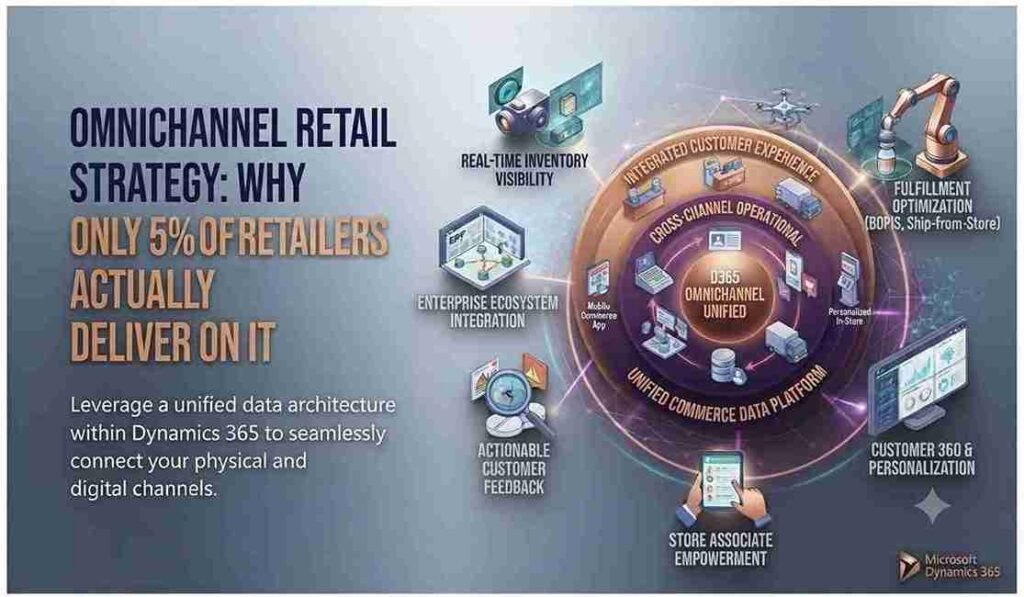
Retailers have been talking about omnichannel for more than a decade. However, only about 5% actually allow a customer to initiate a purchase on one channel and complete it on another. Meanwhile, customers aren’t waiting: The vast majority research and select products online before setting foot in a physical store, and half of in-store shoppers check their phone during the visit to check specifications, compare prices or confirm a decision. The gap between what customers expect and what most retail systems can deliver is where sales are lost.
Make all channels reflect the same brand
A disjointed brand experience—slick in-store, clunky in-app, and slow on social—quietly erodes trust with each inconsistency. Nespresso is a great example of how to do it right: the same visual language is maintained on their e-commerce site, mobile app, order confirmation emails and even on the physical packaging; Thus, the brand is perceived identical at each touch point, instead of reinventing itself channel by channel.
Unify your sales channels, not just your brand image
Customers expect basic cross-channel functionality: checking if a specific store is in stock, adding an item they saw in person to their online cart, or making a hassle-free return on an in-store purchase. Most retailers cannot yet reliably offer this, as their systems have been assembled from separate, poorly integrated tools rather than being built as a single platform; This often results in the inability to see real-time inventory across locations, difficulty accepting returns across channels, and the risk of selling items that are no longer available.
A unified commerce platform like LS Central solves this at the root: centralized inventory and location visibility allows exchanges and returns to work the same way, regardless of the channel where the original purchase was made.
Be transparent about shipping costs and conditions
Approximately 70% of online shopping carts are abandoned before completing the order, with unclear or unexpectedly high shipping costs being the most common reason. Retailers who clearly list delivery time, shipping cost, and return conditions next to each product—rather than revealing them at the final checkout step—allow customers to make an informed decision from the start, building the kind of trust that reduces cart abandonment.
Show real inventory, not just a product catalog
Most customers expect to see product availability online before visiting a store; some retailers, like IKEA, even go so far as to display exact stock quantities at each location. At a minimum, product catalogs should be kept up-to-date across all channels (a unified system allows e-commerce, point-of-sale and back-office to use the same data in real time), include detailed product information to compensate for the inability to physically touch or try it, use high-quality images and videos, and display customer reviews; All of these factors directly influence confidence when purchasing and decision-making.
Design thinking about what the customer really needs
The retailers who succeed are not those who insist most on selling, but those who solve a real problem. CVS’s pharmacy app is a useful example: it helps customers manage complex medication schedules with reminders and notifies them when a prescription is ready for pickup. The value is not promotional, but functional; Precisely because of this, it generates the type of trust that translates into recurring purchases.
Turn collected data into actions, not just reports
Retailers collect huge amounts of behavioral data (pages viewed, items abandoned in cart, return patterns, top customer preferences), but collecting it is not the same as using it. GameStop’s loyalty program, with tens of millions of members, is a clear example of how to do it right: Analysis of member data revealed that rewards alone don’t drive engagement, but personalized offers do. This change reportedly allowed email open rates to more than double when GameStop moved to using hyper-segmented messages based on purchase history.
Turn collected data into action, not just reports
Retailers gather vast amounts of behavioral data—pages visited, items abandoned in carts, return patterns, and the preferences of key customers—but collecting data is not the same as using it. GameStop’s loyalty program, with its tens of millions of members, is a prime example of getting this right: analysis of member data revealed that rewards alone do not drive engagement, whereas personalized offers do. This shift more than doubled email open rates when GameStop switched to using hyper-segmented messages based on purchase history.
For most retailers, the obstacle isn’t a lack of data, but rather data fragmentation. Having data scattered across disconnected systems means most companies can only meaningfully analyze a small fraction of the information they collect. A unified commerce platform that consolidates data from all channels into a single location is what truly enables a comprehensive view of the customer.
Want to see what a unified omnichannel platform would look like for your retail business? Contact the Trident team to discover the possibilities offered by LS Central.

