
INTRODUCTION
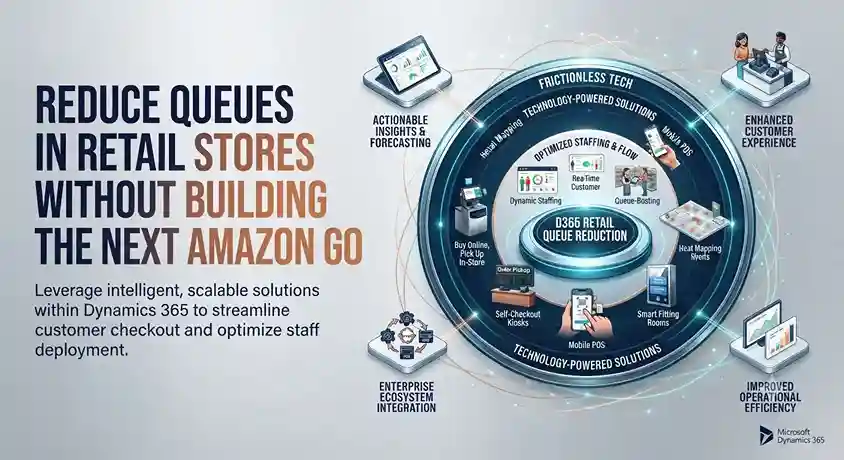
Nine out of ten shoppers in the UK say they will completely avoid a store with a long line; this means that every minute spent waiting to pay represents a real risk of losing the sale, not just a minor inconvenience. Amazon Go made headlines by eliminating checkout lines entirely, but a complete overhaul to remove checkouts is not feasible for most retailers. These six approaches can significantly reduce wait times without going to such extremes.
1. Bring the checkout to the customer with mobile POS systems
Using a tablet or smartphone-based point-of-sale (POS) system allows staff to look up items, process payments, and print receipts wherever the customer is—whether inside or outside the store—instead of funneling all transactions through a fixed checkout counter. Furthermore, this solution facilitates scalability during peak periods: adding more mobile devices does not require allocating physical space for additional checkout stations, as traditional registers do.
2. Designate a specific line for complex transactions
Simple purchases are quick, whereas returns, custom orders, and loyalty program sign-ups take longer. Mixing the two types in the same line means that every complex transaction slows down the progress of those waiting behind. Since straightforward sales usually far outnumber complex ones, routing complicated processes to a dedicated service point allows the main line to move at the pace most customers actually need.
3. Try virtual queuing
Virtual queuing systems—common in banks and post offices but still rare in most retail stores—allow customers to get a number and reserve their spot without having to physically stand in line. Beyond convenience, this creates a genuine opportunity for upselling: a customer browsing the store while waiting for their turn might notice an item they hadn’t originally planned to buy.
4. Offer appointments for visits requiring personalized attention
Not every store visit needs to be spontaneous. For specialized consultations or services, scheduled appointments allow retailers to manage visitor flow and devote proper attention to each customer, rather than rushing to serve them as quickly as possible. Watches of Switzerland took significant steps in this direction after reopening, organizing 13,000 one-on-one appointments (combining virtual and in-person formats) in just two weeks. While this model doesn’t suit every retail category, for purchases requiring more customer deliberation, it transforms queue management into an enhanced service experience rather than a compromise on the quality of care.
5. Implement self-scanning technology (Scan-and-Go)
Self-scanning apps put the scanning process in the customer’s hands: items are scanned and added to a running total as they are placed in the cart, rather than all being scanned at once during checkout. Although this method is more established in the grocery sector, there is no structural reason preventing its application in sectors such as fashion, electronics, health, or home improvement. It offers an advantage beyond speed: scanning a barcode allows product details—such as ingredients, materials, or care instructions—to be displayed directly to the shopper, eliminating the need to consult staff or handle the packaging.
6. Ensure technology works correctly before it becomes a problem
Unreliable point-of-sale (POS) technology not only slows down transactions but can bring them to a complete standstill. A Trident client recounted how their old system crashed during the Christmas Eve rush: every checkout in the store stopped working, transactions had to be processed manually, lines wrapped around the building, and the business estimated losses of $20,000 that day alone—not to mention the likely long-term impact on customer loyalty. Their conclusion, in their own words, was that reliability must be the primary criterion when evaluating payment technology, taking precedence over features or price. Before implementing new strategies to reduce queues, it is essential to ensure that the current system itself does not become the actual bottleneck.
Are you looking for payment technology capable of handling demand spikes without failure? Contact Trident to discuss the best solution for your store.

