
Welcome to Trident Information Systems!
Write us to - info@tridentinfo.com
Let's Socialize

microsoft dynamics 365 finance

D365 Finance and Operations

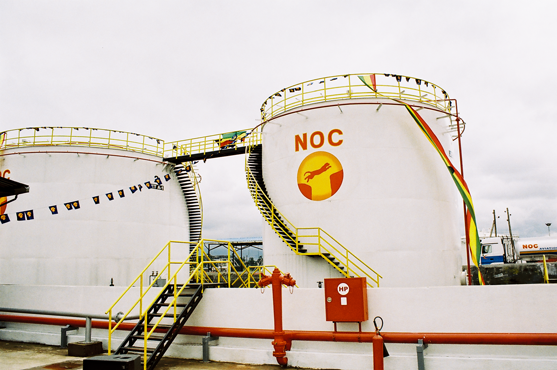
Case Study – Trident Implemented D365 Finance & Supply Chain Management for NOC Ethiopia

Established in 2004, National Oil Ethiopia Plc (NOC) is excelling in the marketing of petroleum products in the country. It is the first indigenous oil marketer to have distinct service stations located throughout the country.  NOC markets one of the leading lubricant brands commonly known as Chevron-Caltex Lubricants, as well as contribute to a major share in Ethiopia Oil Industry. It supplies over 100 lubricant grades for Industrial and Automotive applications. Additionally, the organization delivers other petroleum products such as LPG, Chemicals, Bitumen, and Petcock.   The business delivers services to keep their customers going by delivering services in the most cost-efficient and effective manner. Their team is divided into retail and commercial units to profitably market their products and achieve effective customer services and market leadership in the gas sector of Ethiopia.   The business aims at consistently improving its product and service offerings while expanding its business operations in Ethiopia and other African Countries. However, their current system was unable to comply with their requirements. Hence, they decided to contact Trident Information Systems for a suitable solution. After conducting thorough research, Trident found its core challenges and requirements and believed Microsoft Dynamics 365 Finance and Operations will be the most suitable solution.   Business Challenges  The business was struggling with financial management and supply chain issues which included:   Difficulty in figuring out the accurate volume of fuel transported in the truck.   Tough time allocating charges on import purchase orders and knowing the landed cost on the inventory.   Difficulty in allocating departmental costs and expenses.  The manual approach to the regular activities caused redundancy and similar issues.   Disparate systems and no real-time data availability hampered decision-making.   Uncontrolled operations and compliances throughout the organization and vendors.   Business Requirements  The business needed a unified approach in the financial management of the business and required the following:   To calculate the accurate fuel volume transported in trucks, know the losses and gains during the transit.   To allocate charges on the import purchase order and to know the actual landed cost on inventory.   Needed to identify departmental cost and expenses for actual cost allocations.   Configure and customize the automation process for regular activities.   Unified software solution for real-time data availability.   Robust support of operations and compliances throughout the organization and vendor.  Solutions Provided by Trident Information Systems  After digging out the organization’s core challenges and requirements, Trident implemented Dynamics 365 Finance and Supply Chain. Other benefits the solution provided include:   DIP Measurement Process- as NOC uses Dip Measurement to calculate fuel volume transported in the truck to find out the losses and gains during the transit.   Insightful reports and dashboards on financial transactions with D365 Finance and Supply Chain.   Enhanced Process Automation.   Captured all landed costs while adding them to the Inventory.   A centralized view on operations, costing, compliances, and inventory.   A sophisticated vendor management system.   Benefits to Business  After implementing Dynamics 365 Finance and Supply Chain, NOC noticed a considerable change in their financial management and supply chain. Trident’s solution delivered the following benefits:   The business could manage and schedule its resources in real-time and project costs accurately.   NOC could identify the actual fuel volume transported in the truck to know the gains and losses during the transit.   Their revenue was now managed more systematically and accurately.   A centralized system for planning and project analysis could better control operations and compliance across the organization.   Better vendor management and regulatory compliance.   Advantages of Dynamics 365 Finance and Supply Chain  Microsoft Dynamics Finance and Supply Chain put flexibility and Scalability at the core of your business, allowing you to quickly grow, and adapt at your own pace. You can easily tailor and extend the application to meet your unique business or industry-specific needs. It can offer the benefits given below but not limited to:   Supports critical operations throughout the business.   Exceptional reporting functionality that allows businesses to collect data and assess situations right then and there.   Microsoft backed and developed functionality to enable seamless integration within the enterprise.   Enables in-depth accounting and financial functionality.   Reduces IT maintenance load.   It automates and streamlines the supply chain.   Endorses innovation with a modern and adaptable platform.   Streamlines asset management.   Bottom line   After struggling with successfully managing their expanding business’ finance and supply chain, NOC Ethiopia finally decided to contact Trident Information Systems for Dynamics 365 Finance and Supply Chain solution. After the implementation, the business could witness benefits like optimum resource management and scheduling, systematic revenue management, centralized view of the entire supply chain, and so on. Trident is a Microsoft Dynamics 365 Gold Implementation partner. Contact us for further information

Case Study – Trident Implemented D365 Finance & Supply Chain Management for NOC Ethiopia Read More »

Supply Chain Management Software

Shed Unpredictability, Labour Shortages, and Equipment Unpredictability with SCM software! 

Machinery and equipment rental, leasing, and service-focused businesses look for every challenging opportunity in their way. Everyone applies different strategies to stay ahead in the competition. Successful businesses emphasize majorly Supply Chain Management Software which provides all the necessities to run a business on a single platform.   Due to the global changes in the past few years, the supply chain has been disrupted for various businesses. Mckinsey’s Tom Barton recently moderated a discussion panel on how to overcome supply chain disruptions at the 84th Inland Transport Committee roundtable. There it was discussed that despite consistent recovery efforts, we have still not managed to achieve pre-pandemic growth and sustainable development.   There are three major challenges that the global supply chain is currently facing: Equipment unavailability, labor shortages, and global bottlenecks. Furthermore, persistent unpredictability is another reason why supply chains are failing.   It is important to choose the right Supply Chain Management Software for:   Providing the planning departments with a complete vision of trucks throughout the depots.   Enabling planners to schedule transport and transfer work orders using the same window.   Robust third-party shippers and carriers’ collaboration.   Route optimization by connecting planners with drivers.   Real-time coordination and optimization with logistics.   Updating customers about delivery issues or delays.   Agility for complicated routing, partial shipments, and multi-channel orders.   Manage complex freight and transport costs in a single process.  In this erratic environment, the technology you use plays a major role in the flow of your supply chain. Supply Chain Management Software like Microsoft Dynamics 365 Finance and Operations has helped streamline the supply chains of businesses in different verticals throughout this rough period and continues to do the same.  How does D365 Supply Chain Management Software Help in Maintaining a Healthy Supply Chain Flow?  Microsoft Dynamics 365 Finance and Supply Chain is an all-in-one Supply Chain ERP System evolved to manage trade, manufacturing, and complete supply chain processes. It competently collects and uses the data available to provide significant insights on upcoming opportunities and threats. What else does it provide?  Everything in One Space  Microsoft ERP for Supply Chain Management provides every functionality a retailer, manufacturer, or distributor needs on a single platform. This may include a complete range of tasks such as data management, inventory, planning, warehousing and transportation, procurement and sales, and integrated product management on the same platform. This Supply Chain Management Software allows detailed management and complete control based on reliable and complete operational information.   Input Chain Control   Many products may come from distant locations while engaging in long traveling hours. They may reach you via trucks, ships, planes, etc. and each of them may potentially delay the process. Earlier it was impossible to control every stage. However, today you can access data on your cargo processed by delivery, insurance, and services in electronic forms.   Dynamics 365 Finance and Supply Chain allows you to register agreed routes and gain information about the product’s location at each stage. This way, you can correctly calculate the accurate date of its arrival at your warehouse, thus ensuring timely shipment to the customer.   Control Additional Costs    After adding delivery, processing at intermediate points, and insurance, imported goods cost 40% or even higher than the selling price of the supplier. D365 Supply Chain Management Software allows control of additional costs at every step of the complete supply chain to your warehouse with accurate costing of goods.   Every line in each order, regardless of complete or individual delivery, disparities in routes, or calculation methods will be calculated according to rules of cost allocations. Even if there is an unexpected occurring cost in between the process, it will reflect in your current route ensuring accurate calculations.  Reduce Costs with Power Platforms   Another development in current digital technology is the ability to develop small solutions or chatbots, combine software products, and produce interactive reports at a far lower cost of development and maintenance. And corporate customers have access to all of this with little to no participation from professional developers.  There are also specialized, pre-packaged boxed solutions for particular processes that link to Dynamics family products. Is there an added task in your industry that needs to be automated? You can find solutions in the AppSource Affiliate Store. You will probably be able to identify several proposals that have already been created and are suitable for usage with your system.  If you are looking for D365 Supply Chain ERP Implementation, you can contact Trident Information Systems, a Microsoft Dynamics 365 Gold Implementation Partner, and LS Central Diamond Partner.  

Shed Unpredictability, Labour Shortages, and Equipment Unpredictability with SCM software!  Read More »

AX to D365 Upgrade

Why Should You Upgrade from Dynamics AX to Cloud? 

Relying on outdated technology pushes you back in the race. You become incompetent and your rivals make money out of it. Many businesses postpone upgrades as they feel uncomfortable shifting to modern technology. However, little do they realize that they are pushing themselves back. Businesses working with AX fear the same discomfort and tend to postpone the AX to D365 Upgrade.  One of the major reasons why it is recommended to Upgrade AX to D365 Finance and Operation is the end of its lift support. Many of the AX versions are already out of support and a few have extended support till January 2023. Hence, it is best to hurry up and Upgrade AX to D365.  Other Reasons for AX to D365 Upgrade   Lack of suitability for large-size businesses. It may not even be a good match for small-sized businesses either.   Despite being comprehensive, its dependency on partner channels and ISV may add time to the deployment, hence increasing the total cost of ownership.  Software as a Service (SaaS) and cloud ERP options have a limited reach which can increase costs if partners are hosting the software.  Hence, it is clear that AX is not suitable for every business size, unlike Microsoft Dynamics 365 Finance and Operations. It is not as scalable as a growing business may need and may even become expensive at times.   Dynamics 365 Finance and Operations is both cloud-based and on-premises. Hence, you can choose the solution you prefer. However, cloud-based solutions are more convenient, flexible, and agile. For instance, in an on-premises solution, your data is backed up in a local server, when you feel like increasing your storage, you will have to install a new server from scratch. But in the cloud, all you have to do is push command and your storage shall increase. Furthermore, it is easier to manage cloud storage than a local server.   Other benefits you can experience with Microsoft Dynamics 365 Finance and Supply Chain include:   High-end Security: D365 ensures high-end security from hacking, malware, viruses, and other threats. Contrary to the old beliefs, the cloud has now become more secure than ever as its credentials are continuously monitored and attacked by Microsoft 24/7. With over 3000 security experts by Microsoft, you can assure bank-level security.   Low Cost of Ownership: When you no longer have to invest in hardware, maintenance, service management, staff training, and upgrades, imagine how much you are saving. With AX to D365 Upgrade, your cost of upgrade with a limit to testing and validation, hence removing every other IT-centric work. You do not even have to re-train your staff after an upgrade except for new features if any.   Remote Accessibility: one of the major benefits of AX to D365 Upgrade is its remote accessibility. Upgrading to a cloud-based platform allows accessibility on any device. Since your business apps are standardized by Microsoft, they can function seamlessly with a single sign-on and are integrated out of the box.  Effortless Latest Version Installation: As soon as you leap to the cloud, any subsequent platform will be automatically updated every three months. The application on the other hand will update every six months. Dynamics 365 provides update reminders from 7, 15, 30, and 90 days before the upgrade. You can even postpone upgrades by 12 months from the release date. Minor upgrades take place without disrupting your business operations, and for major updates, you will be updated prior.   No/Low Training Required: Since Microsoft uses the same functionalities, you do not have to spend much time learning the software. You can start working right away and boost efficiency at the same time. The core business logic you use has been transferred to Dynamics 365 Finance and Operations, but the interface is updated.   Adaptability: AX to D365 Upgrade gives you enough flexibility to mix match apps and personalize your experience while increasing profitability. The best part is that the user experience of these apps is equally intuitive. For instance, you can leverage sales and field service along with Dynamics 365 Finance and Operations providing the ultimate growth platform.   Upgrade Dynamics AX to D365 and ensure the most agile, flexible, and secured features. If you wish to for an upgrade, you can Contact Trident Information Systems, a Microsoft Dynamics 365 Gold Implementation Partner and LS Central Diamond Partner. 

Why Should You Upgrade from Dynamics AX to Cloud?  Read More »

AX to D365 Upgrade

It’s High Time to Upgrade Your AX 2012 to Microsoft Dynamics 365 Finance and Operations 

Today, almost all businesses leverage technology to surpass one another. When technology comes with exceptional benefits, it makes the competition harder. Hence, the one with the latest technology is most likely to win. As Microsoft mainstream support for 2012 ended in October 2021, businesses must Upgrade AX to D365. Nevertheless, this is not the only reason to upgrade.   In the era where the cloud rules, businesses running on on-premises technology will fall behind. In addition, Microsoft has stopped its AX 2012 upgrades, which means your services will become more and more irrelevant with time.   Some major drawbacks businesses already witness include:   Microsoft Dynamics AX is not a good choice for small-scale businesses. It majorly supports midsize to large-scale businesses.   Even Though this solution is very flexible and can be customized according to certain market needs, the dependency on ISV and partner channels can heavily cut your ROI.   You cannot get enough Cloud ERP and SaaS options if you run this software on-premises.  Upgrade AX to D365 to Get Exceptional Services   Given below are the top outstanding services you will get after D365 Migration:   Web-and-cloud Based Solutions   One of the major factors promoting AX to D365 Upgrade is its infrastructure. On one side, D365 AX is an on-premises version, which means the business will have to host it on a privately owned server. And on the other hand, Dynamics 365 for Finance and Operations is a cloud-based solution that runs by and on Microsoft Azure. The fact that cloud-based solutions are entitled to more advanced, agile, and flexible solutions makes the difference. Your business needs to become agile and flexible with suitable tools to thrive in this ever-changing market.  One of the greatest benefits of cloud-based solutions is that you do not have to manage the entire ecosystem yourself. Your service provider is responsible for all your upgrades and updates. AX to D365 Finance and Operations Upgrade will support your software on any browser and OS wherever you want.   Consistent Upgrades   Upgrade AX to D365 to get a consistent iterative list of upgrades. The best part is you can install or disable whatever feature you like. You can even pause three upgrades in a row with no fuss. Make your software feature-rich and powerful, and access only the tools you need. Not to mention, this will also save your IT team a bulk of their time.   Since the updates are automatic, your IT team doesn’t have to engage there. Assign them other development projects that count. AX to D365 Finance and Supply Chain Management Upgrade ensures you are on the most up-to-date technology.   Extensively Innovative Tools   If you Upgrade AX to D365 Finance and Operations, you can tap into a plethora of different tools and features designed for different industries. Microsoft is said to have 3700 vertical solutions crafted for different industries. Associated features include human resource management, manufacturing management, purchasing management, inventory management, sales management, quality management, and product technology.   Combining all these features on the same platform presents Microsoft Dynamics 365 for Finance and Operations: an ERP solution that supports every business type, size, and industry.   Intuitive Interface   One of the most noticeable differences between Dynamics AX and Dynamics F&O is their user interface. AX has a standard user interface that can only be used via desktops. Dynamics AX, however, has a friendly user interface and can be used via different browsers, and mobile devices which encourage remote work and support anywhere access.   Additionally, after the AX to Dynamics 365 Finance and Operations upgrade, the user can access workspaces where they can create custom queues and links to get them through day-to-day tasks.   On-demand Scalability   Upgrade AX to D365 and get scaling capabilities whenever and wherever you need them. In contrast to Dynamics AX where scalability was a big concern, Dynamics 365 Finance and Operations gives you the flexibility you need in a growing business. Furthermore, it is excellent to support your business in a rapidly changing environment.   You don’t even have to make a single upfront investment; you can pay in monthly subscriptions too. You can initially get the very minimum service package and increase resources as per need.   If you are looking forward to Upgrade AX to D365, you must get a suitable partner first. It is suggested to choose from a Microsoft Dynamics 365 Gold Implementation Partner. It’s perfect if they are old enough in the market, such as Trident Information Systems. We are a Microsoft Dynamics 365 Gold Implementation Partner and LS Central Diamond Implementation Partner. With a robust track of accomplishments, we have gathered impressive clientage and helped them thrive in the market. If you want to add yourself to the list, Contact Us.  

It’s High Time to Upgrade Your AX 2012 to Microsoft Dynamics 365 Finance and Operations  Read More »

How Business Central Outshines Dynamics 365 GP? 

There is a pretty good reason to Upgrade GP to Business Central; the product’s life cycle has come to an end. Therefore, making it an obvious replacement. Dynamics GP 2015 and GP 2015 R2 mainstream support ended on April 14, 2020, and the extended support is valid up to April 8, 2025. Dynamics GP 2016 and GP 2016 R2 mainstream support terminated on July 13, 2021, and the extended support was extended to July 14, 2026. Dynamics GP 2018 and GP 2018 R2 mainstream support will end on January 10, 2023, while extended support till January 11, 2028.   Moreover, even though Dynamics GP was designed for the cloud as well, it worked best on-premises. It is less flexible than its successor: Microsoft Dynamics Business Central.   Microsoft Dynamics GP is complex software that may not suit small businesses. Its tools can often overwhelm its users. For instance, there are numerous options for reporting, but the user may not be able to spot the required information due to so many options available.  Dynamics GP does not have an intuitive interface hence staff training on the software becomes mandatory in most cases. This software comes with a learning curve in most parts. Therefore, giving you another reason to consider GP to Business Central Upgrade.   Upgrade GP to Business Central Because:  Microsoft Business Central is exceptionally adaptable and feature-rich software. It helps businesses manage their manufacturing, sales, finance, shipping, services, project management, and customers. Upgrade GP to Business Central and enjoy its features:   Enhancement Capabilities: Besides the user interface, you can add new rules, processing, and fields to enrich Business Central. After GP to Dynamics 365 Business Central Upgrade, you no longer need legacy development skills, which you earlier needed for GP to accomplish the same.    Customized Business Processing: After upgrading to GP to Dynamics 365 Business Central, if you are unable to address your unique business processing requirements by base business central or a companion solution, you can still customize the application without disturbing the solution updates.   Arranging Deployment Options: Most of the competing ERP (Enterprise Resource Planning) solution providers allow just one deployment method straight to the cloud. However, this is not the case with Business Central. Upgrade GP to Business Central and access a few more options and decide when you wish to deploy.   Intuitive Interface: Microsoft Business Central delivers advanced features and an intuitive interface. MS Office 365 delivers the same user interface that your staff would already be familiar with i.e., Word, Excel, Outlook. It also includes Teams, Power BI (Business Intelligence), and Flow.   Latest User Experience: GP has not changed its interface for the past 2 decades. However, when you Upgrade GP to Business Central, you can access the latest and updated interface as BC (Business Central) is based on cloud access. Even your non-technical internal sources can modify the windows as they please.   Benefits of Microsoft Business Central   Dynamics GP to Business Central Upgrade delivers ERP and CRM (Customer Relationship Manager) on the same platform and delivers more robust features to your business such as:   Reporting and Analytics: Data availability on the cloud allows reporting and analytical tools. It leverages Power BI with Microsoft Azure and manages huge data. Power BI extracts data from multiple sources and turns it into intuitive and actionable reports. It is a key feature that supports more logical decisions.   Centralized Control: Having all the necessities from finance to customer data to supply chain on the same platform. Gives centralized control of your business your access to data from all your retail chains or different branches of any business on the same platform. A centralized view endorses better decisions and more impactful strategies.  Impressive ROI (Return on Investment): Better control of your business, better decisions, and robust business-boosting strategies contribute to a greater ROI. Automation replaces manual tasks, hence freeing up staff to focus on more productive activities.   Staff Empowerment: With the Business Central Upgrade, your staff can leverage automation to ease their burden. For instance, in a factory, the staff can access real-time inventory available and plan orders accordingly while avoiding overstocking and understocking.   Happier Customers: Microsoft Power BI extracts customer data from different touchpoints, analyzes them, and turns them into insightful plus actionable reports. Having customer data at hand helps segregate them into groups with the same or similar preferences followed by allocating suitable offers to each group.  Upgrade GP to Business Central for enhanced and more robust features. Embrace a better ROI and empower staff. With Microsoft Business Central, get ERP and CRM on the same platform. If you are looking for BC implementation, you can contact Trident Information Systems. We are Gold Microsoft Dynamics 365 and Diamond LS Retail Implementation Partner. 

How Business Central Outshines Dynamics 365 GP?  Read More »

7 Reasons to have a Retail-oriented Solution to Unite E-commerce and ERP

[vc_row][vc_column][vc_column_text]Solely brick-and-mortar retail is gradually have become the exception rather than the norm. Increasing numbers of consumers have welcomed the convenience of online retailers, allowing them to evaluate items in less time and make purchasing decisions rather than visiting various physical stores. In everyday market research, 81 percent of consumers use phones and tablets. In reply to these developments, businesses try to boost revenues by embracing ecommerce and spreading to other platforms. Yet each new site introduced by marketers raises the difficulty of their distribution chain. To integrate all channels information to make good enterprise-wide choices, they need new digital resources. To establish a consolidated database of all purchases, clients, and goods, several retail businesses prefer to incorporate their ERP implementation services with each of their distribution channels. There are however some clear benefits of using an integrated solution designed specifically for the retail sector over integration solutions for common use applications. Below are some features of built-in retail integration solutions that show the requirement of customization for a common integration framework: 1- Flexibility Over Retail Vhannels All businesses move toward cohesive user experiences. Retail-specific integration solutions enable different systems, like your point-of-sale (POS) and ecommerce system, to import and then use product descriptions into your Retail ERP Software. It means you have the same range of products throughout all the product lines, while constantly pricing and discounting those items. 2- Omni Channel Experience Retail integration solutions offer services for Omni channel purchase-online pickup-in-store (BOPIS) fulfilment which enables customers to buy an item from one channel and deliver it from another platform. They might buy a product at a retail outlet, for instance, and have it shipped to their house, or they might order it online and pick it up at a local retail outlet. The retail-specific integrated system manages ZIP-code searches for shop inventory, and shares shop pickup information between systems. 3 – Inventory Clarity Retail connectivity solutions provide an accurate representation of product availability by synchronization of inventory data throughout networks and systems on a routine basis. Entities can even merge individual warehouses and shops into satisfactory groups to enhance the control of the distribution chain. 4- Client Information Integration Your Retail ERP system will exchange customer data with your online store and other channels, using a retail-specific implementation solution. Customer data must stay consistent over digital and physical platforms and will avoid redundant information. Such knowledge could be used to generate and monitor purchase requests, and to improve loyalty program management. 5- Unified Loyalty Program A retail integration solution makes it much easier to operate a single loyalty program with consumer, pricing, and discount information integrated into your Retail ERP system. You will receive and redeem coupons, gift cards, and loyalty points across all platforms, creating better customer satisfaction and higher participation levels than a channel-specific rewards program. 6 – Single Integration Solution for Payment A retail-specific integration approach increases time to value by offering preloaded integration with major payment service vendors. The use of one integrated system for processing payments, order processing, customer data, and product inventory offers greater efficiency and lower production costs than multi-integrator dependence. 7 – Managing Multiple Languages and Currencies Retail integration technologies are planned for retail operations around the world. They have help for managing multiple languages and currencies, so you can quickly set up physical or online stores in new geographical regions. Conclusion Integration solutions intended for the retail sector provide many out of the box that would involve many months of costly customization to accomplish using platforms for general purpose integration. Trident Information Pvt Ltd provides a flexible and versatile integration solution which many international retailers use. For more information on the power of retail-specific integration, contact Microsoft ERP Partner Trident Information Pvt Ltd on https:/tridentinfo.com/contact/     [/vc_column_text][/vc_column][/vc_row]

7 Reasons to have a Retail-oriented Solution to Unite E-commerce and ERP Read More »

Turn prospects into engaged customers with intelligent sales and marketing

[vc_row][vc_column][vc_column_text] The selling landscape is undergoing fundamental changes, many of them driven by the effects of B2B customers’ experience as everyday consumers. Many retailers have created personalized, nearly immersive, online experiences for each customer. Consumers shopping for goods and services continually experience fresh and delightful interactions, from highly customized offers and recommendations to frictionless channels to 24/7 interactions. Using Microsoft Dynamics 365 for Marketing and Microsoft Dynamics 365 for Sales organisations are improving  their profit margins. The impact of B2C on B2B Today’s B2B buyers have high expectations, and those expectations will not be met if B2B buyers are accustomed to sophisticated consumer interactions in their personal lives. Executive B2B buyers are not impressed by marketing driven by large, relatively impersonal data analysis that leads to inconsistent and conflicting interactions or sales outreach that doesn’t cater specifically to their needs at the right time. The source of the problem may be largely invisible to the companies perpetuating this issue. Many organizations believe themselves to be customer-centric, while their buyers may not agree. That’s a significant disconnect. Clearly, B2B has much to learn from B2C companies. Customer experience – the rewards for getting it right Many B2C organizations have strategically embraced modern technologies like customer data platforms (CDP) and artificial intelligence (AI) to gain a 360-degree view of their customers and follow through on those insights to optimize customer engagement. The rewards for getting this engagement right are substantial. Many buyers are willing to pay more for a better customer experience. In terms of the potential benefits a great experience can have on sales success, a McKinsey study reported that organizations can expect: 10-15 percent lower customer churn 20-40 percent increase in the win rate of offers Up to 50 percent lower service costs Take a new approach B2B companies must move away from their legacy approaches based on large, relatively impersonal data analysis and move to solutions that unify relationship data across the full customer lifecycle. That way, they can gain insights that help build credibility and trust with buyers. They can run multi-channel campaigns to increase sales-ready leads, create personal experiences, and use guided process and AI to anticipate and respond faster to customer needs. They can build the ongoing, high-quality relationships that are necessary for long-term success. Four principal goals Turning prospects into engaged customers is a process. In order to achieve these goals, organizations must focus on 4 key priorities: Nurture more demand Personalize buyer experiences Build relationships at scale Make insight-driven decisions Each of these drives results by using deep reservoirs of data in making technology feel more human. Nurture more demand Relying only on conventional, basic email marketing as the primary source of leads is simply not effective enough. In fact, the more focused and demanding the customer universe is, the more essential it is to gain deep insights into what those customers expect. Northrop & Johnson,  a leading global yacht brokerage, competes for multi-million dollar customers using technology its industry has been slow to adopt. Using Microsoft Dynamics 365 for Marketing has created a decided competitive advantage: Vital insights into their customer base have helped to drive a 70 percent increase in charter sales. In any industry, companies need to generate leads across multiple channels, nurture large numbers of leads while prioritizing each one, and use data-driven insights to deliver leads that are sales-ready. Nurturing more demand is critical to growth. Personalize buyer experiences It’s time to end friction, inconsistencies, and the “do you know who I am?” part of the customer experience. Companies can acquire a holistic view of buyers, predict buyer intent, and orchestrate a connected, personalized journey for customers. In an era where guests have more choices than ever for leisure and entertainment, Tivoli delights its guests by using Dynamics 365 Customer Insights to stay one step ahead of expectations and transform the guest experience. With its deeper understanding of guests, it can add new chapters to its long tradition of imagination and innovation. Build relationships at scale Mutually beneficial relationships don’t simply happen with more data. Companies need to build credibility to establish and grow relationships with customers. Together, Dynamics 365 and LinkedIn enable the company to have increased information about, and impact on the sales relationships that are added to its sales pipeline, even as that pipeline experiences exponential growth month over month. Make insight-driven decisions Here’s where sales and marketing can truly align: utilizing data to uncover insights that lead to better-informed decisions throughout the sales process. This can improve performance, empower employees, and enable the company to gain increasingly effective strategic insights. With more than 1,500 pubs serving guests throughout the UK, Marston’s launched a business transition by bringing together guest data that was scattered across multiple systems into Dynamics 365. With their locations’ guest data now unified, Marston’s will gain a complete view of guests, which can be harnessed to generate customer satisfaction and strategic insights. This approach helps drive improved performance throughout the company, including the opportunity to empower employees – an often-overlooked aspect of a company’s success. Aligning sales and marketing: The intelligent way to succeed It’s possible to create exceptional experiences, drive more qualified leads, and increase revenue if an organization has the vision, process, and technology to harness all the data available. This requires high-level technology with well-defined business goals and sales and marketing applications fueled by keen intelligence. We have a compelling offering to accomplish just that with Microsoft Dynamics 365. Get in touch with our representative to request a demo for Microsoft Dynamics 365 for Sales & Microsoft Dynamics 365 for Marketing Blog Reference : https://cloudblogs.microsoft.com/dynamics365/bdm/2019/09/19/turn-prospects-into-engaged-customers-with-intelligent-sales-and-marketing/[/vc_column_text][/vc_column][/vc_row]

Turn prospects into engaged customers with intelligent sales and marketing Read More »

Slash costs in your restaurant with the right software system

[vc_row][vc_column][vc_column_text]How do you manage costs in your restaurant business? Are you operating as efficiently as you could be? We know how difficult it can be to maintain optimal efficiency and make money in a time of razor-thin margins and intense competition. By their very nature, restaurants are characterized by predictable, seasonal factors as well as by unpredictable ones, including changing customer preferences and fluctuating running costs. But there are ways to get a better handle of your business, helping you to plan ahead more effectively, become leaner and reduce costs in the process. For many restaurant owners, the answer lies in choosing a modern unified technology platform that provides a complete overview of your business operations from Point of Sale (POS) to back office. Indeed, research by the National Restaurant Association in the US found that over 80% of restaurants are turning to technology like online ordering and reservations and restaurant analytics to help them run their business successfully and efficiently. The same report found that four in five restaurant operators agreed that: Technology helps increase sales Technology makes their restaurant more productive Technology provides a competitive advantage. If you’re in two minds as to whether a restaurant management system could help your business grow, rather than simply cost you money, here are some specific areas in your business where the right technology can make a real difference: Optimize staff management If your staff schedules are currently handled manually, in spreadsheets or even on paper forms, you could be missing out on a trick. Staff management software has the capabilities you need to ensure rosters correspond with table bookings and helps you plan for the right amount of labor you need. The result is optimized schedules, which means you don’t have too many employees at work during quiet periods, and yet you have enough on hand to see you through the busy times. If you select a unified system for your restaurant, the staff management functionality can be part of the same platform used to manage the rest of your business. This allows you to make truly informed decisions using historic sales data and drilling down by location, day of the week and time to see patterns emerging and better determine when you will be busy or quiet. Another factor to consider is how you can use the software to keep track of your budgets and make sure you’re not paying out more than you should be. We know how difficult it can be to check and confirm the hours worked by each of your employees, especially when you are likely dealing with so many. But a staff management system can automate this for you, confirming actual hours worked are the same as those planned and highlighting any discrepancies for you to follow up on, minimizing errors and costs. With the functionality to analyze how much you are spending by employee, work code, shift and role, you can compare actual costs and performance against your business plan, and minimize unnecessary extra expenses, such as overtime. Simplify staff training In this industry, we know that workers tend to be transient – maybe you have lots of students or temporary workers on your payroll. High staff turnover can be a real pain point and loss maker for your business, especially as recruiting and training staff is both time consuming and costly. But there are ways technology can help you control this better, and reduce the costs and pain of getting new staff on board. If the systems you use are intuitive and easy for all employees to understand, you won’t have to spend as long training them on how to use them in the first place. Some retail management systems allow you to set up your POS so it mirrors your menu, making it far simpler for staff to find their way around while also helping to reduce mistakes. To simplify training even further, it could pay off to choose a system that uses a logic your staff is already familiar with. The LS Retail restaurant solutions, LS First and LS Central, are built on well-known Microsoft technology. This means new employees can be up and running quickly, as any experience with Microsoft software such as Office or Windows means they already know where to find menus and information in the system. Having one enterprise-wide platform, rather than multiple software solutions strung together, also means you only need to train your staff up once. This not only saves time and cost but gives you greater flexibility too. If you need to move staff from the bar to the restaurant floor, you can do so with ease. No extra training required to use a separate system; no time wasted. Increase table turnover and order value Is your restaurant floor running as smoothly as it could? There are some steps you can put in place to subtly speed up the process, allowing you to serve more customers without making your diners feel rushed. Mobile POS devices are a great way of doing this. As they connect your servers directly to the kitchen, kitchen staff can act on orders as soon as they are taken at the table, speeding up food preparation. Your waiters can get an alert on their POS devices when orders are ready, and they can also take payments on the device as soon as diners are ready to leave – no waiting for card readers or an available cash register. If you select the right mobile POS, your staff can also handle conversational ordering, where they take orders in the same way that customers reel them off – extra cheese on their burger and no mayo, with large chips, for example. Everything can be quickly inputted into the POS, speeding up service time and reducing errors. At the same time, because staff have all menu information right in front of them, they can improve their upselling potential by suggesting upsell items and upgrades as they take orders. Streamline kitchen operations A unified platform complete with a kitchen management system could help your restaurant serve up food more quickly and efficiently than ever. In the kitchen, having Kitchen Display System (KDS) screens connected to the

Slash costs in your restaurant with the right software system Read More »

How can Trident’s cloud platform manage your restaurant effortlessly?

[vc_row][vc_column][vc_column_text]Mortality in restaurants is a fact with several young firms shut down. What if the software could transform how restaurants are running by offering profound insights for more profit? Trident’s cloud-based restaurant management solution makes it possible by concentrating on advancing the bottom line and back-of-house productivity. Trident takes into consideration all facets of restaurant management, including Inventory Management, costing of food and beverage, purchase orders, Table Management, Billing System, Point Of Sale, Vendor Planning, Price Monitoring, Costing of Food, Menu Management, and Reporting/Analytics. Still uncertain of restaurant management technology premised on the cloud? Like the idea, but don’t know where to start? Don’t worry, we’ve covered you up. Below we will discuss how Cloud-based restaurant management software transforms the industry for seven reasons: 1) – Access information anywhere  The mobile in your pocket or a laptop with a web browser and internet access are all you need to get started. Simply download the web site’s mobile app or account. To use the app you don’t need to be in the office, live with the hassle of VPNs or private networks. 2) – No more hefty long contracts Why tie-up with a long, costly technology vendor contract and have technology that may soon be out of date? On-site technology requires long-term investments, contract service, and a much higher Total Ownership Cost. The food industry is highly unpredictable, with frequent restaurants open and close. If you’re just beginning, you probably won’t be able to commit to fall tens or even hundreds of thousands of rupees on new technology. Restaurant management technology focused on the cloud removes the need for a big upfront investment and the lower monthly cost helps you to show the ROI from day one. 3) – Flexible Payments  When cash flow is a problem for your corporation (which is a concern for most businesses), then flexible terms of payment is a big thing. You charge for your software-as-a-service (SaaS) with cloud-based restaurant management technology. For example, both month-to-month and yearly contracts are provided by some vendors. When part of the contract you are charging for, the latest technology, new functionalities and updates, infrastructure improvements, etc. are all included. 4) – Scale The advantage of SaaS is that depending on your requirements, you can simply and quickly scale up or down. Open a new site, insert your current contract and get up and running before the end of the day. You can add users, integrations, locations, new features, etc. with just a few clicks. No technician’s visits. No long cycles of implementation. No significant investment to store servers in hardware or storage. 5) – Integration with POS System The ability to easily integrate with other applications is one of the strongest strengths of cloud-based restaurant management systems. Through APIs and other methods of integration, the cloud-based restaurant management technology can communicate with each other, share the data, and provide smarter, quicker, and simpler than ever before insights through stores and systems. 6) – Security  Cloud computing is much safer than data stored on your computer or an internal database. It has advanced security checks such as two-factor authentication for logging in, deterrent controls to alert potential hackers about protections, preventive controls which make accessing the cloud information more difficult for unauthorized users, and detective controls to react to intrusion events. If anything ever occurred to your restaurant’s servers – like a flood, a fire, or a theft, you may not see that data again. Restaurant software based on the cloud often comes with built-in backup and redundancy. 7) No need of It professionals If you are on-premise managing legacy systems, you need to understand what you’re doing. From routing, safety, restoration, debugging, and so on, nobody can go into a database office and start ripping cables. You don’t need to employ an IT professional with cloud-based restaurant management technology. All you need is access to the provider of internet and software that is committed to supporting and guaranteeing your excellence. Microsoft Gold partner Trident Information Pvt Ltd grants all of the above-mentioned advantages. For getting all the advantages you can contact our experts on https://tridentinfo.com/contact/ and add a query on our website. [/vc_column_text][/vc_column][/vc_row]

How can Trident’s cloud platform manage your restaurant effortlessly? Read More »

Don’t let your retail system destroy your holiday season – LS Retail

Holiday season trading is big business for retailers. As retailers up their efforts to draw in more shoppers and take full advantage of “the most wonderful time of the year,” it pays off to be prepared. NRF expects retailers to hire between 530,000 and 590,000 temporary workers during the holiday season, and to spend millions of dollars on window displays and marketing. But many forget one critical aspect that can make the difference between a profit-making and a loss-making season: the status of their technology. From slow e-commerce sites to out-of-stock scenarios, here are some disastrous but all-too-common seasonal-related problems that retailers face, what causes them, and what can be done to prevent them. Issue #1: Your technology can’t sustain the high volume of transactions/increased workload The cause: Tech outages can be extremely costly – but for many retailers, they are a familiar nightmare. A study by LogicMonitor found that 96% of organizations have experienced IT-related disruptions, and 10% of organizations have had 10 or more outages in a three-year period. Common causes of down systems include network failure, usage spikes, human error, software malfunction, hardware failure and third-party outages. An increasingly common cause of outages are disconnected legacy software systems. “One of the issues for some retailers is the fact that systems are, in fact, a patchwork of different technologies and functions added over time,” Neil Saunders, managing director of GlobalData, said to RetailWire. “As the demand put on them increases, they occasionally fall over. For others, it can be about capacity – which is why a lot of retailers have failures at peak times such as Black Friday.” The solution: Retailers should look to replace their technology siloes, which are complex to maintain and costly to support, with a single retail system. A unified system can provide them with a complete overview of their business and all its data. On top of that, the technology is delivered by a single provider, which means full support, and simpler and quicker upgrades. “The solution is unified commerce, one version of software servicing all channels,” retail industry thought leader Ken Morris said in the RetailWire roundtable. “Until retailers wake up and embrace this vision, we will continue to see these types of outages as it is almost impossible to keep this multi-tiered Frankenstein’s Monster running without more people or less complexity.” Issue #2: Part of your system goes down, and you can’t promptly pinpoint which part, or you don’t have the resources to fix it quickly The cause: Again, the cause are ageing, disconnected systems unable to communicate with each other, with unsupported hardware and software. Outdated tech will complicate the day-to-day running of your organization and put a strain on your resources. On top of that, if a part fails, it can be extremely hard to identify where your system is down. Without knowing what to fix or when the disconnection happened, how can you get your system back up and running, and minimize disruption to your business? One of our clients, discount fashion retailer Gallo Clothing, faced this exact scenario one Christmas eve – its busiest sales day of the year. The store was full of shoppers when suddenly the cash registers stopped working. Gallo’s systems had stopped communicating with each other, but where had the glitch happened? The company couldn’t identify and fix the problem straight away, so managers instructed staff to process all transactions manually. With cashiers forced to write every item and price and calculate the total for every single shopper down, each sales transaction became painfully slow, and the queues grew longer and longer. Customers began to complain, and others left the store to shop elsewhere. Some never returned, unwilling to give the business another chance. The solution: Retailers no longer need to put up with unreliable, siloed software systems that threaten the smooth running of the business. But they must be willing to invest in their future, rather than patching up old systems and hoping they won’t fail when they need them most. “Retailers have spent years not spending enough on technology and building a robust future-proof architecture,” roundtable panelist Oliver Guy said to RetailWire. The good news is that modern, unified commerce technology platforms aren’t as expensive as retailers may think, and they can also deliver a fast return on investment. Gallo Clothing now uses LS Retail technology as the foundation for its businesses. Not only has it not experienced any issues since the implementation of the solution, but it has also achieved record profits. The company says it’s because the system is so fast and efficient. Gallo’s president told us: “In the years since implementing the LS Retail software, we’ve seen more customers, sold more products and had much shorter lines.” Issue #3: You can’t react fast enough to customer demand, and end up disappointing customers with out-of-stock items The cause: Out of stock items are one of consumers’ biggest gripes. They’re also hugely damaging to a retailer’s bottom line. The “Out of stock, out of luck” study by global research and advisory firm IHL Group found that retailers are missing out on nearly US$1 trillion in sales because of out-of-stock items. And almost a third of shoppers ended up turning to Amazon when the product they wanted wasn’t in stock at their local store Many retailers admit that the reason they experience out-of-stock scenarios is because they don’t have a complete view of their inventory, their data is unreliable, and they lack the tools to analyze their data and make accurate forecasts. The solution: You can no longer get by with running weekly or even daily reports to keep track of their business. Today, you need a real-time view –  especially during busy trading periods. Luxury fashion retailer Club 21|Armani Exchange gained this visibility when they upgraded their financial, admin, warehouse management, buying & merchandising, CRM and POS systems to a single software environment. Clare Vella, retail director, told us about the first Black Friday after implementing their new LS Retail software. “It was 10pm on Friday evening. We were watching the sales hourly, and one store was seeing an enhanced level of

Don’t let your retail system destroy your holiday season – LS Retail Read More »