Welcome to Trident Information Systems!
Write us to - info@tridentinfo.com
Let's Socialize

Restaurant Management ERP

How the self-service trend is transforming restaurants

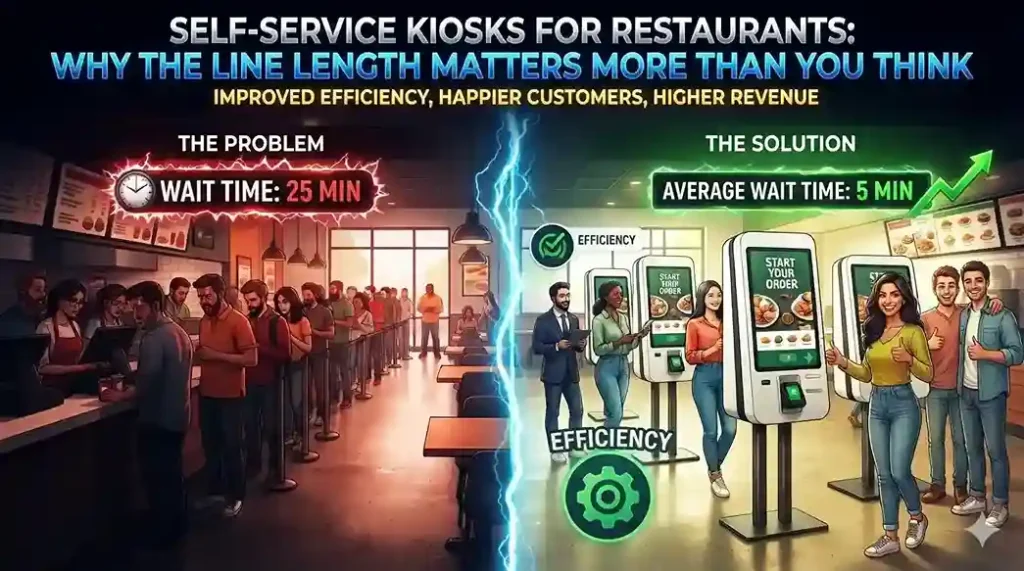
Modern consumer places a huge value on convenience. A recent report by the National Retail Federation found that 97% of consumers have backed out of a purchase just because it was inconvenient for them. And in quick service restaurants, figures show that lengthy queues can be off-putting: almost three out of four guests say they would leave if there were seven people in line. More than nine out of ten said they would go elsewhere if there were more than 10 people queuing before them. Taking the example of supermarkets, which have successfully alleviated queues with self-service checkouts, fast food brands are now adopting touch-screen self-service kiosks. And as more report the positive impact of these kiosks, adoption is rapidly taking off. The rise of self-service kiosks McDonald’s now has self-service kiosks in all 14,000 of its US restaurants. When it began rolling them out in 2017, it said its intention was to enhance the customer experience by speeding up ordering time, reducing human error and allowing for easier order customizations. Almost three years on, McDonald’s is living proof of the success of self-service kiosks. During its 2019 Q2 earnings call, CEO Steve Easterbrook said the chain is seeing impressive incremental sales rises from its use of kiosks. “As we convert the restaurants, we’re getting an incremental sales lift from that, some of which will come through growing and increasing use of the self-order kiosks where we generate higher average checks,” he said. Interestingly, not only are self-service kiosks delivering on consumer desire for ultimate convenience, they’re altering behavior too. As the use of the technology grows, self-ordering has been demonstrated to boost sales by increasing the average order size per customer, while at the same time lowering costs in the restaurant by improving efficiency. There are some compelling statistics to illustrate the impact. When the Dodgers Stadium concession stands in the US tried out new self-service kiosks, the average order size increased by 20%. Similarly, Subway noted that kiosks encourage more consumers to purchase add-ons and generally spend more. The traditional experience Lee heads to his local Easy Burger for lunch. He isn’t a regular customer so he doesn’t know the menu well. It’s a busy Friday afternoon in the restaurant and as he joins the queue he starts scanning the menu board behind the counter to see what he would like. When he gets to the front, he still isn’t quite sure what he wants and spends a few more moments deciding. By this point he’s a bit flustered. He doesn’t want to hold up the queue, so he quickly orders the standard burger meal with no cheese and large fries. It’s noisy in the kitchen, and the server asks Lee to repeat his order. She presses the buttons on the cash register to input Lee’s choice, and politely waits for him to decide which drink he’d like before finalizing the order and taking his payment. This all takes place in the midst of noises coming from the kitchen, voices of customers waiting, and general pressure from people standing in line waiting for their turn. It’s clear to see that there are several opportunities for mistakes, delays and general frustration from both the customer and the cashier. The self-service experience What would the same scenario look like with a self-service kiosk? Again, Lee heads to Easy Burger to pick up his lunch. It’s busy, but Lee heads to a self-service kiosk, where he doesn’t have to queue to place his order. Lee hasn’t actually used one of these kiosks before, but because it looks just like a large version of his mobile phone and all the menu items are clearly labelled, he has no qualms about trying out the technology. With nobody standing behind him putting pressure on him to quickly place his order, Lee feels he can take the time he needs to choose his lunch. He scrolls through the menu and takes in the appealing pictures of food, drinks, and add-on items. He ends up trying out a new meal deal and customizes his burger (no pickles, extra onions and mushrooms), adding the curly fries with cheese – they look too good not to try them. It’s a pleasant, stress free experience. After selecting the items, Lee taps his credit card on the contactless card reader and heads to the counter to wait for his order. He can clearly see his order on the screen above him, so he know there are five orders before his – a bit of a wait, but not too much, before it’s ready. A few minutes later, his number is called out. He picks up his food and heads straight to a clean, empty table. That’s another added bonus. With fewer employees required at the counter, they can spend more time in the kitchen, speeding up food preparation, and on the floor, making sure the restaurant stays clean and tidy. Embracing the trend with LS Central Restaurants are embracing the trend in different ways. Some are buying self-service kiosks running systems and interfaces separate from what is used across the rest of restaurant. This decision entails a lot of extra work, as these systems will have to be integrated with the IT setup, and then updated and maintained individually over time. Thankfully, there is another option. If you selected a unified restaurant management solution like LS Central, you enable customers to order and check out for themselves using the exact same POS system that cashiers use at the manned tills. This wouldn’t be possible with many other restaurant management systems because they are too complicated, and can’t be used effectively without previous training. Not LS Central. There are more benefits, too. You can easily amend and customize the looks of the kiosk to suit your needs. Just as you would customize the POS, you can change interface and menu options to suit your branding, and apply the changes across all your locations – no headache of setting up the brand look for each individual kiosks. Simple menu customization also means you have the

How the self-service trend is transforming restaurants Read More »

Slash costs in your restaurant with the right software system

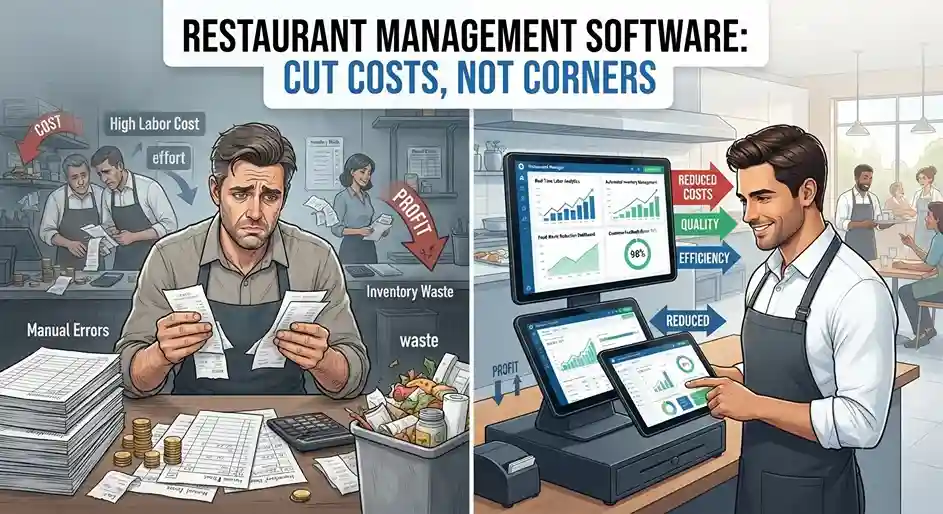
[vc_row][vc_column][vc_column_text]How do you manage costs in your restaurant business? Are you operating as efficiently as you could be? We know how difficult it can be to maintain optimal efficiency and make money in a time of razor-thin margins and intense competition. By their very nature, restaurants are characterized by predictable, seasonal factors as well as by unpredictable ones, including changing customer preferences and fluctuating running costs. But there are ways to get a better handle of your business, helping you to plan ahead more effectively, become leaner and reduce costs in the process. For many restaurant owners, the answer lies in choosing a modern unified technology platform that provides a complete overview of your business operations from Point of Sale (POS) to back office. Indeed, research by the National Restaurant Association in the US found that over 80% of restaurants are turning to technology like online ordering and reservations and restaurant analytics to help them run their business successfully and efficiently. The same report found that four in five restaurant operators agreed that: Technology helps increase sales Technology makes their restaurant more productive Technology provides a competitive advantage. If you’re in two minds as to whether a restaurant management system could help your business grow, rather than simply cost you money, here are some specific areas in your business where the right technology can make a real difference: Optimize staff management If your staff schedules are currently handled manually, in spreadsheets or even on paper forms, you could be missing out on a trick. Staff management software has the capabilities you need to ensure rosters correspond with table bookings and helps you plan for the right amount of labor you need. The result is optimized schedules, which means you don’t have too many employees at work during quiet periods, and yet you have enough on hand to see you through the busy times. If you select a unified system for your restaurant, the staff management functionality can be part of the same platform used to manage the rest of your business. This allows you to make truly informed decisions using historic sales data and drilling down by location, day of the week and time to see patterns emerging and better determine when you will be busy or quiet. Another factor to consider is how you can use the software to keep track of your budgets and make sure you’re not paying out more than you should be. We know how difficult it can be to check and confirm the hours worked by each of your employees, especially when you are likely dealing with so many. But a staff management system can automate this for you, confirming actual hours worked are the same as those planned and highlighting any discrepancies for you to follow up on, minimizing errors and costs. With the functionality to analyze how much you are spending by employee, work code, shift and role, you can compare actual costs and performance against your business plan, and minimize unnecessary extra expenses, such as overtime. Simplify staff training In this industry, we know that workers tend to be transient – maybe you have lots of students or temporary workers on your payroll. High staff turnover can be a real pain point and loss maker for your business, especially as recruiting and training staff is both time consuming and costly. But there are ways technology can help you control this better, and reduce the costs and pain of getting new staff on board. If the systems you use are intuitive and easy for all employees to understand, you won’t have to spend as long training them on how to use them in the first place. Some retail management systems allow you to set up your POS so it mirrors your menu, making it far simpler for staff to find their way around while also helping to reduce mistakes. To simplify training even further, it could pay off to choose a system that uses a logic your staff is already familiar with. The LS Retail restaurant solutions, LS First and LS Central, are built on well-known Microsoft technology. This means new employees can be up and running quickly, as any experience with Microsoft software such as Office or Windows means they already know where to find menus and information in the system. Having one enterprise-wide platform, rather than multiple software solutions strung together, also means you only need to train your staff up once. This not only saves time and cost but gives you greater flexibility too. If you need to move staff from the bar to the restaurant floor, you can do so with ease. No extra training required to use a separate system; no time wasted. Increase table turnover and order value Is your restaurant floor running as smoothly as it could? There are some steps you can put in place to subtly speed up the process, allowing you to serve more customers without making your diners feel rushed. Mobile POS devices are a great way of doing this. As they connect your servers directly to the kitchen, kitchen staff can act on orders as soon as they are taken at the table, speeding up food preparation. Your waiters can get an alert on their POS devices when orders are ready, and they can also take payments on the device as soon as diners are ready to leave – no waiting for card readers or an available cash register. If you select the right mobile POS, your staff can also handle conversational ordering, where they take orders in the same way that customers reel them off – extra cheese on their burger and no mayo, with large chips, for example. Everything can be quickly inputted into the POS, speeding up service time and reducing errors. At the same time, because staff have all menu information right in front of them, they can improve their upselling potential by suggesting upsell items and upgrades as they take orders. Streamline kitchen operations A unified platform complete with a kitchen management system could help your restaurant serve up food more quickly and efficiently than ever. In the kitchen, having Kitchen Display System (KDS) screens connected to the

Slash costs in your restaurant with the right software system Read More »

How can Trident’s cloud platform manage your restaurant effortlessly?

[vc_row][vc_column][vc_column_text]Mortality in restaurants is a fact with several young firms shut down. What if the software could transform how restaurants are running by offering profound insights for more profit? Trident’s cloud-based restaurant management solution makes it possible by concentrating on advancing the bottom line and back-of-house productivity. Trident takes into consideration all facets of restaurant management, including Inventory Management, costing of food and beverage, purchase orders, Table Management, Billing System, Point Of Sale, Vendor Planning, Price Monitoring, Costing of Food, Menu Management, and Reporting/Analytics. Still uncertain of restaurant management technology premised on the cloud? Like the idea, but don’t know where to start? Don’t worry, we’ve covered you up. Below we will discuss how Cloud-based restaurant management software transforms the industry for seven reasons: 1) – Access information anywhere  The mobile in your pocket or a laptop with a web browser and internet access are all you need to get started. Simply download the web site’s mobile app or account. To use the app you don’t need to be in the office, live with the hassle of VPNs or private networks. 2) – No more hefty long contracts Why tie-up with a long, costly technology vendor contract and have technology that may soon be out of date? On-site technology requires long-term investments, contract service, and a much higher Total Ownership Cost. The food industry is highly unpredictable, with frequent restaurants open and close. If you’re just beginning, you probably won’t be able to commit to fall tens or even hundreds of thousands of rupees on new technology. Restaurant management technology focused on the cloud removes the need for a big upfront investment and the lower monthly cost helps you to show the ROI from day one. 3) – Flexible Payments  When cash flow is a problem for your corporation (which is a concern for most businesses), then flexible terms of payment is a big thing. You charge for your software-as-a-service (SaaS) with cloud-based restaurant management technology. For example, both month-to-month and yearly contracts are provided by some vendors. When part of the contract you are charging for, the latest technology, new functionalities and updates, infrastructure improvements, etc. are all included. 4) – Scale The advantage of SaaS is that depending on your requirements, you can simply and quickly scale up or down. Open a new site, insert your current contract and get up and running before the end of the day. You can add users, integrations, locations, new features, etc. with just a few clicks. No technician’s visits. No long cycles of implementation. No significant investment to store servers in hardware or storage. 5) – Integration with POS System The ability to easily integrate with other applications is one of the strongest strengths of cloud-based restaurant management systems. Through APIs and other methods of integration, the cloud-based restaurant management technology can communicate with each other, share the data, and provide smarter, quicker, and simpler than ever before insights through stores and systems. 6) – Security  Cloud computing is much safer than data stored on your computer or an internal database. It has advanced security checks such as two-factor authentication for logging in, deterrent controls to alert potential hackers about protections, preventive controls which make accessing the cloud information more difficult for unauthorized users, and detective controls to react to intrusion events. If anything ever occurred to your restaurant’s servers – like a flood, a fire, or a theft, you may not see that data again. Restaurant software based on the cloud often comes with built-in backup and redundancy. 7) No need of It professionals If you are on-premise managing legacy systems, you need to understand what you’re doing. From routing, safety, restoration, debugging, and so on, nobody can go into a database office and start ripping cables. You don’t need to employ an IT professional with cloud-based restaurant management technology. All you need is access to the provider of internet and software that is committed to supporting and guaranteeing your excellence. Microsoft Gold partner Trident Information Pvt Ltd grants all of the above-mentioned advantages. For getting all the advantages you can contact our experts on https://tridentinfo.com/contact/ and add a query on our website. [/vc_column_text][/vc_column][/vc_row]

How can Trident’s cloud platform manage your restaurant effortlessly? Read More »

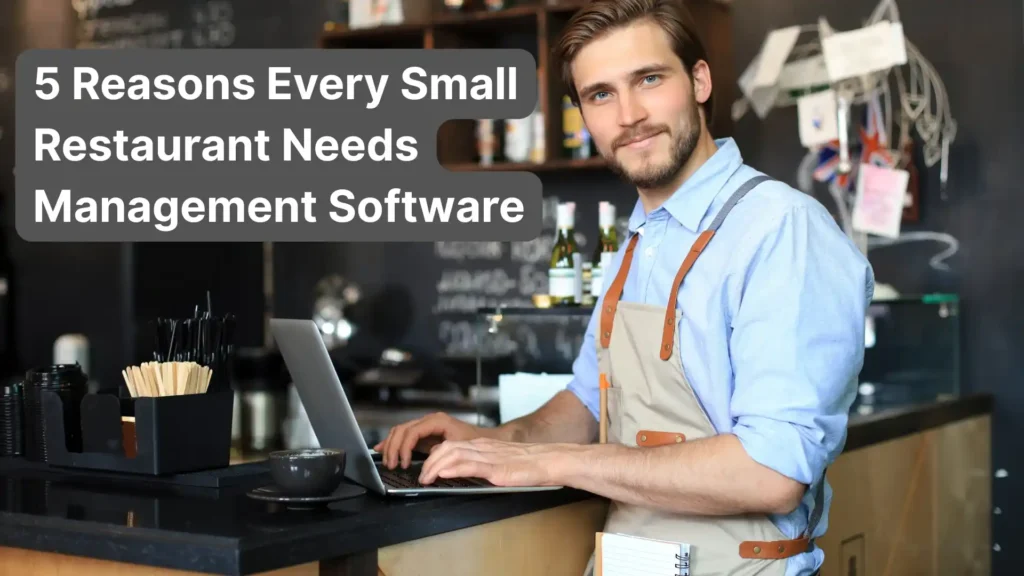
Small restaurant using management software to track orders, inventory, and daily operations.

5 Reasons Every Small Restaurant Needs Management Software in 2026 — Not Spreadsheets

If your restaurant is still managing inventory on a spreadsheet, tracking supplier orders on paper, and reconciling food costs at month-end — you are not just working harder than you need to. You are operating with a structural disadvantage that restaurant management software eliminates entirely. The restaurant industry operates on notoriously thin margins — typically between 3 and 9 percent — where every percentage point of food waste, every supplier order error, and every hour of manual administrative work directly impacts profitability. In this environment, the restaurants that grow consistently are not necessarily the ones with the best chefs or the best locations. They are the ones that operate with the most efficiency, the most accurate data, and the tightest cost control. Restaurant management software brings all of this — inventory automation, supplier order management, food cost tracking, multi-location visibility, and integrated accounting — into a single, connected platform that replaces the manual processes consuming your team’s time and your business’s margin. Despite the clear business case, a significant proportion of small restaurants, bars, and food trucks still operate without dedicated management software — relying on spreadsheets, paper records, and manual processes that were outdated a decade ago. For every restaurant operator still managing this way, there are five concrete, immediately actionable reasons to reconsider. Why Most Small Restaurants Are Still Running on Manual Systems The Hidden Cost of Spreadsheets and Paper in Restaurant Operations The decision to continue managing a restaurant manually is usually not a deliberate strategic choice — it is an inertia problem. The spreadsheet that worked when you had one location and 20 covers a night becomes progressively less adequate as the business grows, but the pain builds gradually rather than arriving as a single obvious crisis. The hidden costs accumulate in ways that are easy to miss because they are distributed across dozens of daily processes: What Changes When You Switch to Restaurant Management Software Restaurant management software does not just make existing processes faster — it fundamentally changes the operational model. Manual processes that required human attention at every step become automated. Data that previously required compilation becomes available in real time. Decisions that were previously made on instinct become supported by accurate, current information. The result is a restaurant that operates with the efficiency, accuracy, and cost discipline of a much larger operation — regardless of size. 5 Reasons Your Restaurant Needs Management Software Now Reason 1: Simplify Inventory Management and Eliminate Stockouts Inventory management is the operational function most immediately transformed by restaurant management software — and the one where the ROI is most immediately visible. Manual inventory management in a restaurant is a constant battle against imprecision. Count sheets completed at the beginning of the shift do not reflect what was actually used during service. Waste goes unrecorded. Deliveries are received without proper checking. By the end of the week, the theoretical inventory and the actual inventory have diverged — and nobody knows by how much until it becomes a problem. How restaurant management software transforms inventory: For a small restaurant operator spending hours every week on manual stock counts, this single capability alone typically justifies the investment in management software. Reason 2: Reduce Human Error in Supply Orders and Purchasing Every restaurant that places supplier orders manually — by phone, email, handwritten form, or fax — is exposed to a category of error that is entirely preventable with the right technology. Supplier order errors are more costly than they appear. A decimal point in the wrong place can result in a delivery ten times larger than intended. An illegible handwritten order can arrive as the wrong product entirely. A verbal order communicated under pressure during a busy service can be misheard and misprocessed. Each of these errors has direct cost implications — either the cost of the unwanted delivery or the cost of being without a critical ingredient during service. How restaurant management software reduces ordering errors: The simple shift from paper-based to digital ordering consistently reduces supplier order errors by a significant margin — protecting both your costs and your service quality. Reason 3: Simplify Accounting and Invoice Management Restaurant accounting is notoriously paper-intensive — invoices arriving from dozens of suppliers across multiple delivery frequencies, requiring manual data entry, filing, and reconciliation before payment. For small restaurant operators without dedicated accounting staff, this administrative burden consumes hours that could be spent more productively. Restaurant management software transforms the invoice management process: For a restaurant operator currently managing accounting with a box of paper invoices and a spreadsheet, this transformation is one of the most immediately impactful changes that management software delivers. Reason 4: Gain Real-Time Insight Into Food Costs and Margins Restaurant profitability lives and dies in the detail of food costs — and most small restaurant operators do not have accurate, current visibility into what each dish on their menu is actually costing them. Ingredient prices change constantly. Supplier costs fluctuate with season and demand. Portion sizes vary between kitchen staff. Waste levels affect effective cost. Without a system that tracks all of these variables in real time and calculates dish-level profitability continuously, menu pricing decisions are made on outdated assumptions — with profit margins eroding silently. How restaurant management software delivers food cost visibility: For a restaurant operator making menu pricing decisions without this data, the difference in profitability can be significant — multiple percentage points of margin that are currently invisible and unmanaged. Reason 5: Manage Multiple Locations From a Single Dashboard For restaurant operators managing two or more locations, the manual management challenge does not scale linearly — it multiplies. Separate systems, separate data, separate reporting, and no reliable way to compare performance or consolidate purchasing across locations creates an administrative overhead that grows faster than the revenue that justifies it. Restaurant management software built for multi-location operations transforms this challenge: For any operator managing more than one location, centralized restaurant management software is not a luxury — it is an operational necessity. Additional

5 Reasons Every Small Restaurant Needs Management Software in 2026 — Not Spreadsheets Read More »

LS Hospitality dashboard managing restaurant POS, kitchen operations, inventory, and guest services.

LS Hospitality: The Restaurant Management Software That Connects Your Entire Food Service Operation on Microsoft Dynamics 365

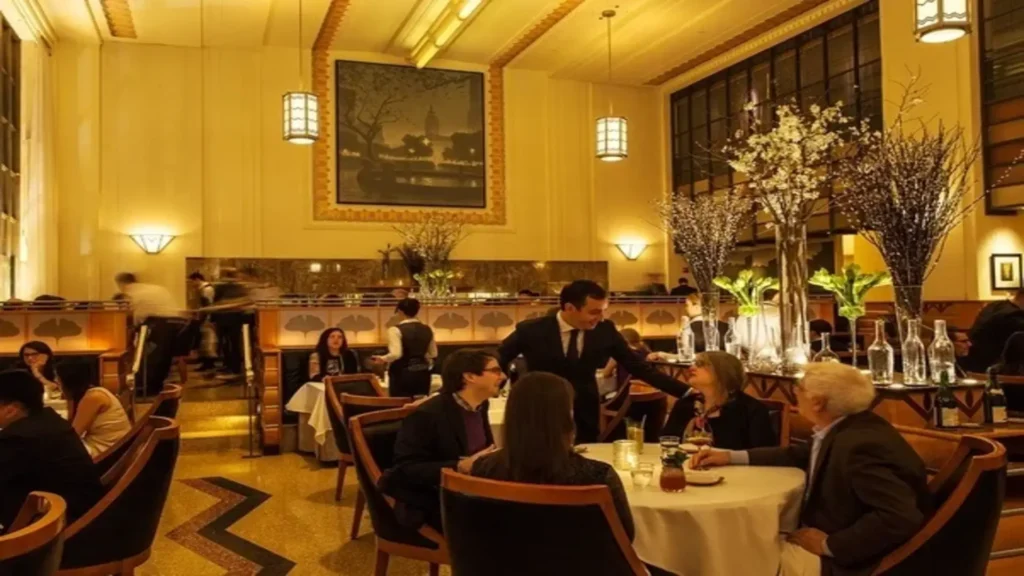
Running a restaurant has always been demanding. Running one in 2025 — where customers expect online ordering, mobile payments, personalized loyalty rewards, and flawless service simultaneously — demands technology that was simply not available to most operators a decade ago. The gap between what guests now expect and what most restaurant technology delivers is widening. Customers who order through an app on Tuesday expect the same loyalty points when they walk in on Friday. A table of four who order separately expect the split bill to process in seconds. A kitchen managing 200 covers on a Saturday night cannot afford miscommunication between the floor and the pass. LS Hospitality — the restaurant and food service management solution built on Microsoft Dynamics 365 Business Central — is designed for exactly this operational environment. It connects your POS terminals, kitchen management, table service, menu configuration, loyalty programs, online ordering, and head office operations on a single unified platform — giving every member of your team the real-time information they need to deliver outstanding hospitality, every service. Whether you operate a single fine dining restaurant, a chain of quick-service outlets, a café group, or a multi-concept hospitality business, LS Hospitality delivers the operational intelligence, service speed, and customer engagement tools that modern food service demands. Trident Information Systems is a certified LS Hospitality and Microsoft Dynamics 365 implementation partner — helping restaurants and hospitality businesses across India implement and maximize the value of this industry-leading platform. Why the Restaurant and Food Service Industry Needs Smarter Technology Now The Five Forces Reshaping How Restaurants Operate in 2026 The restaurant industry is navigating a convergence of five simultaneous shifts — any one of which would require a technology response on its own. Together, they are making the case for a unified, modern hospitality management platform more urgent than ever: 1. The omnichannel expectation — online ordering, mobile payment, in-app loyalty, table ordering via QR code, and dine-in service are no longer separate experiences. Guests expect them to work together seamlessly — with their preferences, history, and rewards recognized across every format. 2. The experience standard — in hospitality, the product is the experience. Operators who deliver consistently high-quality, frictionless service build the loyalty and word-of-mouth that sustains a restaurant long-term. Operators who do not — regardless of food quality — lose customers to those who do. 3. The pace of change — consumer preferences, dietary requirements, delivery platforms, payment methods, and social media dynamics change faster than ever before. Restaurant operators need a technology platform that evolves continuously — not one that requires expensive custom development every time the market shifts. 4. The social dining phenomenon — from food photography on Instagram to review platforms like Google, TripAdvisor, and Zomato, dining has become a social experience that extends far beyond the restaurant walls. Operators who manage their digital presence actively and use data to improve the experience will consistently outperform those who do not. 5. The analytics imperative — the restaurants making the best decisions about menu engineering, staff scheduling, promotional pricing, and customer retention are the ones with access to real-time, accurate data about their operation. Analytics is no longer a back-office function — it is a frontline competitive tool. The Real Cost of Running a Restaurant on Disconnected Systems Most restaurant operations have grown their technology stack organically — a standalone POS here, a reservation system there, a separate loyalty app, an accounting system that receives a manual export at the end of the week. This fragmentation has hidden costs that compound over time: A unified hospitality management platform eliminates every one of these costs. What Is LS Hospitality? Restaurant Management Software Built for Every Format LS Hospitality is an end-to-end restaurant and food service management solution — connecting POS, kitchen management, table service, menu management, loyalty, online ordering, and head office operations within a single unified application built on Microsoft Dynamics 365 Business Central. From Fine Dining to Quick Service: One Platform for Every Hospitality Setup LS Hospitality is designed to serve the full spectrum of food service formats — with configurable workflows that adapt to the operational requirements of each format without requiring separate systems: LS Hospitality on Microsoft Dynamics 365 Business Central LS Hospitality is built on and powered by Microsoft Dynamics 365 Business Central — giving hospitality operators the combined benefit of deep restaurant-specific functionality and enterprise-grade financial management, supply chain, and analytics capabilities. This means your restaurant operation runs on a platform that: Point of Service — Not Just Point of Sale The POS in a restaurant is fundamentally different from a retail POS. It is not just a payment terminal — it is the primary communication hub between the guest, the floor team, and the kitchen. LS Hospitality is built with this reality at its core. A POS That Informs, Orders, Pays, and Manages — All at Once The LS Hospitality POS is designed as a complete point of service — not simply a point of sale. From a single interface, your floor staff can: Superior Customer Service From Every Corner of the Restaurant LS Hospitality’s mobile POS capability means the point of service moves with your staff — not the other way around. Orders can be taken tableside on a handheld device, payments processed at the table without the guest leaving their seat, and loyalty enrollments completed during the dining experience rather than as an afterthought at checkout. This mobility transforms the service dynamic — reducing the friction between guest request and staff response, eliminating the queues at fixed POS terminals, and giving your team the tools to deliver genuinely attentive hospitality rather than transaction-focused service. Table and Guest Management: Maximize Covers, Minimize Wait Times Effective table management is the operational foundation of a profitable restaurant. Every table turn represents revenue. Every guest left waiting represents a potential lost visit. LS Hospitality gives your front-of-house team the visual tools and real-time information to optimize seating, service, and turnover across every service. Graphic Table Management for

LS Hospitality: The Restaurant Management Software That Connects Your Entire Food Service Operation on Microsoft Dynamics 365 Read More »

Hospitality software dashboard managing bookings, guest services, and hotel operations in real time.

Hospitality Industry Software Solutions: Reduce Costs, Increase Revenue & Delight Every Guest

Running a restaurant has never been harder – or more full of opportunity. Margins are razor-thin, customer expectations are at an all-time high, and the operators pulling ahead are not working harder. They are working smarter, powered by the right hospitality industry software solutions. From quick-service counters to fine-dining establishments, cafes, bars, and multi-site food chains – every segment of the food and hospitality industry is under pressure to do more with less. Rising labour costs, food waste, no-show reservations, and negative online reviews can quietly bleed a profitable operation dry. But the restaurants and hospitality businesses that are growing – consistently and profitably – share one thing in common: they have replaced guesswork with data, manual processes with automation, and disconnected systems with a single, intelligent platform. That is exactly what Trident’s hospitality software solutions are built to deliver. Whether your priority is filling more covers, reducing kitchen waste, boosting loyalty, or scaling across multiple sites — this is the technology stack your operation needs. Why the Food & Hospitality Industry Needs Smarter Software Now The Real Cost of Outdated Restaurant Management Systems Most independent restaurants and hospitality groups are still running on fragmented systems – a separate POS here, a manual stock sheet there, a spreadsheet for staff scheduling. The hidden cost of this disconnection is enormous: over-ordering ingredients, understaffing peak hours, missing fraudulent transactions, and losing loyal customers to competitors who simply communicate better. The food and hospitality industry operates on margins as thin as 3–9%. In that environment, every percentage point of waste, every unfilled table, and every missed upsell opportunity is the difference between a profitable month and a loss. What Today’s Diners Actually Expect From Your Restaurant Today’s consumer does not just want a meal – they want an experience. They expect fresh ingredients year-round, personalized menu suggestions, seamless mobile reservations, flexible payment options, and fast delivery. And if they do not get it from you, they will get it from the restaurant down the street – and post about the comparison online. One bad review on TripAdvisor or Google can suppress bookings for weeks. One great loyalty campaign can drive repeat visits for months. The difference, in almost every case, comes down to the software powering your operation behind the scenes. Core Features of Industry-Leading Hospitality Software Increase Revenue With Targeted Marketing and Loyalty Programs Generic promotions no longer move the needle. Today’s most effective restaurant marketing is built on data – not guesswork. Trident’s hospitality software captures granular customer behavior data, allowing you to build laser-targeted campaigns, personalized offers, and loyalty rewards that actually drive repeat visits. Build and manage gift card and loyalty programmes that incentivize return visits Segment your customer base by visit frequency, spend level, and menu preferences Launch targeted promotions, meal deals, and seasonal campaigns with measurable ROI Power e-commerce and mobile loyalty programmes that keep your brand in your customer’s pocket Faster Table Turns and Smarter Reservation Management Every empty seat is lost revenue. Trident’s table management system gives your front-of-house team real-time visibility into table availability, party sizes, and turn times – so you can seat more covers per service without sacrificing the guest experience. Monitor live table status and match party size to table size automatically Integrate with OpenTable and other online booking platforms for 24/7, 365-day reservations Reduce no-shows with automated booking confirmations and reminders Increase revenue per service through smarter seating sequencing Reduce Labour Costs With Intelligent Workforce Forecasting Labour is typically the largest controllable cost in any hospitality operation. Trident’s workforce management tools help you forecast staffing needs based on historical covers, seasonal trends, and live booking data – so you are never overstaffed on a quiet Tuesday or understaffed on a bank holiday Friday. Forecast labour demand by day, shift, and station Reduce overtime costs through proactive scheduling Align staffing levels directly with reservation and walk-in data Better Waste Control and Inventory Management Food waste is one of the most damaging – and most preventable – costs in hospitality. Trident gives kitchen managers real-time visibility into stock levels, ingredient usage, and supplier orders – enabling smarter purchasing, reduced shrinkage, and tighter margin control. Manage stock efficiently and minimize ingredient shrinkage Plan menus in advance and rationalize ingredient orders based on demand forecasts Build digital supply chains that connect procurement directly to your POS data Multi-Site Management: Control Every Location From One Dashboard Running multiple sites should not mean managing multiple headaches. Trident’s multi-site capabilities give hospitality groups a single, unified view of performance across every location – with the ability to push menu changes, pricing updates, and promotional campaigns across your entire estate in seconds. End-to-end business reporting across all sites in real time Centralized menu management – update once, deploy everywhere Consistent brand standards and customer experience at every location Digital Transformation in the Restaurant Industry Digital transformation is no longer exclusive to banking, insurance, or retail. The restaurant and food service industry is being disrupted – fast – and operators who embrace technology now will define the new standard for hospitality excellence. How AI, Chatbots and Kiosks Are Reshaping Food Service The most forward-thinking restaurants in the world are already using artificial intelligence and automation to serve more customers, faster, with fewer errors: AI-driven self-service kiosks – Reduce customer wait times and empower guests to customize orders exactly as they want them. McDonald’s and Five Guys have demonstrated that kiosk adoption directly increases average order value Chatbots and virtual assistants – Automate order-taking via social media and messaging platforms. Taco Bell and Pizza Hut have successfully deployed chatbots to handle ordering at scale, freeing staff for higher-value service tasks AI-powered menu suggestions – Apps that learn a customer’s eating preferences and suggest personalized meals at the point of ordering – increasing upsell rates and satisfaction simultaneously Robotics in food preparation – AI-driven robots are increasing kitchen capacity and consistency, particularly in high-volume quick-service environments Digital signage – Eye-catching dynamic displays engage customers the moment they walk through the

Hospitality Industry Software Solutions: Reduce Costs, Increase Revenue & Delight Every Guest Read More »