Welcome to Trident Information Systems!
Write us to - info@tridentinfo.com
Let's Socialize

Retail POS Solution

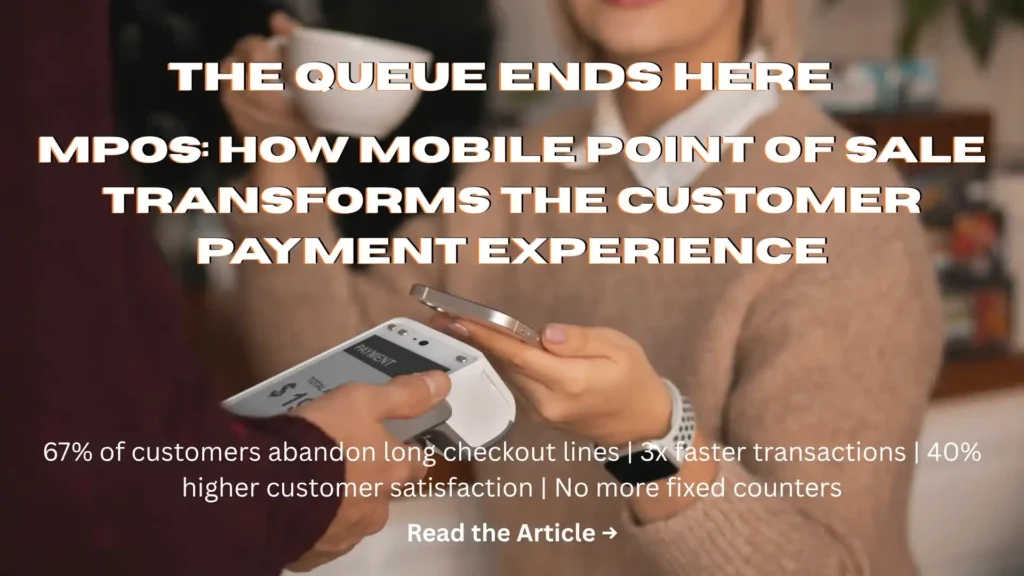
Retail associate using a mobile point of sale device to process a customer payment.

mPOS: How Mobile Point of Sale Transforms the Customer Payment Experience

A customer walks up to your counter, picks up exactly what they want — and then puts it back down and walks out because you do not accept card payments. That lost sale happens thousands of times every day across India. And with the explosion of UPI, digital wallets, and contactless payments, it is happening more frequently — not less. The solution is not complicated. It is mPOS — mobile Point of Sale — and it is changing the way retailers and merchants across India do business. What Is mPOS and Why Does It Matter? mPOS (Mobile Point of Sale) is a compact payment acceptance solution that turns a smartphone or tablet into a fully functional payment terminal. Using a small card reader connected to your device, you can accept credit cards, debit cards, UPI payments, digital wallets, and contactless transactions — anywhere, instantly. For small and mid-size retailers, restaurants, delivery businesses, and service providers, mPOS removes the biggest barrier to completing a sale: payment inflexibility. India’s payment landscape is uniquely diverse. Different customers prefer different payment modes — and those preferences vary by region, age group, and transaction size. Some customers only carry cards. Others exclusively use UPI. Many prefer digital wallets like Paytm or PhonePe. A traditional cash-only or single-mode payment setup means turning away every customer whose preferred method you do not support. mPOS accepts them all. That single capability alone justifies the investment. mPOS vs Traditional POS: The Key Difference Traditional POS systems are fixed, expensive, and require significant infrastructure. You need a dedicated terminal, a broadband connection, and a fixed checkout counter. They work well for established retail locations — but they offer zero flexibility for businesses that operate on the move, across multiple locations, or in environments where a fixed terminal is impractical. mPOS is the opposite: For growing businesses that need payment flexibility before they are ready for a full POS infrastructure, mPOS is the practical, cost-effective bridge. 5 Reasons Your Business Needs mPOS Right Now 1. Grow Your Sales by Accepting Every Payment Mode The most direct benefit of mPOS is also the most commercially significant: you stop turning away customers. Today’s Indian consumer is comfortable with multiple payment modes — UPI via BHIM, Google Pay, or PhonePe; contactless card payments; digital wallets; EMI options; and cash. Their preference at any given moment depends on the transaction size, their current balance, and simply what is most convenient. When you can accept every mode, you remove friction from the purchase decision. Research consistently shows that payment flexibility increases both the frequency of purchase and the average transaction value. Customers who are not limited to cash tend to spend more freely — because digital payment feels less immediate than handing over physical notes. Fewer payment declines. Fewer abandoned purchases. Higher revenue per customer visit. 2. Track Customer Data and Drive Repeat Business Every mPOS transaction is a data point. And those data points — when captured and used well — are the foundation of customer retention. A connected mPOS solution captures customer mobile numbers and transaction histories, which you can use to: This is marketing intelligence that traditional cash-only businesses simply do not have. Every digital transaction your customer makes builds a profile you can use to serve them better — and bring them back more often. 3. Go Digital With Instant, Automated Receipts Paper receipts are slow, unreliable, and increasingly unwanted. Digital receipts — sent instantly to a customer’s phone or email — are faster, more professional, and more convenient for everyone. With mPOS, the moment a payment is processed: No manual entry. No reconciliation errors. No paper trail to manage. It is faster for your staff, cleaner for your records, and better for your customer experience. 4. Accept Payments Anywhere, Anytime The traditional payment counter creates a bottleneck. Customers queue. Service slows. The experience deteriorates — particularly during peak periods. mPOS eliminates the bottleneck entirely. Your team can accept payment at the table in a restaurant, at the customer’s doorstep for a delivery, on the shop floor during a sale event, or at an outdoor market stall. Payment happens where the customer is — not where your fixed terminal is. This flexibility is transformative for: Convenience at the point of payment directly improves the customer experience — and a better experience drives better reviews, referrals, and repeat visits. 5. A Complete, Hassle-Free Payment Solution The best mPOS solutions do not just process payments. They connect payment acceptance to your broader business operations — inventory, customer management, sales reporting, and financial reconciliation. When your mPOS is integrated with your retail management or ERP platform, every transaction updates your records automatically. Stock levels adjust. Revenue is captured. Customer data is stored. End-of-day reconciliation takes minutes instead of hours. This end-to-end connectivity is what separates a true business solution from a simple payment tool — and it is what makes mPOS genuinely transformative rather than merely convenient. How Trident’s Retail Technology Supports mPOS Integration Trident Information Systems provides retail and hospitality management solutions — including LS Central on Microsoft Dynamics 365 Business Central — that integrate mPOS capabilities with full inventory management, customer loyalty, financial reporting, and multi-location management. Whether you operate a single outlet or a growing retail chain, our solutions connect your payment acceptance directly to your business operations — giving you the complete picture of performance in real time. Ready to upgrade your payment experience and grow your business? Book a free retail technology assessment with Trident today. For more insightful content and industry updates, follow our LinkedIn page.

mPOS: How Mobile Point of Sale Transforms the Customer Payment Experience Read More »

Retail CEO analyzing unified commerce dashboard integrating data, strategy, and technology.

The Retail CEO’s Guide to Unified Commerce: Data, Strategy and the Technology That Ties It All Together

Only 31% of retail industry experts believe that today’s retail CEOs have the technical skills needed to lead a data-driven, unified commerce operation. That means nearly seven out of ten retail leaders are navigating one of the most complex, fast-moving industries in the world without the technology literacy or strategic tools they need to make confident, informed decisions. That gap is not just a personal challenge — it is a competitive vulnerability. According to the World Retail Congress’s DNA of the Future Retail CEO, the two most critical technical competencies for retail leaders — today and in the future — are a deep understanding of digital commerce and omnichannel strategy, and a genuinely data-driven approach to decision-making. Not data-aware. Not data-informed. Data-driven in the extreme. The good news is that no retail CEO has to master every technology trend personally. The right unified commerce platform does the heavy lifting — connecting every sales channel, every business function, and every data source into a single system that gives retail leaders the real-time intelligence they need to set strategy, track performance, and pivot confidently when the market demands it. This guide covers exactly what retail CEOs need to know — and do — to lead their organizations into a unified commerce future. What the Data Says About the Future Retail CEO The Two Technical Skills Every Retail CEO Needs Right Now Two independent bodies of research point to the same conclusion about what separates tomorrow’s retail leaders from today’s: The World Retail Congress identifies the top two technical skills for retail CEOs as understanding of digital commerce and omnichannel operations, and a data and insight-driven approach to strategy and decision-making. These are not IT skills — they are leadership skills, because the decisions that flow from digital commerce and data intelligence are ultimately strategic, not technical. The Korn Ferry Institute’s study of UK retail CEOs reinforces this, finding that the new retail CEO must be experienced across both budget management and strategic planning — a combination that is only possible when financial and operational data are fully visible, accurate, and real-time. Research at Harvard Business School adds a third dimension: the ability to cope with change and lead organizational adaptation is the defining characteristic of high-performing CEOs — and it is directly linked to better business outcomes. In retail, where technology, consumer behavior, and competitive dynamics shift constantly, this capacity for agile leadership is not optional. Why Only 31% of Retail CEOs Are Prepared — And How to Be in That Group The 31% statistic from the World Retail Congress is not just a data point — it is a strategic warning. The retail CEOs who are building unified commerce capabilities now are creating a compounding advantage: better data leads to better decisions, which leads to better performance, which creates the financial headroom to invest in further capability. The 69% who are not yet there are not necessarily failing — but they are accumulating a technology debt that will become increasingly costly to address as the gap between digital commerce leaders and laggards continues to widen. The path forward starts with the right technology platform — and the strategic clarity to use it. Why Unified Commerce Is Now a CEO-Level Priority What Unified Commerce Actually Means (And How It Differs From Omnichannel) Omnichannel retail means giving customers a consistent experience across multiple channels — online, in-store, mobile, social. It is a customer experience standard, and it is now the baseline expectation in most retail categories. Unified commerce goes further. It is not just about the customer-facing experience — it is about the technology architecture that powers it. A true unified commerce platform brings every sales channel, every business function, and every data source together on a single integrated system — eliminating the silos, the data lags, and the reconciliation headaches that plague retailers running separate e-commerce, POS, ERP, and inventory platforms. When your systems are unified, data flows freely across channels. When a customer returns an online purchase in-store, the inventory updates instantly. When a promotion launches on your mobile app, the margin impact is visible in your financial reporting in real time. That is what unified commerce delivers — and it is why it is now a CEO-level strategic priority, not just an IT project. The Real Cost of Pieced-Together Retail Systems Many retailers are operating on a patchwork of integrated-but-separate systems — an e-commerce platform here, a POS system there, an ERP that talks to both of them most of the time. The integrations work, mostly. But “mostly” is not good enough when strategic decisions depend on accurate, real-time data. Pieced-together systems cost more than a unified platform in ways that are easy to underestimate: A unified commerce platform eliminates every one of these costs — and replaces them with the real-time, reliable intelligence that enables genuine data-driven leadership. 4 Things Every Data-Driven Retail CEO Must Do in 2025 1. Unify Your Sales Channels on a Single Commerce Platform No matter what your retail business sells or where it sells it — physical stores, e-commerce, mobile commerce, marketplace, or social commerce — your technology should be a single-platform solution that manages every channel simultaneously. A unified sales channel platform gives your leadership team: 2. Connect Front-End and Back-End Operations Seamlessly Unified commerce is not just a customer-facing concept. The most powerful version of it connects your customer-facing sales operations directly to your back-office business functions — financials, inventory, supply chain, HR, and analytics — in a single, seamless system. What feels almost impossible when a business is running separate ERP, POS, and inventory platforms — consistent, real-time financial and operational reporting — becomes straightforward with the right unified technology. Data flows freely between functions. Financial results reflect operational reality instantly. And the retail CEO has a complete, accurate picture of business performance at any given moment, without waiting for someone to compile a report. 3. Set a Clear Vision — But Build in the Agility to Pivot Richard Branson,

The Retail CEO’s Guide to Unified Commerce: Data, Strategy and the Technology That Ties It All Together Read More »

Hospitality software dashboard managing bookings, guest services, and hotel operations in real time.

Hospitality Industry Software Solutions: Reduce Costs, Increase Revenue & Delight Every Guest

Running a restaurant has never been harder – or more full of opportunity. Margins are razor-thin, customer expectations are at an all-time high, and the operators pulling ahead are not working harder. They are working smarter, powered by the right hospitality industry software solutions. From quick-service counters to fine-dining establishments, cafes, bars, and multi-site food chains – every segment of the food and hospitality industry is under pressure to do more with less. Rising labour costs, food waste, no-show reservations, and negative online reviews can quietly bleed a profitable operation dry. But the restaurants and hospitality businesses that are growing – consistently and profitably – share one thing in common: they have replaced guesswork with data, manual processes with automation, and disconnected systems with a single, intelligent platform. That is exactly what Trident’s hospitality software solutions are built to deliver. Whether your priority is filling more covers, reducing kitchen waste, boosting loyalty, or scaling across multiple sites — this is the technology stack your operation needs. Why the Food & Hospitality Industry Needs Smarter Software Now The Real Cost of Outdated Restaurant Management Systems Most independent restaurants and hospitality groups are still running on fragmented systems – a separate POS here, a manual stock sheet there, a spreadsheet for staff scheduling. The hidden cost of this disconnection is enormous: over-ordering ingredients, understaffing peak hours, missing fraudulent transactions, and losing loyal customers to competitors who simply communicate better. The food and hospitality industry operates on margins as thin as 3–9%. In that environment, every percentage point of waste, every unfilled table, and every missed upsell opportunity is the difference between a profitable month and a loss. What Today’s Diners Actually Expect From Your Restaurant Today’s consumer does not just want a meal – they want an experience. They expect fresh ingredients year-round, personalized menu suggestions, seamless mobile reservations, flexible payment options, and fast delivery. And if they do not get it from you, they will get it from the restaurant down the street – and post about the comparison online. One bad review on TripAdvisor or Google can suppress bookings for weeks. One great loyalty campaign can drive repeat visits for months. The difference, in almost every case, comes down to the software powering your operation behind the scenes. Core Features of Industry-Leading Hospitality Software Increase Revenue With Targeted Marketing and Loyalty Programs Generic promotions no longer move the needle. Today’s most effective restaurant marketing is built on data – not guesswork. Trident’s hospitality software captures granular customer behavior data, allowing you to build laser-targeted campaigns, personalized offers, and loyalty rewards that actually drive repeat visits. Build and manage gift card and loyalty programmes that incentivize return visits Segment your customer base by visit frequency, spend level, and menu preferences Launch targeted promotions, meal deals, and seasonal campaigns with measurable ROI Power e-commerce and mobile loyalty programmes that keep your brand in your customer’s pocket Faster Table Turns and Smarter Reservation Management Every empty seat is lost revenue. Trident’s table management system gives your front-of-house team real-time visibility into table availability, party sizes, and turn times – so you can seat more covers per service without sacrificing the guest experience. Monitor live table status and match party size to table size automatically Integrate with OpenTable and other online booking platforms for 24/7, 365-day reservations Reduce no-shows with automated booking confirmations and reminders Increase revenue per service through smarter seating sequencing Reduce Labour Costs With Intelligent Workforce Forecasting Labour is typically the largest controllable cost in any hospitality operation. Trident’s workforce management tools help you forecast staffing needs based on historical covers, seasonal trends, and live booking data – so you are never overstaffed on a quiet Tuesday or understaffed on a bank holiday Friday. Forecast labour demand by day, shift, and station Reduce overtime costs through proactive scheduling Align staffing levels directly with reservation and walk-in data Better Waste Control and Inventory Management Food waste is one of the most damaging – and most preventable – costs in hospitality. Trident gives kitchen managers real-time visibility into stock levels, ingredient usage, and supplier orders – enabling smarter purchasing, reduced shrinkage, and tighter margin control. Manage stock efficiently and minimize ingredient shrinkage Plan menus in advance and rationalize ingredient orders based on demand forecasts Build digital supply chains that connect procurement directly to your POS data Multi-Site Management: Control Every Location From One Dashboard Running multiple sites should not mean managing multiple headaches. Trident’s multi-site capabilities give hospitality groups a single, unified view of performance across every location – with the ability to push menu changes, pricing updates, and promotional campaigns across your entire estate in seconds. End-to-end business reporting across all sites in real time Centralized menu management – update once, deploy everywhere Consistent brand standards and customer experience at every location Digital Transformation in the Restaurant Industry Digital transformation is no longer exclusive to banking, insurance, or retail. The restaurant and food service industry is being disrupted – fast – and operators who embrace technology now will define the new standard for hospitality excellence. How AI, Chatbots and Kiosks Are Reshaping Food Service The most forward-thinking restaurants in the world are already using artificial intelligence and automation to serve more customers, faster, with fewer errors: AI-driven self-service kiosks – Reduce customer wait times and empower guests to customize orders exactly as they want them. McDonald’s and Five Guys have demonstrated that kiosk adoption directly increases average order value Chatbots and virtual assistants – Automate order-taking via social media and messaging platforms. Taco Bell and Pizza Hut have successfully deployed chatbots to handle ordering at scale, freeing staff for higher-value service tasks AI-powered menu suggestions – Apps that learn a customer’s eating preferences and suggest personalized meals at the point of ordering – increasing upsell rates and satisfaction simultaneously Robotics in food preparation – AI-driven robots are increasing kitchen capacity and consistency, particularly in high-volume quick-service environments Digital signage – Eye-catching dynamic displays engage customers the moment they walk through the

Hospitality Industry Software Solutions: Reduce Costs, Increase Revenue & Delight Every Guest Read More »