Welcome to Trident Information Systems!
Write us to - info@tridentinfo.com
Let's Socialize

best erp for manufacturing industry

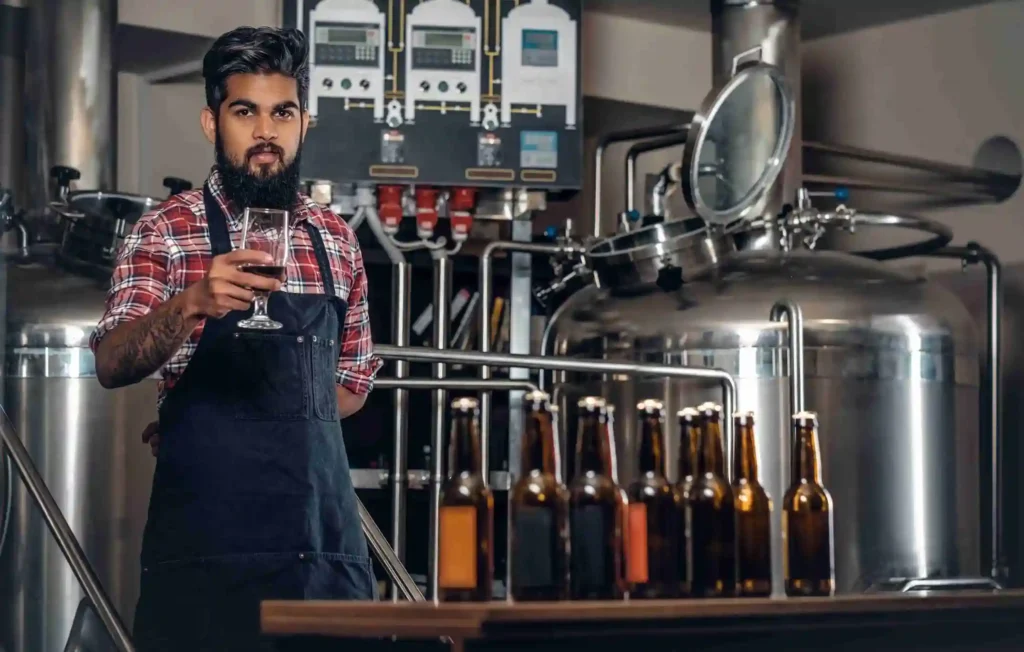
Manage Your Inventory Effectively with Food and Beverage Inventory Management Software

Introduction Managing inventory in the food and beverage industry is no easy task. With perishable goods, fluctuating demand, and complex supply chains, keeping everything in order requires a lot of attention to detail. Effective inventory management can make or break your business, impacting everything from your bottom line to customer satisfaction. This is where food and beverage inventory management software comes into play, offering a modern solution to age-old problems. In this article, we’ll explore why inventory management is crucial in the food and beverage industry, the benefits of using specialized software, and how you can choose and implement the right system for your business. Why Inventory Management is Crucial for Food and Beverage Businesses Managing inventory in the food and beverage industry presents unique challenges. Unlike other sectors, you’re dealing with perishable items, which means timing is everything. Mismanagement can lead to significant losses, whether through spoilage, overstocking, or missed sales opportunities due to stockouts. On top of that, the food and beverage industry is highly competitive, and the ability to respond quickly to customer demands can set you apart from your competitors. Poor inventory management can lead to a range of issues—from excessive waste and increased costs to lost revenue and dissatisfied customers. In an industry where margins are often thin, every little bit counts. This is why more and more businesses are turning to technology to help manage their inventory more effectively. What is Food and Beverage Inventory Management Software? Food and beverage inventory management software is a specialized tool designed to help businesses keep track of their inventory in real-time. It goes beyond simple stock counting to provide a comprehensive view of your inventory levels, usage patterns, and ordering needs. This software is designed specifically for the unique needs of the food and beverage industry, taking into account factors like shelf life, seasonality, and supplier lead times. Unlike traditional inventory management methods, which often rely on manual counting and spreadsheets, inventory management software automates many of these tasks. This not only saves time but also reduces the risk of human error. Key Features of Food and Beverage Inventory Management Software Let’s dive deeper into the key features that make food and beverage inventory management software an essential tool for modern businesses: Automated Inventory Tracking One of the standout features of inventory management software is automated tracking. The software automatically updates your inventory levels as stock is received, used, or sold. This automation ensures that your inventory data is always up-to-date, helping you avoid the pitfalls of overstocking or understocking. Real-time Data Analytics Real-time data is invaluable in the food and beverage industry. Inventory management software provides instant access to data on stock levels, sales trends, and usage patterns. This allows you to make informed decisions quickly, whether it’s adjusting order quantities or identifying slow-moving items that need to be promoted. Supply Chain Management Integration Effective inventory management isn’t just about tracking what’s in your stockroom; it also involves managing your supply chain. Many inventory management systems integrate with your suppliers, allowing for automated ordering and real-time tracking of shipments. This integration can streamline your operations and reduce the risk of stockouts or delays. Waste Reduction Tools Food waste is a significant concern for many businesses. Inventory management software can help minimize waste by providing tools to track expiration dates, rotate stock, and forecast demand more accurately. By reducing waste, you not only save money but also contribute to a more sustainable business model. Reporting and Forecasting Accurate reporting and forecasting are critical to effective inventory management. The software can generate detailed reports on inventory turnover, waste, and profitability, helping you identify trends and make data-driven decisions. Forecasting tools can predict future demand based on historical data, helping you plan your orders more effectively. Benefits of Using Inventory Management Software Now that we’ve covered the key features, let’s look at some of the benefits of using food and beverage inventory management software: Increased Efficiency By automating many of the tasks involved in inventory management, the software frees up your time to focus on other areas of your business. Tasks that once took hours can now be completed in minutes, allowing your team to be more productive. Cost Savings Better inventory management leads to significant cost savings. By optimizing your stock levels and reducing waste, you can lower your overall expenses. Additionally, the software can help you identify cost-saving opportunities, such as bulk purchasing or finding alternative suppliers. Enhanced Accuracy Manual inventory management is prone to errors, which can lead to costly mistakes. Inventory management software significantly reduces the risk of human error by automating data entry and calculations. This enhanced accuracy can lead to more reliable inventory data and better decision-making. Improved Compliance The food and beverage industry is heavily regulated, and non-compliance can result in hefty fines or even the closure of your business. Inventory management software helps you stay compliant by keeping accurate records of your stock and providing alerts when items are nearing their expiration date. How to Choose the Right Food and Beverage Inventory Management Software Choosing the right inventory management software can be daunting, especially with so many options on the market. Here are some key considerations to help you make the right choice: Assess Your Business Needs Before you start shopping for software, take a close look at your business needs. What are the biggest challenges you face with inventory management? Do you need help with tracking, forecasting, or compliance? Understanding your specific needs will help you find a solution that fits. Consider Scalability As your business grows, your inventory management needs will likely become more complex. Choose a software solution that can scale with your business, adding new features and capabilities as needed. Look for User-Friendly Interfaces The best software in the world won’t be much use if your team can’t figure out how to use it. Look for software with a user-friendly interface that makes it easy for your staff to learn and use. Evaluate Integration Capabilities Your

Manage Your Inventory Effectively with Food and Beverage Inventory Management Software Read More »
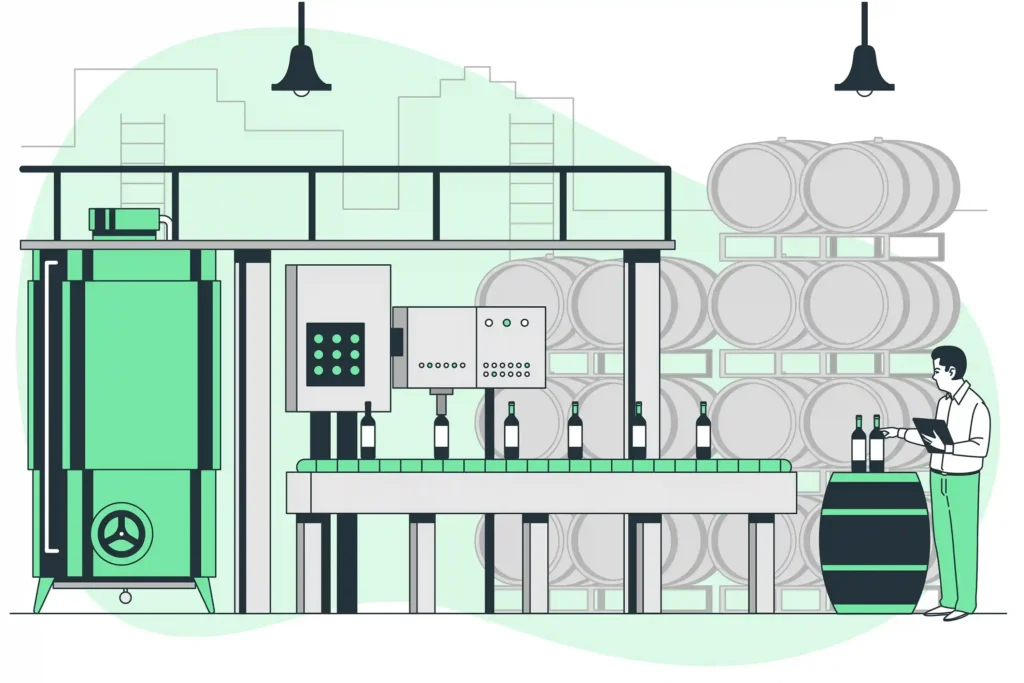

Inventory-Management-in-the-Food-and-Beverage-Industry-with-ERP-Software

Enhance Inventory Management in the Food and Beverage Industry with ERP Software

Elevate your Food and Beverage business with cutting-edge ERP software. Optimize inventory management, streamline processes, and boost efficiency. Experience enhanced control and profitability. Revolutionize your F&B operations with ERP solutions.

Enhance Inventory Management in the Food and Beverage Industry with ERP Software Read More »

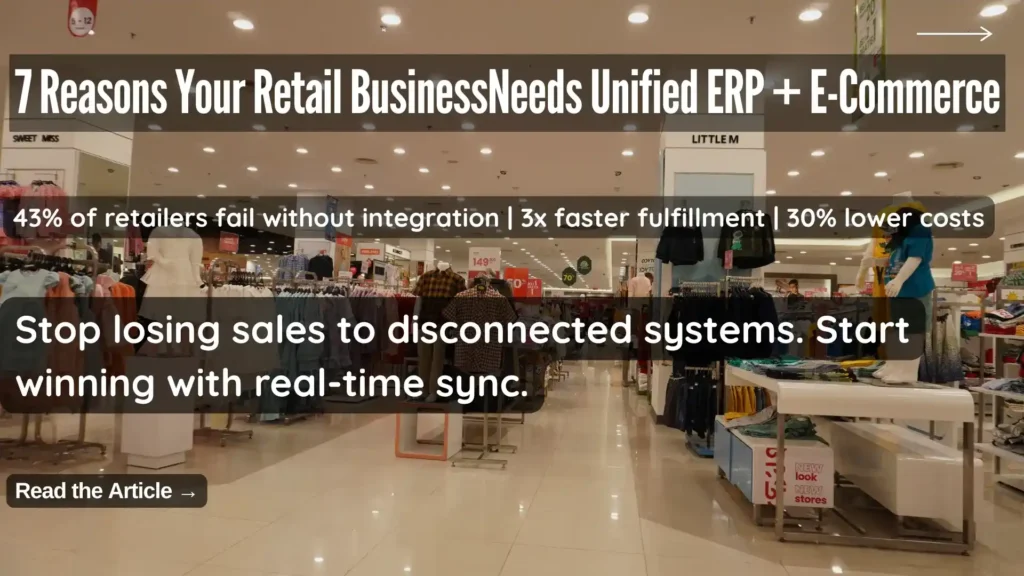
7 Reasons to have a Retail-oriented Solution to Unite E-commerce and ERP

[vc_row][vc_column][vc_column_text]Solely brick-and-mortar retail is gradually have become the exception rather than the norm. Increasing numbers of consumers have welcomed the convenience of online retailers, allowing them to evaluate items in less time and make purchasing decisions rather than visiting various physical stores. In everyday market research, 81 percent of consumers use phones and tablets. In reply to these developments, businesses try to boost revenues by embracing ecommerce and spreading to other platforms. Yet each new site introduced by marketers raises the difficulty of their distribution chain. To integrate all channels information to make good enterprise-wide choices, they need new digital resources. To establish a consolidated database of all purchases, clients, and goods, several retail businesses prefer to incorporate their ERP implementation services with each of their distribution channels. There are however some clear benefits of using an integrated solution designed specifically for the retail sector over integration solutions for common use applications. Below are some features of built-in retail integration solutions that show the requirement of customization for a common integration framework: 1- Flexibility Over Retail Vhannels All businesses move toward cohesive user experiences. Retail-specific integration solutions enable different systems, like your point-of-sale (POS) and ecommerce system, to import and then use product descriptions into your Retail ERP Software. It means you have the same range of products throughout all the product lines, while constantly pricing and discounting those items. 2- Omni Channel Experience Retail integration solutions offer services for Omni channel purchase-online pickup-in-store (BOPIS) fulfilment which enables customers to buy an item from one channel and deliver it from another platform. They might buy a product at a retail outlet, for instance, and have it shipped to their house, or they might order it online and pick it up at a local retail outlet. The retail-specific integrated system manages ZIP-code searches for shop inventory, and shares shop pickup information between systems. 3 – Inventory Clarity Retail connectivity solutions provide an accurate representation of product availability by synchronization of inventory data throughout networks and systems on a routine basis. Entities can even merge individual warehouses and shops into satisfactory groups to enhance the control of the distribution chain. 4- Client Information Integration Your Retail ERP system will exchange customer data with your online store and other channels, using a retail-specific implementation solution. Customer data must stay consistent over digital and physical platforms and will avoid redundant information. Such knowledge could be used to generate and monitor purchase requests, and to improve loyalty program management. 5- Unified Loyalty Program A retail integration solution makes it much easier to operate a single loyalty program with consumer, pricing, and discount information integrated into your Retail ERP system. You will receive and redeem coupons, gift cards, and loyalty points across all platforms, creating better customer satisfaction and higher participation levels than a channel-specific rewards program. 6 – Single Integration Solution for Payment A retail-specific integration approach increases time to value by offering preloaded integration with major payment service vendors. The use of one integrated system for processing payments, order processing, customer data, and product inventory offers greater efficiency and lower production costs than multi-integrator dependence. 7 – Managing Multiple Languages and Currencies Retail integration technologies are planned for retail operations around the world. They have help for managing multiple languages and currencies, so you can quickly set up physical or online stores in new geographical regions. Conclusion Integration solutions intended for the retail sector provide many out of the box that would involve many months of costly customization to accomplish using platforms for general purpose integration. Trident Information Pvt Ltd provides a flexible and versatile integration solution which many international retailers use. For more information on the power of retail-specific integration, contact Microsoft ERP Partner Trident Information Pvt Ltd on https:/tridentinfo.com/contact/     [/vc_column_text][/vc_column][/vc_row]

7 Reasons to have a Retail-oriented Solution to Unite E-commerce and ERP Read More »

Turn prospects into engaged customers with intelligent sales and marketing

[vc_row][vc_column][vc_column_text] The selling landscape is undergoing fundamental changes, many of them driven by the effects of B2B customers’ experience as everyday consumers. Many retailers have created personalized, nearly immersive, online experiences for each customer. Consumers shopping for goods and services continually experience fresh and delightful interactions, from highly customized offers and recommendations to frictionless channels to 24/7 interactions. Using Microsoft Dynamics 365 for Marketing and Microsoft Dynamics 365 for Sales organisations are improving  their profit margins. The impact of B2C on B2B Today’s B2B buyers have high expectations, and those expectations will not be met if B2B buyers are accustomed to sophisticated consumer interactions in their personal lives. Executive B2B buyers are not impressed by marketing driven by large, relatively impersonal data analysis that leads to inconsistent and conflicting interactions or sales outreach that doesn’t cater specifically to their needs at the right time. The source of the problem may be largely invisible to the companies perpetuating this issue. Many organizations believe themselves to be customer-centric, while their buyers may not agree. That’s a significant disconnect. Clearly, B2B has much to learn from B2C companies. Customer experience – the rewards for getting it right Many B2C organizations have strategically embraced modern technologies like customer data platforms (CDP) and artificial intelligence (AI) to gain a 360-degree view of their customers and follow through on those insights to optimize customer engagement. The rewards for getting this engagement right are substantial. Many buyers are willing to pay more for a better customer experience. In terms of the potential benefits a great experience can have on sales success, a McKinsey study reported that organizations can expect: 10-15 percent lower customer churn 20-40 percent increase in the win rate of offers Up to 50 percent lower service costs Take a new approach B2B companies must move away from their legacy approaches based on large, relatively impersonal data analysis and move to solutions that unify relationship data across the full customer lifecycle. That way, they can gain insights that help build credibility and trust with buyers. They can run multi-channel campaigns to increase sales-ready leads, create personal experiences, and use guided process and AI to anticipate and respond faster to customer needs. They can build the ongoing, high-quality relationships that are necessary for long-term success. Four principal goals Turning prospects into engaged customers is a process. In order to achieve these goals, organizations must focus on 4 key priorities: Nurture more demand Personalize buyer experiences Build relationships at scale Make insight-driven decisions Each of these drives results by using deep reservoirs of data in making technology feel more human. Nurture more demand Relying only on conventional, basic email marketing as the primary source of leads is simply not effective enough. In fact, the more focused and demanding the customer universe is, the more essential it is to gain deep insights into what those customers expect. Northrop & Johnson,  a leading global yacht brokerage, competes for multi-million dollar customers using technology its industry has been slow to adopt. Using Microsoft Dynamics 365 for Marketing has created a decided competitive advantage: Vital insights into their customer base have helped to drive a 70 percent increase in charter sales. In any industry, companies need to generate leads across multiple channels, nurture large numbers of leads while prioritizing each one, and use data-driven insights to deliver leads that are sales-ready. Nurturing more demand is critical to growth. Personalize buyer experiences It’s time to end friction, inconsistencies, and the “do you know who I am?” part of the customer experience. Companies can acquire a holistic view of buyers, predict buyer intent, and orchestrate a connected, personalized journey for customers. In an era where guests have more choices than ever for leisure and entertainment, Tivoli delights its guests by using Dynamics 365 Customer Insights to stay one step ahead of expectations and transform the guest experience. With its deeper understanding of guests, it can add new chapters to its long tradition of imagination and innovation. Build relationships at scale Mutually beneficial relationships don’t simply happen with more data. Companies need to build credibility to establish and grow relationships with customers. Together, Dynamics 365 and LinkedIn enable the company to have increased information about, and impact on the sales relationships that are added to its sales pipeline, even as that pipeline experiences exponential growth month over month. Make insight-driven decisions Here’s where sales and marketing can truly align: utilizing data to uncover insights that lead to better-informed decisions throughout the sales process. This can improve performance, empower employees, and enable the company to gain increasingly effective strategic insights. With more than 1,500 pubs serving guests throughout the UK, Marston’s launched a business transition by bringing together guest data that was scattered across multiple systems into Dynamics 365. With their locations’ guest data now unified, Marston’s will gain a complete view of guests, which can be harnessed to generate customer satisfaction and strategic insights. This approach helps drive improved performance throughout the company, including the opportunity to empower employees – an often-overlooked aspect of a company’s success. Aligning sales and marketing: The intelligent way to succeed It’s possible to create exceptional experiences, drive more qualified leads, and increase revenue if an organization has the vision, process, and technology to harness all the data available. This requires high-level technology with well-defined business goals and sales and marketing applications fueled by keen intelligence. We have a compelling offering to accomplish just that with Microsoft Dynamics 365. Get in touch with our representative to request a demo for Microsoft Dynamics 365 for Sales & Microsoft Dynamics 365 for Marketing Blog Reference : https://cloudblogs.microsoft.com/dynamics365/bdm/2019/09/19/turn-prospects-into-engaged-customers-with-intelligent-sales-and-marketing/[/vc_column_text][/vc_column][/vc_row]

Turn prospects into engaged customers with intelligent sales and marketing Read More »

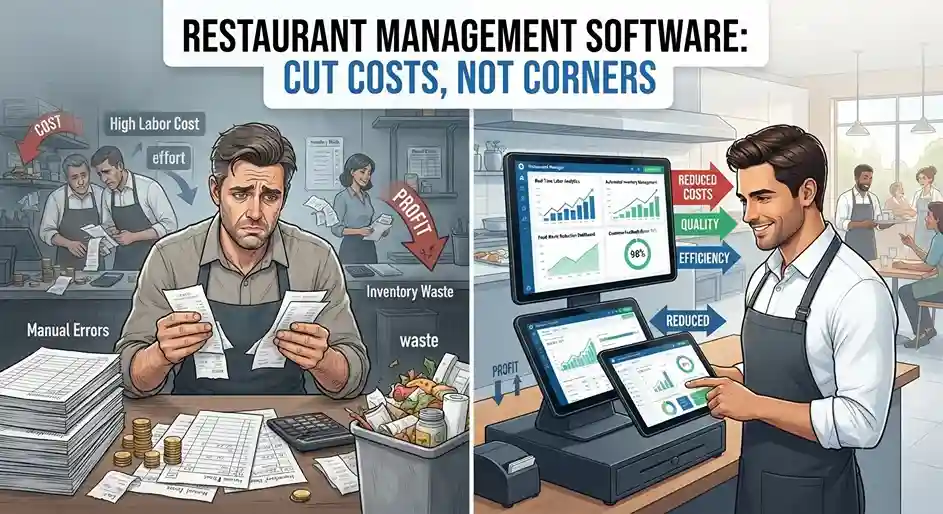
Slash costs in your restaurant with the right software system

[vc_row][vc_column][vc_column_text]How do you manage costs in your restaurant business? Are you operating as efficiently as you could be? We know how difficult it can be to maintain optimal efficiency and make money in a time of razor-thin margins and intense competition. By their very nature, restaurants are characterized by predictable, seasonal factors as well as by unpredictable ones, including changing customer preferences and fluctuating running costs. But there are ways to get a better handle of your business, helping you to plan ahead more effectively, become leaner and reduce costs in the process. For many restaurant owners, the answer lies in choosing a modern unified technology platform that provides a complete overview of your business operations from Point of Sale (POS) to back office. Indeed, research by the National Restaurant Association in the US found that over 80% of restaurants are turning to technology like online ordering and reservations and restaurant analytics to help them run their business successfully and efficiently. The same report found that four in five restaurant operators agreed that: Technology helps increase sales Technology makes their restaurant more productive Technology provides a competitive advantage. If you’re in two minds as to whether a restaurant management system could help your business grow, rather than simply cost you money, here are some specific areas in your business where the right technology can make a real difference: Optimize staff management If your staff schedules are currently handled manually, in spreadsheets or even on paper forms, you could be missing out on a trick. Staff management software has the capabilities you need to ensure rosters correspond with table bookings and helps you plan for the right amount of labor you need. The result is optimized schedules, which means you don’t have too many employees at work during quiet periods, and yet you have enough on hand to see you through the busy times. If you select a unified system for your restaurant, the staff management functionality can be part of the same platform used to manage the rest of your business. This allows you to make truly informed decisions using historic sales data and drilling down by location, day of the week and time to see patterns emerging and better determine when you will be busy or quiet. Another factor to consider is how you can use the software to keep track of your budgets and make sure you’re not paying out more than you should be. We know how difficult it can be to check and confirm the hours worked by each of your employees, especially when you are likely dealing with so many. But a staff management system can automate this for you, confirming actual hours worked are the same as those planned and highlighting any discrepancies for you to follow up on, minimizing errors and costs. With the functionality to analyze how much you are spending by employee, work code, shift and role, you can compare actual costs and performance against your business plan, and minimize unnecessary extra expenses, such as overtime. Simplify staff training In this industry, we know that workers tend to be transient – maybe you have lots of students or temporary workers on your payroll. High staff turnover can be a real pain point and loss maker for your business, especially as recruiting and training staff is both time consuming and costly. But there are ways technology can help you control this better, and reduce the costs and pain of getting new staff on board. If the systems you use are intuitive and easy for all employees to understand, you won’t have to spend as long training them on how to use them in the first place. Some retail management systems allow you to set up your POS so it mirrors your menu, making it far simpler for staff to find their way around while also helping to reduce mistakes. To simplify training even further, it could pay off to choose a system that uses a logic your staff is already familiar with. The LS Retail restaurant solutions, LS First and LS Central, are built on well-known Microsoft technology. This means new employees can be up and running quickly, as any experience with Microsoft software such as Office or Windows means they already know where to find menus and information in the system. Having one enterprise-wide platform, rather than multiple software solutions strung together, also means you only need to train your staff up once. This not only saves time and cost but gives you greater flexibility too. If you need to move staff from the bar to the restaurant floor, you can do so with ease. No extra training required to use a separate system; no time wasted. Increase table turnover and order value Is your restaurant floor running as smoothly as it could? There are some steps you can put in place to subtly speed up the process, allowing you to serve more customers without making your diners feel rushed. Mobile POS devices are a great way of doing this. As they connect your servers directly to the kitchen, kitchen staff can act on orders as soon as they are taken at the table, speeding up food preparation. Your waiters can get an alert on their POS devices when orders are ready, and they can also take payments on the device as soon as diners are ready to leave – no waiting for card readers or an available cash register. If you select the right mobile POS, your staff can also handle conversational ordering, where they take orders in the same way that customers reel them off – extra cheese on their burger and no mayo, with large chips, for example. Everything can be quickly inputted into the POS, speeding up service time and reducing errors. At the same time, because staff have all menu information right in front of them, they can improve their upselling potential by suggesting upsell items and upgrades as they take orders. Streamline kitchen operations A unified platform complete with a kitchen management system could help your restaurant serve up food more quickly and efficiently than ever. In the kitchen, having Kitchen Display System (KDS) screens connected to the

Slash costs in your restaurant with the right software system Read More »

How can Trident’s cloud platform manage your restaurant effortlessly?

[vc_row][vc_column][vc_column_text]Mortality in restaurants is a fact with several young firms shut down. What if the software could transform how restaurants are running by offering profound insights for more profit? Trident’s cloud-based restaurant management solution makes it possible by concentrating on advancing the bottom line and back-of-house productivity. Trident takes into consideration all facets of restaurant management, including Inventory Management, costing of food and beverage, purchase orders, Table Management, Billing System, Point Of Sale, Vendor Planning, Price Monitoring, Costing of Food, Menu Management, and Reporting/Analytics. Still uncertain of restaurant management technology premised on the cloud? Like the idea, but don’t know where to start? Don’t worry, we’ve covered you up. Below we will discuss how Cloud-based restaurant management software transforms the industry for seven reasons: 1) – Access information anywhere  The mobile in your pocket or a laptop with a web browser and internet access are all you need to get started. Simply download the web site’s mobile app or account. To use the app you don’t need to be in the office, live with the hassle of VPNs or private networks. 2) – No more hefty long contracts Why tie-up with a long, costly technology vendor contract and have technology that may soon be out of date? On-site technology requires long-term investments, contract service, and a much higher Total Ownership Cost. The food industry is highly unpredictable, with frequent restaurants open and close. If you’re just beginning, you probably won’t be able to commit to fall tens or even hundreds of thousands of rupees on new technology. Restaurant management technology focused on the cloud removes the need for a big upfront investment and the lower monthly cost helps you to show the ROI from day one. 3) – Flexible Payments  When cash flow is a problem for your corporation (which is a concern for most businesses), then flexible terms of payment is a big thing. You charge for your software-as-a-service (SaaS) with cloud-based restaurant management technology. For example, both month-to-month and yearly contracts are provided by some vendors. When part of the contract you are charging for, the latest technology, new functionalities and updates, infrastructure improvements, etc. are all included. 4) – Scale The advantage of SaaS is that depending on your requirements, you can simply and quickly scale up or down. Open a new site, insert your current contract and get up and running before the end of the day. You can add users, integrations, locations, new features, etc. with just a few clicks. No technician’s visits. No long cycles of implementation. No significant investment to store servers in hardware or storage. 5) – Integration with POS System The ability to easily integrate with other applications is one of the strongest strengths of cloud-based restaurant management systems. Through APIs and other methods of integration, the cloud-based restaurant management technology can communicate with each other, share the data, and provide smarter, quicker, and simpler than ever before insights through stores and systems. 6) – Security  Cloud computing is much safer than data stored on your computer or an internal database. It has advanced security checks such as two-factor authentication for logging in, deterrent controls to alert potential hackers about protections, preventive controls which make accessing the cloud information more difficult for unauthorized users, and detective controls to react to intrusion events. If anything ever occurred to your restaurant’s servers – like a flood, a fire, or a theft, you may not see that data again. Restaurant software based on the cloud often comes with built-in backup and redundancy. 7) No need of It professionals If you are on-premise managing legacy systems, you need to understand what you’re doing. From routing, safety, restoration, debugging, and so on, nobody can go into a database office and start ripping cables. You don’t need to employ an IT professional with cloud-based restaurant management technology. All you need is access to the provider of internet and software that is committed to supporting and guaranteeing your excellence. Microsoft Gold partner Trident Information Pvt Ltd grants all of the above-mentioned advantages. For getting all the advantages you can contact our experts on https://tridentinfo.com/contact/ and add a query on our website. [/vc_column_text][/vc_column][/vc_row]

How can Trident’s cloud platform manage your restaurant effortlessly? Read More »