
Welcome to Trident Information Systems!
Write us to - info@tridentinfo.com
Let's Socialize

Cloud Kitchen software africa

Cloud kitchen management system handling online orders, kitchen operations, and food delivery in 2026.

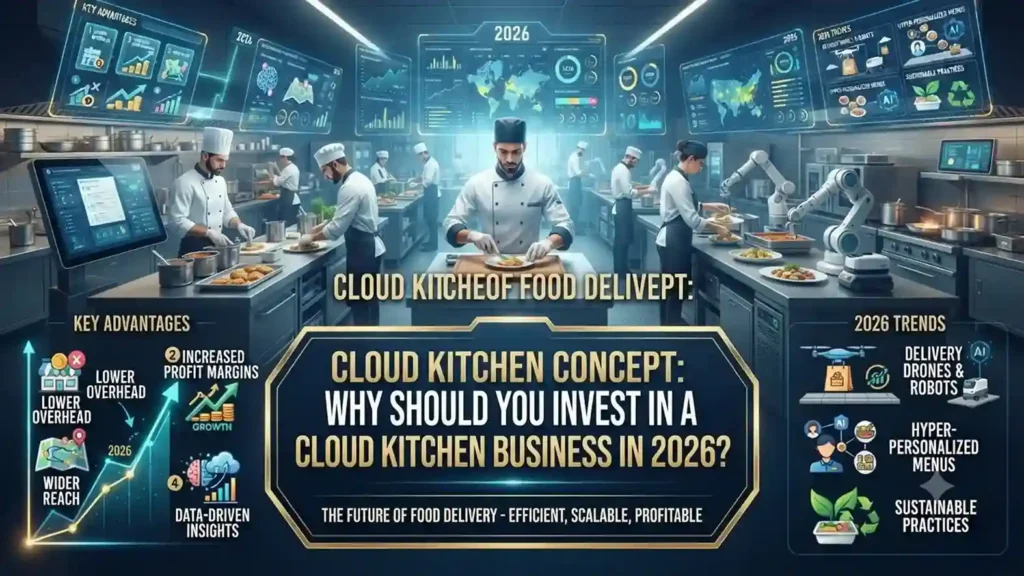
Cloud Kitchen Concept: Why Should You Invest in a Cloud Kitchen Business in 2026?

The food industry has changed forever — and cloud kitchens are leading that change. What started as a pandemic-era workaround has become one of the most profitable and fastest-growing business models in the food service industry. In 2026, cloud kitchens aren’t a trend. They’re a permanent, mainstream pillar of how food gets made and delivered — and the opportunity for entrepreneurs has never been bigger. The global cloud kitchen market was valued at USD 85.5 billion in 2025 and is projected to reach USD 185.7 billion by 2034. In India specifically, the market reached USD 1.24 billion in 2025 and is growing at a CAGR of 12.28% — projected to hit USD 3.69 billion by 2034. India is now the second-largest cloud kitchen market in Asia, after China. If you’ve been thinking about entering the food business — or expanding your existing restaurant operation — here’s everything you need to understand about the cloud kitchen concept and why 2026 is the right time to invest. What Is a Cloud Kitchen? A cloud kitchen — also called a ghost kitchen, dark kitchen, or virtual restaurant — is a food preparation facility built exclusively for delivery. There is no dine-in space, no waitstaff, no fancy interiors, and no walk-in customers. Everything operates digitally. Orders come in through food delivery apps like Swiggy, Zomato, and ONDC, or through the brand’s own website and app. Food is prepared in the kitchen and dispatched directly to the customer’s door. The result: lower overhead, faster operations, and the ability to serve more customers with significantly less investment than a traditional restaurant. How Does the Cloud Kitchen Business Model Work? Cloud kitchens typically operate in one of three formats: Independent Cloud Kitchen — A single brand operates from a dedicated kitchen space, taking orders from delivery platforms and its own channels. This is the most common model, holding 63% of global market share in 2025. Hub & Spoke Model — A central kitchen (the hub) handles bulk preparation and distributes to smaller satellite kitchens (the spokes) located closer to customers. This model maximizes delivery speed and coverage across a city. Shared / Commissary Kitchen — Multiple food brands share a single kitchen facility, splitting infrastructure costs. Ideal for startups and first-time food entrepreneurs wanting to test their concept with minimal investment. In all three models, the core operational flow is the same: online order received → kitchen prepares → delivery partner dispatches → customer receives. No tables. No waiting. No overheads that don’t contribute to revenue. 6 Powerful Reasons to Invest in a Cloud Kitchen Business 1. Dramatically Lower Investment to Start Starting a traditional dine-in restaurant in India typically requires significant capital — location fit-out, furniture, décor, kitchen equipment, staff, and months of losses before hitting profitability. Cloud kitchens slash that entry cost by 70–80%. You need a kitchen space, equipment, a few delivery registrations, and an FSSAI licence. In metro cities, rental costs for a cloud kitchen space can be as low as ₹15,000–30,000 per month. The capital you save goes directly into product quality, marketing, and growth. 2. Faster Return on Investment Lower startup costs mean your break-even point arrives much sooner. Because cloud kitchens have no dine-in overheads — no ambience spending, no waitstaff salary bill, no front-of-house maintenance — a significantly higher percentage of every order contributes directly to profit. This is why entrepreneurs increasingly prefer the cloud kitchen model as their first or next outlet. The ROI timeline that takes a traditional restaurant 2–3 years can be achieved by a well-run cloud kitchen in 6–12 months. 3. Unlimited Scalability Traditional restaurants scale by opening new locations — each requiring full investment, fit-out, and months of ramp-up. Cloud kitchens scale differently. From one kitchen space, you can operate multiple virtual brands simultaneously — each with its own menu, pricing, identity, and target audience. A single kitchen in Delhi can run a biryani brand, a burger brand, and a healthy meal brand at the same time. When one brand gains traction, you expand it to the next city using the hub-and-spoke model — without the capital burden of a traditional rollout. Kitchen pods — micro-format cloud kitchens deployable in apartment basements, mall food courts, and office parks — are growing at a 14.6% CAGR and represent the next frontier of scalable cloud kitchen expansion across India’s Tier-2 cities. 4. Brand Exclusivity and Menu Innovation Cloud kitchens give food entrepreneurs something traditional restaurants rarely can — the freedom to be bold. With no physical space to maintain and no walk-in customer expectations to manage, you can launch niche concepts, test new menus, and pivot quickly based on delivery data. Think Netflix Originals — exclusive content that keeps audiences engaged. Cloud kitchens work the same way: unique, delivery-first food concepts that customers can only order from you. In 2026, India’s demand for international cuisine, premium healthy food, and hyperlocal regional dishes is surging. Cloud kitchens are perfectly positioned to capture these niche segments faster than any dine-in restaurant ever could. 5. Competitive Pricing Power When you eliminate spending on ambience, signage, furniture, and front-of-house staff — you free up capital that goes directly into what actually drives customer loyalty: food quality, packaging, and digital presence. Cloud kitchens can offer better food at lower prices than comparable dine-in restaurants while still maintaining healthy margins. This pricing advantage, combined with the convenience of home delivery, is a powerful combination in India’s price-sensitive food market. 6. Access to a Massive and Growing Digital Customer Base India has over 820 million active internet users. Swiggy and Zomato together process millions of orders every day. ONDC is now disrupting the delivery platform duopoly and reducing commission costs for cloud kitchen operators — improving unit economics further. By registering across multiple delivery platforms and building your own direct ordering channel, a cloud kitchen can access an enormous customer base from day one — without the geographic limitations that cap a dine-in restaurant’s growth. The Technology Behind a Successful Cloud Kitchen

Cloud Kitchen Concept: Why Should You Invest in a Cloud Kitchen Business in 2026? Read More »
Cloud Kitchen Business Model: What It Is, Why It Works, and How to Make It Succeed

Imagine running a restaurant without paying for expensive interiors, premium high-street locations, or a large front-of-house team. No waiters. No dine-in tables. No investment in fancy décor. Just a kitchen focused entirely on preparing food while orders arrive through online delivery apps. That is the power of the cloud kitchen business model. Also known as ghost kitchens, dark kitchens, or delivery-only restaurants, cloud kitchens have transformed the food and beverage industry over the last few years. What started as a niche concept has now become one of the fastest-growing business models in the restaurant industry. In India alone, thousands of entrepreneurs, restaurant chains, and food startups are operating cloud kitchens successfully across major cities and smaller towns. The reason is simple — customer behavior has changed. People now prefer convenience, fast delivery, digital ordering, and variety over traditional dine-in experiences. Apps like Swiggy and Zomato have made food delivery a daily habit, creating the perfect environment for cloud kitchens to thrive. But while the model sounds attractive, success is not automatic. Many cloud kitchens fail because they underestimate operational complexity, delivery dependency, food consistency challenges, and technology requirements. To build a profitable cloud kitchen, businesses need the right strategy, systems, and execution. This guide explains exactly what a cloud kitchen is, why the model works, the challenges involved, and how to make it successful. What Is a Cloud Kitchen? A cloud kitchen is a food business that operates without a dine-in facility. Customers place orders online through food delivery apps, websites, or mobile apps, and the food is prepared in a centralized kitchen purely for delivery or takeaway. Unlike traditional restaurants, cloud kitchens focus entirely on food production and order fulfillment. Since they do not require expensive dining spaces or prime commercial real estate, operational costs are significantly lower. A single cloud kitchen can operate: For example, one kitchen may simultaneously run: All from the same infrastructure and kitchen staff. This flexibility makes cloud kitchens highly scalable and cost-efficient compared to traditional restaurants. Why the Cloud Kitchen Model Works Lower Startup Costs Traditional restaurants require huge upfront investments in interiors, furniture, signage, and prime locations. Cloud kitchens eliminate most of these expenses. Businesses can start operations from smaller commercial kitchens or even shared kitchen spaces, reducing setup costs dramatically. Faster Expansion Opening a traditional restaurant in multiple cities requires heavy investment and long timelines. Cloud kitchens can expand much faster because they only need kitchen infrastructure and delivery coverage. Brands can test new markets quickly with lower financial risk. Higher Focus on Operations Traditional restaurants divide attention between dining experience and kitchen efficiency. Cloud kitchens focus entirely on: This operational focus often improves efficiency and profitability. Rising Online Food Delivery Demand Food delivery is no longer a trend — it has become a permanent customer habit. Busy lifestyles, smartphone usage, and delivery platforms have created massive demand for online food ordering. Cloud kitchens are built specifically for this digital-first market. Different Types of Cloud Kitchen Models Independent KDS A single food brand operates from one kitchen and handles online orders directly through delivery apps or its own website. Best for: Multi-Brand KDS One kitchen operates multiple virtual brands targeting different customer segments and cuisines. For example: This increases revenue potential without additional infrastructure investment. Aggregator-Owned KDS Platforms like Swiggy or Zomato may provide ready-to-use kitchen infrastructure that brands can rent and operate from. This reduces setup complexity for new businesses. Shared Kitchen Model Multiple food businesses share one commercial kitchen facility while operating independently. This model lowers operational costs and is ideal for startups testing the market. Challenges of Running a Cloud Kitchen While KDS offer huge advantages, they also come with challenges that many businesses underestimate. Heavy Dependence on Delivery Apps Most cloud kitchens rely heavily on Swiggy, Zomato, or other aggregators for customer acquisition. These platforms charge high commissions, which can impact profitability. Businesses must eventually build direct customer relationships through loyalty programs and their own ordering channels. Intense Competition Customers browsing delivery apps compare dozens of restaurants instantly. Cloud kitchens compete not only on food quality but also on: Standing out requires strong branding and operational consistency. Food Quality During Delivery A dish that tastes amazing inside the kitchen may not arrive in the same condition after 30 minutes of delivery. Packaging becomes extremely important for maintaining: Operational Complexity Managing multiple brands, online orders, inventory, kitchen staff, and delivery coordination can quickly become chaotic without proper systems in place. This is why technology plays a critical role in cloud kitchen success. Technology Needed for a Successful Cloud Kitchen Cloud kitchens run on technology. Without the right systems, businesses struggle with delays, inventory issues, and inconsistent operations. POS & Order Management System A centralized POS system helps manage: Solutions like Microsoft Dynamics 365 Business Central and LS Central help cloud kitchens automate operations while improving visibility across multiple brands and locations. Inventory Management Food costs can destroy profitability if inventory is not tracked properly. Inventory systems help businesses: Kitchen Display System (KDS) Digital kitchen display systems replace paper tickets and improve order accuracy and kitchen efficiency. Analytics & Reporting Cloud kitchens depend heavily on data-driven decisions. Reporting tools help identify: How to Make a Cloud Kitchen Successful Choose the Right Location Even though customers never visit the kitchen, location still matters. Kitchens should be close to high-demand delivery zones to ensure faster delivery times. Focus on a Strong Menu KDS menus should be optimized for: Complicated dishes with long prep times often reduce operational efficiency. Build a Recognizable Brand Branding matters even in delivery-only businesses. Strong logos, packaging, social media presence, and customer experience help cloud kitchens stand out from competitors. Prioritize Customer Reviews Online ratings directly impact visibility on delivery apps. Consistent food quality and reliable service are critical for maintaining positive reviews. Use Data to Improve Operations Successful KDS constantly analyze sales, customer preferences, delivery times, and food costs to improve performance and profitability. Final Thoughts The cloud kitchens business model is reshaping the restaurant

Cloud Kitchen Business Model: What It Is, Why It Works, and How to Make It Succeed Read More »