Welcome to Trident Information Systems!
Write us to - info@tridentinfo.com
Let's Socialize

erp for manufacturing industry

Manage Your Inventory Effectively with Food and Beverage Inventory Management Software

Introduction Managing inventory in the food and beverage industry is no easy task. With perishable goods, fluctuating demand, and complex supply chains, keeping everything in order requires a lot of attention to detail. Effective inventory management can make or break your business, impacting everything from your bottom line to customer satisfaction. This is where food and beverage inventory management software comes into play, offering a modern solution to age-old problems. In this article, we’ll explore why inventory management is crucial in the food and beverage industry, the benefits of using specialized software, and how you can choose and implement the right system for your business. Why Inventory Management is Crucial for Food and Beverage Businesses Managing inventory in the food and beverage industry presents unique challenges. Unlike other sectors, you’re dealing with perishable items, which means timing is everything. Mismanagement can lead to significant losses, whether through spoilage, overstocking, or missed sales opportunities due to stockouts. On top of that, the food and beverage industry is highly competitive, and the ability to respond quickly to customer demands can set you apart from your competitors. Poor inventory management can lead to a range of issues—from excessive waste and increased costs to lost revenue and dissatisfied customers. In an industry where margins are often thin, every little bit counts. This is why more and more businesses are turning to technology to help manage their inventory more effectively. What is Food and Beverage Inventory Management Software? Food and beverage inventory management software is a specialized tool designed to help businesses keep track of their inventory in real-time. It goes beyond simple stock counting to provide a comprehensive view of your inventory levels, usage patterns, and ordering needs. This software is designed specifically for the unique needs of the food and beverage industry, taking into account factors like shelf life, seasonality, and supplier lead times. Unlike traditional inventory management methods, which often rely on manual counting and spreadsheets, inventory management software automates many of these tasks. This not only saves time but also reduces the risk of human error. Key Features of Food and Beverage Inventory Management Software Let’s dive deeper into the key features that make food and beverage inventory management software an essential tool for modern businesses: Automated Inventory Tracking One of the standout features of inventory management software is automated tracking. The software automatically updates your inventory levels as stock is received, used, or sold. This automation ensures that your inventory data is always up-to-date, helping you avoid the pitfalls of overstocking or understocking. Real-time Data Analytics Real-time data is invaluable in the food and beverage industry. Inventory management software provides instant access to data on stock levels, sales trends, and usage patterns. This allows you to make informed decisions quickly, whether it’s adjusting order quantities or identifying slow-moving items that need to be promoted. Supply Chain Management Integration Effective inventory management isn’t just about tracking what’s in your stockroom; it also involves managing your supply chain. Many inventory management systems integrate with your suppliers, allowing for automated ordering and real-time tracking of shipments. This integration can streamline your operations and reduce the risk of stockouts or delays. Waste Reduction Tools Food waste is a significant concern for many businesses. Inventory management software can help minimize waste by providing tools to track expiration dates, rotate stock, and forecast demand more accurately. By reducing waste, you not only save money but also contribute to a more sustainable business model. Reporting and Forecasting Accurate reporting and forecasting are critical to effective inventory management. The software can generate detailed reports on inventory turnover, waste, and profitability, helping you identify trends and make data-driven decisions. Forecasting tools can predict future demand based on historical data, helping you plan your orders more effectively. Benefits of Using Inventory Management Software Now that we’ve covered the key features, let’s look at some of the benefits of using food and beverage inventory management software: Increased Efficiency By automating many of the tasks involved in inventory management, the software frees up your time to focus on other areas of your business. Tasks that once took hours can now be completed in minutes, allowing your team to be more productive. Cost Savings Better inventory management leads to significant cost savings. By optimizing your stock levels and reducing waste, you can lower your overall expenses. Additionally, the software can help you identify cost-saving opportunities, such as bulk purchasing or finding alternative suppliers. Enhanced Accuracy Manual inventory management is prone to errors, which can lead to costly mistakes. Inventory management software significantly reduces the risk of human error by automating data entry and calculations. This enhanced accuracy can lead to more reliable inventory data and better decision-making. Improved Compliance The food and beverage industry is heavily regulated, and non-compliance can result in hefty fines or even the closure of your business. Inventory management software helps you stay compliant by keeping accurate records of your stock and providing alerts when items are nearing their expiration date. How to Choose the Right Food and Beverage Inventory Management Software Choosing the right inventory management software can be daunting, especially with so many options on the market. Here are some key considerations to help you make the right choice: Assess Your Business Needs Before you start shopping for software, take a close look at your business needs. What are the biggest challenges you face with inventory management? Do you need help with tracking, forecasting, or compliance? Understanding your specific needs will help you find a solution that fits. Consider Scalability As your business grows, your inventory management needs will likely become more complex. Choose a software solution that can scale with your business, adding new features and capabilities as needed. Look for User-Friendly Interfaces The best software in the world won’t be much use if your team can’t figure out how to use it. Look for software with a user-friendly interface that makes it easy for your staff to learn and use. Evaluate Integration Capabilities Your

Manage Your Inventory Effectively with Food and Beverage Inventory Management Software Read More »
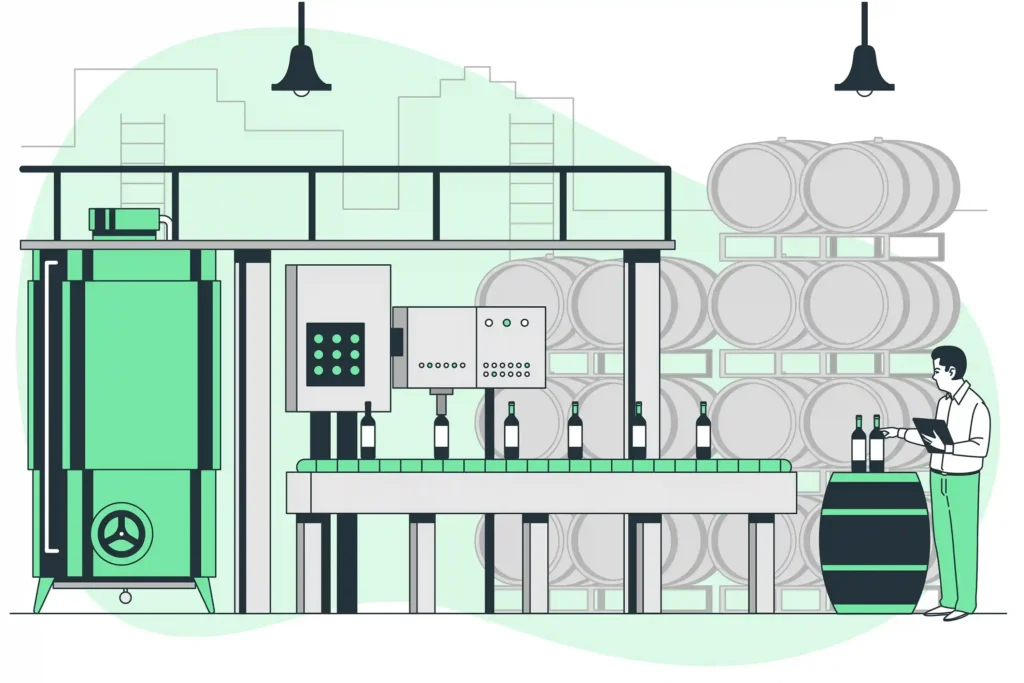

Inventory-Management-in-the-Food-and-Beverage-Industry-with-ERP-Software

Enhance Inventory Management in the Food and Beverage Industry with ERP Software

Elevate your Food and Beverage business with cutting-edge ERP software. Optimize inventory management, streamline processes, and boost efficiency. Experience enhanced control and profitability. Revolutionize your F&B operations with ERP solutions.

Enhance Inventory Management in the Food and Beverage Industry with ERP Software Read More »

Beat the Skill Gap in Manufacturing

The manufacturing industry contributes a massive part to India’s GDP. India’s gross domestic products at current counts at Rs. 51.23 lakh crores (USD 694.93 billion). In the first quarter of FY22, according to the provisional estimates of gross domestic product for the first quarter of 2021-22. The manufacturing GVA at current prices was estimated at USD 97.41 billion in the first quarter of FY22.   This pandemic has pushed this sector back causing skill gaps. Unfortunately, various manufacturers were exposed to crisis fallouts. Despite manufacturing companies trying their hardest to strengthen and rebound in the post-COVID 19 eras, this has impacted hugely on the existing workforce. To overcome this scenario, manufacturers may opt for Manufacturing ERP Software like Microsoft Dynamics 365 which integrates every aspect of manufacturing under the same platform and hence provides a centralized and streamlined manufacturing experience.  There are multiple ways in which manufacturers have changed the way they operate their business. For example, Manufacturers all over the world had to cut budgets and let workers go to secure their bottom line. Apart from reducing the effectiveness of the remaining workforce, it fundamentally altered the functioning of the organization overall. With limited employees left behind, they have to pick up the slack. This leads to increased workload and adjusting with more than what they are assigned to. And not to mention employee safety becomes the top priority (an even bigger priority than it ever was).     Can Digitalization Address Skill Gaps As-Well-as Safety Compliance?  The manufacturing industry has been transforming even before the COVID 19 pandemic hits the world. It was so rapid that it was even tougher for your workforce to keep up with it. Rapid digital transformation contributes to the growing skill gap on the shop floor as well as brings new challenges to the worker’s safety and productivity.   In simple words, your workforce needs to transform to keep up with it. They need to embrace resilient technology like Microsoft Dynamics 365 that can attract, train, and retain the next generation of workers while embedding skills they need to recreate manufacturing and shape a sustainable future.   The talent hunt needs to be done keeping the uneven and protracted recovery environment to balance productivity and achieve desired business outcomes.   Manufacturers can rejoice now as by integrating suitable productive applications, intelligent cloud services, and security, the industry can easily set its workforce up for victory. This is how digital transformation can help employees fill the skill gap:   Connecting empowered technicians and remote assets security to troubleshoot issues, therefore dispatching technicians only when required.  Providing frontline workers with expert assistance remotely to avoid downtime while allowing them to do their best by unifying devices, relationships, processes, and data into intelligent apps, and guiding them securely through the compliance requirements and the most suitable practices.   Ensuring better productivity with team collaboration tools, remote assists, mixed-reality, AI-enhanced applications, and IoT-enables machines to keep up with the boosted process complexities and operational maintenance.   Technology Transforms Manufacturing Operations  Technology-centered agile businesses ensure business practices from anywhere. This is especially useful for businesses having a workforce scattered remotely and, in the workplace, globally. Research commissioned by Microsoft reveals that 97% of entrepreneurs require more agile and mongrel techniques for working in the longer run. With a dynamic as-well-as cohesive workforce all around the world, businesses have numerous opportunities to encompass a technology-centric approach like Microsoft Dynamics 365 for Manufacturing.  Manufacturers can balance productivity with remote work. They can reinforce their organizations and frontline workers with robust and intuitive tools delivering a remote, integrated as-well-as in resilient business experience.   COVID 19 pandemic has raised a grave concern about employee safety and health. As soon as they enter the workplace, their safety and health will be the major priority. Having such technology can help with the health and safety compliance set by the government.   With the rise of connectivity and mobility, security compliance becomes a big issue. Since the data is more prone to various malware, viruses, etc., manufacturers have to find new ways to keep their data safe. Microsoft Azure ensures bank-level security and backup.   As words, manufacturers have to deploy remote and more agile business practices and optimally boost their productivity. Microsoft Dynamics 365 allows manufacturers to grow and attain excellent customer service while:   Transforming your workforce by integrating intelligent cloud services, productive apps, and security to reimagine the way you operate your business.    Engaging more customers with innovation by delivering exponent customer experience throughout marketing, sales, and service channels.   Creating more robust, secure, and safe factories with IoT (Internet of Things), IT, and industrial IoT.   Building more flexible supply chains with intelligent supply chain planning ensures more resilient services and profitability.   The world is transforming, and therefore mounting pressure on the manufacturers to address skill gaps in their factories and deliver impeccable services. Centering trust, security, innovation, and compliance, Microsoft, ERP for Manufacturing Industry, enables the digital transformation of your business. Trident Information Systems is a Gold Microsoft Partner. If you are looking for Microsoft implementation, you may contact us.  

Beat the Skill Gap in Manufacturing Read More »

How Manufacturing Industry Transformed using Microsoft Dynamics 365

The future of manufacturing will be defined by the quality of investments companies are making today In the not too distant past, efforts in manufacturing to optimize productivity and increase customer satisfaction were viewed as separate endeavors. Today, the convergence of physical and digital trends is disrupting these kinds of assumptions. Manufacturers today care about integrated digital and physical systems, improved visibility, increased efficiency, additional flexibility, and lower costs. They want to connect equipment and factories, leveraging data from the factory floor to the customer call center to improve every aspect of their operations. But this is just the beginning. Digitization is fundamentally changing the way manufacturers do business, enabling a customer-centric approach while optimizing operations. Digitally empowered manufacturers engage customers throughout the product lifecycle from design to field service. They sell value-add services to complement the product sales, opening new revenue streams and strengthening their customer relationships. And they are revolutionizing delivery of these differentiated services, using technology like augmented reality to combine the eyes of a technician in the field with the insights of an expert back at headquarters. Capitalizing on these trends isn’t limited to large, well-resourced manufacturers. Across all kinds of manufacturing operations, the opportunity to digitize and transform your business has never been more accessible. Imagine your business transformed The Microsoft vision for supporting digital manufacturing embraces the seismic shifts in the industry today. We’ve created solutions that provide a unified and flexible approach across front office and production floor processes. Our approach enables transformation in six ways: Optimize supply chain operations through better visibility and collaboration By collecting, integrating, and visualizing global supply chain data worldwide, manufacturers gain better visibility into their operations from production to sales. For example, one of the world’s largest industrial automation firms found that by automating the collection and analysis of data from remote installations across the petroleum supply chain, they strengthened their competitive advantage with a faster time to market. Improved access to supply chain data is also the basis for better collaboration across production, supply, service, and sales.  Streamline the management of assets, products, and production With a consolidated view that unifies process oversight and provides real-time insight, manufacturers can institutionalize efficiency gains and use connected devices to monitor and resolve issues remotely. One leading manufacturer of industrial robots enabled 24-hour continuous uptime using this approach. The additional insights into production and customer usage also allow manufacturers to provide value-added services like ongoing monitoring and proactive support. Engage customers in powerful new ways To deliver personalized and contextual engagement across any channel, manufacturers must provide customers with more visibility and build trust through fast and convenient responses. This engagement approach is built on a combination of predictive analytics, the ability  to deliver value-added services at scale, and guided or self-directed service that’s relevant to customer needs. With the implementation of a connected platform for sales through service, a leading home technology manufacturer not only solved potential problems remotely before customers ever felt the impact, but provided custom differentiated offerings based on unique customer usage and purchasing history.  Transform service centers into profit centers Thanks to the ever-decreasing cost of IoT sensors, sophisticated mobile devices, and cloud-based data aggregation, manufacturers can improve service quality and margins by offering remote monitoring and proactive maintenance services that supplement break/fix support. By more intelligently coordinating technicians equipped with mobile and virtual reality tools, companies can leverage existing expertise and minimize costly engagements. A leading tire service and manufacturing company found that by combining customer records, technician availability, and back-end inventory in a single mobile-friendly system, it could provide a seamless user experience as well as improve its service delivery. understand their business more deeply, from customer usage through supply chain sourcing and production. With IoT-enabled parts, assets, and products, manufacturers can gain the insights needed to innovate. Data from connected products and equipment can empower developers, engineers, and technicians to collaborate. For example, teams can identify overengineered or faulty components and track product usage in the field to improve future designs. When a leading information and communication technology company implemented remote monitoring, they decreased time to production as well as accelerated the cycle of innovation using a data-driven approach. Empower employees to work more effectively When a company can provide 360-degree views of customer assets and work order history, technicians are empowered by a better understanding of not only the job in front of them, but of other similar and successful field service engagements. This goes hand in hand with empowering service agents to provide instant feedback, using machine learning to find and follow similar cases for successful troubleshooting, and scheduling a visit or evaluation. A leading auto manufacturer wanted to save money by unifying their siloed customer service and customer engagement while providing employees with better tools to understand customer sentiment. To accomplish this, it implemented a system to connect production and project management with their customer relationship management systems in order to deliver personalized service and recommendations to their customers.  Introducing Microsoft Dynamics 365 For manufacturers, Microsoft Dynamics 365 ends the artificial divide between CRM and ERP systems and supplements necessary capabilities with rich analytics, embedded intelligence, and the convenience people expect from consumer apps on their phone or tablet. Dynamics 365 unites the front office and the back office with a single end-to-end system for managing every aspect of your business, at the pace and scale that’s right for you. Digital transformation isn’t accomplished overnight and leveraging current investments is a key component of any successful approach. With Microsoft, you can optimize across all your processes while laying the foundation for connecting advanced technology in the future. Blog reference: https://cloudblogs.microsoft.com/dynamics365/bdm/2017/05/30/manufacturing-transformed-microsoft-dynamics-365

How Manufacturing Industry Transformed using Microsoft Dynamics 365 Read More »

Business team using CRM software to manage sales, customer data, and communication workflows.

5 Clear Signs Your Business Needs CRM Software in 2026

Here is a question most business owners ask too late: at what point does managing customer relationships in spreadsheets, email inboxes, and memory become a liability rather than a system? The honest answer is — sooner than you think. Customer Relationship Management (CRM) software is not just for large enterprises with complex sales teams. It is for any business that wants to grow its customer base, retain the customers it already has, and make sure no opportunity falls through the cracks. The challenge is recognising when the moment has arrived. Here are five clear signs that your business needs CRM software — and why Microsoft Dynamics 365 is the platform most businesses choose. What Is CRM Software and Why Does It Matter? CRM software is a centralised system that manages every interaction between your business and your customers — from the first marketing touchpoint through the sales cycle, the initial purchase, ongoing service, and renewal. Done well, CRM gives every team member a complete, real-time picture of every customer relationship. Sales knows what marketing has sent. Customer service knows what sales has promised. Management knows exactly where every opportunity stands. Without CRM, this information lives in individual inboxes, personal spreadsheets, and people’s heads — and every time someone leaves the business, some of that knowledge leaves with them. 5 Signs Your Business Needs CRM Software Now Sign 1 — You Are Losing Leads Without Knowing Why Leads come in through your website, social media, phone calls, and referrals. But if you are managing them manually, some of those leads are simply not being followed up — because they were logged in the wrong place, assigned to the wrong person, or forgotten during a busy week. A CRM captures every lead automatically, assigns it to the right team member, sets follow-up reminders, and tracks every interaction. Nothing gets lost. Every opportunity gets the attention it deserves. If you have ever discovered a warm lead that was never followed up weeks after it arrived — your business needs CRM. Sign 2 — Your Marketing and Sales Teams Work in Silos Marketing generates leads. Sales closes deals. But when these two teams work from different systems and different data, the handoff between them is where opportunities die. Marketing does not know which leads converted. Sales does not know which campaigns generated their best prospects. Neither team can make decisions based on the complete picture — because that picture does not exist in any single place. CRM creates a shared view of every customer and every lead — so marketing can see which campaigns produce sales-ready prospects and sales can engage leads with full context on their marketing journey. The result is better targeting, higher conversion rates, and a measurable improvement in revenue. If your marketing and sales teams regularly blame each other for pipeline problems — your business needs CRM. Sign 3 — You Cannot Easily Create Quotes and Track Invoices For businesses that sell through a quotation process — professional services, manufacturing, technology, or any B2B operation — the ability to create, track, and follow up on quotes directly impacts how quickly deals close. A CRM with a built-in quoting and invoicing module connects the entire opportunity-to-cash process: If your team is manually creating quotes in Word documents and tracking them in a spreadsheet — your business needs CRM. Sign 4 — Customer Service Issues Are Falling Through the Gaps Customer service quality is directly tied to information quality. When a customer calls with a problem, the speed and accuracy of the resolution depends on whether your team can instantly see their complete history — what they bought, when, what issues they have had before, and what was promised. Without CRM, this information is scattered across email threads, support tickets, and different team members’ notes. The customer ends up repeating themselves. Issues take longer to resolve. Satisfaction drops. CRM centralises customer service management: If customers regularly complain about having to repeat their issue to multiple people — your business needs CRM. Sign 5 — You Cannot See How Your Business Is Really Performing Good management decisions are built on good data. But if your sales pipeline lives in a spreadsheet, your customer data is in email, and your service records are in a helpdesk tool — getting a clear, current picture of business performance requires manual compilation that takes hours and is outdated the moment it is finished. CRM provides real-time dashboards and reports that give every level of the organisation instant visibility: If your management team regularly makes decisions based on instinct because the data is too hard to access quickly — your business needs CRM. Why Microsoft Dynamics 365 CRM Microsoft Dynamics 365 is one of the world’s most widely adopted CRM platforms — and for good reason. It covers every scenario described above in a single, unified platform: lead management, marketing automation, sales pipeline, quoting and invoicing, customer service, and real-time analytics — all connected on the same data model. Key advantages over standalone CRM tools: Why Trident Is India’s Trusted Dynamics 365 CRM Partner As a certified Microsoft Dynamics 365 partner, Trident Information Systems has helped businesses across sales, marketing, manufacturing, retail, and professional services in India implement CRM solutions that close the gaps described in this article. Our CRM implementations are configured around your specific sales process and customer management requirements — not a generic template. Ready to find out how CRM software can transform your customer relationships? Book a free Dynamics 365 CRM assessment with Trident today. For more insightful content and industry updates, follow our LinkedIn page.

5 Clear Signs Your Business Needs CRM Software in 2026 Read More »

Retail ERP and e-commerce integration dashboard managing inventory, orders, and online sales.

7 Reasons Your Retail Business Needs a Unified ERP and E-Commerce Integration Solution

Here is a scenario that will feel familiar to most retail operators: a customer visits your website, sees a product marked as available, drives to your store to buy it, and finds out the shelf is empty. Your website still shows it in stock. Nobody knows why. Or this one: a loyal customer who buys from you in-store every week places their first online order — and receives a “welcome, new customer” email. No recognition of their purchase history. No loyalty points applied. No sense that the business they have been giving you for two years means anything in the digital channel. These are not technology failures. They are integration failures — and they happen every day in retail businesses running separate, loosely connected systems for their physical stores and online channels. The solution is retail ERP and e-commerce integration — specifically, a retail-oriented integration solution designed from the ground up for the way retail businesses actually operate, rather than a generic middleware tool that treats your retail operation like any other business. This article covers the seven concrete reasons why retail-specific ERP and e-commerce integration delivers outcomes that generic solutions simply cannot match — and what to look for when evaluating your options. Why Separate Retail Systems Are Now a Competitive Liability Brick-and-mortar retail is not dead — but purely physical retail without a connected online presence is becoming increasingly rare. Today’s retail customer moves fluidly between channels. They discover products on social media, research them on your website, check availability through your app, visit your store to see them in person, and expect to complete the purchase on whichever channel is most convenient at that moment. Research consistently shows that 81% of consumers use mobile devices as part of their shopping research — and the majority of purchasing journeys now involve at least two channels before a transaction is completed. For retail businesses, every additional sales channel represents a potential revenue stream. But it also represents a new source of operational complexity — unless every channel shares the same data, the same inventory, the same customer records, and the same pricing. When they do not, the experience falls apart. And in a market where customers have endless alternatives, an experience that falls apart drives them to a competitor without a second thought. The Real Cost of Running Disconnected ERP and E-Commerce The cost of disconnected retail systems is distributed across every channel, every function, and every customer interaction — making it easy to underestimate until you try to measure it: Why Generic Integration Tools Fall Short for Retail Many businesses attempt to solve the integration challenge with general-purpose middleware tools — platforms designed to connect any two applications regardless of industry. Generic integration tools can technically connect a retail ERP with an e-commerce platform. The problem is that retail has specific operational requirements — BOPIS fulfilment logic, zip-code-based inventory routing, loyalty program data synchronization, multi-currency retail pricing rules — that generic tools are not built to handle natively. The result is months of expensive custom development to configure a generic tool for retail-specific scenarios, followed by ongoing maintenance overhead every time either connected system updates. A retail-specific integration solution — or better, a unified retail platform — delivers all of this functionality out of the box. 7 Reasons to Choose a Retail-Specific ERP and E-Commerce Integration Reason 1: Consistent Products and Pricing Across Every Sales Channel The most fundamental requirement of a unified retail operation is consistency — every channel showing the same products, the same prices, and the same promotions at the same time. When your product catalog, pricing structure, and promotional mechanics live in your ERP and distribute automatically to every connected channel, consistency is structural — it happens automatically rather than requiring manual synchronization. A retail-specific integration solution enables: For retailers managing hundreds or thousands of SKUs across multiple channels, centralized product management is not just a convenience — it is a necessity. Reason 2: True Omnichannel Fulfilment — Buy Anywhere, Deliver Anywhere The modern retail customer expects to complete their shopping journey on their own terms — and that means the fulfilment model needs to be as flexible as they are. Buy Online, Pick Up In-Store (BOPIS) is now a baseline expectation for omnichannel retailers — customers order online and collect from their preferred store, combining the convenience of online shopping with the immediacy of in-store collection. But executing BOPIS reliably requires real-time integration between your e-commerce platform, your ERP, and your in-store systems. A retail-specific integration solution enables the full range of omnichannel fulfilment scenarios: Each of these scenarios requires real-time data sharing between the e-commerce platform, the ERP, and store-level inventory — which only a retail-specific integration solution delivers reliably. Reason 3: Real-Time Inventory Visibility Across Every Location Inventory accuracy is the operational foundation on which everything else in omnichannel retail depends. Without accurate, real-time inventory data across every location, BOPIS fails, online availability is unreliable, and customer trust erodes. A retail-specific integration solution delivers inventory visibility that generic tools cannot: The business impact of real-time inventory accuracy extends beyond customer experience. Buyers make better purchasing decisions. Markdowns are more targeted. Overstock and out-of-stock situations are identified earlier and resolved faster. Reason 4: Unified Customer Data Across Digital and Physical Channels A customer who has shopped with you for five years should feel known — regardless of which channel they use. Their purchase history, preferences, loyalty status, and contact information should follow them seamlessly across every interaction with your brand. This only happens when your ERP and every connected channel share a single customer database — updated in real time by every transaction, regardless of where it occurs. A retail-specific integration solution delivers: Reason 5: A Single Loyalty Program That Works Everywhere Loyalty programs are one of the most powerful customer retention tools available to retailers — but only when they work seamlessly across every channel a customer uses. A loyalty program that earns points in-store but cannot redeem them online,

7 Reasons Your Retail Business Needs a Unified ERP and E-Commerce Integration Solution Read More »