
Welcome to Trident Information Systems!
Write us to - info@tridentinfo.com
Let's Socialize

NAV to BC Upgrade NAV to BC Upgrade

You Will Never Dread Inflation Again with ERP Software for Retail

You are already aware that the rising inflation rate is having a detrimental effect on consumers and businesses. As prices for everything, including food, electricity bills, and household goods, soar to record highs, everyone is feeling the effects. Trade associations, particularly among poorer households who are more vulnerable to the effects of inflation, like the National Retail Federation (NRF) in the US, which monitors industry changes, emphasize some of the ways that these kinds of events alter consumer behavior. Retail industry leaders too are impacted by the situation. However, they can use it as an opportunity with ERP Software for Retail. With Retail Business Software, retailers can make ground-breaking profits in inflation with attractive policies.   Even though it’s challenging to predict exactly what will occur in the coming months, we do know that the retail business has survived and, in some circumstances, even thrived throughout prior recessions. Analyst McKinsey provides a more optimistic analysis of the situation, saying that “retailers may convert these obstacles into opportunities – if they make bold, strategic decisions.” These decisions are typically influenced by retailers’ digital transformation journeys, (ERP Software for Retail) which aid them in acquiring the transparency, knowledge, and abilities required to safeguard margins and promptly address shifting customer and corporate demands.  In light of this, the following five technological strategies can help your business become more resistant to inflation and other issues in the future:  Order Only What Will Sell  It might seem obvious that you must stock the necessary items but is it that easy? Without real-time insights, you cannot understand what items will sell at a specific time. Implement ERP Software for Retail which allows live market updates and statistics to help you analyze the right strategy for upcoming sales. LS Retail ERP will help you analyze the sentiments and spending patterns of your customers to provide them with the best deals during inflation.   Furthermore, ERP for Retail will help you identify present and future buying trends and upcoming shortfalls in your supply chain. Reinforcing your business with retail analysis helps you understand your customer’s patterns, which will be useful for your marketing planning.   Set Reasonable and Appealing Pricing   To attract customers, you do not have to sell your products cheaply all the time, nor must you run a marketing campaign most of the time. Your customers may perceive your brand otherwise and may not even want to pay enough for the full price for your products.   Instead, with ERP Software for Retail and its analytic tools, use this time as an opportunity to reset your promotional strategies. You can think of creative ideas of how you can provide products to customers at reasonable prices while saving your costs and profit margin.   A UK-based retail company, Sainsbury’s, did just that. They introduced new pricing pledges during the inflation as it eased the financial pressure on customers while helping them make more profit. This way not only did they bond emotionally with them but also managed to make a profit. CEO Simon Roberts said that they have invested £60 million to lower the prices so their customers could get exclusive offers and meal deals on budget.  Improve Your Staff Performance with ERP Software for Retail   It doesn’t take long to see that high staff turnover continues to be a significant concern for merchants in this sector. The average staff turnover rate in retail, according to NRF, is over 60%, which is significantly higher than the average for other industries, which is approximately 19%. The expenses incurred due to all those people joining and leaving your payroll quickly mount up. Recruiting, recruiting, onboarding, and training consume time and resources from store management and cost your company money. What can you do, then, to entice the greatest employees, maintain their productivity, and motivate them to stay with you?  A cutting-edge POS Software Solution undoubtedly helps. It not only enables you to organize and monitor employee schedules, but it also provides you with a comprehensive picture of costs and results. With this knowledge, you can handle brief and overstaffed times, identify high performers and reward them, and give those who require tailored coaching and guidance.  Filter Your Omnichannel Strategies   Retailers are preparing for less foot traffic in their businesses due to rising energy costs and gasoline and fuel costs. According to a poll by Alvarez and Marsal’s Consumer and Retail Group (CRG), more than half of consumers usually or exclusively shop when they truly need something, which results in fewer trips to the store and more things being purchased in bulk per transaction.  In these circumstances, maintaining a connection with your consumers and enticing them to do business with you depends on having a seamless physical and digital presence. Make those experiences count whether customers are visiting your business less frequently or shopping online less frequently. McKinsey provides the following illustration of what this coordinated shopping experience may entail: Retailers can access all of our omnichannel chances to place an order and pick it up using ERP Software for Retail, which will also assist you with navigating and offer you visibility into the goods in the shop. You are welcome to use a QR code to conduct product research while standing in the aisle.  Inflation hits every business but retail the hardest. Retailers need ERP Software for Retail during this time to accurately analyze the market and supply chain. LS Retail provides a complete ERP and CRM suite to help retailers thrive even during inflation. If you are looking for an LS Retail Implementation Partner, you can Contact Trident Information Systems. We are a Gold Microsoft Dynamics 365 Implementation Partner and Diamond LS Central Partner. For further details Contact Us Today!  

You Will Never Dread Inflation Again with ERP Software for Retail Read More »
What is the Difference between Microsoft Dynamics Business Central and Dynamics NAV? 

  You must be aware of the significant functional changes and new features of Dynamics 365 Business Central when comparing it with Dynamics NAV. D365 BC is the upgraded version of Nav. With NAV to Dynamics Business Central Upgrade, you can get a whole new set of advanced features. We will explore some key distinctions between Dynamics NAV and Dynamics 365 Business Central in this blog post.  40% of Business Central clients are in the United States, 12% are in the United Kingdom, and 6% are in Canada, according to enlyft.com. Small businesses make up 41% of all consumers, medium-sized businesses make up 44%, and large enterprises make up 14%.  For small and mid-sized organizations, Business Central is a cloud-based ERP solution that automates finance, sales, operations, and customer care to increase customer interactions, streamline business processes, and make smarter decisions. To take advantage of the improved features and capabilities that Dynamics 365 Business Central has to offer, many Fortune 500 organizations prefer NAV to Business Central Upgrade.  Difference Between Dynamics NAV and Dynamics 365 Business Central    Despite the many similarities between Microsoft Dynamics NAV and Microsoft Dynamics 365 Business Central, there are also significant distinctions that encourage many users to switch from NAV to Business Central  While Dynamics NAV is an on-premises ERP solution, D365 Business Central is a cloud-based ERP solution.  You may access your data and applications using Dynamics 365 Business Central from any location and on any device.  While Dynamics NAV needs some customization and third-party add-ons to obtain the same degree of functionality, D365 Business Central comes with a comprehensive collection of features and functionality.  While Dynamics NAV is licensed on a per-server basis, Business Central is licensed per user. When utilizing Dynamics NAV, you must pay for the server regardless of how many people are accessing the system, whereas, with Business Central, you only need to pay for the users who will be using the system.  Other major differences include:  User Interface   The user interface is where there are the biggest differences. With its simple navigation and cloud-based ERP solution design, Dynamics 365 Business Central increases efficiency. In contrast to Microsoft Dynamics NAV, which uses C/AL (Client Application Language), the new Business Central interface uses AL language code.  In Microsoft Dynamics 365 Business Central, the usage of AL language code allows for additional customization and aids in managing, upgrading, and creating extensions.  All the programs, including Office 365’s Outlook and Excel and Microsoft Dynamics 365 Sales, and Power BI Services are included in Microsoft Dynamics 365 Business Central (CRM). Automating processes avoid silos and raise productivity. End-users may build robust workflows and connectors without learning sophisticated coding.  Hosting   Dynamics 365 Business Central was first introduced to bring Dynamics NAV functionality to the cloud. Extensions and updates are significantly simpler to do with Microsoft Azure Cloud hosting. It makes it unnecessary for you to purchase and maintain your internal servers and allows you to expand or decrease capacity with a simple click. The main advantages of SaaS systems include improved security, lower risk of data loss, and better accessibility.  Upgrades  To prevent the systems from being out of date, important upgrades are automatically released twice a year. With constant enhancements, businesses are an optimal version of Business Central, unlike Microsoft Dynamics NAV. Updates enhance security and user experience. You can even delay it for 90 days. Users are forced to Upgrade NAV to Business Central by this function.  User License   The monthly subscription-based Microsoft Dynamics 365 Business Central software is offered in “Essentials” and “Premium”. Users can gain from usability on numerous platforms, Single Sign-On, iOS, Android, and PC. Remote work is convenient thanks to the cloud-based ERP solution, which also makes it incredibly flexible and affordable for enterprises. As opposed to Dynamics NAV, which comes in Starter and Extended Packs.    How Can You Move from NAV to Business Central    Dynamics NAV has been used by most businesses for years. Consequently, switching from NAV to Business Central update could be a little challenging. However, if users receive greater usability and more functionality than the NAV solution, it will be worthwhile.  It is challenging to transition Navision to contemporary platforms like Business Central because it is an extremely ancient program with a sophisticated code base. The transition is pricey, difficult, and time-consuming. However, there are several actions you must take if you want to get better over time.  NAV has been replaced by Business Central. Unlike the previous Navision, which required customization, it is a robust, adaptable application with capabilities that are ready to use. Although it costs money, it is the quickest way to pick up new skills and shorten the time to market. Any reputable and authorized Microsoft partner, such as Trident Information Systems, a gold partner of Microsoft, can sell Microsoft Dynamics 365 Business Central.  During the relocation, we will adopt the following procedures:  Step 1: Assessing your current NAV offering  Step2: Testing/Migration.   Step 3: Appropriate training and evaluation  Step 4: Properly start the migration  Step 5 is to keep supporting your company continuously.  If you are looking for a Business Central Upgrade Partner, you can Contact Trident Information Systems. We are a Gold Microsoft Partner and LS Retail Diamond Partner/ LS Central Diamond Partner. 

What is the Difference between Microsoft Dynamics Business Central and Dynamics NAV?  Read More »

How can IoT Help in Achieving Excellent Automotive Product Quality in Your Manufacturing Plant? 

Today’s economies are dramatically changing, triggered by new markets, digital developments, increased automation, and the rise in modern technologies around the world. These factors have revolutionized several industries, and the automotive industry is no exception. People these days have become more quality conscious. Hence, pressuring manufacturers to provide the best quality automotive items at lower costs. Manufacturers seek the best IoT for Manufacturing such as a Machine Vision Application to produce excellent quality products.   The automotive industry can expect consistent growth in the market. According to a report by Mckinsey, the automotive revenue pool will significantly increase and diversify towards on-demand mobility and driven data services. It can generate about 1.5 trillion or 30% more as additional revenue in 2030. This is a massive opportunity for automotive manufacturers. However, this opportunity tags along with various challenges. Among these, the most obvious one is – high competition.   To stay ahead of the competition, you have to offer exceptional services and excellent quality automotive products to the customers. You can easily achieve this with an IoT solution for Manufacturing (preferably Artificial Intelligence based Software). A Machine Vision Inspection helps you achieve exactly what you need; excellent quality products at lower costs. This Smart Manufacturing IoT is designed specifically for you to cut waste and increase your staff’s productivity.   In this article, we will discuss how a Machine Vision Application can help you achieve the desired quality of your products.   How Can Machine Vision Application Help You Achieve First-Class Production Quality?  To ensure the quality of your products, first, you need superior quality raw material and then ensure that the produced items have no scratches, breakage, etc. A Manufacturing Defect Detection Software enables the dimensional gauging of the precision machine components like transmission, fasteners, and other sub-assemblies. The Machine Vision Application ensures only those items pass through the conveyor belt that fulfills the quality standards.    AI-based Manufacturing Inspection Software like Vision Intelligence System by Trident  Allows quality inspection in a similar environment. The best part is you do not even have to make additional changes to this IoT Factory Automation software.   What Can the Vision Intelligence System do? Identify   The Machine Vision Application can read barcode labels, barcodes from the marked parts, direct part marks (DPM), and verify labels.  Inspect   This IoT in Manufacturing Industry detects dents, wrinkles, and cracks in any part of the item. It can further detect piston defects (mishandling and foundry defects).   Measure/ Gauge/ Guide  You can easily measure the outer and inner diameters of the O ring, the angle of the metal tips, and the positions of labels and edges with Machine Vision Application.   Detects Minute Flaws   You can even detect flaws that are not visible to the naked eye such as small dents, scratches, dust, dust, etc.   Quality of the Glass  The Internet of Things Smart Manufacturing software helps detect little flaws on the windshield like cracks, scratches, breakage, discoloration, dust, and so on.   Missing Components   Detect missing bolts, nuts, screws, wires, and so on at one glance.   What Would You Get in the End?  Defect detection is a tiring process, yet the most important thing is to determine the quality of your production. If you employ Machine Vision Application , you can get the following benefits:   No Human Interaction Required  With Defect Detection Computer Vision like Vision Intelligence System, you can leave human dependency behind. The machine does all the work itself demanding no too low human interactions. This is the best way to avoid human errors.  Boosts Productivity   When you employ a robust machine like Machine Vision Application for quality check, you get faster and more accurate detection. Since the process becomes faster, you can cut waste and produce more items in less time.  Quick Reporting   The best part of this technology is its quick reporting facilities. Whenever there is a defect, it flashes the alert on the monitor. Hence, prompting the concerned person to take relevant actions. In human-based defect detection, the same process is more tedious and time-consuming.   The automotive industry has a bright future, and you, as a manufacturer, have a lot of opportunities. However, opportunities come with challenges. To stay ahead in the competition, you need to get AI (Artificial Intelligence) and IoT software working for you that supports you to provide excellent customer service.   Vision Intelligence System is one of the most renowned Machine Vision Application in the market that helps you boost productivity, cut human errors and increase your ROI (Return on Investment) impressively. For further information, you can Contact Trident Information Systems. 

How can IoT Help in Achieving Excellent Automotive Product Quality in Your Manufacturing Plant?  Read More »

D365 Finance and Operations

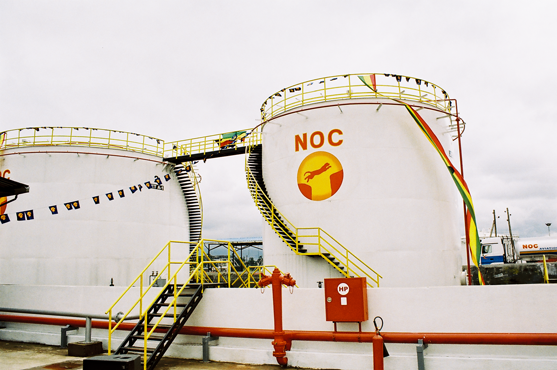
Case Study – Trident Implemented D365 Finance & Supply Chain Management for NOC Ethiopia

Established in 2004, National Oil Ethiopia Plc (NOC) is excelling in the marketing of petroleum products in the country. It is the first indigenous oil marketer to have distinct service stations located throughout the country.  NOC markets one of the leading lubricant brands commonly known as Chevron-Caltex Lubricants, as well as contribute to a major share in Ethiopia Oil Industry. It supplies over 100 lubricant grades for Industrial and Automotive applications. Additionally, the organization delivers other petroleum products such as LPG, Chemicals, Bitumen, and Petcock.   The business delivers services to keep their customers going by delivering services in the most cost-efficient and effective manner. Their team is divided into retail and commercial units to profitably market their products and achieve effective customer services and market leadership in the gas sector of Ethiopia.   The business aims at consistently improving its product and service offerings while expanding its business operations in Ethiopia and other African Countries. However, their current system was unable to comply with their requirements. Hence, they decided to contact Trident Information Systems for a suitable solution. After conducting thorough research, Trident found its core challenges and requirements and believed Microsoft Dynamics 365 Finance and Operations will be the most suitable solution.   Business Challenges  The business was struggling with financial management and supply chain issues which included:   Difficulty in figuring out the accurate volume of fuel transported in the truck.   Tough time allocating charges on import purchase orders and knowing the landed cost on the inventory.   Difficulty in allocating departmental costs and expenses.  The manual approach to the regular activities caused redundancy and similar issues.   Disparate systems and no real-time data availability hampered decision-making.   Uncontrolled operations and compliances throughout the organization and vendors.   Business Requirements  The business needed a unified approach in the financial management of the business and required the following:   To calculate the accurate fuel volume transported in trucks, know the losses and gains during the transit.   To allocate charges on the import purchase order and to know the actual landed cost on inventory.   Needed to identify departmental cost and expenses for actual cost allocations.   Configure and customize the automation process for regular activities.   Unified software solution for real-time data availability.   Robust support of operations and compliances throughout the organization and vendor.  Solutions Provided by Trident Information Systems  After digging out the organization’s core challenges and requirements, Trident implemented Dynamics 365 Finance and Supply Chain. Other benefits the solution provided include:   DIP Measurement Process- as NOC uses Dip Measurement to calculate fuel volume transported in the truck to find out the losses and gains during the transit.   Insightful reports and dashboards on financial transactions with D365 Finance and Supply Chain.   Enhanced Process Automation.   Captured all landed costs while adding them to the Inventory.   A centralized view on operations, costing, compliances, and inventory.   A sophisticated vendor management system.   Benefits to Business  After implementing Dynamics 365 Finance and Supply Chain, NOC noticed a considerable change in their financial management and supply chain. Trident’s solution delivered the following benefits:   The business could manage and schedule its resources in real-time and project costs accurately.   NOC could identify the actual fuel volume transported in the truck to know the gains and losses during the transit.   Their revenue was now managed more systematically and accurately.   A centralized system for planning and project analysis could better control operations and compliance across the organization.   Better vendor management and regulatory compliance.   Advantages of Dynamics 365 Finance and Supply Chain  Microsoft Dynamics Finance and Supply Chain put flexibility and Scalability at the core of your business, allowing you to quickly grow, and adapt at your own pace. You can easily tailor and extend the application to meet your unique business or industry-specific needs. It can offer the benefits given below but not limited to:   Supports critical operations throughout the business.   Exceptional reporting functionality that allows businesses to collect data and assess situations right then and there.   Microsoft backed and developed functionality to enable seamless integration within the enterprise.   Enables in-depth accounting and financial functionality.   Reduces IT maintenance load.   It automates and streamlines the supply chain.   Endorses innovation with a modern and adaptable platform.   Streamlines asset management.   Bottom line   After struggling with successfully managing their expanding business’ finance and supply chain, NOC Ethiopia finally decided to contact Trident Information Systems for Dynamics 365 Finance and Supply Chain solution. After the implementation, the business could witness benefits like optimum resource management and scheduling, systematic revenue management, centralized view of the entire supply chain, and so on. Trident is a Microsoft Dynamics 365 Gold Implementation partner. Contact us for further information

Case Study – Trident Implemented D365 Finance & Supply Chain Management for NOC Ethiopia Read More »