Welcome to Trident Information Systems!
Write us to - info@tridentinfo.com
Let's Socialize

restaurant erp solution

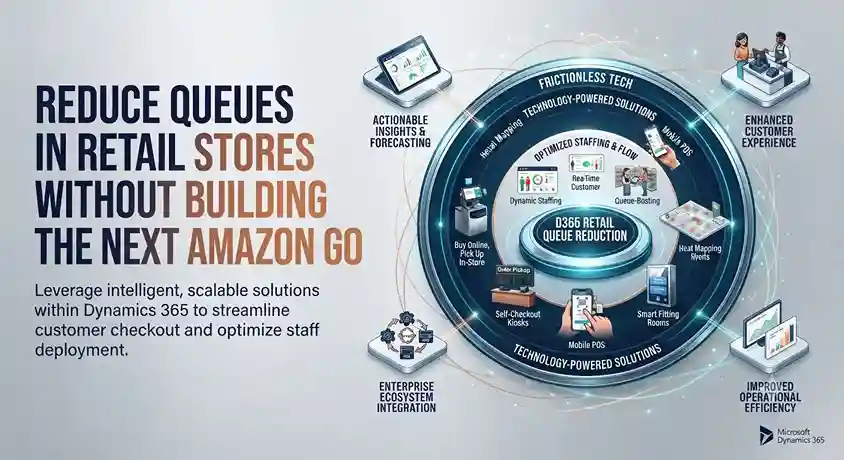
Retail store using mobile POS and digital checkout solutions to reduce customer queues and improve checkout speed.

Reduce Queues in Retail Stores Without Building the Next Amazon Go

INTRODUCTION Nine out of ten shoppers in the UK say they will completely avoid a store with a long line; this means that every minute spent waiting to pay represents a real risk of losing the sale, not just a minor inconvenience. Amazon Go made headlines by eliminating checkout lines entirely, but a complete overhaul to remove checkouts is not feasible for most retailers. These six approaches can significantly reduce wait times without going to such extremes. 1. Bring the checkout to the customer with mobile POS systems Using a tablet or smartphone-based point-of-sale (POS) system allows staff to look up items, process payments, and print receipts wherever the customer is—whether inside or outside the store—instead of funneling all transactions through a fixed checkout counter. Furthermore, this solution facilitates scalability during peak periods: adding more mobile devices does not require allocating physical space for additional checkout stations, as traditional registers do. 2. Designate a specific line for complex transactions Simple purchases are quick, whereas returns, custom orders, and loyalty program sign-ups take longer. Mixing the two types in the same line means that every complex transaction slows down the progress of those waiting behind. Since straightforward sales usually far outnumber complex ones, routing complicated processes to a dedicated service point allows the main line to move at the pace most customers actually need. 3. Try virtual queuing Virtual queuing systems—common in banks and post offices but still rare in most retail stores—allow customers to get a number and reserve their spot without having to physically stand in line. Beyond convenience, this creates a genuine opportunity for upselling: a customer browsing the store while waiting for their turn might notice an item they hadn’t originally planned to buy. 4. Offer appointments for visits requiring personalized attention Not every store visit needs to be spontaneous. For specialized consultations or services, scheduled appointments allow retailers to manage visitor flow and devote proper attention to each customer, rather than rushing to serve them as quickly as possible. Watches of Switzerland took significant steps in this direction after reopening, organizing 13,000 one-on-one appointments (combining virtual and in-person formats) in just two weeks. While this model doesn’t suit every retail category, for purchases requiring more customer deliberation, it transforms queue management into an enhanced service experience rather than a compromise on the quality of care. 5. Implement self-scanning technology (Scan-and-Go) Self-scanning apps put the scanning process in the customer’s hands: items are scanned and added to a running total as they are placed in the cart, rather than all being scanned at once during checkout. Although this method is more established in the grocery sector, there is no structural reason preventing its application in sectors such as fashion, electronics, health, or home improvement. It offers an advantage beyond speed: scanning a barcode allows product details—such as ingredients, materials, or care instructions—to be displayed directly to the shopper, eliminating the need to consult staff or handle the packaging. 6. Ensure technology works correctly before it becomes a problem Unreliable point-of-sale (POS) technology not only slows down transactions but can bring them to a complete standstill. A Trident client recounted how their old system crashed during the Christmas Eve rush: every checkout in the store stopped working, transactions had to be processed manually, lines wrapped around the building, and the business estimated losses of $20,000 that day alone—not to mention the likely long-term impact on customer loyalty. Their conclusion, in their own words, was that reliability must be the primary criterion when evaluating payment technology, taking precedence over features or price. Before implementing new strategies to reduce queues, it is essential to ensure that the current system itself does not become the actual bottleneck. Are you looking for payment technology capable of handling demand spikes without failure? Contact Trident to discuss the best solution for your store.

Reduce Queues in Retail Stores Without Building the Next Amazon Go Read More »
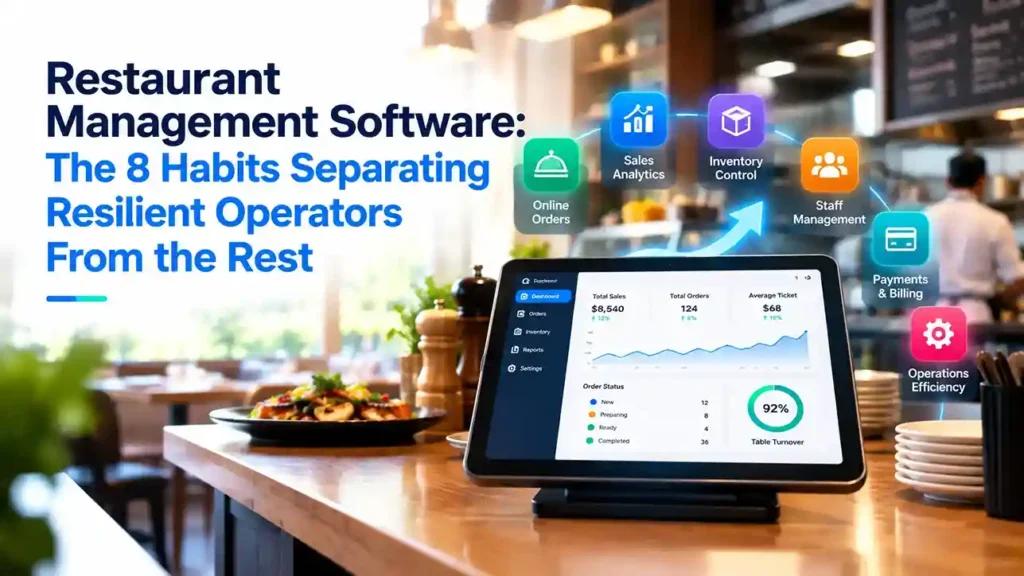
Restaurant management software dashboard showing sales, inventory, food costs, staffing, orders, and real-time restaurant performance.

Restaurant Management Software: The 8 Habits Separating Resilient Operators From the Rest

INTRODUCTION Contactless payments, curbside pickup, QR code menus—none of these options were commonplace in restaurants just a few years ago. Today, they are standard expectations. The restaurants that adapted most successfully weren’t necessarily the ones that adopted the most technology, but rather those that managed it through a single, integrated platform instead of a disjointed array of tools. This distinction separates operators who achieved lasting resilience from those who implemented stopgap solutions that didn’t stand the test of time. Design the entire experience, not just a stopgap solution A payment terminal wrapped in plastic is a patch, not a solution; in fact, it often negates the very contactless functionality it was meant to protect. The shift toward contactless payments, delivery, drive-thru service, and curbside pickup is here to stay; therefore, it pays to build a robust infrastructure around these practices rather than relying on makeshift fixes. QR code menus are a prime example: they are useful right now for hygiene reasons, but they offer long-term value by allowing restaurants to instantly update prices or menu items without incurring reprinting costs. Table management software follows the same logic: it is useful today for maintaining social distancing and facilitating contact tracing, and it will remain valuable indefinitely for optimizing occupancy and speeding up table turnover. Take your POS system mobile When a server relies on a fixed terminal, customers are kept waiting, staff waste time walking back and forth, and lines form at the register. A mobile POS system allows servers to take orders, process payments, and close out checks without leaving the dining area; this results in faster service, less unnecessary movement, and the elimination of shared terminals among staff. The greatest advantage arises when the mobile POS connects directly to kitchen display systems: an order taken at the table is automatically sent to the appropriate kitchen station, eliminating the back-and-forth between the dining area and the kitchen that slows down service and leads to order errors. Opt for a single platform rather than multiple disconnected solutions Fragmented systems—standalone tools for point-of-sale (POS), inventory management, and reporting—entail higher integration and maintenance costs while offering managers only a partial view of the business. A unified platform provides a comprehensive, real-time view of operations and customer data, enables faster access to actionable reports, and lowers total costs by eliminating the need for ongoing integration work. Cloud-based implementation proved crucial during times of rapid change: restaurants without legacy on-premise infrastructure could quickly roll out delivery, pickup, and curbside services, whereas those reliant on local systems moved much more slowly. Furthermore, software-hardware compatibility is just as important as the individual components themselves; a system that looks good on paper but fails to integrate properly with existing hardware will fail in practice, regardless of its features. Analyze how customer behavior is actually changing Consumption patterns shift—new customers arrive, and regulars visit at different times or with different needs—and a restaurant that fails to collect this data lacks a solid foundation for designing a loyalty strategy. Reliable, up-to-date data enables actionable decisions, such as creating predictive cost models to set menu prices when ingredient sourcing becomes difficult, or redistributing inventory among locations based on foot traffic. Rethink which metrics truly matter A metric like table turnover rate is meaningless if there aren’t enough customers to fill the tables. Traditional key performance indicators (KPIs) should be reviewed periodically—not just once—since current customer behavior cannot reliably predict what the situation will look like a few months down the line. The goal is not to discard metrics, but to ensure that the ones being monitored continue to reflect the reality of the business. Use predictive analytics, not just historical reports Most restaurant analytics still look to the past: what happened and why. The real value lies in predictive analytics—finding correlations across large, disparate datasets that reveal where the business is heading before it gets there. Combining internal data with external context—local events, weather patterns, general market trends—refines that insight; even a small process adjustment based on this type of information can yield disproportionately large results. Technology is no substitute for the human touch Social distancing and digital ordering changed the dining-out experience, but customers still seek warm, personal service—and it is empowered staff with decision-making authority who truly deliver that. Genuine loyalty stems from a real connection, not just a points program: knowing a customer well enough to offer something relevant is what keeps them coming back, and that starts with how the restaurant treats its own staff. View technology as infrastructure, not a reaction Curbside delivery wasn’t the industry norm until, suddenly, it was. Investing in restaurant management technology requires the same long-term vision as investing in essential kitchen equipment: it is infrastructure that should be implemented before demand forces action, not after. A feature that doesn’t offer an immediate return on investment (ROI) can still be valuable simply because it prepares the business to respond quickly when conditions shift again—and conditions will keep changing. Are you ready to move beyond fragmented systems and adopt a unified platform? Contact Trident to discuss what this transition would look like for your restaurant.

Restaurant Management Software: The 8 Habits Separating Resilient Operators From the Rest Read More »

Why organizational change projects fail and how to prevent implementation disaster

New IT installations often fail. At least that’s the widespread belief surrounding organizational change initiatives today. One frequently cited study from the 1993 book Reengineering the Corporation goes as far as saying that as many as 70% of the organizations that undertake a reengineering effort do not achieve the dramatic results they intended. A more recent McKinsey survey of more than 1,500 executives who had undertaken a significant change effort in the past five years found that only 38% of respondents said “the transformation was ‘completely’ or ‘mostly’ successful at improving performance. After two decades of hearing about high failure rates related to change, it’s unsurprising that business leaders are wary of organizational change projects. Organizational psychologist Nick Tasler explained that these negative biases can create a toxic self-fulfilling prophecy. “When a change project falls a day behind schedule, if leaders and employees believe that successful change is an unlikely outcome, they will regard this momentary setback as the dead canary in the coalmine of their change initiative. (Never mind the fact that three other initiatives are still on time or ahead of schedule),” he wrote in an article for Harvard Business Review. “Suddenly, employees disengage en masse and then the change engine begins to sputter in both perception and reality.” Yes, change is hard, and complex IT implementation projects, particularly ERP installations, can be particularly challenging. But it doesn’t mean they are doomed to failure. So where do you start? How can you choose the right technology for your retail business, and ensure that the implementation project runs as smoothly as possible and you get the most from your investment? Here are some of the main causes for failure in any organizational change initiative, and how can you prevent them from happening: Mistake #1: Failure to plan Issue: An outdated legacy system is impacting business performance, and it needs replacing quickly. In their rush to get the project going, business management jump straight into the implementation without taking the time to develop a well thought-out organizational change management plan. Solution: Don’t be tempted to cut corners in your planning. Analyze your business, decide what should be prioritized, and understand all the different ways the project will impact your routines at every stage of the process. “Companies should start by analyzing their current and future requirements and processes,” says Gunnar Ingimundarson, Chief Consulting Officer at LS Retail. “How many software solutions are they currently using, and what are they used for? Map out the disparate solutions in the stack, alongside their dependencies and interconnections. The next step is to figure out where they can draw the biggest – or quickest – benefits. Is your POS system not generating the information you need on stock levels and product visibility? Or, are there integrations that repeatedly cause problems or break down? Do you experience missing data? Identify the area(s) where a new system would bring immediate value in terms of savings or returns. That’s where you should start, and that should determine your priorities.” Once the priorities are set, break the project down into manageable chunks, from pilot phase to initial implementation to company-wide rollout. Consider when it’s most appropriate to start each phase of the installation so you won’t place unnecessary strain on your business during busy times. Mistake #2: Key stakeholders aren’t onboard, or have unrealistic expectations Issue: Management want the new technology in place quickly and only focus on the end goals. They get frustrated by how long the project is taking and threaten to pull the plug. Or they wonder why the new software isn’t being adopted widely and successfully when they failed to communicate the changes to everybody in the business and get company-wide buy in. Solution: All stakeholders need to be committed to the project’s success right from the beginning, and to clearly understand the project’s scope and goals. “Internal resistance can kill even the best implementation project,” says Eric Miller, Regional Director for the Americas at LS Retail, building on his 13 years of experience in software implementations. “Get the buy-in from all stakeholders from the start, and make sure that the goals, objectives and expected end results of the project are clear and communicated from you to the stakeholders, and from the stakeholders to all the customer parties involved. It never pays off to sell a dream you can’t deliver on.” Bring together personnel from different departments to understand their requirements and what outcomes they hope to achieve from the implementation. Similarly, they need to understand how much time should be devoted to a project like this and ensure project teams are given sufficient time to carry out the work. Set realistic timeframes from the start, and ensure everyone knows exactly what’s required of them. Mistake #3: Unforeseen changes throw the project off track Issue: Even the best prepared projects encounter hurdles along the way, but if unforeseen issues arise and major milestones are missed, it can be tempting to throw in the towel and deem the entire project a failure. Solution: Know that when you’re dealing with a large-scale IT implementation, it’s hard to plan for every eventuality. Be willing to adapt and take a different approach if it ultimately means the project will be a success. “What was deemed to be the best approach initially may need to change – this might even happen after the pilot is completed. I have seen companies that went through multiple pilots before finding the right balance. It’s a learning process, and it’s never over,” says Miller. It’s worth learning everything you can from the pilot implementation. Instead of rushing on to roll out store #2, take a moment to see how the system is working and to identify any issues that you couldn’t have planned for in your testing environment. Success comes to those who take a considered approach. Mistake #4: Picking the wrong technology partner Issue: It may be tempting to go for the cheapest technology provider, but cheapest upfront may not necessarily deliver the long-term business value you hoped for. You quickly realize they can’t help you achieve your outcomes, because they lack drive,

Why organizational change projects fail and how to prevent implementation disaster Read More »

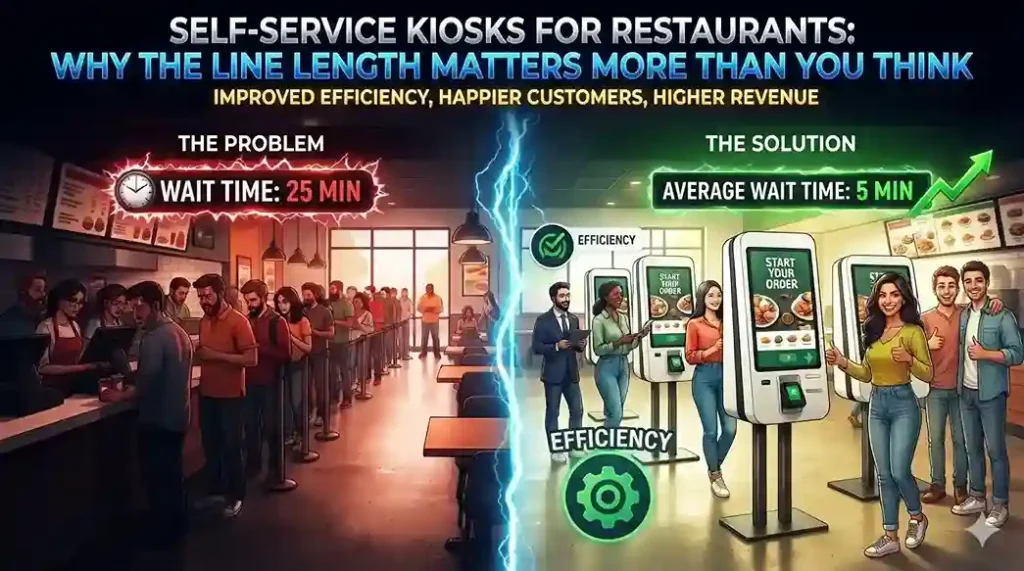
Self-service kiosks for restaurants helping customers place orders faster and reduce queues during busy periods.

Self-Service Kiosks for Restaurants: Why the Line Length Matters More Than You Think

INTRODUCTION Almost three out of four customers at quick-service establishments say they would leave the line if seven people were waiting ahead of them; that figure rises to more than nine out of ten when the queue reaches ten people. This is not merely a minor loss of conversions, but actual revenue vanishing before an order is even placed. Restaurant self-service kiosks exist precisely to eliminate this friction point, and adoption data confirms their effectiveness: McDonald’s rolled out kiosks across its 14,000 U.S. locations and has recorded measurable sales increases directly linked to their use. Kiosks do more than reduce wait times—they also change order size The most interesting effect of self-service ordering isn’t speed. What really matters is that customers order differently when they don’t have someone standing behind them or a cashier waiting for them to make a decision. Concession stands at Dodger Stadium saw a 20% increase in average order size after introducing self-service kiosks; meanwhile, Subway has reported that customers using kiosks are more likely to add extras and spend more per visit than those ordering at the counter. The key lies in removing social pressure from the ordering process: customers can explore options at their own pace, notice add-on items, try new combinations, and avoid rushing to choose their usual or “safe” order simply to avoid holding up the line. The integration choice that determines whether the system truly works Many restaurants add kiosks as a standalone system running its own software, linked to their existing point-of-sale (POS) system. This approach entails managing two systems that require constant integration, updates, and maintenance: every menu change, price update, and new promotion must be implemented twice. A unified restaurant management platform, such as LS Central, avoids this issue by running kiosks on the same POS system already used by cashiers. This is crucial, as most restaurant management systems are too complex to implement on a self-service kiosk without specific staff training—which would defeat the very purpose of self-service. Menu customization becomes a sales tool, not just a display option Since kiosk menus operate on the same system as the POS, changes are applied instantly across all locations, eliminating the need to configure each kiosk individually. This opens up real tactical possibilities: A/B testing menu item presentations to see what actually drives upselling, highlighting high-margin items at the top of the screen, or simplifying options during peak hours to speed up ordering when time is of the essence. It also solves a practical inventory issue. If stock for a specific product runs low, the kiosk menu can update in real time to promote what is actually available—prioritizing chicken over beef or offering milkshakes when the smoothie machine goes down—instead of having to manually cross out items on a physical menu board. The kitchen benefits just as much as the front counter Orders placed at kiosks are automatically sent to a kitchen display system and organized by preparation station, ensuring that items from the same order are ready simultaneously rather than arriving piecemeal. The system can alert staff to orders that have been pending for too long, and front-of-house staff can view order status in real time; this allows customers to know exactly when they will receive their food, so they don’t have to linger near the counter. Is it a passing fad or a permanent shift? Self-service kiosks in quick-service restaurants are not a new idea; For over a decade, the industry has questioned the slow pace of its adoption. What has changed is that the technology has matured enough for major brands to commit to it on a large scale, and customer expectations have evolved accordingly: diners increasingly expect self-service as a standard option, and a significant number clearly prefer it over ordering with a cashier. Are you considering installing self-service kiosks in your restaurant? Talk to Trident about implementing LS Central at your locations.

Self-Service Kiosks for Restaurants: Why the Line Length Matters More Than You Think Read More »

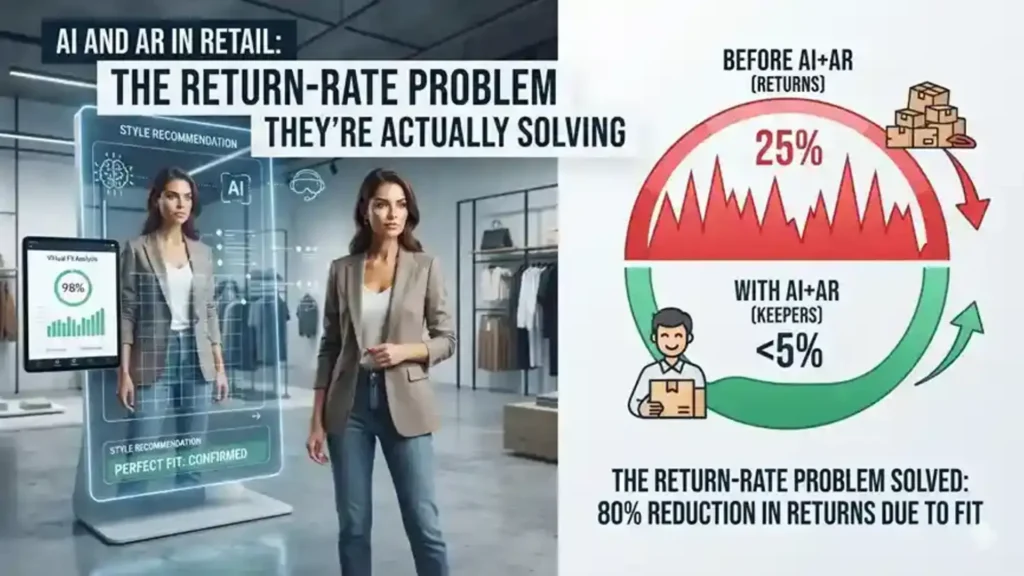
AI and AR retail technology helping customers visualize products and make confident purchasing decisions.

AI and AR in Retail: The Return-Rate Problem They’re Actually Solving

INTRODUCTION Each returned item represents a double cost for the retailer: once when shipping it and once when processing its return. AI and augmented reality (AR) in retail largely exist to avoid that round trip in the first place, helping the shopper choose the right product the first time. Virtual try-on technology alone has been shown to significantly increase conversion rates in e-commerce and reduce returns by over 8%; figures that explain why beauty, fashion and home goods retailers were the first to adopt it. Take the fitting room to the client’s living room Opticians were pioneers in this area for an obvious reason: glasses are a product that people do not buy without seeing how they look on their own face. The virtual try-on solved this problem entirely online, and some retailers have gone further by using AI to recommend frame shapes suitable for the customer’s face, rather than forcing them to guess which one will fit them. The same logic applies to any situation where excess options are the true barrier to purchase. A beauty catalog with hundreds of thousands of products is impossible for a human being to explore; However, an AI-based recommendation service can reduce that number to a few relevant options based on the user’s search and purchase history, transforming an overwhelming catalog into a short, personalized selection. Make the “infinite hallway” truly navigable A larger online catalog is only useful if customers can find what fits their tastes. Wayfair’s approach is a clear example: its search algorithm interprets style preferences from a customer’s search history to show furniture that is likely to fit their tastes; Additionally, a visual search feature allows the shopper to photograph an item they like and find matches among millions of products in inventory. Augmented reality expands this concept: it goes from “will I like it?” to “Will it fit in my space?” It allows the buyer to view a digitally recreated piece of furniture in their own room before purchasing it, which goes a long way to explaining why this category has seen measurable improvements in conversion and a reduction in returns. In the fashion sector, the question of sizes works in a similar way. Levi’s uses an AI chatbot that asks for fit, rise and stretch preferences—in addition to the size the customer wears in other brands—to recommend the right size, addressing the leading cause of fashion returns: a garment not fitting as expected. H2: 3. Turn purchasing behavior into better forecasts Turn Shopping Behavior Into Better Forecasts Every interaction with an AI-powered shopping tool—a search, a virtual product try-on, or a completed purchase—generates data that retailers didn’t previously have. Used correctly, this data refines inventory and demand forecasts far beyond what historical sales data alone allows, and facilitates truly relevant follow-up marketing: A shopper who has just purchased kitten supplies is an ideal candidate for a cat food subscription offer, not a mass generic newsletter. This same data allows retailers to target their promotions more precisely, tailoring the discount type and channel to what a specific customer actually responds to based on their history, rather than launching a one-size-fits-all promotion. Keep shelves stocked before customers notice they are empty AI-based forecasting is increasingly used to anticipate not only typical demand, but also disruptions to it; This involves recalculating replenishment quantities and adjusting supply in response to real changes, and not simply historical averages. Some retailers have piloted robots that scan shelves to automatically detect out-of-stocks; Likewise, real-time replenishment signaling systems in selected stores seek to solve a basic but persistent problem: the customer who comes expecting to find an item and finds an empty shelf. What does this mean for retailers who don’t have Wayfair’s budget? None of this requires developing AI and computer vision capabilities internally. ERP platforms for the retail sector increasingly integrate AI-based demand forecasting and customer data unification as standard functionality; This is what really puts personalization and smarter inventory management within reach of a mid-sized retailer, not a multimillion-dollar in-house AI team. Curious what AI-powered forecasting and personalization would look like on your retail platform? Contact Trident to request a demo of your retail ERP.

AI and AR in Retail: The Return-Rate Problem They’re Actually Solving Read More »