Welcome to Trident Information Systems!
Write us to - info@tridentinfo.com
Let's Socialize

transport erp software in india

How to Centrally Manage Freight Forwarding, Rail Yard & Fleet Operations Effectively

Managing your logistics and transport operations can be quite challenging especially due to the Covid-19 Pandemic which has hiked rail freight traffic in various parts of the globe. Two industry trends are majorly driving this growth i.e., customer demands after hitting shortages, and packed truckload ability. These situations lead organizations to look for alternatives to beat the rising challenges. Adopting advanced fleet management software is one of the most effective measures which logistic managers are opting for, to keep up with the competition.   There are six modes of transportations – road transportation, maritime transportation, air transportation, rail transport, intermodal transport, and pipelines. However, the logistic managers prefer one which stands up to their four requirements – the one who could transport maximum product volume at the maximum speed over the greatest distance at a minimum cost. All the companies pick their models according to these standards.   Current Challenges Faced by Logistics Companies   As of the current scenario, measures to cope with challenges need a new outlook such as adopting an advanced Fleet management software to centrally manage freight forwarding, rail, yard & fleet operations effectively. Current challenges include:   The Recovery Playbook   This pandemic has highlighted the weak spots in supply chains which have led the stakeholders to pay closer attention to supply chain resilience and seek clarity on their recovery plans. To stay adaptable, the supply chain is required to enhance its visibility, provide reliable analysis and adopt active freight procurement options.   All of the above issues need digitalization as early as possible. A good freight forwarding software would do just the thing. This is the perfect time to make investments in digital asset procurement.   Keeping up with Sustainability   Sustainable practices include route optimization and reducing half-full trucks. Companies that practiced sustainability are more likely to keep with the decarbonization movement than those that neglected its importance. Digitizing the supply chain opens up the scope for manufacturers to trace the product to their source, allowing them to grow their business keeping up with the customer demands. A suitable fleet management software can help trace the environment and energy tracking.   Single Source Dependency   As the Covid-19 pandemic hit, manufacturers who completely relied on partners and suppliers in one country, faced delays and correlated costs. For example, many supply chains witnessed failures as China imposed lockdowns throughout the country.   Experts have recommended decentralizing and diversifying supply chains to survive this dynamic environment. A suitable fleet management software that offers ERP for transport and logistics allows the manufacturers to proceed with a sourcing model which is more adaptable than the older one.   Poor Data Quality and Lack of Analysis   This is a major issue in railroads and intermodal carriers. They provide tracking data in different formats with different standardization and consistency levels. There is a lack of analysis and reporting as well, therefore reports like transmit time, future planning and cycle time are either manual or non-existent. To overcome this challenge, opting for a centralized software solution that integrates the essential features of rail depot software and yard terminal software is ideal.      Cold Chain Optimization   Since there is a sudden ramp-up of vaccination production and distribution globally, supply chains controlling temperature have been put to a test. In order to maximize their efficiency. The supply chain managers need the real-time reporting which they can get from a well-developed fleet management software, for better data visibility on cold shipments with the help of technology.    How to Find the Right Technology to Centrally Manage Freight Forwarding, Rail Yard & Fleet Operations Effectively?  Fleet-oriented companies tend to operate on thin margins. Therefore, their profit is heavily dependent on their operational measures. Look for ideal fleet management software providers who hold relevant skills and experience. Trident Information System is a Microsoft Gold Partner who provides all the necessary features a logistic company needs such as:   Real-time GPS Tracking: An ideal Fleet management software provides real-time GPS tracking, which helps in controlling spiral fleet running and maintenance costs and real-time vehicle tracking and reporting.     Manages Driver’s Behavior and Location: it tracks drivers’ behavior, previous routes, and current location. Also, it monitors the driver’s activities and driving patterns.   Trip Scheduling and Route Planning: it will create trips and navigate unique routers followed by certain instructions based on traffic.   Maintains and Tracks Vehicles: generates vehicle maintenance schedules and offers real-time vehicle locations. Monitors previous travel data like routes, speed, idling, and so on.   Tracks Tire Efficiency:  tracks tire efficiency and generates a factsheet presenting tire efficiency and so on.   Temperature Tracking: this is the feature not everyone offers; it helps with cold chain optimization by tracking the temperature needs of the goods you are supplying.    Generates Reports and Analysis: this feature offers reports customized in yards, rail, cargo, and customer levels. Generates a set of reports on real-time rail terminal status and future planning.   Transport and logistics management can be quite tricky especially during this most challenging era ever. All the challenges have one thing in common i.e., their solution – digitalization. Such organizations need a unified solution to cut time, money, and complications. Trident Information system offers ERP for transports and logistics which offers all the essentials Combined with IoT you need to run a transport and logistics business. For further information or a demo, you can contact us.  

How to Centrally Manage Freight Forwarding, Rail Yard & Fleet Operations Effectively Read More »
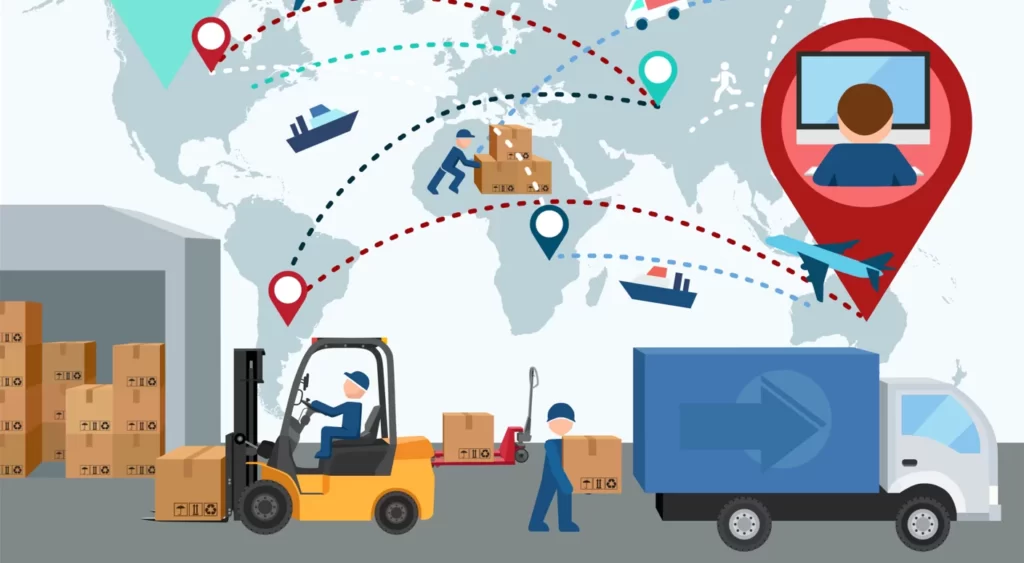
Microsoft Dynamics 365 dashboard managing transportation, logistics, and delivery operations in real time.

Microsoft Dynamics 365 for Transportation & Logistics: Smarter Operations, Lower Costs, Faster Delivery

The global logistics industry does not forgive inefficiency. With razor-thin margins, volatile fuel prices, increasingly complex regulatory environments, and customers who expect real-time visibility into every shipment — transportation and logistics businesses that rely on disconnected, outdated systems are fighting with one hand tied behind their back. Microsoft Dynamics 365 for transportation and logistics changes that equation entirely. By unifying fleet management, warehouse operations, yard control, rail logistics, billing, and financial management into a single intelligent platform, Dynamics 365 gives logistics organizations the real-time visibility, operational agility, and data-driven decision-making capability they need to compete — and win — in today’s volatile markets. Trident’s Logistics and Transportation Solutions, built on Microsoft Dynamics 365, have been helping organizations across the supply chain realize measurable value from their technology investments for over a decade. Whether you are a third-party logistics provider managing complex multi-modal operations, a fleet operator focused on on-time delivery, or a warehouse operator building toward smart fulfillment — Trident has the modular, scalable solution your operation needs. The Growing Challenges Facing Transportation & Logistics Businesses The transportation and logistics sector is under pressure from every direction simultaneously. Understanding these challenges is the first step toward building a technology strategy capable of addressing them. Rising Operational Costs: Fuel, Warehousing and Shrinkage Operational cost management is the defining challenge for most logistics businesses. Elevated warehousing costs, fluctuating fuel prices, product loss from errors and shrinkage, and the compounding effect of a stagnant economy on profit margins create a financial environment where inefficiency is simply not survivable. Even the best-managed logistics operations bleed revenue through manual processes, scheduling errors, poor route optimization, and inventory inaccuracies. The businesses that are protecting and growing their margins are those that have replaced manual intervention with intelligent automation — and reactive management with predictive analytics. Intensifying Competition Across National and Global Markets Across both domestic and international markets, competition in the transportation and logistics industry has never been more intense. Manufacturers, suppliers, and distributors are constantly evaluating their logistics partners — and they are increasingly choosing those that offer the best combination of speed, visibility, reliability, and cost efficiency. For 3PL companies in particular, the pressure to deliver innovative, cost-reducing solutions to clients while maintaining their own operational profitability requires a technology platform that scales with demand and adapts to shifting client requirements without constant reconfiguration. Regulatory Compliance: A Growing Cost of Doing Business Environmental regulations, cross-border customs requirements, driver hours-of-service rules, and government mandates at local, national, and international levels add layers of complexity and cost to every logistics operation. Non-compliance is not just expensive — it can ground fleets, halt shipments, and damage client relationships irreparably. The right ERP platform does not just help you comply with current regulations — it gives you the infrastructure to adapt quickly when regulations change, without rebuilding your operational processes from scratch. How Microsoft Dynamics 365 Addresses Logistics Industry Challenges Microsoft Dynamics 365 is not a generic ERP platform adapted for logistics — it is a powerful, configurable business management solution with deep capabilities across every function critical to transportation and supply chain operations. Real-Time Visibility Across Your Entire Supply Chain In logistics, information delayed is opportunity lost. Dynamics 365 gives every stakeholder in your operation — from dispatchers and warehouse managers to executives and end customers — real-time visibility into shipment status, asset location, inventory levels, and operational performance. When a delay occurs, your team knows immediately. When demand spikes, your system adapts automatically. When a compliance issue emerges, it is flagged before it becomes a crisis. That is the operational intelligence that separates logistics leaders from logistics laggards. Smarter Scheduling, Capacity Planning and Workflow Automation Manual scheduling, spreadsheet-based capacity planning, and paper-driven workflows are productivity killers in any logistics environment. Dynamics 365 automates the routine operational decisions that consume management time — optimizing routes, allocating resources, triggering reorder points, and flagging exceptions — so your team can focus on the strategic decisions that actually grow the business. Trident’s Modular Logistics Suite Built on Microsoft Dynamics 365 Trident’s Logistics Suite is modular by design — meaning your organization can implement the specific capabilities you need today, and scale into additional modules as your operation grows. Every module is tightly integrated with Trident’s globally recognized HCM and Finance modules, creating a single unified processing and analysis interface across every functional area of your business. Yard and Terminal Management: Put Productivity on the Fast Track Yard inefficiency is a silent revenue drain. Every minute a trailer sits in the wrong position, every gate check that requires manual processing, and every asset that cannot be located in real time costs your operation money. Trident’s Yard and Terminal Management solution — powered by Zebra’s electronic asset tracking — eliminates the manual processes that slow down yard operations and gives your team the live visibility they need to: Rail Operations: Connecting Shippers Without Direct Rail Access Rail transportation remains the most efficient and cost-effective mode for moving large quantities of bulk commodities over long distances. But not every shipper or receiver has direct rail service — and that gap creates significant logistical complexity. Trident’s Rail Operations solution transforms rail transload terminals into seamless links in the supply chain, enabling shippers without direct rail access to access the cost and efficiency benefits of rail transportation through a managed, technology-enabled transload operation. Warehouse Management: Enabling the Smart, Connected Warehouse Modern warehouse operations demand more than basic inventory tracking. From receiving and putaway through picking, staging, and loading — every process must be optimized, compliant, and connected to real-time operational intelligence. Trident’s Warehouse Management solution integrates your supply chain end-to-end, enabling: Fleet and Delivery Management: Nonstop Optimization for Any Operation Fleet performance is the heartbeat of any transportation business. Every vehicle off the road, every missed delivery window, and every compliance violation is a direct cost to your operation and a risk to your client relationships. Trident’s Fleet and Delivery Management solution keeps drivers on the road and assets moving with: Billing, HCM and

Microsoft Dynamics 365 for Transportation & Logistics: Smarter Operations, Lower Costs, Faster Delivery Read More »