Welcome to Trident Information Systems!
Write us to - info@tridentinfo.com
Let's Socialize

dynamics 365 crm

Learn how an electronics manufacturer unifies data and gains agility using Dynamics 365 Supply Chain Management

Bel Fuse designs, manufactures, and markets electronic circuits products at 24 manufacturing locations across North America, Europe, and Asia. The company’s existing enterprise resource planning solution was highly customized and expensive to maintain, so it decided to deploy Microsoft Dynamics 365 Finance and Dynamics 365 Supply Chain Management. Bel Fuse unified data and can now more easily manage its supply chain operations and finance processes, gaining more agility to respond quickly to changes in the market or its suppliers. With Dynamics 365, we save nearly USD2 million per year in IT service and support fees compared to our previous, highly customized solution. Mark Hodkinson: Vice President of Finance for the Bel Power Solutions Group Bel Fuse Essential step in the supply chain A typical consumer might interact with Bel Fuse products and not even know it. The manufacturer makes the components that power, protect, and connect electronic circuits in products we use every day. Bel Fuse is usually in the middle of the supply chain, relying on smaller parts from its suppliers before passing components on to the manufacturers that create finished products. Founded in 1949, the company has grown significantly in the last 20 years through acquisitions. It has seven business groups, including Bel Power Solutions, which it acquired in 2014. Bel Power Solutions makes the power conversion products for server and storage networks at large server farms and in industrial products like the power sources in hybrid electric vehicles and trains. To manage its enterprise resource planning (ERP) processes, Bel Power Solutions used a legacy version of Oracle that was highly customized and difficult to update. The version was outdated and the month-to-month costs and support for the solution were expensive. With different business units using different ERP systems, Bel Fuse wanted to find an affordable solution to unify the company’s finance and operations processes, starting with Bel Power Solutions. Bel Fuse also needed a solution that would support its material requirements planning (MRP) process, a production planning, scheduling, and inventory control system to manage its manufacturing processes. “Our MRP processing goes in both directions—we require a full dataset and forecasting of what’s coming to us and what’s going out,” says Scott Hasterlik, Director Global IT at Bel Fuse. “We have power assets with 500 components and 65,000 SKUs, so we needed a robust solution to share nonstandard information quickly.” An integrated solution for finance and operations After careful evaluation, Bel Fuse found that Microsoft Dynamics 365 had the right capabilities at the right price for the company’s needs. With Dynamics 365, Bel Fuse had a single system for the first time, the ability to report globally, and a solution that was intuitive to use and easy to add users. Bel Fuse uses Dynamics 365 Finance to automate its financial operations, monitor performance in real time, predict future outcomes, and make data-driven decisions. For operations, the company deployed Dynamics 365 Supply Chain Management, which includes an MRP function and AI to improve visibility across its global supply chain and to improve manufacturing productivity. To aid the quick, seamless deployment process, Bel Fuse worked with Flintfox, a Gold competency member of the Microsoft Partner Network. “Flintfox jumped in, understood what we wanted to accomplish, and helped us move forward on budget,” says Hasterlik. “Flintfox has been a fantastic partner and is still our partner of record.” A wide range of Bel Power Solutions employees now rely on the Finance and Supply Chain Management business applications. Users include staff in customer service, quality assurance, demand and product returns, manufacturing and supply chain ordering, accounts payable, accounts receivable, and engineering. “From decision makers to factory floor managers, everyone is working in Dynamics 365, staying connected and accessing valuable data,” says Stefan Naude, General Manager, Slovakia, at Bel Fuse. Reduced costs, disparate systems eliminated Bel Fuse accomplished its central goal—to reduce the high costs of its previous ERP system while bringing data together in one solution. The company built the capacity it needed without a lot of customizations, helping ensure that the solution would stay flexible in the future. “With Dynamics 365, we save nearly USD2 million per year in IT service and support fees compared to our previous, highly customized solution,” says Mark Hodkinson, Vice President of Finance for the Bel Power Solutions Group at Bel Fuse. Bel Fuse also reduced costs because it now has the tools to fulfill more of its own finance needs internally. For example, a Bel Fuse engineering and distribution site in Italy previously paid an outside firm to do its accounting. “It was easy to move the Italy site into Dynamics 365 and transfer all that work internally to our team in Slovakia,” says Hodkinson. “Now our own team manages the facility’s day-to-day finances even though they aren’t located in Italy. With a common system, we have better access to our own internal talent.” Increased visibility and agility With Dynamics 365, Bel Fuse gained a more global view of financial data and can perform more accurate forecasting. “I always view orders and revenue from a global perspective because the locations are all connected and have so many intercompany transactions,” says Hodkinson. “I rely on Dynamics 365 to help me make sense of complex financial histories to stay on top of complicated billing and payment processes at multiple sites.” With ERP data now centralized and easy to access in the cloud, Bel Fuse can respond with more agility to complex, changing circumstances. When employees in Italy, China, and other countries needed to work from home during the COVID-19 crisis, the company was able to effectively run remote finance and supply chain operations. “We kept all our finance functions moving forward even though we don’t have anyone physically in the office,” says Hodkinson. “We were impressed that our team was able to get everything done while working from home for the first time, and I think that speaks to how intuitive Dynamics 365 Finance was for our team.” As a mid-chain supplier, Bel Fuse is committed to continuing its operations on
Learn how an electronics manufacturer unifies data and gains agility using Dynamics 365 Supply Chain Management Read More »

Reinvent business productivity with Microsoft Dynamics 365 and Microsoft Office 365

Microsoft Dynamics 365 Business Central is an all-in-one business management solution that helps businesses manage financials, sales, service and operations easier and faster from day one. This e-book explores how the solution integrates with Office 365 to connect business processes and personal productivity like never before, bringing insight and efficiency to your daily tasks[/vc_column_text][/vc_column][/vc_row]

Reinvent business productivity with Microsoft Dynamics 365 and Microsoft Office 365 Read More »

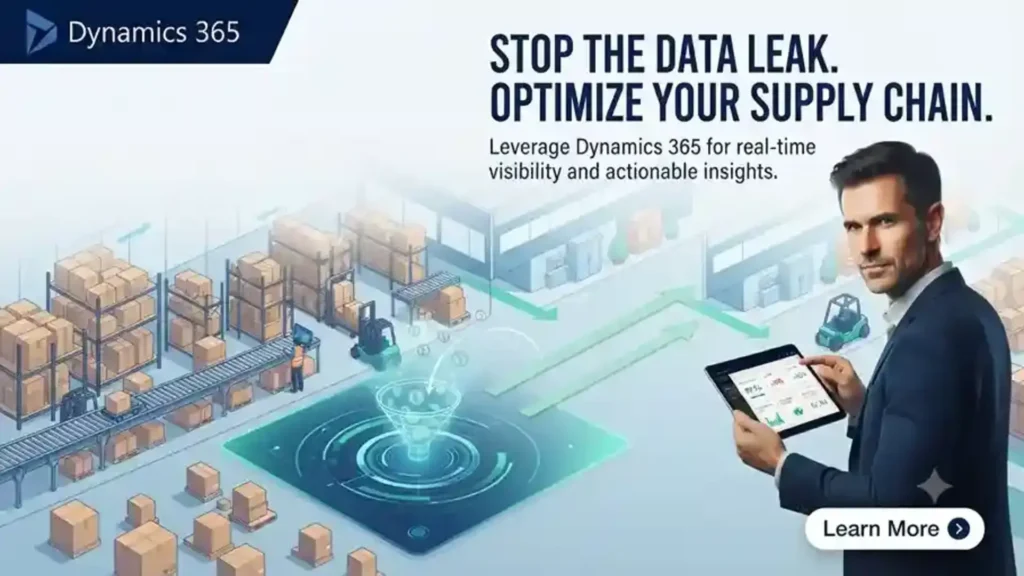
Is your business ready to take supply chain management to the next level?

When you lack deep visibility and insight into your supply chain, you leave money on the table It turns out what you don’t know as a manufacturer can and will hurt you. For too long, manufacturers have settled for siloed and inconsistent information, as well as manual processes, to understand and manage their supply chain. Why? Because for a long time, these systems were good enough to keep production going. But plenty of manufacturers don’t want to settle for good enough. IDC predicts that by 2019, 50% of manufacturing supply chains will have benefited from digital transformation, and the remainder will be held back by outdated business models or functional structures. Smart manufacturers understand that supply chain transformation is necessary. They are connecting assets across their factories, gaining visibility into their supply chain, and acting on insights from increased visibility to address inefficiency, as well as increase customer satisfaction and margins. Don’t accept operational inefficiencies as a limit on your business Supply chain management is complex, so doing it right requires a solution that simplifies and consolidates disparate information, while retaining flexibility. Data from the sales process, suppliers, order fulfillment, product performance, and customer service all matter for a full understanding of the supply chain. The core tools for accomplishing this fall into three categories: IoT-enabled visibility and services, powerful analytics, and cloud-delivered data visualizations. Like many aspects of manufacturing, IoT is the starting point. The best way to lower production costs is by using a single IoT-friendly platform to integrate back and front office processes. Using IoT-based modeling to create digital twins, manufacturers can understand in real-time the amount of wear and tear on parts and adjust designs in response. This insight can help identify simple inefficiencies like sourcing a part from the company that’s always supplied it, rather than buying a similarly-performing part at a lower cost from another supplier. Powerful analytics is the next step in transforming your supply chain. A truly intelligent system for supply chain management dynamically adjusts distribution, as well as production, to accelerate the speed of delivery. By using built-in analytics and machine learning, public data like weather conditions can be used to create richer, more accurate schedules and delivery forecasts. On top of that, opportunities to consolidate or expedite shipments can be automatically identified using artificial intelligence—passing lower shipping and order fulfillment costs on to customers. Finally, consolidating all this information won’t completely optimize your supply chain without the ability to easily visualize and manage it. That’s why a real-time and mobile-delivered view is so crucial. Understanding how to solve problems is hard enough; there’s no need to complicate it further by using different systems to identify where problems are occurring. Decision makers on the factory floor or in global headquarters need instant access to relevant information, and the collaborative power to communicate with or work alongside employees anywhere in the world. These investments in operations put manufacturers in position to embrace new technology and adjust to whatever business challenges they may be facing. Get the tools to transform with Microsoft Dynamics 365 The power of a supply chain management and operations platform that combines all these capabilities at cloud speed and scale is obvious. Companies positioned to digitally transform their supply chains will see accelerated time to market and reduced cost to enter new markets or scale new lines of business. Microsoft supports flexibility in deployment, enabling you to leverage existing investments while expanding with either a cloud or a hybrid model that includes both on-prem and cloud systems. That can shorten deployment from months to days and ensure security and analytics capabilities are consistent across every location and tuned appropriately for every team. Microsoft Dynamics 365 ends the artificial separation of ERP and CRM and makes it easy for employees to collaborate and even role-switch to engage customers or address supply chain issues. Only Dynamics 365 unites the front office and the back office with a single end-to-end system for managing every aspect of your business, all backed by industry-leading enterprise cloud. That means manufacturers can develop at the pace and scale that’s right for them, while taking advantage of current investments such as existing productivity and technology stacks. With Microsoft, consistent development practices and R&D investments combine to offer manufacturers rich analytics, embedded intelligence, partner-created applications, and the ability to collaborate worldwide.

Is your business ready to take supply chain management to the next level? Read More »

Whitepaper: The business owner’s guide for replacing accounting software

Replacing your accounting software is easier and more affordable than you may think. Use this guide to learn about the benefits of a modern technology platform, better understand the advantages of a cloud-based solution, and know what questions to ask when evaluating your options.

Whitepaper: The business owner’s guide for replacing accounting software Read More »

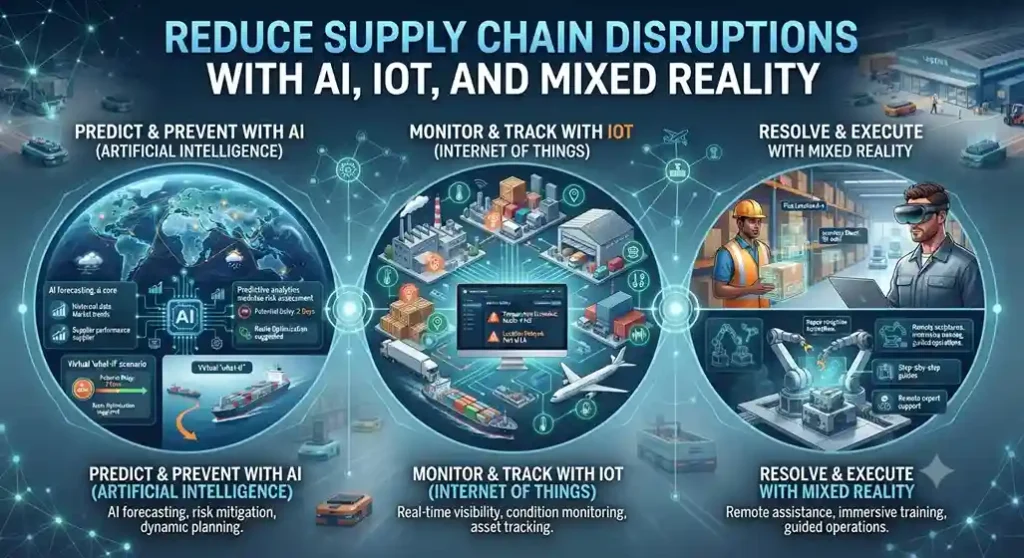
Reduce supply chain disruptions with AI, IoT, and mixed reality

Disruptions in global supply chains have significantly increased over the last decade, fueled by a myriad of triggers ranging from trade wars, demand surges from social marketing, natural disasters, and most recently, the recent COVID-19 pandemic. Updates to Microsoft Dynamics 365 Supply Chain Management in the 2020 release wave 1 help organizations proactively transform every aspect of manufacturing and supply chain operations to reduce disruptions. These new and updated capabilities drive automation and reduce downtime using IoT and mixed reality, and provide the agility to re-plan production in real time to dynamically changing demand. In fact, the agility enabled by Supply Chain Management is currently being leveraged by a consortium of major UK industrial, technology, and engineering businesses from across the aerospace, automotive, and medical sectors that has come together to produce medical ventilators for the NHS. Reducing the risk of supply chain disruptions As the threat of disruptions increase, companies are pressured to ask if the supply chain is ready for the next event, pushing them to build a more resilient supply chain to ensure business continuity for them and their customers in the most cost-effective manner. More companies will start buffering for risks and move from a “Just-in time” mentality to a “Just-in case” mentality. Factories will need to transform rapidly to adapt to change, serving a wider range of products produced in smaller batches with lower set up time, faster throughput, and the ability to quickly respond to fluctuating demand and customer expectations. Companies are likely to move from single supplier to multi-supplier and single location to multi-location models for mission critical parts even if it is cost prohibitive in order to reduce the impact of supply chain disruptions. To reach this optimal state of agility and delivery speed, manufacturers need to adapt every aspect of the supply chain to enable tools, equipment, and people to become instrumented, interconnected, and intelligent—a state of persistent adaptive learning and optimization as more data is available to tighten links between manufacturers, suppliers, and customers. The latest release from Dynamics 365 Supply Chain Management enables customers to reach this optimal state by proactively transforming their manufacturing and supply chain with predictive insights and intelligence from AI, IoT, and mixed reality—across planning, production, inventory, warehouse, and transportation management—to maximize operational efficiency, product quality, and profitability. Train workers faster with integrated mixed reality learning experiences Dynamics 365 Supply Chain Management is now integrated with Dynamics 365 Guides to help mainstream mixed reality for manufacturing. Companies can deliver a faster ROI by getting the workforce trained sooner with fewer trainers and with an interactive learning experience. Workforce efficiency can skyrocket with step-by-step instructions that guide employees to the tools and parts they need and how to use them in real work situations, available at a glance on a Microsoft HoloLens device that keeps their hands free to do the work. Dynamics 365 Guides can not only eliminate costly errors in production but also improve workforce safety. Companies can significantly reduce asset downtime by making asset maintenance skillset-agnostic and avoid costly waiting time for a specific expert to perform maintenance on an asset. The guides are extremely easy to author and do not require any coding. A guide can be authored by simply writing the step-by-step instructions on a PC followed by picking and placing the holographic parts and inbuilt icons on the machine where the work is happening. Introducing Dynamics 365 Guides for HoloLens 2 Dispatch the right resources at the right time Dynamics 365 Supply Chain Management is now integrated with Microsoft Dynamics 365 Field Service. Customers can significantly reduce downtime of geographically dispersed mission critical assets by automating field service operations so that the right resources—workforce, machines, parts, and tools—are available at the right place, at the right time, to proactively maintain them. Companies can improve the overall equipment effectiveness (OEE) of their geographically dispersed mission critical assets by performing predictive maintenance based on real-time performance data from IoT and field data from Dynamics 365 Field Service. Traditionally, disparate systems hinder the ability to accurately forecast demand for critical and expensive parts frequently used in both service and new production. Due to lack of forecasting for service demand, companies constantly take parts from production to fulfill the service demand, and vice versa, to deliver good customer service. This often creates a shortage for new production and significantly impacts on time delivery to new customers. As a result, the company is unable to deliver a delightful customer experience on both fronts. This integration will eliminate the need for disparate systems and significantly improve the forecast accuracy of these mission-critical parts due to real time tracking in the service supply chain. Seamlessly integrate IoT capabilities Dynamics 365 Supply Chain Management now offers out-of-the-box IoT capabilities that leverage Microsoft Azure IoT Hub to connect signals from mission-critical assets with business transaction data. Manufacturers can improve uptime, throughput, and quality by proactively managing shop floor and equipment operations with a real-time view of their entire production and stock. This will significantly reduce costly downtime of business-critical equipment by performing predictive maintenance before disruptive failures occur. There is no coding required to implement these out-of-the-box IoT scenarios on your manufacturing floor today. Dynamics 365 Supply Chain Management and IoT Intelligence customer spotlight with Majans Improve on-time delivery with real-time production planning The Planning Optimization Add-in for Dynamics 365 Supply Chain Management enables companies to improve on-time delivery by performing production planning in real time, accounting for dynamically changing customer demand, material availability, and capacity constraints across multiple sites and warehouses. It also enables customers to improve inventory turns by right-sizing inventory levels based on dynamically changing customer demand and capacity constraints. This helps eliminate excess and reduces slow moving inventory. Planning Optimization Add-in for Retail and Distribution is available and Production planning is currently in preview.

Reduce supply chain disruptions with AI, IoT, and mixed reality Read More »

Business team using CRM software to manage sales, customer data, and communication workflows.

5 Clear Signs Your Business Needs CRM Software in 2026

Here is a question most business owners ask too late: at what point does managing customer relationships in spreadsheets, email inboxes, and memory become a liability rather than a system? The honest answer is — sooner than you think. Customer Relationship Management (CRM) software is not just for large enterprises with complex sales teams. It is for any business that wants to grow its customer base, retain the customers it already has, and make sure no opportunity falls through the cracks. The challenge is recognising when the moment has arrived. Here are five clear signs that your business needs CRM software — and why Microsoft Dynamics 365 is the platform most businesses choose. What Is CRM Software and Why Does It Matter? CRM software is a centralised system that manages every interaction between your business and your customers — from the first marketing touchpoint through the sales cycle, the initial purchase, ongoing service, and renewal. Done well, CRM gives every team member a complete, real-time picture of every customer relationship. Sales knows what marketing has sent. Customer service knows what sales has promised. Management knows exactly where every opportunity stands. Without CRM, this information lives in individual inboxes, personal spreadsheets, and people’s heads — and every time someone leaves the business, some of that knowledge leaves with them. 5 Signs Your Business Needs CRM Software Now Sign 1 — You Are Losing Leads Without Knowing Why Leads come in through your website, social media, phone calls, and referrals. But if you are managing them manually, some of those leads are simply not being followed up — because they were logged in the wrong place, assigned to the wrong person, or forgotten during a busy week. A CRM captures every lead automatically, assigns it to the right team member, sets follow-up reminders, and tracks every interaction. Nothing gets lost. Every opportunity gets the attention it deserves. If you have ever discovered a warm lead that was never followed up weeks after it arrived — your business needs CRM. Sign 2 — Your Marketing and Sales Teams Work in Silos Marketing generates leads. Sales closes deals. But when these two teams work from different systems and different data, the handoff between them is where opportunities die. Marketing does not know which leads converted. Sales does not know which campaigns generated their best prospects. Neither team can make decisions based on the complete picture — because that picture does not exist in any single place. CRM creates a shared view of every customer and every lead — so marketing can see which campaigns produce sales-ready prospects and sales can engage leads with full context on their marketing journey. The result is better targeting, higher conversion rates, and a measurable improvement in revenue. If your marketing and sales teams regularly blame each other for pipeline problems — your business needs CRM. Sign 3 — You Cannot Easily Create Quotes and Track Invoices For businesses that sell through a quotation process — professional services, manufacturing, technology, or any B2B operation — the ability to create, track, and follow up on quotes directly impacts how quickly deals close. A CRM with a built-in quoting and invoicing module connects the entire opportunity-to-cash process: If your team is manually creating quotes in Word documents and tracking them in a spreadsheet — your business needs CRM. Sign 4 — Customer Service Issues Are Falling Through the Gaps Customer service quality is directly tied to information quality. When a customer calls with a problem, the speed and accuracy of the resolution depends on whether your team can instantly see their complete history — what they bought, when, what issues they have had before, and what was promised. Without CRM, this information is scattered across email threads, support tickets, and different team members’ notes. The customer ends up repeating themselves. Issues take longer to resolve. Satisfaction drops. CRM centralises customer service management: If customers regularly complain about having to repeat their issue to multiple people — your business needs CRM. Sign 5 — You Cannot See How Your Business Is Really Performing Good management decisions are built on good data. But if your sales pipeline lives in a spreadsheet, your customer data is in email, and your service records are in a helpdesk tool — getting a clear, current picture of business performance requires manual compilation that takes hours and is outdated the moment it is finished. CRM provides real-time dashboards and reports that give every level of the organisation instant visibility: If your management team regularly makes decisions based on instinct because the data is too hard to access quickly — your business needs CRM. Why Microsoft Dynamics 365 CRM Microsoft Dynamics 365 is one of the world’s most widely adopted CRM platforms — and for good reason. It covers every scenario described above in a single, unified platform: lead management, marketing automation, sales pipeline, quoting and invoicing, customer service, and real-time analytics — all connected on the same data model. Key advantages over standalone CRM tools: Why Trident Is India’s Trusted Dynamics 365 CRM Partner As a certified Microsoft Dynamics 365 partner, Trident Information Systems has helped businesses across sales, marketing, manufacturing, retail, and professional services in India implement CRM solutions that close the gaps described in this article. Our CRM implementations are configured around your specific sales process and customer management requirements — not a generic template. Ready to find out how CRM software can transform your customer relationships? Book a free Dynamics 365 CRM assessment with Trident today. For more insightful content and industry updates, follow our LinkedIn page.

5 Clear Signs Your Business Needs CRM Software in 2026 Read More »

Retail ERP and e-commerce integration dashboard managing inventory, orders, and online sales.

7 Reasons Your Retail Business Needs a Unified ERP and E-Commerce Integration Solution

Here is a scenario that will feel familiar to most retail operators: a customer visits your website, sees a product marked as available, drives to your store to buy it, and finds out the shelf is empty. Your website still shows it in stock. Nobody knows why. Or this one: a loyal customer who buys from you in-store every week places their first online order — and receives a “welcome, new customer” email. No recognition of their purchase history. No loyalty points applied. No sense that the business they have been giving you for two years means anything in the digital channel. These are not technology failures. They are integration failures — and they happen every day in retail businesses running separate, loosely connected systems for their physical stores and online channels. The solution is retail ERP and e-commerce integration — specifically, a retail-oriented integration solution designed from the ground up for the way retail businesses actually operate, rather than a generic middleware tool that treats your retail operation like any other business. This article covers the seven concrete reasons why retail-specific ERP and e-commerce integration delivers outcomes that generic solutions simply cannot match — and what to look for when evaluating your options. Why Separate Retail Systems Are Now a Competitive Liability Brick-and-mortar retail is not dead — but purely physical retail without a connected online presence is becoming increasingly rare. Today’s retail customer moves fluidly between channels. They discover products on social media, research them on your website, check availability through your app, visit your store to see them in person, and expect to complete the purchase on whichever channel is most convenient at that moment. Research consistently shows that 81% of consumers use mobile devices as part of their shopping research — and the majority of purchasing journeys now involve at least two channels before a transaction is completed. For retail businesses, every additional sales channel represents a potential revenue stream. But it also represents a new source of operational complexity — unless every channel shares the same data, the same inventory, the same customer records, and the same pricing. When they do not, the experience falls apart. And in a market where customers have endless alternatives, an experience that falls apart drives them to a competitor without a second thought. The Real Cost of Running Disconnected ERP and E-Commerce The cost of disconnected retail systems is distributed across every channel, every function, and every customer interaction — making it easy to underestimate until you try to measure it: Why Generic Integration Tools Fall Short for Retail Many businesses attempt to solve the integration challenge with general-purpose middleware tools — platforms designed to connect any two applications regardless of industry. Generic integration tools can technically connect a retail ERP with an e-commerce platform. The problem is that retail has specific operational requirements — BOPIS fulfilment logic, zip-code-based inventory routing, loyalty program data synchronization, multi-currency retail pricing rules — that generic tools are not built to handle natively. The result is months of expensive custom development to configure a generic tool for retail-specific scenarios, followed by ongoing maintenance overhead every time either connected system updates. A retail-specific integration solution — or better, a unified retail platform — delivers all of this functionality out of the box. 7 Reasons to Choose a Retail-Specific ERP and E-Commerce Integration Reason 1: Consistent Products and Pricing Across Every Sales Channel The most fundamental requirement of a unified retail operation is consistency — every channel showing the same products, the same prices, and the same promotions at the same time. When your product catalog, pricing structure, and promotional mechanics live in your ERP and distribute automatically to every connected channel, consistency is structural — it happens automatically rather than requiring manual synchronization. A retail-specific integration solution enables: For retailers managing hundreds or thousands of SKUs across multiple channels, centralized product management is not just a convenience — it is a necessity. Reason 2: True Omnichannel Fulfilment — Buy Anywhere, Deliver Anywhere The modern retail customer expects to complete their shopping journey on their own terms — and that means the fulfilment model needs to be as flexible as they are. Buy Online, Pick Up In-Store (BOPIS) is now a baseline expectation for omnichannel retailers — customers order online and collect from their preferred store, combining the convenience of online shopping with the immediacy of in-store collection. But executing BOPIS reliably requires real-time integration between your e-commerce platform, your ERP, and your in-store systems. A retail-specific integration solution enables the full range of omnichannel fulfilment scenarios: Each of these scenarios requires real-time data sharing between the e-commerce platform, the ERP, and store-level inventory — which only a retail-specific integration solution delivers reliably. Reason 3: Real-Time Inventory Visibility Across Every Location Inventory accuracy is the operational foundation on which everything else in omnichannel retail depends. Without accurate, real-time inventory data across every location, BOPIS fails, online availability is unreliable, and customer trust erodes. A retail-specific integration solution delivers inventory visibility that generic tools cannot: The business impact of real-time inventory accuracy extends beyond customer experience. Buyers make better purchasing decisions. Markdowns are more targeted. Overstock and out-of-stock situations are identified earlier and resolved faster. Reason 4: Unified Customer Data Across Digital and Physical Channels A customer who has shopped with you for five years should feel known — regardless of which channel they use. Their purchase history, preferences, loyalty status, and contact information should follow them seamlessly across every interaction with your brand. This only happens when your ERP and every connected channel share a single customer database — updated in real time by every transaction, regardless of where it occurs. A retail-specific integration solution delivers: Reason 5: A Single Loyalty Program That Works Everywhere Loyalty programs are one of the most powerful customer retention tools available to retailers — but only when they work seamlessly across every channel a customer uses. A loyalty program that earns points in-store but cannot redeem them online,

7 Reasons Your Retail Business Needs a Unified ERP and E-Commerce Integration Solution Read More »