Welcome to Trident Information Systems!
Write us to - info@tridentinfo.com
Let's Socialize

logistics software

How to Optimize Transportation and Logistics with Microsoft Dynamics 365?

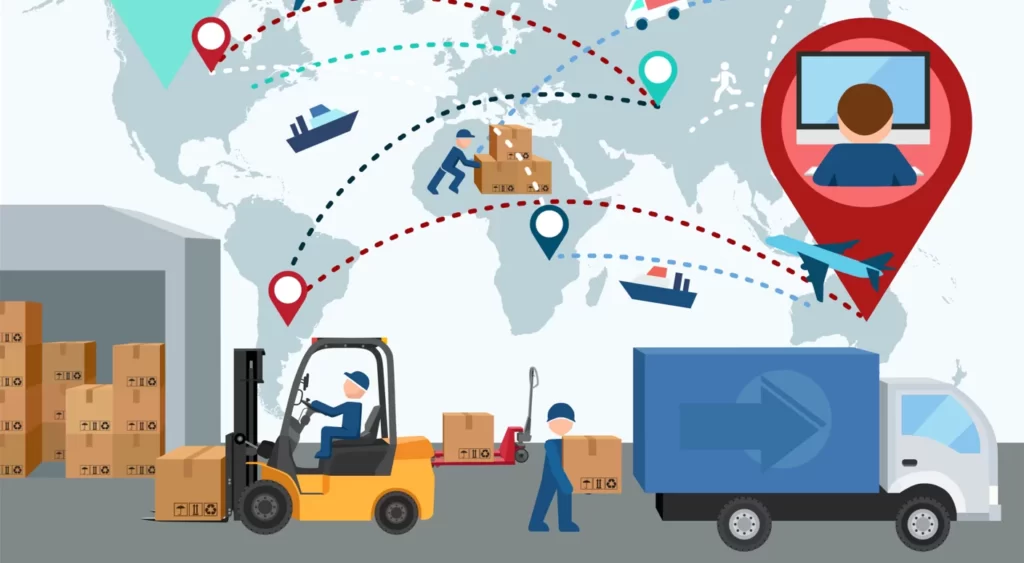
Need an ideal solution to manage your transportation and logistics? Microsoft Dynamics is just for you. This software showers tremendous benefits like routing, vehicle tracking, temperature tracking, and warehousing within a unified platform. You can identify vendors and routings to cover inbound and outbound orders or get the cheapest shipping rates.   Cutting Transportation costs holds the top position as far as the logistics industry is concerned, other pain points do not add any less to the challenges. Microsoft Dynamics 365 offers solutions to bust pain points such as:    Fuel Costs: When it comes to cost-cutting, fuel cost is the major concern of all time. Increased fuel rates add up to higher transportation costs and escalate surcharges, resulting in hiked freight rates and other included charges.   Economic Crisis: Hyped fuel prices bring greater credit issues and raise inflationary demands that take a greater toll on an economy. The industry is mounted by complying with regulations, additional capacity, and declining demands with the increase in key cost centers.   Technological Issues: Even though this industry recognizes the need for advanced technology, business owners fail to find the right solution to manage their transportation and logistics. Most of them either work in silos or adopt multiple software, which might even complicate their operations.   Why Microsoft Dynamics 365 is the perfect solution for Your Transportation or logistics business?  Work smarter and embrace greater flexibility in your daily operations. With a suitable service provider, having over a decade of experience such as Trident Information Systems, you can easily plan routes and identify vendors for inbound and outbound orders. Apart from this, you can claim other benefits like:   Efficient Inbound and Outbound Planning   As soon as you are in the game, you cannot avoid extreme pricing. Therefore, it becomes even more essential to drive down your operational costs by enhancing inbound and outbound operations. Microsoft Dynamics 365 helps in optimizing the shipping process when you order items from the vendors and transfer them to the end customers. Get end-to-end visibility from order to payment, claim substantial lead time reduction and enhance the overall manufacturing process.   On-Time Delivery   When you have an item to accept or dispatch from/to the vendor or customer, you get multiple shipping options on your plate which show up with delivery restrictions such as delivery time, costs, or distance. With Microsoft Dynamics 365, you can ensure timely delivery no matter what route you choose. It identifies all the factors that have a direct or indirect impact on the final delivery and ensures the fastest route possible.  Real-Time Visibility  Transportation management exceeds transportation concerns and includes real-time visibility into the entire order and delivery process to every individual who needs it, from procurement, production scheduling, warehousing to supply chain and staff. Real-time visibility classified under individual departments within a unified platform helps you cut costs and make more logical decisions. Apart from this, you can use this data to fill the process gaps causing variability in the supply chain.   Warehouse Management  Integrate supply chain with Microsoft Dynamics 365 and stay agile while receiving, picking, staging, and loading. Cut down on excess inventory and get visibility when the item was shipped, how much was shipped, and when it will arrive in real-time. End-to-end data on orders and shipments help you plan and maintain optimum inventory levels.   Accurate Replenishment  Inventory replenishment is one of the most crucial operations in transportation management. Microsoft Dynamics 365 optimizes this task and allows you to set up replenishment strategies based on the minimum/maximum criteria. Identify when you need to add up more inventory as soon as it hits the minimum level. Additionally, you can also set up demand-driven replenishments.   Yard and Terminal Management  With Microsoft Dynamics 365, you can eliminate manual processing that slows your progress down. Get real-time visibility in your yard and terminal to minimize waiting times, increase outputs and reinforce regulations. Claim a secured, safe, and optimally productive yard.   Spot the Most Appropriate Carrier   With cutting-edge business intelligence, access the large network of suppliers and carriers existing right now. Browse through thousands of vendors and suppliers and pick up the one that suits you the best. Get a unified view of all carriers and identify where they stand against one another, also analyze their performance over time.   Why Would You Choose Trident Amongst All the Partners?  Trident Information Systems, being the gold partner of Microsoft Dynamics 365, boasts decades of experience with various transportation and logistics firms. We research your business and assemble tools to customize the perfect solution. We assist in managing schedules, analysis, errors, integrations, capacity plans, and workflow.   Trident’s Logistics suite includes Rail Operations, Yard Management, transportation management, warehouse management, billing solutions, and fleet management. Additionally, this suite collaborates with our globally recognized HCM and Finance Modules. It integrates with your organization’s operational aspects and provides a smooth workflow.  

How to Optimize Transportation and Logistics with Microsoft Dynamics 365? Read More »
Customer Story : CRANE Worldwide Logistics centralised their sales platform with Microsoft Dynamics 365

As it approached its 10-year anniversary and its first billion in revenue, global logistics and freight company Crane Worldwide Logistics looked for a modern platform that brought all its sales tools into one place. With the Microsoft Relationship Sales solution, which brings together LinkedIn Sales Navigator and Microsoft Dynamics 365 for Sales, its salespeople have the tools to drive more meaningful engagements with customers, convert opportunities faster, and create more revenue. Just by getting the team using the platform, we’ve seen an uplift in activity in all areas. We’ve had record growth since implementing Microsoft Relationship Sales—the last quarter was excellent for us. John Jergens: Vice President of Global Sales Crane Worldwide Logistics A global sales team From a startup created in the risky business climate of the 2008 recession, Crane Worldwide Logistics has become a major player in the global transport and logistics industry, on track to hit USD1 billion in revenue in 2019. Created by former Eagle Global Logistics executives and headquartered in Houston, Texas, Crane Worldwide aims to provide customers with full transparency into its supply chains by coupling talented people with game-changing technology. But with salespeople spread across the globe, Crane Worldwide found itself with a visibility problem. “We weren’t all working on a common platform, so we were lacking in visibility,” says John Jergens, Vice President of Global Sales at Crane Worldwide. “We knew we had a vast sales pipeline out there, but there wasn’t much data available on it—so we couldn’t see how robust it was.” From data silos to connected visibility A key part of the Crane Worldwide ethos is providing customers with meaningful interactions—and that relies on having a customer relationship management (CRM) solution that salespeople can use to build and maintain relationships and convert opportunities more effectively. But, with a seven-year-old siloed CRM system that it had simply outgrown, the company lacked the tools its salespeople needed. “The previous system never had very good adoption,” Jergens adds. “It just wasn’t very functional.” So, the team went looking for a platform that could replace it. With implementation support from Microsoft Partner Network member PowerObjects, Crane Worldwide deployed the Microsoft Relationship Sales solution, a powerful combination of Microsoft Dynamics 365 for Sales and LinkedIn Sales Navigator, to support personalized, meaningful customer engagements. The team was already using LinkedIn Sales Navigator and Microsoft Office 365, so Dynamics 365 for Sales was the ideal addition to the Crane Worldwide ecosystem. “We saw how Microsoft Relationship Sales could help us focus on being easy to work with from a customer’s perspective,” explains Jergens. “So this whole deployment was part and parcel of becoming easier to do business with.” Now, just six months into deployment, Crane Worldwide has 300 Microsoft Relationship Sales users in its ranks, including 150 direct sellers along with employees from its marketing and account management teams. New processes, simpler sales Using the Microsoft Relationship Sales solution, Crane Worldwide salespeople have already changed the way they work. And they’re reaping the benefits of the visibility they’ve gained into the sales pipeline. “Once we rolled out Microsoft Relationship Sales, the overwhelming response was that it’s really easy to use, and it doesn’t take much time,” says Jergens. “We created a very simple weekly routine where our sellers spend about 30 minutes adding new data into Dynamics 365 for Sales. That’s just six minutes a day to keep everything up to date.” With faster processes freeing up more time for the sales team, sellers can focus their energy where it matters most—building the customer relationships that turn into revenue. And, at the end of each week, management can analyze activity through a global dashboard, which combines CRM and customer interaction data into detailed executive reports that show how salespeople are turning relationships into revenue. “With Microsoft Relationship Sales, we can generate KPIs that tell us what a healthy pipeline should look like. We look at the number of prospects and targets, how long the sales cycle takes, and the time from when we close an account to the time it generates revenue,” explains Jergens. “And if the pipeline isn’t where it should be, we can support the sellers with the resources that they need—it’s more productive all around.” A centralized sales platform Because Microsoft Relationship Sales brings together so many sales capabilities, Crane Worldwide sellers have everything they need to do their jobs in one place. Previously, they had to manage a relationship from scoping to sale across disconnected tools and platforms, far from an efficient process. “It’s difficult to put a number on what it’s like to manage 30 or 40 customers with an email folder and a spreadsheet,” says Jergens. “Now, once the salesperson finds a prospect using LinkedIn Sales Navigator, they use Dynamics 365 for Sales to easily track those conversations. Instead of creating and referencing a lot of notes, they can quickly link activities and discussions through Microsoft Relationship Sales.” With LinkedIn Sales Navigator and Dynamics 365 for Sales together, salespeople can start building the context they need to deliver a meaningful interaction before the first contact even occurs. Insight into potential prospects’ roles, connections, and priorities through LinkedIn Sales Navigator is fed straight into Dynamics 365 for Sales—increasing conversion chances from the very start. “It’s had a direct impact on the time it takes to develop customer relationships, because we have true visibility into those opportunities now,” explains Jergens. A built-in assistant also sends prompts to help sellers accelerate the sales cycle, reminding them to contact a lead that might go cold or nudge an opportunity as it approaches its estimated close date. A roadmap for integration In businesses the world over, sales and marketing teams struggle to communicate and collaborate effectively. As the sales team adapts to Microsoft Relationship Sales, Crane Worldwide is already adopting more of the solution’s capabilities to help sales and marketing stay on the same path. “The marketing teams are able to work in tandem with the sales team to help them understand how marketing activities can help nurture their

Customer Story : CRANE Worldwide Logistics centralised their sales platform with Microsoft Dynamics 365 Read More »

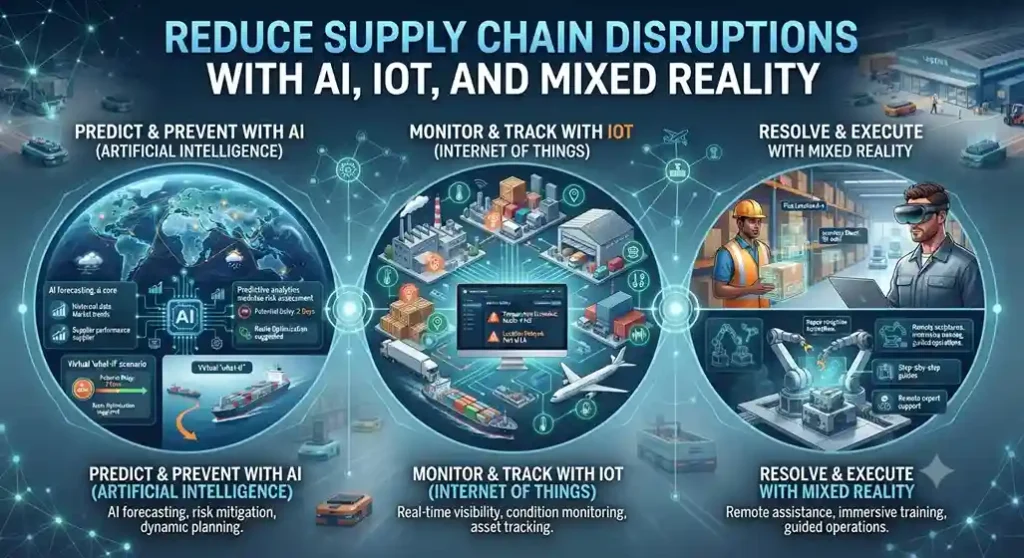
Reduce supply chain disruptions with AI, IoT, and mixed reality

Disruptions in global supply chains have significantly increased over the last decade, fueled by a myriad of triggers ranging from trade wars, demand surges from social marketing, natural disasters, and most recently, the recent COVID-19 pandemic. Updates to Microsoft Dynamics 365 Supply Chain Management in the 2020 release wave 1 help organizations proactively transform every aspect of manufacturing and supply chain operations to reduce disruptions. These new and updated capabilities drive automation and reduce downtime using IoT and mixed reality, and provide the agility to re-plan production in real time to dynamically changing demand. In fact, the agility enabled by Supply Chain Management is currently being leveraged by a consortium of major UK industrial, technology, and engineering businesses from across the aerospace, automotive, and medical sectors that has come together to produce medical ventilators for the NHS. Reducing the risk of supply chain disruptions As the threat of disruptions increase, companies are pressured to ask if the supply chain is ready for the next event, pushing them to build a more resilient supply chain to ensure business continuity for them and their customers in the most cost-effective manner. More companies will start buffering for risks and move from a “Just-in time” mentality to a “Just-in case” mentality. Factories will need to transform rapidly to adapt to change, serving a wider range of products produced in smaller batches with lower set up time, faster throughput, and the ability to quickly respond to fluctuating demand and customer expectations. Companies are likely to move from single supplier to multi-supplier and single location to multi-location models for mission critical parts even if it is cost prohibitive in order to reduce the impact of supply chain disruptions. To reach this optimal state of agility and delivery speed, manufacturers need to adapt every aspect of the supply chain to enable tools, equipment, and people to become instrumented, interconnected, and intelligent—a state of persistent adaptive learning and optimization as more data is available to tighten links between manufacturers, suppliers, and customers. The latest release from Dynamics 365 Supply Chain Management enables customers to reach this optimal state by proactively transforming their manufacturing and supply chain with predictive insights and intelligence from AI, IoT, and mixed reality—across planning, production, inventory, warehouse, and transportation management—to maximize operational efficiency, product quality, and profitability. Train workers faster with integrated mixed reality learning experiences Dynamics 365 Supply Chain Management is now integrated with Dynamics 365 Guides to help mainstream mixed reality for manufacturing. Companies can deliver a faster ROI by getting the workforce trained sooner with fewer trainers and with an interactive learning experience. Workforce efficiency can skyrocket with step-by-step instructions that guide employees to the tools and parts they need and how to use them in real work situations, available at a glance on a Microsoft HoloLens device that keeps their hands free to do the work. Dynamics 365 Guides can not only eliminate costly errors in production but also improve workforce safety. Companies can significantly reduce asset downtime by making asset maintenance skillset-agnostic and avoid costly waiting time for a specific expert to perform maintenance on an asset. The guides are extremely easy to author and do not require any coding. A guide can be authored by simply writing the step-by-step instructions on a PC followed by picking and placing the holographic parts and inbuilt icons on the machine where the work is happening. Introducing Dynamics 365 Guides for HoloLens 2 Dispatch the right resources at the right time Dynamics 365 Supply Chain Management is now integrated with Microsoft Dynamics 365 Field Service. Customers can significantly reduce downtime of geographically dispersed mission critical assets by automating field service operations so that the right resources—workforce, machines, parts, and tools—are available at the right place, at the right time, to proactively maintain them. Companies can improve the overall equipment effectiveness (OEE) of their geographically dispersed mission critical assets by performing predictive maintenance based on real-time performance data from IoT and field data from Dynamics 365 Field Service. Traditionally, disparate systems hinder the ability to accurately forecast demand for critical and expensive parts frequently used in both service and new production. Due to lack of forecasting for service demand, companies constantly take parts from production to fulfill the service demand, and vice versa, to deliver good customer service. This often creates a shortage for new production and significantly impacts on time delivery to new customers. As a result, the company is unable to deliver a delightful customer experience on both fronts. This integration will eliminate the need for disparate systems and significantly improve the forecast accuracy of these mission-critical parts due to real time tracking in the service supply chain. Seamlessly integrate IoT capabilities Dynamics 365 Supply Chain Management now offers out-of-the-box IoT capabilities that leverage Microsoft Azure IoT Hub to connect signals from mission-critical assets with business transaction data. Manufacturers can improve uptime, throughput, and quality by proactively managing shop floor and equipment operations with a real-time view of their entire production and stock. This will significantly reduce costly downtime of business-critical equipment by performing predictive maintenance before disruptive failures occur. There is no coding required to implement these out-of-the-box IoT scenarios on your manufacturing floor today. Dynamics 365 Supply Chain Management and IoT Intelligence customer spotlight with Majans Improve on-time delivery with real-time production planning The Planning Optimization Add-in for Dynamics 365 Supply Chain Management enables companies to improve on-time delivery by performing production planning in real time, accounting for dynamically changing customer demand, material availability, and capacity constraints across multiple sites and warehouses. It also enables customers to improve inventory turns by right-sizing inventory levels based on dynamically changing customer demand and capacity constraints. This helps eliminate excess and reduces slow moving inventory. Planning Optimization Add-in for Retail and Distribution is available and Production planning is currently in preview.

Reduce supply chain disruptions with AI, IoT, and mixed reality Read More »

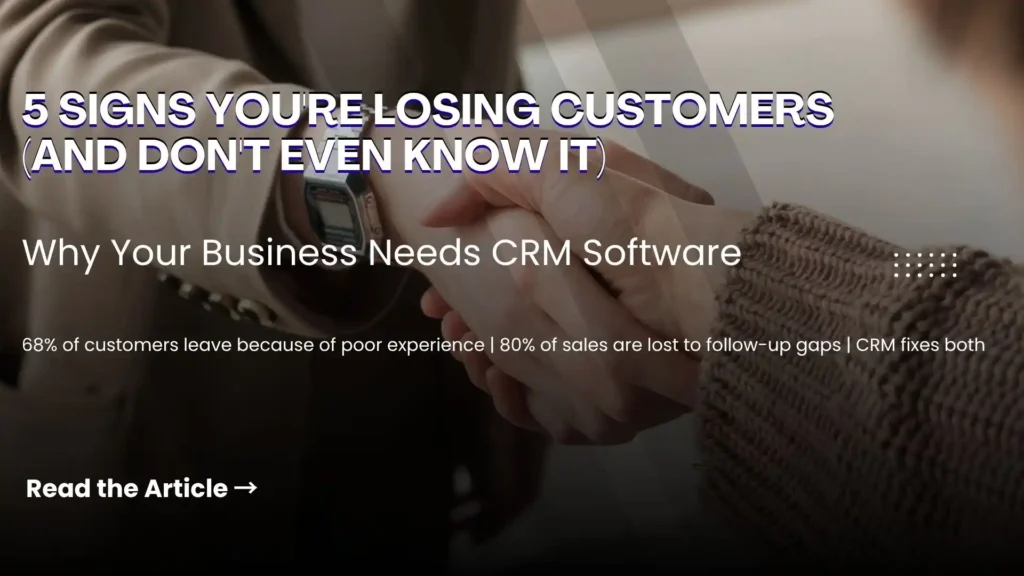
When do you know that your business needs a CRM software?

[vc_row][vc_column][vc_column_text]Customer Relationship Management is a process of managing or organizing prospects throughout the sales life cycle. The more the advancement in serving the clients, the more will be the payment stream for the Company. Trident’s CRM software solutions happen to be one of the most effective and efficient CRM software that could easily cut overhead costs and give highlights which demonstrate helpful to different business firms. Many CRM software programs available have several features that can be used or restricted – so in effect a business can modify to make their own CRM software. However, utilizing CRM software gives various advantages to both organizations and customers and that is the reason each genuine business has implemented some of the other CRM applications. So who can opt for Trident’s CRM software? A simple response to that question would be “Any business with customers would utilize CRM“. However, in the real world, it is not just as simple as that. Choosing an appropriate CRM software solely depends upon the business process along with a range of profitable features. Below are the type of Businesses that could gain benefit from using Trident’s CRM software solutions. 1- The business that uses any form of Marketing:  For any business that uses marketing campaigns to promote, sell or advertise their products or services in the market through various communication mediums such as phone, email, etc. Reaching to customers in bulk within a short period as well as recording the response on the go makes it more effective to manage the marketing process. 2- A business that deals with B2B and B2C Sales: For any business that tends to cope up with the Customers to sell or cross-sell the products. Maintain relevant sales data such as documents, communication records, etc. Identify the process flow starting from Lead up to the deal gets closed. 3- A business that creates Quotations & Invoices:  Built-in invoicing module to track the quotations and invoices generated against an opportunity. Efficiency to merge the billing details into the document which can further be mailed to the customer right from the CRM software without any need to switch between the applications. 4 – A business that deals in Customer Service:  For any business that believes in increasing customer satisfaction by helping them in tracking as well as resolving the issues completely. Managing the cases within CRM as well as auto – escalations triggered on a timely basis not only guarantees better customer satisfaction but at the same helps the Management to track resource performance. 5- A business that wants to increase efficiency:  Well-organized business results in better output which can be ultimately tracked with the help of various Reports, Dashboards, etc. Well-improved or say the advance level of features incorporating in CRM with the latest release of versions has enhanced the CRM which has ultimately proved beneficial for Business growth. Thus using CRM software gives you numerous benefits to enrich both Business and Customer Relations by serving your customers better with stronger service and support. To know more about how can CRM software help you, you can check out our CRM software solution on https://tridentinfo.com/microsoft-dynamics-crm-software-solution/ and contact to our experts on https://tridentinfo.com/contact/.[/vc_column_text][/vc_column][/vc_row]

When do you know that your business needs a CRM software? Read More »

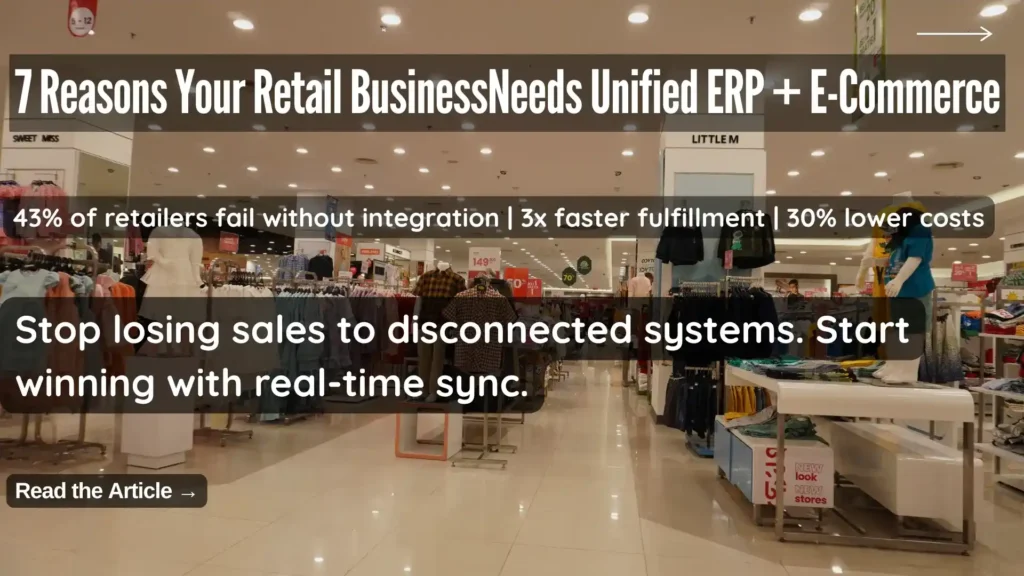
7 Reasons to have a Retail-oriented Solution to Unite E-commerce and ERP

[vc_row][vc_column][vc_column_text]Solely brick-and-mortar retail is gradually have become the exception rather than the norm. Increasing numbers of consumers have welcomed the convenience of online retailers, allowing them to evaluate items in less time and make purchasing decisions rather than visiting various physical stores. In everyday market research, 81 percent of consumers use phones and tablets. In reply to these developments, businesses try to boost revenues by embracing ecommerce and spreading to other platforms. Yet each new site introduced by marketers raises the difficulty of their distribution chain. To integrate all channels information to make good enterprise-wide choices, they need new digital resources. To establish a consolidated database of all purchases, clients, and goods, several retail businesses prefer to incorporate their ERP implementation services with each of their distribution channels. There are however some clear benefits of using an integrated solution designed specifically for the retail sector over integration solutions for common use applications. Below are some features of built-in retail integration solutions that show the requirement of customization for a common integration framework: 1- Flexibility Over Retail Vhannels All businesses move toward cohesive user experiences. Retail-specific integration solutions enable different systems, like your point-of-sale (POS) and ecommerce system, to import and then use product descriptions into your Retail ERP Software. It means you have the same range of products throughout all the product lines, while constantly pricing and discounting those items. 2- Omni Channel Experience Retail integration solutions offer services for Omni channel purchase-online pickup-in-store (BOPIS) fulfilment which enables customers to buy an item from one channel and deliver it from another platform. They might buy a product at a retail outlet, for instance, and have it shipped to their house, or they might order it online and pick it up at a local retail outlet. The retail-specific integrated system manages ZIP-code searches for shop inventory, and shares shop pickup information between systems. 3 – Inventory Clarity Retail connectivity solutions provide an accurate representation of product availability by synchronization of inventory data throughout networks and systems on a routine basis. Entities can even merge individual warehouses and shops into satisfactory groups to enhance the control of the distribution chain. 4- Client Information Integration Your Retail ERP system will exchange customer data with your online store and other channels, using a retail-specific implementation solution. Customer data must stay consistent over digital and physical platforms and will avoid redundant information. Such knowledge could be used to generate and monitor purchase requests, and to improve loyalty program management. 5- Unified Loyalty Program A retail integration solution makes it much easier to operate a single loyalty program with consumer, pricing, and discount information integrated into your Retail ERP system. You will receive and redeem coupons, gift cards, and loyalty points across all platforms, creating better customer satisfaction and higher participation levels than a channel-specific rewards program. 6 – Single Integration Solution for Payment A retail-specific integration approach increases time to value by offering preloaded integration with major payment service vendors. The use of one integrated system for processing payments, order processing, customer data, and product inventory offers greater efficiency and lower production costs than multi-integrator dependence. 7 – Managing Multiple Languages and Currencies Retail integration technologies are planned for retail operations around the world. They have help for managing multiple languages and currencies, so you can quickly set up physical or online stores in new geographical regions. Conclusion Integration solutions intended for the retail sector provide many out of the box that would involve many months of costly customization to accomplish using platforms for general purpose integration. Trident Information Pvt Ltd provides a flexible and versatile integration solution which many international retailers use. For more information on the power of retail-specific integration, contact Microsoft ERP Partner Trident Information Pvt Ltd on https:/tridentinfo.com/contact/     [/vc_column_text][/vc_column][/vc_row]

7 Reasons to have a Retail-oriented Solution to Unite E-commerce and ERP Read More »

Turn prospects into engaged customers with intelligent sales and marketing

[vc_row][vc_column][vc_column_text] The selling landscape is undergoing fundamental changes, many of them driven by the effects of B2B customers’ experience as everyday consumers. Many retailers have created personalized, nearly immersive, online experiences for each customer. Consumers shopping for goods and services continually experience fresh and delightful interactions, from highly customized offers and recommendations to frictionless channels to 24/7 interactions. Using Microsoft Dynamics 365 for Marketing and Microsoft Dynamics 365 for Sales organisations are improving  their profit margins. The impact of B2C on B2B Today’s B2B buyers have high expectations, and those expectations will not be met if B2B buyers are accustomed to sophisticated consumer interactions in their personal lives. Executive B2B buyers are not impressed by marketing driven by large, relatively impersonal data analysis that leads to inconsistent and conflicting interactions or sales outreach that doesn’t cater specifically to their needs at the right time. The source of the problem may be largely invisible to the companies perpetuating this issue. Many organizations believe themselves to be customer-centric, while their buyers may not agree. That’s a significant disconnect. Clearly, B2B has much to learn from B2C companies. Customer experience – the rewards for getting it right Many B2C organizations have strategically embraced modern technologies like customer data platforms (CDP) and artificial intelligence (AI) to gain a 360-degree view of their customers and follow through on those insights to optimize customer engagement. The rewards for getting this engagement right are substantial. Many buyers are willing to pay more for a better customer experience. In terms of the potential benefits a great experience can have on sales success, a McKinsey study reported that organizations can expect: 10-15 percent lower customer churn 20-40 percent increase in the win rate of offers Up to 50 percent lower service costs Take a new approach B2B companies must move away from their legacy approaches based on large, relatively impersonal data analysis and move to solutions that unify relationship data across the full customer lifecycle. That way, they can gain insights that help build credibility and trust with buyers. They can run multi-channel campaigns to increase sales-ready leads, create personal experiences, and use guided process and AI to anticipate and respond faster to customer needs. They can build the ongoing, high-quality relationships that are necessary for long-term success. Four principal goals Turning prospects into engaged customers is a process. In order to achieve these goals, organizations must focus on 4 key priorities: Nurture more demand Personalize buyer experiences Build relationships at scale Make insight-driven decisions Each of these drives results by using deep reservoirs of data in making technology feel more human. Nurture more demand Relying only on conventional, basic email marketing as the primary source of leads is simply not effective enough. In fact, the more focused and demanding the customer universe is, the more essential it is to gain deep insights into what those customers expect. Northrop & Johnson,  a leading global yacht brokerage, competes for multi-million dollar customers using technology its industry has been slow to adopt. Using Microsoft Dynamics 365 for Marketing has created a decided competitive advantage: Vital insights into their customer base have helped to drive a 70 percent increase in charter sales. In any industry, companies need to generate leads across multiple channels, nurture large numbers of leads while prioritizing each one, and use data-driven insights to deliver leads that are sales-ready. Nurturing more demand is critical to growth. Personalize buyer experiences It’s time to end friction, inconsistencies, and the “do you know who I am?” part of the customer experience. Companies can acquire a holistic view of buyers, predict buyer intent, and orchestrate a connected, personalized journey for customers. In an era where guests have more choices than ever for leisure and entertainment, Tivoli delights its guests by using Dynamics 365 Customer Insights to stay one step ahead of expectations and transform the guest experience. With its deeper understanding of guests, it can add new chapters to its long tradition of imagination and innovation. Build relationships at scale Mutually beneficial relationships don’t simply happen with more data. Companies need to build credibility to establish and grow relationships with customers. Together, Dynamics 365 and LinkedIn enable the company to have increased information about, and impact on the sales relationships that are added to its sales pipeline, even as that pipeline experiences exponential growth month over month. Make insight-driven decisions Here’s where sales and marketing can truly align: utilizing data to uncover insights that lead to better-informed decisions throughout the sales process. This can improve performance, empower employees, and enable the company to gain increasingly effective strategic insights. With more than 1,500 pubs serving guests throughout the UK, Marston’s launched a business transition by bringing together guest data that was scattered across multiple systems into Dynamics 365. With their locations’ guest data now unified, Marston’s will gain a complete view of guests, which can be harnessed to generate customer satisfaction and strategic insights. This approach helps drive improved performance throughout the company, including the opportunity to empower employees – an often-overlooked aspect of a company’s success. Aligning sales and marketing: The intelligent way to succeed It’s possible to create exceptional experiences, drive more qualified leads, and increase revenue if an organization has the vision, process, and technology to harness all the data available. This requires high-level technology with well-defined business goals and sales and marketing applications fueled by keen intelligence. We have a compelling offering to accomplish just that with Microsoft Dynamics 365. Get in touch with our representative to request a demo for Microsoft Dynamics 365 for Sales & Microsoft Dynamics 365 for Marketing Blog Reference : https://cloudblogs.microsoft.com/dynamics365/bdm/2019/09/19/turn-prospects-into-engaged-customers-with-intelligent-sales-and-marketing/[/vc_column_text][/vc_column][/vc_row]

Turn prospects into engaged customers with intelligent sales and marketing Read More »

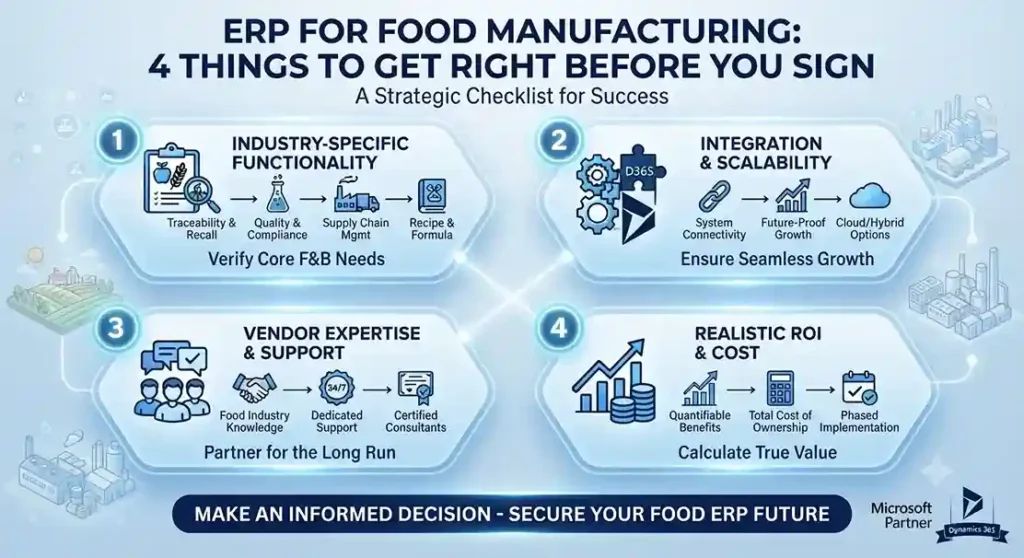
What Considerations Should be taken into Account when Implementing the New ERP for Food Manufacturing?

[vc_row][vc_column][vc_column_text]Usually, the decision-making process for ERP for Food Manufacturing is long and complex. From deciding which functionality is most vital to your business, to choosing a system that will make rapid and meaningful changes, it may seem daunting to decide on the appropriate ERP solution for your organization. But don’t worry, Microsoft gold partner Trident got you covered. As we have 20+ years’ experience and  implemented ERP food manufacturing various satisfied customers like Haldirams, Nik Bakers, etc. Through sharing tips on how to pick and incorporate the right food production ERP solution for your food company, we will make the decision-making process of implementing an appropriate ERP for food manufacturing a bit easier for your organization. 1) – Food Specific Approaches Tons of ERPs and business solutions are available to choose from. But as a food manufacturer or supplier, you should understand that it is complex to manage a food business effectively and comes with its own set of unique complexities. Many of the integrated software systems in the marketplace for small to medium-sized enterprises provide the functionality you would expect for sales, acquisitions, operations, accounting and inventory management only. But what about the extra features distinctive to food manufacturing? Once you settle on a standardized ERP solution, ask yourselves how much modification and flexibility a food-specific system will have to go into implementing the following characteristics: Food safety and compliance Manufacturing and quality Recipe development and management Food recall and trace-ability 2) – Functionality Recalling that not all food businesses run in the same manner is also relevant. A supermarket bakery operates much differently than a manufacturing frozen food, and a meat processor will have a completely different set of software specifications than a broad line dealer. So where are you going to start? Try to address the features and functions that your existing system currently lacks. Create a “wish list” of elements that would make operations run better if you had them in the spot. From there, you can filter a lot of ERP providers and can concentrate on only those solutions that are suitable for your organization. 3) –  Easy to Use Suppose: at your job you’re a warehouse worker or a machine technician. Now your management team has decided to introduce a new software platform throughout the organization, and you are responsible for learning it as soon as possible (and as precisely as possible). Too much load, right? Moving from manually managing stuff or from a legacy system to a fully integrated ERP solution can be terrifying for everyone in the company. The accounting department now needs to learn how to use a new system to enter figures and run calculations. The QA department now has a new way to set up quality controls and audits. If a new process is too complex, your staff might feel frustrated, disheartened, and underappreciated. Look for an ERP running on a system that is probably already familiar with most of your workforce (such as, for example, Microsoft Dynamics) 4) – Customer Support Working with a vendor of an ERP solution is so much more than just buying and using the product to run your business. The ERP solution is implemented, which usually takes five to nine months, and then continued support and facilities will proceed across your software’s life cycle. It is therefore essential to ensure that the ERP you choose is assisted by a team of people who are committed to ensuring that you are successful. This means for the food industry you need experts who are not only professionals in software but also food specialists. You wouldn’t recruit somebody to work in your warehouse that wasn’t a good choice, correct? Think the same way about the people who are working for your ERP provider. Because they are also responsible for your business ‘ success. It is easy to get confused as there are too many ERP for food manufacturing service providers, so remember to remain vigilant and consistent with what you want to get out of your solution. Selecting the right ERP means choosing software to help you enhance food security, simplify efficiency or productivity and handle the progress of the enterprise. If you still have any doubts left in your mind then you can contact to Trident’s ERP for food manufacturing providers on https://tridentinfo.com/contact/[/vc_column_text][/vc_column][/vc_row]

What Considerations Should be taken into Account when Implementing the New ERP for Food Manufacturing? Read More »

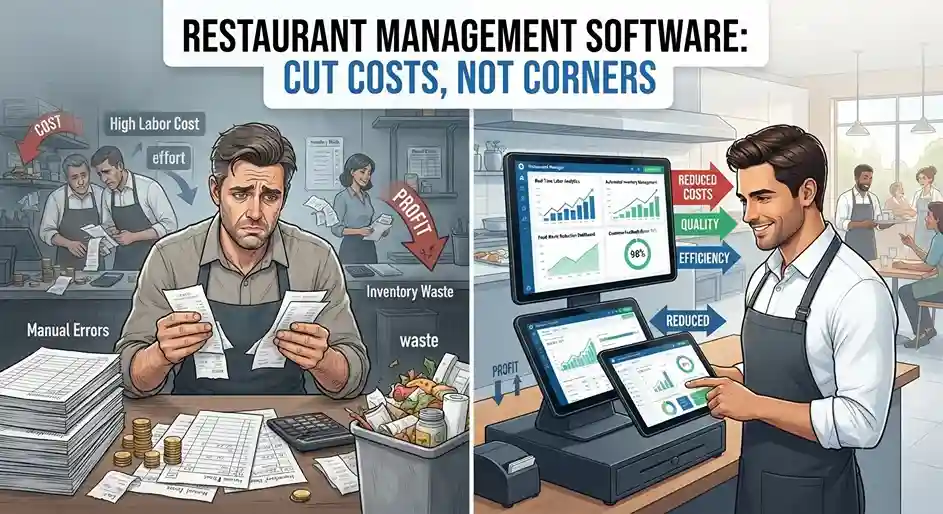
Slash costs in your restaurant with the right software system

[vc_row][vc_column][vc_column_text]How do you manage costs in your restaurant business? Are you operating as efficiently as you could be? We know how difficult it can be to maintain optimal efficiency and make money in a time of razor-thin margins and intense competition. By their very nature, restaurants are characterized by predictable, seasonal factors as well as by unpredictable ones, including changing customer preferences and fluctuating running costs. But there are ways to get a better handle of your business, helping you to plan ahead more effectively, become leaner and reduce costs in the process. For many restaurant owners, the answer lies in choosing a modern unified technology platform that provides a complete overview of your business operations from Point of Sale (POS) to back office. Indeed, research by the National Restaurant Association in the US found that over 80% of restaurants are turning to technology like online ordering and reservations and restaurant analytics to help them run their business successfully and efficiently. The same report found that four in five restaurant operators agreed that: Technology helps increase sales Technology makes their restaurant more productive Technology provides a competitive advantage. If you’re in two minds as to whether a restaurant management system could help your business grow, rather than simply cost you money, here are some specific areas in your business where the right technology can make a real difference: Optimize staff management If your staff schedules are currently handled manually, in spreadsheets or even on paper forms, you could be missing out on a trick. Staff management software has the capabilities you need to ensure rosters correspond with table bookings and helps you plan for the right amount of labor you need. The result is optimized schedules, which means you don’t have too many employees at work during quiet periods, and yet you have enough on hand to see you through the busy times. If you select a unified system for your restaurant, the staff management functionality can be part of the same platform used to manage the rest of your business. This allows you to make truly informed decisions using historic sales data and drilling down by location, day of the week and time to see patterns emerging and better determine when you will be busy or quiet. Another factor to consider is how you can use the software to keep track of your budgets and make sure you’re not paying out more than you should be. We know how difficult it can be to check and confirm the hours worked by each of your employees, especially when you are likely dealing with so many. But a staff management system can automate this for you, confirming actual hours worked are the same as those planned and highlighting any discrepancies for you to follow up on, minimizing errors and costs. With the functionality to analyze how much you are spending by employee, work code, shift and role, you can compare actual costs and performance against your business plan, and minimize unnecessary extra expenses, such as overtime. Simplify staff training In this industry, we know that workers tend to be transient – maybe you have lots of students or temporary workers on your payroll. High staff turnover can be a real pain point and loss maker for your business, especially as recruiting and training staff is both time consuming and costly. But there are ways technology can help you control this better, and reduce the costs and pain of getting new staff on board. If the systems you use are intuitive and easy for all employees to understand, you won’t have to spend as long training them on how to use them in the first place. Some retail management systems allow you to set up your POS so it mirrors your menu, making it far simpler for staff to find their way around while also helping to reduce mistakes. To simplify training even further, it could pay off to choose a system that uses a logic your staff is already familiar with. The LS Retail restaurant solutions, LS First and LS Central, are built on well-known Microsoft technology. This means new employees can be up and running quickly, as any experience with Microsoft software such as Office or Windows means they already know where to find menus and information in the system. Having one enterprise-wide platform, rather than multiple software solutions strung together, also means you only need to train your staff up once. This not only saves time and cost but gives you greater flexibility too. If you need to move staff from the bar to the restaurant floor, you can do so with ease. No extra training required to use a separate system; no time wasted. Increase table turnover and order value Is your restaurant floor running as smoothly as it could? There are some steps you can put in place to subtly speed up the process, allowing you to serve more customers without making your diners feel rushed. Mobile POS devices are a great way of doing this. As they connect your servers directly to the kitchen, kitchen staff can act on orders as soon as they are taken at the table, speeding up food preparation. Your waiters can get an alert on their POS devices when orders are ready, and they can also take payments on the device as soon as diners are ready to leave – no waiting for card readers or an available cash register. If you select the right mobile POS, your staff can also handle conversational ordering, where they take orders in the same way that customers reel them off – extra cheese on their burger and no mayo, with large chips, for example. Everything can be quickly inputted into the POS, speeding up service time and reducing errors. At the same time, because staff have all menu information right in front of them, they can improve their upselling potential by suggesting upsell items and upgrades as they take orders. Streamline kitchen operations A unified platform complete with a kitchen management system could help your restaurant serve up food more quickly and efficiently than ever. In the kitchen, having Kitchen Display System (KDS) screens connected to the

Slash costs in your restaurant with the right software system Read More »