

Welcome to Trident Information Systems!
Write us to - info@tridentinfo.com
Let's Socialize

process manufacturing erp

Manage Your Inventory Effectively with Food and Beverage Inventory Management Software

Introduction Managing inventory in the food and beverage industry is no easy task. With perishable goods, fluctuating demand, and complex supply chains, keeping everything in order requires a lot of attention to detail. Effective inventory management can make or break your business, impacting everything from your bottom line to customer satisfaction. This is where food and beverage inventory management software comes into play, offering a modern solution to age-old problems. In this article, we’ll explore why inventory management is crucial in the food and beverage industry, the benefits of using specialized software, and how you can choose and implement the right system for your business. Why Inventory Management is Crucial for Food and Beverage Businesses Managing inventory in the food and beverage industry presents unique challenges. Unlike other sectors, you’re dealing with perishable items, which means timing is everything. Mismanagement can lead to significant losses, whether through spoilage, overstocking, or missed sales opportunities due to stockouts. On top of that, the food and beverage industry is highly competitive, and the ability to respond quickly to customer demands can set you apart from your competitors. Poor inventory management can lead to a range of issues—from excessive waste and increased costs to lost revenue and dissatisfied customers. In an industry where margins are often thin, every little bit counts. This is why more and more businesses are turning to technology to help manage their inventory more effectively. What is Food and Beverage Inventory Management Software? Food and beverage inventory management software is a specialized tool designed to help businesses keep track of their inventory in real-time. It goes beyond simple stock counting to provide a comprehensive view of your inventory levels, usage patterns, and ordering needs. This software is designed specifically for the unique needs of the food and beverage industry, taking into account factors like shelf life, seasonality, and supplier lead times. Unlike traditional inventory management methods, which often rely on manual counting and spreadsheets, inventory management software automates many of these tasks. This not only saves time but also reduces the risk of human error. Key Features of Food and Beverage Inventory Management Software Let’s dive deeper into the key features that make food and beverage inventory management software an essential tool for modern businesses: Automated Inventory Tracking One of the standout features of inventory management software is automated tracking. The software automatically updates your inventory levels as stock is received, used, or sold. This automation ensures that your inventory data is always up-to-date, helping you avoid the pitfalls of overstocking or understocking. Real-time Data Analytics Real-time data is invaluable in the food and beverage industry. Inventory management software provides instant access to data on stock levels, sales trends, and usage patterns. This allows you to make informed decisions quickly, whether it’s adjusting order quantities or identifying slow-moving items that need to be promoted. Supply Chain Management Integration Effective inventory management isn’t just about tracking what’s in your stockroom; it also involves managing your supply chain. Many inventory management systems integrate with your suppliers, allowing for automated ordering and real-time tracking of shipments. This integration can streamline your operations and reduce the risk of stockouts or delays. Waste Reduction Tools Food waste is a significant concern for many businesses. Inventory management software can help minimize waste by providing tools to track expiration dates, rotate stock, and forecast demand more accurately. By reducing waste, you not only save money but also contribute to a more sustainable business model. Reporting and Forecasting Accurate reporting and forecasting are critical to effective inventory management. The software can generate detailed reports on inventory turnover, waste, and profitability, helping you identify trends and make data-driven decisions. Forecasting tools can predict future demand based on historical data, helping you plan your orders more effectively. Benefits of Using Inventory Management Software Now that we’ve covered the key features, let’s look at some of the benefits of using food and beverage inventory management software: Increased Efficiency By automating many of the tasks involved in inventory management, the software frees up your time to focus on other areas of your business. Tasks that once took hours can now be completed in minutes, allowing your team to be more productive. Cost Savings Better inventory management leads to significant cost savings. By optimizing your stock levels and reducing waste, you can lower your overall expenses. Additionally, the software can help you identify cost-saving opportunities, such as bulk purchasing or finding alternative suppliers. Enhanced Accuracy Manual inventory management is prone to errors, which can lead to costly mistakes. Inventory management software significantly reduces the risk of human error by automating data entry and calculations. This enhanced accuracy can lead to more reliable inventory data and better decision-making. Improved Compliance The food and beverage industry is heavily regulated, and non-compliance can result in hefty fines or even the closure of your business. Inventory management software helps you stay compliant by keeping accurate records of your stock and providing alerts when items are nearing their expiration date. How to Choose the Right Food and Beverage Inventory Management Software Choosing the right inventory management software can be daunting, especially with so many options on the market. Here are some key considerations to help you make the right choice: Assess Your Business Needs Before you start shopping for software, take a close look at your business needs. What are the biggest challenges you face with inventory management? Do you need help with tracking, forecasting, or compliance? Understanding your specific needs will help you find a solution that fits. Consider Scalability As your business grows, your inventory management needs will likely become more complex. Choose a software solution that can scale with your business, adding new features and capabilities as needed. Look for User-Friendly Interfaces The best software in the world won’t be much use if your team can’t figure out how to use it. Look for software with a user-friendly interface that makes it easy for your staff to learn and use. Evaluate Integration Capabilities Your

Manage Your Inventory Effectively with Food and Beverage Inventory Management Software Read More »
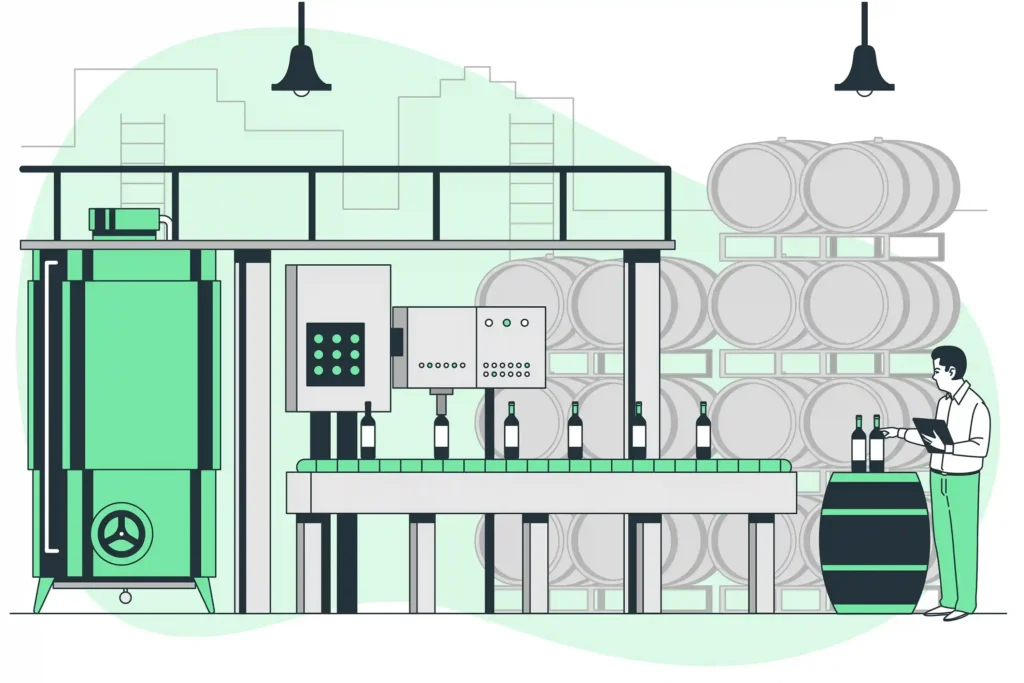

Inventory-Management-in-the-Food-and-Beverage-Industry-with-ERP-Software

Enhance Inventory Management in the Food and Beverage Industry with ERP Software

Elevate your Food and Beverage business with cutting-edge ERP software. Optimize inventory management, streamline processes, and boost efficiency. Experience enhanced control and profitability. Revolutionize your F&B operations with ERP solutions.

Enhance Inventory Management in the Food and Beverage Industry with ERP Software Read More »

Microsoft Dynamics 365 Finance and Operations dashboard managing finance, supply chain, and enterprise operations.

Microsoft Dynamics 365 Finance and Operations: Elevate Financial Performance, Streamline Operations, and Scale With Confidence

For enterprises still running financial and operational management on legacy ERP systems, the question is no longer whether to modernize — it is how quickly they can afford not to. Disconnected financial systems, manual reporting processes, siloed supply chain data, and compliance frameworks built for a pre-digital regulatory environment are not just inefficient. They are competitive liabilities. Every month a CFO waits days for month-end close, every time an operations director cannot see real-time production capacity, and every time a procurement team manually reconciles purchase orders against invoices — value is being destroyed that a modern ERP platform would have preserved. Microsoft Dynamics 365 Finance and Operations is the evolution of Microsoft Dynamics AX — rebranded, rebuilt for the cloud, and extended with artificial intelligence, embedded analytics, and no-code configurability that legacy AX simply cannot match. It gives finance, operations, manufacturing, supply chain, and procurement teams a single, unified intelligent platform — with the real-time visibility, automation depth, and global compliance capability that modern enterprises require. Whether your organization is evaluating its first enterprise ERP investment, planning an upgrade from Dynamics AX 2012, or looking to consolidate a fragmented mix of financial and operational systems onto a single platform — this guide covers everything you need to know about Microsoft Dynamics 365 Finance and Operations. Why Enterprises Are Upgrading From Dynamics AX to Dynamics 365 What Changed: From On-Premises ERP to Intelligent Cloud Finance Microsoft Dynamics AX was one of the most capable on-premises ERP platforms available for mid-to-large enterprises — particularly in manufacturing and distribution. But the world it was built for no longer exists. Today’s enterprise finance and operations environment demands: Microsoft Dynamics 365 Finance and Operations delivers all of these capabilities natively — on the Microsoft Azure cloud platform, with continuous updates, embedded Microsoft Copilot AI, and deep integration across the Microsoft 365 and Power Platform ecosystems. The Risk of Staying on Legacy Dynamics AX — What You Need to Know Microsoft ended mainstream support for Dynamics AX 2012 in 2021 and extended support in January 2023. Organizations still running AX 2012 are now operating on an unsupported platform — with no security patches, no regulatory updates, and no new feature development. The risks compound over time: The migration path from Dynamics AX to Dynamics 365 Finance and Operations is well-documented — and Trident has guided multiple enterprises through it successfully, preserving existing data, configurations, and business process knowledge while unlocking the full capability of the modern platform. 1. Elevate Your Financial Performance With Dynamics 365 The financial management capabilities of Microsoft Dynamics 365 Finance and Operations are built for the complexity and pace of modern enterprise finance — with real-time intelligence, automated processes, and global compliance tools that enable finance teams to move faster, report more accurately, and contribute more strategically. Increase Profitability With Real-Time Financial Intelligence Profitability management in complex enterprises requires more than periodic financial reporting — it requires continuous, real-time visibility into margin performance across products, customers, geographies, and business units. Microsoft Dynamics 365 Finance delivers: When financial intelligence is available in real time — not compiled once a month — the decisions that protect and grow profitability can be made faster and with greater confidence. Optimize Workforce Productivity Through Role-Based Automation Finance and operations teams lose significant productive capacity to manual, repetitive tasks that intelligent automation can handle faster and more accurately. Dynamics 365 Finance and Operations eliminates this waste through: Reduce Operational Expense Across Every Business Geography For enterprises operating across multiple countries and regions, financial process inconsistency is a hidden cost driver. Different teams using different processes, different tools, and different approval workflows create both inefficiency and compliance risk. Dynamics 365 Finance addresses this through: Adapt Quickly to Changing Financial and Regulatory Requirements The regulatory environment for global enterprises has never been more complex or more rapidly changing — VAT reforms, IFRS updates, digital invoicing mandates, transfer pricing requirements, and ESG reporting obligations are creating continuous compliance pressure that legacy systems were never designed to handle. Microsoft Dynamics 365 Finance is built for this reality: Streamline Asset Management From Acquisition Through Disposal Fixed asset management is one of the most error-prone areas in enterprise finance — particularly when asset registers are maintained in spreadsheets or legacy systems disconnected from the main ERP. Dynamics 365 Finance delivers: 2. Run Smarter Manufacturing Operations With Dynamics 365 Microsoft Dynamics 365 Finance and Operations extends beyond the finance function to deliver deep manufacturing operations capabilities — connecting production planning, scheduling, resource management, and cost control in a single unified system. Select the Best-Fit Manufacturing Process for Every Product Line Modern manufacturing organizations rarely operate on a single production model. A company might run make-to-stock for high-volume standard products, make-to-order for customized variants, and engineer-to-order for complex customer-specific configurations — simultaneously, within the same facility. Dynamics 365 Finance and Operations supports the complete range of manufacturing models in a single unified solution: Improve Operational Procedures With Advanced Production Planning Manufacturing competitiveness is built on the ability to optimize production parameters for every product and every scenario — adjusting quickly to demand changes, supply constraints, and capacity limitations without losing efficiency: Simplify Resource Management With Real-Time Scheduling Visibility Resource scheduling in complex manufacturing environments — balancing machine capacity, labor availability, tooling requirements, and material flow across multiple production lines — is one of the most operationally demanding challenges in enterprise management. Dynamics 365 Finance and Operations simplifies this through: Accelerate Product Delivery Through Advanced Warehouse Management The connection between manufacturing and warehouse management is where delivery performance is won or lost. Dynamics 365 Finance and Operations integrates advanced warehouse management directly with production planning: 3. Automate and Modernize Your Supply Chain A modern, connected supply chain is one of the most significant sources of competitive advantage available to manufacturing and distribution enterprises. Microsoft Dynamics 365 Finance and Operations delivers the tools to transform a fragmented, reactive supply chain into a unified, predictive, cost-optimized operation. Modernize Business Logistics Across Sites, Warehouses, and Transport Modes Supply chain

Microsoft Dynamics 365 Finance and Operations: Elevate Financial Performance, Streamline Operations, and Scale With Confidence Read More »