
Welcome to Trident Information Systems!
Write us to - info@tridentinfo.com
Let's Socialize

staff augmentation services

How does a Vision Intelligence System Outraces Manual Defect Detection While Manufacturing? 

Quality and Productivity are the two key aspects of a manufacturing company. However, bringing them both into equilibrium has become a daunting challenge. Manufacturers desperately need a Vision Intelligence System to restore balance. A Vision Inspection System Manufacturers assist with meeting dynamic customer demands and keeping up with the quality requirements.   Manual Defect Detection in Manufacturing, on the other hand, is insufficient to deal with current market dynamics. It becomes next to impossible to get productivity and quality complementing each other. It is prone to setbacks such as:   The inefficiency of human eyes to detect minute defects.   Inability to identify differences in similar spectrums of colors.   Too much workforce is needed to detect defects manually.   A rather costly approach.   Crowded floor space may cause staff to bump into each other.   Delayed reporting can lead to defective pieces passing through the conveyor.  A Vision Intelligence System is capable of abolishing each of these hindrances and providing a seamless quality inspection. Trident Information Systems has designed a technology called Vision Intelligence System. It is specifically for manufacturers. It digitally detects defects of manufactured items right on the conveyor, demanding low or no human interference.   How Does Trident’s Visual Quality Inspection Work?  Trident’s Machine Vision Inspection is a solution that digitally does everything a human inspection does, but more efficiently.   Identifies Minute Defects  This Visual Defect Detection System catches even minute defects such as small dents, scratches, breaks, burrs, chips, and so on. Human eyes may get tired, and miss these faults sometimes, or due to lack of focus, the outcome could be similar. It is faster and more efficient than a human, hence delivering results with more accuracy.  Presence/ Absence of Components   It can also identify the absence or presence of a component while manufacturing. For Instance, during FMCG production, it can identify small animals, dust, stone, and any other component that is not supposed to be there. In addition, it can also detect missing items. E.g., it can easily identify missing bolts, nuts, screws, etc.   Color Monitoring  Human eyes can sometimes miss judging certain colors, but this Vision Intelligence System does not. It can precisely monitor colors and only lets those pieces pass which has an acceptable color range than what is standardized. Color monitoring ensures uniformity among items produced.   Dimension Quality   Vision Intelligence System also ensures a dimensional uniformity among all the items. In human inspection, the chances for faulty dimension quality are higher. A Visual Quality Inspection, however, precisely monitors the dimensional quality of a product. It checks if all the bottles are properly capped and sealed. It detects any thorns in the packaging too.   Printing Accuracy   Apart from color monitoring, it also identifies if printing is accurate, the colors match the standards, and the logo is professionally printed. It also inspects if the labels are mentioned within the assisted dimensions.  How Does it Work in the Favor of Your Business?  Trident’s Vision Quality Inspection, also known as Vision Intelligence System, outweighs common manual inspection challenges and provides a better, faster, smoother, and optimized defect detection.   Accurate and Faster Defect Detection   With machine handling your defect detection, you can expect a more accurate defect detection. Even little scratches, dents, burns, etc. which are generally missed by human eyes, this Machine Vision System catches them right away. In addition to being accurate, it is also faster than your traditional inspection. It quickly catches the defect and commands to discard it, hence leading only pieces to pass through.   Prompt Reporting   In inspection by man, reporting can be delayed, and surplus time is given for defective pieces to blend with the accurate items. A Machine Vision System flashes it on the associated monitor as soon as a defect is identified.  Boosted Productivity   Faster and more accurate detection with low to no human interference leads to boosted productivity. You will not have to hire new staff as you can use your current staff on other productive tasks which they would get the time for earlier. For instance, assigning packaging work to more staff if you do not have automatic packaging technology.   Empty Floor Space  No human interference leaves floor space empty. With plenty of free space, the chances of staff bumping into one another and getting into clashes diminish.   Trident’s Vision Intelligence System is crafted specifically for manufacturers. We serve glass, steel, laminate, FMCG, automotive, and pharmaceutical manufacturing industries. Contact us for further information. 
How does a Vision Intelligence System Outraces Manual Defect Detection While Manufacturing?  Read More »

What Makes Azure Your Ultimate Cloud Server? 

Microsoft Azure Debuted in 2010, and since then it has used worldwide virtualization at Microsoft Data Centers. It offers up to 600 different services and is a leading brand in Infrastructure as a Service and has led to noticeable growth. Azure was fabricated to test, build, and manage application services via Microsoft data centers. Nowadays, Microsoft Cloud Azure is a growing cluster of integrated services and applications focusing on a seamless work environment It is a perfect match for small businesses. It has now become an integral part of the smooth work experience.  Azure supplies some unique benefits that deserve acknowledgment. It has also managed to outrace its competition by great lengths. Its more flexible and scalable capabilities make it the first choice of the user.   How Microsoft Azure Outraces Competition?  Azure supplies unmatched capabilities. Hence, the competition could not stay intact before it. Some clouds like AWS have similar IaaS capabilities for virtual machines, storage, and networking. However, Azure has no match in PaaS abilities. Given below are some of the features Microsoft Cloud Azure provides the best.   PaaS Capabilities   Microsoft PaaS provides the developers an environment, building blocks, and tools to build and deploy Microsoft Cloud Services. Furthermore, Azure Cloud also provides the vital Microsoft Azure DevOps connections which are critical for the managing, controlling, and monitoring of these applications. Azure PaaS takes care of your infrastructure behind the scenes.   .NET Suitability   One of the most useful benefits of Microsoft Azure is its .NET capabilities. It has an upper hand over its competitors when it comes to the .NET programming language. Azure has been successfully created and perfected to work smoothly with old and new applications with the .NET programming framework. Furthermore, it is easier to move your Windows App to Microsoft Azure Cloud as compared to its competition.   Security Benefits   Microsoft Azure Cloud is tailored following Security Development Lifecycle (SDL), a top industry-leading assurance process. It delivers Azure security to the heart. Your personal data and services enjoy guaranteed security when they are on Azure Cloud. Microsoft was the primary cloud vendor whom European Union’s data protection authorities approved. They were alone the first to receive the latest international standard for cloud privacy.   Hybrid Solutions   Where many of the competitors are testing their hybrid solutions, Microsoft Azure has had its hybrid capabilities fallen into place. It effortlessly integrates data centers to the Azure Cloud. It also provides easy mobility between the public cloud and on-premises.   Unlike most of the competitors, one can create hybrid apps on Azure using the available resources in data centers at the MS Azure Hosting Provider. You can also access a massive range of hybrid connectors which includes Virtual Private Networks (VPNs), Content Delivery Networks (CDN), catches, and Express Route Connectors to boost the performance and usability.   Connected Ecosystem   Azure provides an integrated ecosystem for building, testing, and deploying Azure Cloud Apps. It is up to the client how he prefers the application development to be. Furthermore, open development languages add more to the flexibility of Microsoft Cloud Azure. Further, ready-made services such as mobile, web, and media in addition to templates and APIs can work as a catalyst for Azure Application Development.   Why Do Businesses Primarily Pick Microsoft Cloud Azure?  The RightScale survey broke out; many businesses prefer to use Microsoft Cloud Azure for its excellent PaaS and IaaS. It enables various flexible business-friendly features which makes it the primary choice for most businesses.   You Can Integrate Azure Smoothly with Other Microsoft Tools  Most businesses rely on Microsoft services such as Office 365, Outlook, SharePoint, Teams, and so on. Cloud Services in Azure easily integrated with these tools providing persistent processing. In addition, Azure Cloud Services uses the same virtual machines as Windows and Linux, which businesses use on-premises. Organizations that have always had a challenging time integrating and coordinating their disparate systems must opt for Azure. It provides a fresh integration capability which saves time and money.   You Can Partner with Industry Leaders  According to a survey by The Virtualization Practice, a bulk of users mentioned Microsoft’s Image as a trusted industry leader. Thus, this was a major consideration they took while deciding to merge with Azure Cloud. It was also reported that Microsoft is the primary preference among Fortune 500 companies. The Steller’s image was driven by widely used tools such as Skype, Xbox, Bing, and so on. The rationale was simple since Microsoft tools are trusted, and Azure makes sense too.   You can customize your Solutions to Meet Your Specific Requirements  Another major reason that fosters Microsoft’s image as one of the most convenient solutions is its ability to use to fit your business. For instance, implementing Azure’s IaaS services allows the user to pay only for the services they use. In addition to it, PaaS allows you to design and develop applications without having to pay for the underlying infrastructure expenses. Therefore, you can tailor your cloud software to meet your business requirements without fuss.   Get Robust Open-Source Analytical Support  You can leverage managed SQL and NoSQL data services by assurance, followed by embedded support. Thus, you can access deeply dug insights to understand your business better and strategize better ways to improve your business productivity. Furthermore, you can also access Azure’s analytical tools such as HDInsight. According to Microsoft, it is the only completely managed Apache Hadoop feature which enables the user to optimize open-source analytical clusters for Hive, Spark, MapReduce, HBase, Storm, Kafka, and Microsoft Server backed up by a 99.9% SLA.   You Get an On-going Stream of New and Exciting Releases   Azure often updates its offerings and provides new services to its users. For instance, one of its releases was Azure Advisor, which provides tailored recommendations suiting the individual user’s needs. Further, a combination of two more functionalities; Site Recovery and Azure Data Backup aids businesses to build cost-efficient and robust business longevity and disaster recovery plans. Azure Disaster Recovery Plays a vital role in the same.   How Does Azure Benefit a Business?  Azure

What Makes Azure Your Ultimate Cloud Server?  Read More »

Things to Consider While Choosing Smart Manufacturing Software for Apparel Industry  

The apparel industry is one of the most dynamic industries of all time since fashion changes in the blink of an eye. Sometimes, keeping up with the overwhelming rate of specific regulations, dizzying standards, and ever-changing customer preferences get on the manufacturer’s nerves. Adopting advanced Apparel Manufacturing Software can help your business become more flexible, adaptable, and focused. However, in the pool of advanced software, it might get a little tricky to pick out the best option.   Apparel Manufacturing might be prone to certain issues such as frequently changing production planning, insufficient information, high lost time due to operator absenteeism, longline setting time, and so on.   Thus, we will discuss some technological essentials Apparel Manufacturing Software must have through this blog’s medium.   How to Choose Ideal Apparel Manufacturing Software?   It can be a bit challenging to look for ERP Software for Garment Manufacturing. Therefore, there are certain factors you need to take care of when choosing one. Getting technical support for apparel manufacturing can outthrow the maximum obstacles you may stumble upon with traditional manufacturing management. Make sure you consider the factors given below before finalizing them:   Go Beyond Supply Chain Management  The supply chain includes sourcing, scheduling, transportation, warehousing, and so on. Thus, it plays an essential role in manufacturing. However, it is important to note that the process extends to sales, production management, product data management, customer relationship management, and IT as well. This means you need to look beyond supply chain management to find ERP Software for Garment Manufacturing Company. Since all these disciplines play a vital role in running a manufacturing organization and picking the right solution, you must consider every aspect of your business before making the final decision.   Seek Advice from Internal Experts  Gather a team of experts within your business to execute the selection process. Staff that are responsible for managing ERP projects can guide better to the must-haves to overcome the challenges. Each team member must be specialized in their field and must possess a thorough understanding of the ongoing apparel manufacturing process. They must also recognize the consequences of events taking place in one department over other departments. Without thorough research, ERP selection may lack certain features.   Ask IT Department   The IT department plays a pivotal role in implementing the Best Software for Garment Manufacturing since they will be responsible for its maintenance. Another thing that needs consideration is change management. Some IT workers might resist change to an extent. It is important to accept and embrace change during the transit period.   Choose the Right Implementation Partner   This is one of the most important Apparel Manufacturing Software selection aspects. Choosing the right implementation partner is as important as choosing the right Apparel Manufacturing Software. Since a partner is expected to stick around for at least five years ahead, this portion must not be taken casually.   Make sure you check your prospect solution provider’s customer reviews. Consider up to three industrial references and compare their experiences. Also, make sure they have relevant experience in the industry. one such example is Trident Information System, a Microsoft Gold Partners since 2004, who have served various business ventures so far.   Microsoft Dynamics Business Central: Your All-in-One Manufacturing Solution.   Microsoft Dynamics is one of the most renowned Apparel Manufacturing Software. You can effectively manage your production: bills of Orders, production orders, supply planning, and capacity requirement planning. Flexible features and real-time data help you make more meaningful decisions that directly affect the outcome of your business.   Bills of Materials   Your Bills of Material impacts warehouses, transportation fleets, and containerships. The Dynamics NAV Manufacturing Bills of Material is a robust and easily maintained feature due to its unique functions. For Instance, new routings designs enable routing and bills of material comparison. It also allows independent functioning for assigning labor to purchase orders, tracking labor posts, requisitioning POs to BOMs (Bill of Materials) running in Dynamics NAV.   Production Orders   You can easily manage production orders and forecast consumption against manufacturing data within the Apparel Manufacturing Software. After creating a new production order, they can easily calculate the net requirements. The production order platform consists of traditional planning tools that do not prefer automatic planning.   Demand Forecasting   You can make forecasts per item. Input demand forecast per product more conveniently. The system computes the forecast data and generates production and purchase orders comparing them with inventory level and requirement planning parameters.   Machine Center Allocation  While working with Dynamics Business Central Apparel Manufacturing Software, you can add machine center modules that are designed to take care of a machine production unit. You can plan and manage capacity from two perspectives: a synthesized perspective for work centers and a comprehensive view of machine centers. This feature enables the users to save additional manufacturing data, like set-up times and scrap percentages within the system.   Agile Manufacturing   Through Business Central’s interactive planning and tracking, you can design rush orders, make last-minute design changes, and make exceptions. Users can add certain manufacturing capacities, specific production order routing and make better replenishment strategies. You can easily view each load and task via individual capacities.   Looking for an Implementation Partner? Pick Trident!  Trident Information Systems have been implementing software services for a couple of decades. Maneuvering Microsoft’s flexible and robust services coupled with our diligence; we have managed to gain a massive clientele. After winning multiple awards, we claimed Microsoft’s and LS Retail’s Gold partnership.   Our Credentials Comprise  Microsoft Dynamics President Club winner from Microsoft, 2011.  Gold-certified partner for Microsoft Dynamics, Ongoing.  Strategic Partner to Microsoft for Azure IoT (Internet of Things).  Vertical Add-On development for Logistics and Transport.  One of the top 5 strategic partners to Microsoft for Dynamics AX in Retail in India.  Expertise in verticals of Retail, Construction & Real Estate, Manufacturing & Logistics.  Add-on Developed for HR & Payroll for MBS Dynamics NAV (Dynamics NAV Partner in India).  Trident Information Systems is a Gold Microsoft Dynamics Implementation Partner. Our team of experts have managed to maintain a robust track record. Our services exceed Indian borders.

Things to Consider While Choosing Smart Manufacturing Software for Apparel Industry   Read More »

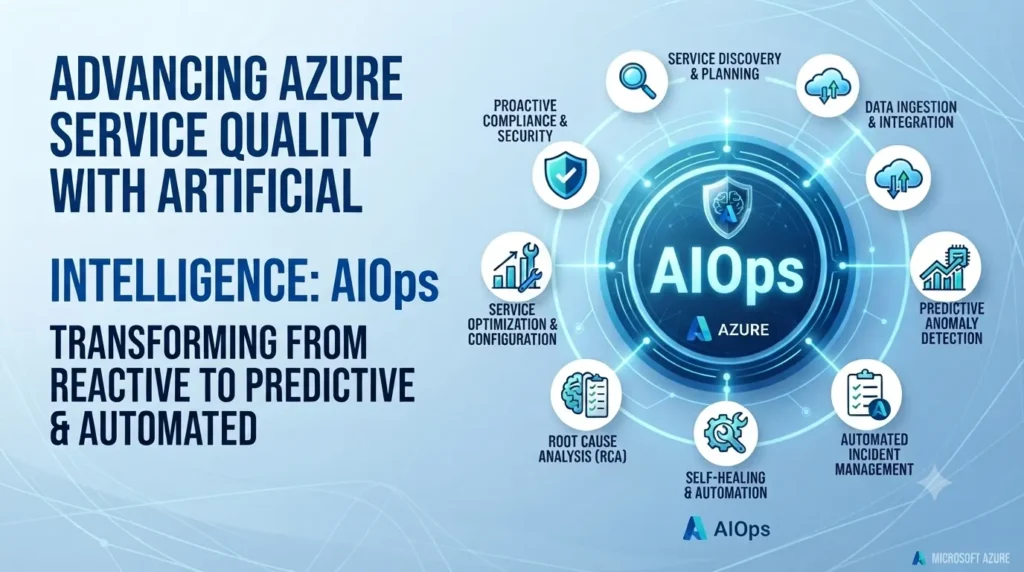
Advancing Azure service quality with artificial intelligence: AIOps

We are going to share our vision on the importance of infusing AI into our cloud platform and DevOps process. Gartner referred to something similar as AIOps (pronounced “AI Ops”) and this has become the common term that we use internally, albeit with a larger scope. Today’s post is just the start, as we intend to provide regular updates to share our adoption stories of using AI technologies to support how we build and operate Azure at scale. Why AIOps? There are two unique characteristics of cloud services: The ever-increasing scale and complexity of the cloud platform and systems The ever-changing needs of customers, partners, and their workloads To build and operate reliable cloud services during this constant state of flux, and to do so as efficiently and effectively as possible, our cloud engineers (including thousands of Azure developers, operations engineers, customer support engineers, and program managers) heavily rely on data to make decisions and take actions. Furthermore, many of these decisions and actions need to be executed automatically as an integral part of our cloud services or our DevOps processes. Streamlining the path from data to decisions to actions involves identifying patterns in the data, reasoning, and making predictions based on historical data, then recommending or even taking actions based on the insights derived from all that underlying data.   Figure 1. Infusing AI into cloud platform and DevOps. The AIOps vision AIOps has started to transform the cloud business by improving service quality and customer experience at scale while boosting engineers’ productivity with intelligent tools, driving continuous cost optimization, and ultimately improving the reliability, performance, and efficiency of the platform itself. When we invest in advancing AIOps and related technologies, we see this ultimately provides value in several ways: Higher service quality and efficiency: Cloud services will have built-in capabilities of self-monitoring, self-adapting, and self-healing, all with minimal human intervention. Platform-level automation powered by such intelligence will improve service quality (including reliability, and availability, and performance), and service efficiency to deliver the best possible customer experience. Higher DevOps productivity: With the automation power of AI and ML, engineers are released from the toil of investigating repeated issues, manually operating and supporting their services, and can instead focus on solving new problems, building new functionality, and work that more directly impacts the customer and partner experience. In practice, AIOps empowers developers and engineers with insights to avoid looking at raw data, thereby improving engineer productivity. Higher customer satisfaction: AIOps solutions play a critical role in enabling customers to use, maintain, and troubleshoot their workloads on top of our cloud services as easily as possible. We endeavor to use AIOps to understand customer needs better, in some cases to identify potential pain points and proactively reach out as needed. Data-driven insights into customer workload behavior could flag when Microsoft or the customer needs to take action to prevent issues or apply workarounds. Ultimately, the goal is to improve satisfaction by quickly identifying, mitigating, and fixing issues. Figure 2. AI for Cloud: AIOps and AI-Serving Platform. AIOps Moving beyond our vision, we wanted to start by briefly summarizing our general methodology for building AIOps solutions. A solution in this space always starts with data—measurements of systems, customers, and processes—as the key of any AIOps solution is distilling insights about system behavior, customer behaviors, and DevOps artifacts and processes. The insights could include identifying a problem that is happening now (detect), why it’s happening (diagnose), what will happen in the future (predict), and how to improve (optimize, adjust, and mitigate). Such insights should always be associated with business metrics—customer satisfaction, system quality, and DevOps productivity—and drive actions in line with prioritization determined by the business impact. The actions will also be fed back into the system and process. This feedback could be fully automated (infused into the system) or with humans in the loop (infused into the DevOps process). This overall methodology guided us to build AIOps solutions in three pillars. Figure 3. AIOps methodologies: Data, insights, and actions. AI for systems Today, we’re introducing several AIOps solutions that are already in use and supporting Azure behind the scenes. The goal is to automate system management to reduce human intervention. As a result, this helps to reduce operational costs, improve system efficiency, and increase customer satisfaction. These solutions have already contributed significantly to the Azure platform availability improvements, especially for Azure IaaS virtual machines (VMs). AIOps solutions contributed in several ways including protecting customers’ workload from host failures through hardware failure prediction and proactive actions like live migration and Project Tardigrade and pre-provisioning VMs to shorten VM creation time. Of course, engineering improvements and ongoing system innovation also play important roles in the continuous improvement of platform reliability. Hardware Failure Prediction is to protect cloud customers from interruptions caused by hardware failures.  Microsoft Research and Azure have built a disk failure prediction solution for Azure Compute, triggering the live migration of customer VMs from predicted-to-fail nodes to healthy nodes. We also expanded the prediction to other types of hardware issues including memory and networking router failures. This enables us to perform predictive maintenance for better availability. Pre-Provisioning Service in Azure brings VM deployment reliability and latency benefits by creating pre-provisioned VMs. Pre-provisioned VMs are pre-created and partially configured VMs ahead of customer requests for VMs. As we described in the IJCAI 2020 publication, As we described in the AAAI-20 keynote mentioned above,  the Pre-Provisioning Service leverages a prediction engine to predict VM configurations and the number of VMs per configuration to pre-create. This prediction engine applies dynamic models that are trained based on historical and current deployment behaviors and predicts future deployments. Pre-Provisioning Service uses this prediction to create and manage VM pools per VM configuration. Pre-Provisioning Service resizes the pool of VMs by destroying or adding VMs as prescribed by the latest predictions. Once a VM matching the customer’s request is identified, the VM is assigned from the pre-created pool to the customer’s subscription. AI for DevOps AI can boost engineering productivity and help in shipping

Advancing Azure service quality with artificial intelligence: AIOps Read More »