Welcome to Trident Information Systems!
Write us to - info@tridentinfo.com
Let's Socialize

Trident Information Systems

Microsoft Dynamics 365 Business Central dashboard managing finance, inventory, and business operations.

Microsoft Dynamics 365 Business Central: The All-in-One ERP Solution for Growing Businesses

Growing businesses reach a point where spreadsheets, disconnected accounting software, and manual processes stop being inconveniences and start being strategic risks. Inventory decisions made without real-time stock data. Financial close processes that take weeks instead of days. Sales teams working from customer records that do not reflect the latest service interactions. Supply chain planning that cannot see production capacity in real time. These are not just operational frustrations — they are competitive vulnerabilities in a market where speed and accuracy determine which businesses grow and which ones stall. Microsoft Dynamics 365 Business Central is built for exactly this inflection point. It is an all-in-one business management solution that connects finance, sales, supply chain, manufacturing, project management, and service operations on a single, intelligent platform — giving growing businesses the end-to-end visibility, automation depth, and real-time intelligence they need to make better decisions and accelerate growth. As the evolution of Microsoft Dynamics NAV — one of the world’s most widely deployed mid-market ERP platforms — Business Central combines the deep functional capability that NAV users trusted with the cloud-native architecture, embedded Power BI analytics, and Microsoft 365 integration that modern businesses require. Trident Information Systems is a certified Microsoft Dynamics 365 Business Central implementation partner — helping businesses across manufacturing, retail, professional services, and distribution implement, configure, and maximize the value of Business Central across India. This guide covers every major capability of Dynamics 365 Business Central — what it does, how it works, and what it delivers for growing businesses. What Is Microsoft Dynamics 365 Business Central? Microsoft Dynamics 365 Business Central is an all-in-one cloud ERP solution designed for small and mid-size businesses that need a single, integrated platform to manage their entire operation — without the complexity and cost of enterprise-grade ERP systems like Dynamics 365 Finance and Operations. The Evolution of Dynamics NAV: Built for Modern Business Business Central is the direct successor to Microsoft Dynamics NAV — one of the most successful mid-market ERP platforms in the world, with hundreds of thousands of deployments across more than 170 countries. If your organization is currently running Dynamics NAV, Business Central is your natural upgrade path — preserving the functional depth and business logic you depend on while adding cloud delivery, embedded AI, real-time analytics, and modern Microsoft 365 integration. For new implementations, Business Central offers the fastest path to a fully integrated business management platform — with preconfigured industry templates, rapid deployment methodology, and no-code customization tools that allow businesses to adapt the system to their specific processes without expensive custom development. Who Is Dynamics 365 Business Central Designed For? Business Central is designed for: Financial Management: Real-Time Intelligence Across Every Account Financial management is the operational core of Business Central — built to give finance teams the real-time visibility, automation, and control they need to close faster, report more accurately, and forecast with confidence. Make Informed Decisions With End-to-End Financial Visibility Business Central connects data across accounting, sales, purchasing, inventory, and customer interactions — creating a single, continuously updated financial picture of your business. Built-in Power BI dashboards display financial performance in real time, with drill-down capability from summary KPIs to individual transaction level: Accelerate Financial Close and Reporting Manual financial close processes consume weeks of finance team capacity every period — reconciling accounts, chasing documentation, and correcting errors that automated systems would have caught immediately. Business Central streamlines the entire close cycle: Improve Forecast Accuracy With Multi-Dimensional Analysis Business Central’s forecasting capabilities give finance and leadership teams the tools to model future performance with confidence: Core Financial Capabilities: GL, Fixed Assets, Receivables, and More Business Central’s financial module covers every dimension of business accounting: Customer Relationship Management: Deliver Value at Every Touchpoint Business Central includes integrated CRM capabilities — giving sales teams the customer intelligence, opportunity management tools, and productivity features they need to close more deals and build stronger relationships. Prioritize Leads, Track Interactions, and Close More Deals Boost Sales Productivity From Within Microsoft Outlook One of Business Central’s most practically impactful capabilities is its deep integration with Microsoft Outlook — the tool most sales professionals already spend the majority of their working day in: Dynamics 365 Business Central and Dynamics 365 Sales Integration For organizations that require deeper CRM functionality than Business Central’s native capabilities provide, Dynamics 365 for Sales integration is available natively — synchronizing sales orders, item availability, units of measure, and currencies between the two platforms in a few straightforward steps. Supply Chain Management: Automate, Optimize, and Protect Margins Business Central’s supply chain capabilities give purchasing, inventory, and operations teams the intelligence and automation to maintain optimal stock levels, avoid costly shortages, and protect margins through smarter procurement. Optimize Inventory Levels With Built-In Intelligence Avoid Stockouts and Lost Sales With Automated Replenishment Stockouts are one of the most costly and preventable operational failures in any product-based business. Business Central eliminates them through: Purchase and Sales Order Management Warehouse Management: Basic and Advanced Business Central’s warehouse management can be configured at different complexity levels — from basic order-by-order processing for simpler operations to advanced multi-order consolidation for high-volume distribution environments: Manufacturing: From Planning to Production to Delivery Business Central provides integrated manufacturing capabilities for companies that produce goods — from simple assembly operations through complex multi-level production with subcontracting. Production Planning and Capacity Optimization Subcontracting and Assembly Management Service Order Management: From After-Sales to Contract Management Business Central provides a complete service management framework — giving service operations teams the tools to manage service requests, service contracts, field technician dispatch, and pricing across the full service lifecycle: Project Management: Stay on Budget, Deliver on Time Business Central’s project management capabilities give professional services organizations and project-based businesses the tools to plan, track, and deliver customer projects profitably: Job Costing, Timesheets, and Resource Planning Analyze Project Profitability in Real Time Human Resources and Expense Management Business Central includes foundational human resources and expense management capabilities — giving HR and finance teams a single system for employee data and expense processing: Power

Microsoft Dynamics 365 Business Central: The All-in-One ERP Solution for Growing Businesses Read More »

Microsoft Dynamics 365 support dashboard helping businesses manage ERP support and issue resolution.

Microsoft Dynamics 365 Support Plans in India: Find the Right Plan for Your Business

Your Microsoft Dynamics 365 system is only as valuable as the support structure behind it. Whether you have just completed a Dynamics 365 implementation, are managing a complex multi-module environment that requires ongoing optimization, or are running a business-critical operation where system downtime is simply not an option — having the right support partner in place is not a secondary consideration. It is a fundamental business requirement. Trident Information Systems offers a comprehensive range of Microsoft Dynamics 365 support plans for Indian organizations — from fully dedicated on-site resources for large, complex deployments to flexible incident-based packages for businesses with occasional support needs. Our support services extend beyond break-fix assistance to include training, change request management, system migration, implementation support, and version upgrades — giving your organization a single trusted partner for every phase of your Dynamics 365 journey. This page covers all six of Trident’s Dynamics 365 support plans — what each includes, who it is best suited for, and how to choose the right option for your organization’s size, complexity, and support frequency. Why Choose Trident for Microsoft Dynamics 365 Support in India A Decade of Dynamics 365 Implementation and Support Experience Trident Information Systems has been implementing and supporting Microsoft Dynamics 365 — and its predecessor, Dynamics AX — for over a decade. That depth of platform experience means our support consultants are not learning your system while you wait for a resolution. They arrive with the diagnostic knowledge, platform expertise, and business process understanding to identify root causes quickly and resolve issues effectively. Trident Information Systems is a trusted consulting and technology services partner with deep expertise in driving digital transformation across Manufacturing, Retail, Hospitality, Logistics, Services, and more. With a strong presence in India, the U.S., UK, UAE, Africa, and a rapidly expanding footprint in Southeast Asia, Trident has successfully delivered over 250 customer engagements. These include smart manufacturing with intelligent shop floor automation, retail digitalization spanning 3,000+ stores, and IoT-driven asset management covering 400+ assets across 150+ locations. Beyond infrastructure and operations, Trident excels in business applications ( Microsoft Dynamics 365 ERP, CRM, O365, Azure, Power BI, Power Platform, Salesforce ) and Data & AI services in collaboration with Microsoft and IBM. What truly sets them apart is their exclusive Managed Talent Services unit, designed to help organizations jumpstart digital transformation engagements quickly and effectively—bridging the gap between strategy and execution with the right skills at the right time. Support, Training, Migration and Implementation — All Under One Roof Many organizations manage multiple vendor relationships for their Dynamics 365 environment — one partner for support, another for training, a third for customization and change requests. This fragmentation creates communication gaps, accountability gaps, and unnecessary cost. Trident provides the complete spectrum of Dynamics 365 services from a single point of accountability: Our 6 Microsoft Dynamics 365 Support Plans for Indian Organizations Trident’s support plans are designed for Indian organizations managing their Indian operations on Microsoft Dynamics 365. Every plan is structured to provide clear scope, predictable cost, and transparent commitment — so you know exactly what you are getting and exactly what it will cost. Plan A — Full-Time Dedicated Resource: Maximum Support Coverage Best for: Large organizations with high-volume, continuous support needs or complex Dynamics 365 environments requiring frequent change requests. Plan A allocates a dedicated Trident consultant exclusively to your organization — available 100 percent of their working time to provide support and manage change requests. This is the highest-coverage support arrangement Trident offers, and it is designed for organizations where Dynamics 365 is mission-critical and support needs are frequent. Key features of Plan A: Plan B — Shared Resource: Flexible Monthly Support Commitment Best for: Mid-size organizations with regular but not continuous support needs, where a predictable monthly commitment is more cost-effective than a full-time dedicated resource. Plan B provides a minimum commitment of 5 support days per month — drawn from a shared Trident resource pool. Support needs can arise at any point during the month, in single or multiple instances, giving your organization flexibility in how and when the support days are consumed. Key features of Plan B: Plan C — Time Package: 200 Hours Over 12 Months Best for: Organizations with moderate, unpredictable support needs that want a pre-purchased block of hours they can draw on throughout the year — without committing to a monthly minimum. Plan C provides 200 hours of support over a 12-month contract period — giving your organization a substantial support bank to draw on whenever needs arise, with the flexibility of a shared resource model. Key features of Plan C: Plan D — Incident-Based Priority Support: Next Business Day Response Best for: Organizations with occasional, unpredictable support needs who require a guaranteed fast response time when issues do arise — without committing to hours or days in advance. Plan D provides 50 support incidents with a guaranteed next business day response commitment — ensuring that when you log an issue, you receive a response within one business day without exception. Key features of Plan D: Plan E — Incident-Based Normal Support: Cost-Effective Coverage Best for: Organizations with occasional, low-urgency support needs where response time is less critical than cost efficiency — the most cost-effective entry point in Trident’s support portfolio. Plan E provides 50 support incidents with a 2 business day response commitment — offering solid coverage for organizations whose support needs are infrequent and non-time-critical. Key features of Plan E: Plan F — On-Site Dedicated Resource: Hands-On, In-Person Support Best for: Organizations that require a physical Trident presence at their offices — for user hand-holding, day-to-day coordination, and on-site operational support — in addition to one of the specialist support plans above. Plan F is an add-on plan designed to work alongside any of Plans A through E. Under Plan F, Trident deploys a full-time consultant physically at the client’s site — providing continuous in-person presence for operational support activities. Key features of Plan F: Comparing Trident’s Dynamics 365 Support Plans Plan

Microsoft Dynamics 365 Support Plans in India: Find the Right Plan for Your Business Read More »

Microsoft Dynamics 365 Integration Services connecting business applications, data, and workflows.

Microsoft Dynamics 365 Integration Services: Connect Your Applications, Data, and Processes — Seamlessly

Every enterprise runs on more applications than it can easily count. A CRM here. An ERP there. A website that does not talk to either. A mobile app that syncs to a database once a night. A marketing platform that receives a weekly export. A finance system that requires manual reconciliation with the sales data that should be feeding it automatically. This is not a technology problem. It is a strategy problem — and it compounds with every new system your business adds. Microsoft Dynamics 365 integration services solve this at the architectural level. By connecting your Dynamics 365 environment — and every other application, data source, and process in your business ecosystem — through Microsoft Azure, Power Automate, and Microsoft Dataverse, Trident enables your organization to operate with the speed, accuracy, and agility that modern business demands. Whether you are implementing Dynamics 365 for the first time, upgrading from a legacy ERP, or trying to rationalize a complex multi-system environment that has grown organically over years — Trident’s integration consultants will architect a solution that ensures your data flows where it needs to, when it needs to, without manual intervention, without data loss, and without the security risks that come from poorly designed integration architectures. This is not about connecting systems. It is about connecting your business. Why Seamless Integration Is Now a Business Imperative The Hidden Cost of Disconnected Systems and Data Silos Most businesses underestimate the cost of their disconnected systems — because the cost is distributed across dozens of daily processes that have been manual for so long, nobody questions them anymore. The sales team copies data from the CRM into a spreadsheet to send to operations. The finance team waits for the month-end export from the sales system to reconcile revenue. The warehouse team checks inventory in one system and updates orders in another. The marketing team sends campaigns to a list that was last synchronized three days ago. Each of these manual steps is a cost: time spent, errors introduced, decisions delayed, and opportunities missed. At enterprise scale, the aggregate cost of data silos is enormous — and entirely preventable with the right integration architecture. What True Integration Looks Like in a Modern Business True integration is not connecting two systems with a point-to-point API that breaks every time either system updates. It is a resilient, scalable integration architecture that: This is the integration architecture that Trident designs, builds, and maintains for organizations running Microsoft Dynamics 365 across India. Trident’s Microsoft Dynamics 365 Integration Approach Right Data, Right Place, Right Time — Every Time The success of any ERP or CRM implementation depends fundamentally on data quality and data availability. A Dynamics 365 deployment that does not receive accurate, timely data from every connected system is a Dynamics 365 deployment that is not delivering its full value. Trident’s integration philosophy is built around a simple principle: the right data, in the right place, at the right time. Our integration consultants work with your team to understand every data flow your business depends on — and architect an integration solution that makes those flows automatic, reliable, and auditable. Our most common integration scenarios include: On-Premises, Cloud, and Hybrid Integration Capabilities Not every business is ready to move everything to the cloud simultaneously — and not every system can be. Trident’s integration capabilities cover the full deployment spectrum: Microsoft Azure: The Integration Foundation Azure Integration Services: Power, Security, and Global Scale Microsoft Azure is the cloud platform that powers Trident’s integration solutions — providing the security, scalability, and global infrastructure that enterprise integration requires. Azure’s integration services give organizations access to: Hybrid Cloud Connectivity: Maximize Value From Existing Investments One of the most compelling capabilities of Azure’s integration platform is its hybrid connectivity — allowing organizations to connect on-premises systems to cloud services without replacing existing infrastructure. The Azure On-Premises Data Gateway enables secure, encrypted connectivity between cloud-based Power Automate workflows and on-premises data sources — including databases, file systems, and legacy applications — without opening inbound firewall ports or compromising on-premises security posture. For organizations managing a mixed environment of legacy on-premises systems and modern cloud applications during a digital transformation journey, this hybrid connectivity is the bridge that makes a phased approach viable. Microsoft Power Automate: Automate Workflows Without Code Microsoft Power Automate (formerly Microsoft Flow) is the workflow automation layer that connects everyday business applications and automates repetitive processes — without requiring any code. For business users who need to automate a specific process and for IT teams building enterprise integration workflows, Power Automate provides a no-code interface for creating automated workflows between hundreds of supported applications and services. Multi-Step Workflows and Conditional Logic Power Automate’s workflow engine goes far beyond simple “if this then that” automation. Enterprise-grade workflows can include: Practical examples of Power Automate integration for Dynamics 365: Secure Data Management and Loss Prevention Data security is not an afterthought in Power Automate — it is built into the architecture: On-Premises Data Gateway: Connect Legacy Systems to the Cloud The On-Premises Data Gateway for Power Automate enables secure connectivity to on-premises data sources — including SQL Server, Oracle, SharePoint on-premises, and file system sources — without exposing those systems directly to the internet. This capability is critical for organizations in the middle of a digital transformation journey — where some systems have moved to the cloud but others remain on-premises for operational, compliance, or cost reasons. The gateway acts as a secure bridge — enabling cloud-based workflows to access on-premises data as if it were a cloud service. Microsoft Dataverse: The Single Source of Truth for Your Business Data Microsoft Dataverse (formerly Common Data Service) is the unified data platform at the heart of the Microsoft Dynamics 365 and Power Platform ecosystem — providing a standardized, secure, and governed data layer that every connected application can use as a shared source of truth. A Unified Data Layer Across Every Business Application Rather than each application maintaining its own separate database

Microsoft Dynamics 365 Integration Services: Connect Your Applications, Data, and Processes — Seamlessly Read More »

LS Retail software dashboard managing POS, inventory, sales, and retail operations in real time.

LS Retail Software Solution: The All-in-One Retail ERP and POS Platform That Sharpens Your Competitive Edge

The retailers growing fastest right now are not the ones with the most stores or the biggest marketing budgets. They are the ones with the best technology — and specifically, the best-connected technology. When your POS system, inventory management, loyalty program, e-commerce platform, and head office operations run on separate, loosely integrated systems, you are not just managing inefficiency. You are making every strategic decision with incomplete, delayed, or conflicting data. You are losing sales to stockouts that a connected inventory system would have prevented. You are losing customers to competitors whose personalized offers are powered by data you are collecting but cannot use. LS Retail — the industry-leading end-to-end retail management solution built on Microsoft Dynamics 365 Business Central — solves this at the architectural level. Rather than patching together multiple applications, LS Retail gives retailers a single platform that covers every aspect of the retail operation: from the POS terminal on the shop floor to the head office dashboard, from online store management to supplier replenishment, from loyalty program management to loss prevention. One application. One database. One unified view of your entire retail business — in real time. Trident Information Systems is a certified LS Retail and Microsoft Dynamics 365 implementation partner, helping retail businesses across India implement, configure, and maximize the competitive value of LS Retail. Why Retail Competition Demands a Smarter Technology Platform The Real Cost of Running Retail on Disconnected Systems Most retail businesses grow into their technology problems gradually. A standalone POS system here. An inventory management tool there. An e-commerce platform that syncs to the ERP once a night. A loyalty program that does not talk to the in-store system. By the time the fragmentation becomes visible, it is deeply embedded in daily operations. The cost of this disconnection is significant — and largely invisible until you try to measure it: Every one of these costs is preventable — with the right unified retail platform. What Today’s Shoppers Expect — and What Legacy Systems Cannot Deliver The modern retail customer moves fluidly between channels. They browse online, check in-store availability on their phone, visit the store, and expect the sales associate to know their purchase history and loyalty status instantly. They want personalized offers based on what they actually buy. They want flexible fulfillment — buy online, collect in-store, or return anywhere. Legacy retail systems — designed when online and offline were separate channels — cannot deliver this experience. Only a platform that unifies every channel on a single application can give customers the seamless, personalized experience that earns loyalty and repeat business in today’s market. What Is LS Retail? The End-to-End Retail Management Solution LS Retail is an internationally deployed, end-to-end retail software solution designed for independent stores, retail chains, and multi-format retail operations of every size. It is one of the world’s most widely used retail management platforms — covering POS, store management, inventory, merchandising, demand planning, loyalty, and all head office functions within a single, unified application. Single Application From POS Terminal to Head Office The defining characteristic of LS Retail is its single-application architecture. Unlike retail technology stacks built from multiple integrated products, LS Retail operates on a single database and a single application framework — meaning: This architecture is what makes true omnichannel retail — and true real-time retail management — operationally achievable. LS Retail on Microsoft Dynamics 365 Business Central LS Retail is built on and powered by Microsoft Dynamics 365 Business Central — giving retailers the combined benefit of LS Retail’s deep retail-specific functionality and the enterprise-grade financial management, supply chain, and analytics capabilities of Business Central. This means your retail operation runs on a platform that: Why Retailers Choose LS Retail Software Solutions Fully Integrated All-in-One Software: No More Disconnected Systems LS Retail eliminates the technology fragmentation that plagues most retail operations by delivering every retail management function within a single, centrally managed platform: Omnichannel Retail Strategy: One Experience Across Every Channel Consumer behavior changes faster than most retail systems can adapt. LS Retail’s omnichannel capabilities ensure your business can deliver a consistent, personalized customer experience across every touchpoint — without rebuilding your technology for each new channel: Superior Customer Experience That Builds Loyalty and Repeat Business The competitive advantage in retail increasingly comes down to the quality of the customer experience — and that experience is only as good as the data and technology powering it. LS Retail gives your team the tools to deliver outstanding service at every touchpoint: LS Retail Head Office Capabilities The head office module is the operational brain of the LS Retail platform — giving merchandising, buying, marketing, and operations teams centralized control over every aspect of the retail business. Product Lifecycle and Item Management Pricing, Promotions, Campaigns, and Loyalty Pricing and promotional management is one of the most operationally demanding functions in retail — particularly for chains managing multiple price zones, complex promotional mechanics, and loyalty reward structures simultaneously. LS Retail delivers: Replenishment, Vendor Performance, and Loss Prevention LS Retail Back Office Capabilities The back office module gives store managers and operations teams the tools to run their specific location efficiently — with full visibility into store performance, inventory, and cash position. Store Operations Dashboard and POS Management Cash Management, Stock Control, and End-of-Day Processing LS Retail Store Front Office and POS Capabilities The POS module is where LS Retail’s integration advantage is most immediately visible to customers — and most commercially valuable to retailers. A fast, reliable, feature-rich POS that is connected to real-time inventory, loyalty, and product data transforms the checkout experience from a transaction into a service touchpoint. Fast Checkout and Flexible Payment Options Loyalty Programs, Cross-Selling, and Special Orders at POS LS Retail Mobile Device Capabilities Mobile capability in LS Retail extends the power of the platform beyond fixed POS terminals and back office workstations — giving store staff the tools they need anywhere on the shop floor or in the stockroom: LS Retail for Retail Chain Management: Multi-Site Control From One

LS Retail Software Solution: The All-in-One Retail ERP and POS Platform That Sharpens Your Competitive Edge Read More »

Microsoft Dynamics 365 AI and Mixed Reality Applications: How They Are Transforming Business Operations in 2026

In September 2018, Microsoft made a set of announcements that signaled a fundamental shift in how business applications would work — not just for Dynamics 365, but for enterprise software as a category. The introduction of Microsoft Dynamics 365 AI applications — covering Sales, Customer Service, and Market Insights — and the launch of Dynamics 365 Mixed Reality applications including Remote Assist and Layout, represented the beginning of a journey from static, report-based business software to intelligent, predictive, and spatially-aware business applications. Six years later, that journey has accelerated beyond what even Microsoft’s 2018 roadmap envisioned. The AI capabilities that required specialist data science teams to configure in 2018 are now available out-of-the-box through Microsoft Copilot — embedded natively across the entire Dynamics 365 suite. The mixed reality applications that required a dedicated HoloLens device are now extended through mobile AR, remote collaboration, and digital twin technologies that connect physical and digital operations at scale. This guide covers the full arc — from the original 2018 announcements through the 2026 state of Microsoft Dynamics 365 AI and mixed reality applications — and what it means for organizations evaluating or expanding their Dynamics 365 investment today. The Vision Behind Microsoft Dynamics 365 AI: Breaking CRM and ERP Silos From Disconnected Systems to Unified Intelligent Business Applications The foundational problem that Dynamics 365 AI was built to solve has not changed since 2018 — it has only become more urgent. Organizations continue to struggle with data locked in disconnected systems, decisions made without real-time intelligence, and employees spending productive capacity on tasks that AI can now handle automatically. Microsoft’s original vision for Dynamics 365 was to tear down the traditional silos between CRM and ERP — creating unified, intelligent, adaptable business applications built natively on Microsoft Azure and integrated with Office 365. The AI and mixed reality announcements of 2018 were the first major expression of what “intelligent” would actually mean in practice. The core requirements then — and now — are: How Microsoft’s AI Philosophy Has Evolved From 2018 to 2026 In 2018, Microsoft’s AI for Dynamics 365 was primarily about surfacing insights from existing data — pipeline analysis, customer sentiment, social listening. It was impressive for its time, but required significant configuration and data science expertise to realize its full potential. By 2026, the model has fundamentally changed. Microsoft Copilot — built on large language model AI and integrated across every Dynamics 365 application — makes AI assistance accessible to every user, in every role, without configuration, code, or specialist expertise. The shift is from AI that produces insights to AI that takes action alongside the user — drafting emails, summarizing cases, generating forecasts, reconciling accounts, and guiding complex tasks in real time. Microsoft Dynamics 365 AI Applications: Then and Now Dynamics 365 AI for Sales: From Pipeline Analysis to Copilot-Assisted Selling In 2018: Dynamics 365 AI for Sales introduced AI-powered pipeline analysis — helping sales managers understand deal health, prioritize their team’s time, and surface coaching opportunities based on sales data patterns. It was analytical: telling sales leaders what had happened and what was likely to happen. In 2026: Dynamics 365 Sales with Microsoft Copilot is operational: AI that actively assists sellers in real time. Copilot for Sales now: The progression from analytical to operational AI in Dynamics 365 Sales represents one of the most significant improvements in sales productivity technology in the past decade. Dynamics 365 AI for Customer Service: From Virtual Agents to Generative AI Support In 2018: Dynamics 365 AI for Customer Service introduced natural language understanding to surface automated insights for customer service agents — and introduced the concept of virtual agents that could handle common customer inquiries without human intervention, without requiring in-house AI expertise or custom code. In 2026: Dynamics 365 Customer Service with Copilot has transformed what AI-assisted customer service means: Dynamics 365 AI for Market Insights: From Social Listening to Predictive Intelligence In 2018: Dynamics 365 AI for Market Insights gave marketing teams a tool to monitor web and social data — understanding brand sentiment, tracking competitor conversations, and identifying emerging trends in customer discussions. In 2026: The market insights and intelligence capabilities within Dynamics 365 have evolved significantly — now embedded within Dynamics 365 Customer Insights and Dynamics 365 Marketing (now Customer Journey): Microsoft Copilot in Dynamics 365: The Next Generation of Business AI Microsoft Copilot represents the most significant evolution in Dynamics 365 AI capability since the original 2018 announcements — and it changes the fundamental model of how AI is used in business applications. Where 2018 AI required users to navigate to an insights dashboard and interpret what the AI had found, Copilot is embedded directly in the workflow — present at the moment a user is doing their work, offering assistance, generating content, and taking action without requiring the user to switch context or interpret a separate analytical tool. What Microsoft Copilot Does Across the Dynamics 365 Suite Copilot is now embedded across every major Dynamics 365 application: Dynamics 365 Application What Copilot Does Sales Meeting prep, email drafting, deal summaries, pipeline coaching Customer Service Case summaries, knowledge search, response drafting, sentiment analysis Finance Anomaly detection, reconciliation assistance, variance explanation Supply Chain Disruption alerts, demand forecast adjustment, supplier risk flagging Field Service Work order summarization, next-best-action, scheduling optimization Marketing Content generation, segment suggestions, campaign performance explanation Project Operations Risk identification, resource recommendation, status report generation Copilot for Sales: AI-Assisted Deal Management and Coaching Copilot for Dynamics 365 Sales gives sales professionals a capable AI collaborator that works alongside them throughout every stage of the sales process. Before a meeting, Copilot generates a preparation brief. During a call, conversation intelligence captures key moments. After a meeting, Copilot drafts the follow-up email and updates the CRM record automatically. For sales managers, Copilot surfaces team performance insights, identifies coaching opportunities, and flags deals that need attention — without requiring the manager to manually review every opportunity in the pipeline. Copilot for Customer Service: Generative AI That Resolves Faster The

Microsoft Dynamics 365 AI and Mixed Reality Applications: How They Are Transforming Business Operations in 2026 Read More »

LS Hospitality dashboard managing restaurant POS, kitchen operations, inventory, and guest services.

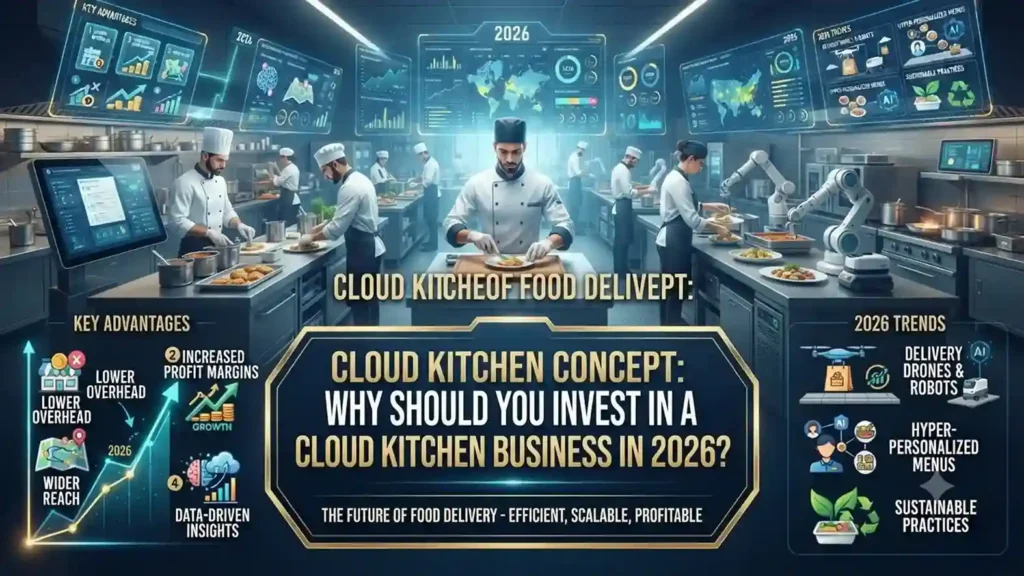
LS Hospitality: The Restaurant Management Software That Connects Your Entire Food Service Operation on Microsoft Dynamics 365

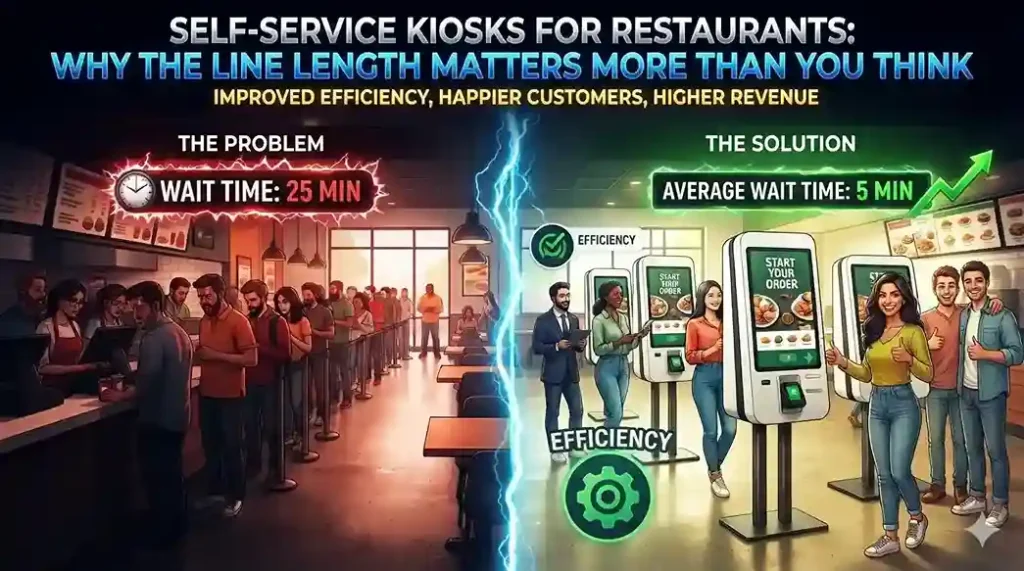
Running a restaurant has always been demanding. Running one in 2025 — where customers expect online ordering, mobile payments, personalized loyalty rewards, and flawless service simultaneously — demands technology that was simply not available to most operators a decade ago. The gap between what guests now expect and what most restaurant technology delivers is widening. Customers who order through an app on Tuesday expect the same loyalty points when they walk in on Friday. A table of four who order separately expect the split bill to process in seconds. A kitchen managing 200 covers on a Saturday night cannot afford miscommunication between the floor and the pass. LS Hospitality — the restaurant and food service management solution built on Microsoft Dynamics 365 Business Central — is designed for exactly this operational environment. It connects your POS terminals, kitchen management, table service, menu configuration, loyalty programs, online ordering, and head office operations on a single unified platform — giving every member of your team the real-time information they need to deliver outstanding hospitality, every service. Whether you operate a single fine dining restaurant, a chain of quick-service outlets, a café group, or a multi-concept hospitality business, LS Hospitality delivers the operational intelligence, service speed, and customer engagement tools that modern food service demands. Trident Information Systems is a certified LS Hospitality and Microsoft Dynamics 365 implementation partner — helping restaurants and hospitality businesses across India implement and maximize the value of this industry-leading platform. Why the Restaurant and Food Service Industry Needs Smarter Technology Now The Five Forces Reshaping How Restaurants Operate in 2026 The restaurant industry is navigating a convergence of five simultaneous shifts — any one of which would require a technology response on its own. Together, they are making the case for a unified, modern hospitality management platform more urgent than ever: 1. The omnichannel expectation — online ordering, mobile payment, in-app loyalty, table ordering via QR code, and dine-in service are no longer separate experiences. Guests expect them to work together seamlessly — with their preferences, history, and rewards recognized across every format. 2. The experience standard — in hospitality, the product is the experience. Operators who deliver consistently high-quality, frictionless service build the loyalty and word-of-mouth that sustains a restaurant long-term. Operators who do not — regardless of food quality — lose customers to those who do. 3. The pace of change — consumer preferences, dietary requirements, delivery platforms, payment methods, and social media dynamics change faster than ever before. Restaurant operators need a technology platform that evolves continuously — not one that requires expensive custom development every time the market shifts. 4. The social dining phenomenon — from food photography on Instagram to review platforms like Google, TripAdvisor, and Zomato, dining has become a social experience that extends far beyond the restaurant walls. Operators who manage their digital presence actively and use data to improve the experience will consistently outperform those who do not. 5. The analytics imperative — the restaurants making the best decisions about menu engineering, staff scheduling, promotional pricing, and customer retention are the ones with access to real-time, accurate data about their operation. Analytics is no longer a back-office function — it is a frontline competitive tool. The Real Cost of Running a Restaurant on Disconnected Systems Most restaurant operations have grown their technology stack organically — a standalone POS here, a reservation system there, a separate loyalty app, an accounting system that receives a manual export at the end of the week. This fragmentation has hidden costs that compound over time: A unified hospitality management platform eliminates every one of these costs. What Is LS Hospitality? Restaurant Management Software Built for Every Format LS Hospitality is an end-to-end restaurant and food service management solution — connecting POS, kitchen management, table service, menu management, loyalty, online ordering, and head office operations within a single unified application built on Microsoft Dynamics 365 Business Central. From Fine Dining to Quick Service: One Platform for Every Hospitality Setup LS Hospitality is designed to serve the full spectrum of food service formats — with configurable workflows that adapt to the operational requirements of each format without requiring separate systems: LS Hospitality on Microsoft Dynamics 365 Business Central LS Hospitality is built on and powered by Microsoft Dynamics 365 Business Central — giving hospitality operators the combined benefit of deep restaurant-specific functionality and enterprise-grade financial management, supply chain, and analytics capabilities. This means your restaurant operation runs on a platform that: Point of Service — Not Just Point of Sale The POS in a restaurant is fundamentally different from a retail POS. It is not just a payment terminal — it is the primary communication hub between the guest, the floor team, and the kitchen. LS Hospitality is built with this reality at its core. A POS That Informs, Orders, Pays, and Manages — All at Once The LS Hospitality POS is designed as a complete point of service — not simply a point of sale. From a single interface, your floor staff can: Superior Customer Service From Every Corner of the Restaurant LS Hospitality’s mobile POS capability means the point of service moves with your staff — not the other way around. Orders can be taken tableside on a handheld device, payments processed at the table without the guest leaving their seat, and loyalty enrollments completed during the dining experience rather than as an afterthought at checkout. This mobility transforms the service dynamic — reducing the friction between guest request and staff response, eliminating the queues at fixed POS terminals, and giving your team the tools to deliver genuinely attentive hospitality rather than transaction-focused service. Table and Guest Management: Maximize Covers, Minimize Wait Times Effective table management is the operational foundation of a profitable restaurant. Every table turn represents revenue. Every guest left waiting represents a potential lost visit. LS Hospitality gives your front-of-house team the visual tools and real-time information to optimize seating, service, and turnover across every service. Graphic Table Management for

LS Hospitality: The Restaurant Management Software That Connects Your Entire Food Service Operation on Microsoft Dynamics 365 Read More »

Customer service team using Microsoft Dynamics 365 to improve productivity and response times.

How SMRT Doubled Customer Service Productivity With Microsoft Dynamics 365: A Real-World Case Study

What does it look like when Microsoft Dynamics 365 Customer Service genuinely transforms an organization’s service capability? Not in theory — but in practice, at scale, with measurable outcomes that can be independently verified? It looks like SMRT — Singapore’s largest transport network operator, managing over one billion rail and bus journeys per year — handling 2.3 times more customer service cases with the same team after implementing Dynamics 365. It looks like new innovation projects going from concept to live deployment in under three months. And it looks like over 1,000 customer service staff moving from manual case sorting to automated, dashboard-driven service management — delivering faster, more personal service across email, calls, WhatsApp, Facebook, SMS, fax, and letters simultaneously. The SMRT case study is one of the most compelling documented proofs of what Microsoft Dynamics 365 Customer Service can deliver when implemented correctly — and it remains highly relevant today, because the core challenge SMRT faced in 2016 is the same challenge that customer service organizations across every industry face in 2026: managing rising contact volumes across an ever-expanding range of channels, with the need for real-time visibility, automated case management, and the agility to launch new service initiatives quickly. This article covers the full SMRT story — the challenge, the solution, and the results — and contextualizes it against what Microsoft Dynamics 365 Customer Service delivers in 2026, with the addition of AI-powered Copilot capabilities that make those 2016 results a baseline rather than a ceiling. About SMRT: Singapore’s Largest Transport Network Operator One Billion Journeys Per Year — and the Customer Service Challenge Behind Them SMRT is Singapore’s principal public transport network operator — responsible for the rail and bus infrastructure that keeps one of the world’s most efficient cities moving. With 102 train stations and over 1,400 buses, SMRT delivers more than one billion journeys per year — making it one of the highest-volume public transport operations in Southeast Asia. Behind that operational scale sits an equally significant customer service operation. Every day, more than 1,000 employees are involved in managing customer enquiries, complaints, compliments, and feedback — across multiple channels, in real time, with the expectation of world-class responsiveness that Singapore’s residents and visitors demand. For Dave Ong, Head of Passenger Service at SMRT, the mission is clearly defined: “Our mission is to enhance the lives of Singapore citizens with a transport system that is safe, reliable and customer-centric.” Delivering on that mission — consistently, at scale, across every channel a customer might use — required a technology transformation. The Challenge: Managing 1,000+ Customer Service Staff Across Fragmented Channels Multi-Channel Complexity: Email, Calls, WhatsApp, Facebook, SMS and More By 2016, SMRT’s customers were contacting the organization through a wide and growing range of channels — email, phone calls, fax, letters, WhatsApp, Facebook, and SMS. Each channel represented a different queue, a different workflow, and a different set of management challenges. Without a unified system to aggregate all of these interactions, SMRT’s customer service team faced the challenge that faces every organization managing multi-channel contact at scale: the risk that cases fall through the cracks, response times vary by channel, and management has no real-time visibility into how the overall operation is performing. “Today, customers contact us through many different ways — emails, calls, faxes, letters, WhatsApp, Facebook and SMS,” says Dave Ong. “We need a case-handling system that helps us manage new processes for handling all these interactions, and a reporting system that helps us visualize our performance in real time.” The manual effort involved in sorting, routing, and tracking cases across all these channels was consuming staff capacity that should have been directed toward actual customer service. Hundreds of lost-and-found cases added further complexity — requiring dedicated workflows and tracking across multiple teams and locations. The Innovation Problem: New Projects Taking Too Long to Deploy Beyond day-to-day customer service management, SMRT had an ambition to launch a series of innovation projects — new service initiatives that required custom business applications, document management, stakeholder engagement workflows, and reporting capabilities. Under the old approach, each new project required SMRT to source, evaluate, procure, and deploy new technology — a process that was slow, expensive, and required capital investment in new infrastructure. The organization needed a platform that would let them build, test, and deploy new applications quickly, without infrastructure overhead. “When setting up an innovation project, we want a system that would allow us to adapt and be more creative,” says Mr. Ong. The Solution: Microsoft Dynamics 365 Customer Service in the Cloud Why SMRT Chose Dynamics 365 Over Other CRM Platforms In late 2016, SMRT selected Dynamics CRM Online — now part of Microsoft Dynamics 365 Customer Service — as the foundation for its enterprise customer service and engagement transformation. The cloud-based deployment provided three critical advantages that on-premises alternatives could not: With implementation support from Customer Capital Consulting, SMRT configured Dynamics 365 to serve as the single, integrated system for all customer interaction management across the organization. One Unified System for Every Customer Interaction The implementation transformed how SMRT’s customer service operation handled the full volume of interactions it received every day. The new Dynamics 365 environment: Results: How Dynamics 365 Transformed SMRT’s Customer Service Operation 2.3x Productivity Increase: Managing More Cases With the Same Team The headline result from SMRT’s Dynamics 365 implementation is one of the most compelling productivity metrics documented in any CRM case study: a 2.3-times increase in the volume of customer cases managed by the same team. “Our ability to handle public feedback volume has increased 2.3 times,” says Dave Ong. “Dynamics 365 reduces manual effort and frees up customer-service staff to handle cases with a personal touch. This helps us achieve our strategic goal of making all interactions with our contact centre more personal.” This result is not primarily about working faster — it is about eliminating the non-productive overhead that was consuming staff capacity before the implementation. When automated workflows handle case sorting, routing, reminders,

How SMRT Doubled Customer Service Productivity With Microsoft Dynamics 365: A Real-World Case Study Read More »

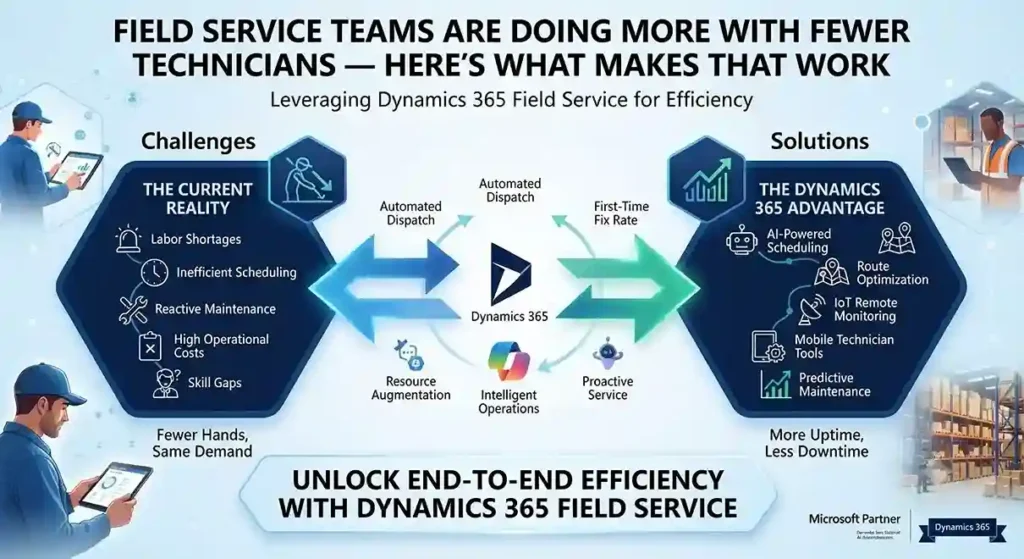
Microsoft Dynamics 365 Connected Field Service dashboard monitoring predictive maintenance and service operations.

Microsoft Dynamics 365 Connected Field Service: How Industry Leaders Are Moving From Break-Fix to Predictive Service

What if your field technician could fix a problem before the customer even knew it existed? That is not a futuristic scenario. It is what Microsoft Dynamics 365 Connected Field Service — powered by IoT integration through Microsoft Azure — is delivering for industry leaders right now. And organizations that have made the switch are seeing return on investment in as little as four months. Field service has always been the moment of truth in customer relationships. The technician who arrives on time, with the right parts, with full knowledge of the customer’s history — or doesn’t — defines how that customer feels about your brand for years. But the traditional break-fix model of field service is no longer a viable competitive strategy. Customers today expect 100 percent uptime, hyper-speed service delivery, and proactive care that anticipates problems before they escalate. In an environment where competitive pressure is intensifying across every industry — from manufacturing and utilities to telecommunications and retail — field service has become a primary differentiator. The organizations winning are those that have moved from reactive to predictive, from disconnected to connected, and from legacy systems to intelligent, cloud-based field service platforms. This guide covers everything you need to know about Microsoft Dynamics 365 Connected Field Service — what it is, how it works, what real organizations have achieved with it, and how Trident Information Systems can implement it for your operation. The Field Service Revolution: Why the Old Model Is Failing From Break-Fix to Predictive: The New Standard for Field Service The break-fix model of field service — wait for something to fail, dispatch a technician, fix the problem, send the invoice — was the industry standard for decades. It worked adequately in a world where customers had limited alternatives and modest expectations. Neither of those conditions applies today. Modern customers expect continuous uptime, not reactive repairs. They expect service providers to know about potential failures before they occur — and to resolve them without disruption to operations. In industries like utilities, manufacturing, and facilities management, an unplanned outage or equipment failure is not just an inconvenience. It is a financial event, a safety risk, and a potential contract termination. The shift from break-fix to proactive and predictive service is not a trend — it is a market requirement. And it is only possible with the right connected technology infrastructure. Why Customer Experience Has Become the Frontline of Field Service Field service is no longer just an operational function. It is a customer experience function — and in many industries, it is the single most important touchpoint in the entire customer relationship. The field technician who arrives at a customer’s facility is representing your brand at its most direct and personal. What they know, what tools they have, how quickly they resolve the issue, and how well they communicate throughout the process determines whether that customer renews their contract, refers your company to others, or starts evaluating your competitors. This is why leading organizations across retail, telecommunications, manufacturing, utilities, and professional services are investing in connected field service — not just as an operational upgrade, but as a strategic investment in customer retention and competitive differentiation. What Is Microsoft Dynamics 365 Connected Field Service? Microsoft Dynamics 365 Connected Field Service is an intelligent, IoT-powered field service management solution that connects physical assets, field technicians, customer data, and service operations on a single platform — enabling organizations to shift from reactive maintenance to proactive, predictive service delivery. At its core, Connected Field Service integrates three technology layers that traditional field service solutions have always kept separate: When these three layers work together, something fundamental changes: your service operation stops reacting to failures and starts preventing them. IoT Integration: Knowing About Problems Before Customers Do The most powerful capability in Microsoft Dynamics 365 Connected Field Service is the integration with Microsoft Azure IoT Hub — which enables continuous monitoring of connected assets and automatic work order generation when sensor data indicates a potential failure. Here is what that means in practice: The result is not just faster service. It is service that prevents the problem from becoming a crisis — protecting the customer’s operations and your relationship simultaneously. Mobile-Connected Field Teams With a 360-Degree Customer View The value of IoT monitoring is only fully realized when the field technician who responds to it is properly equipped. Microsoft Dynamics 365 Connected Field Service gives every technician a complete, real-time view of the customer and asset before they arrive on site: When a technician arrives fully informed and properly equipped, first-time fix rates increase dramatically — and repeat visits, which are expensive for the service provider and frustrating for the customer, decrease proportionally. H3: Mixed Reality and the Future of Field Service Delivery Microsoft Dynamics 365 Connected Field Service also supports Mixed Reality technologies — including Microsoft HoloLens and Remote Assist — that are reshaping how complex field service challenges are resolved: Mixed Reality in field service is not yet universal — but for organizations managing complex, high-value assets in industries like aerospace, industrial manufacturing, and energy, it is rapidly becoming a standard capability. Real-World Proof: MacDonald Miller Facility Solutions Case Study Theory is valuable. Proof is better. The MacDonald Miller Facility Solutions case study is one of the most compelling demonstrations of what Microsoft Dynamics 365 Connected Field Service delivers in practice — and the speed at which it delivers it. The Challenge: Managing Complex, Interconnected Facility Systems MacDonald Miller Facility Solutions is a professional services company specializing in facilities management — a sector defined by complexity. Managing multiple interlocking, interdependent building systems across a large portfolio of client facilities, with the expectation of continuous uptime and proactive maintenance, requires a technology platform capable of integrating disparate data sources and coordinating rapid field response. Before adopting Connected Field Service, MacDonald Miller’s technicians were working without complete asset history when deployed to service calls. Work order creation and dispatch was reactive. The information needed to diagnose and resolve issues

Microsoft Dynamics 365 Connected Field Service: How Industry Leaders Are Moving From Break-Fix to Predictive Service Read More »

Microsoft Dynamics 365 Finance and Operations dashboard managing finance, supply chain, and enterprise operations.

Microsoft Dynamics 365 Finance and Operations: Elevate Financial Performance, Streamline Operations, and Scale With Confidence

For enterprises still running financial and operational management on legacy ERP systems, the question is no longer whether to modernize — it is how quickly they can afford not to. Disconnected financial systems, manual reporting processes, siloed supply chain data, and compliance frameworks built for a pre-digital regulatory environment are not just inefficient. They are competitive liabilities. Every month a CFO waits days for month-end close, every time an operations director cannot see real-time production capacity, and every time a procurement team manually reconciles purchase orders against invoices — value is being destroyed that a modern ERP platform would have preserved. Microsoft Dynamics 365 Finance and Operations is the evolution of Microsoft Dynamics AX — rebranded, rebuilt for the cloud, and extended with artificial intelligence, embedded analytics, and no-code configurability that legacy AX simply cannot match. It gives finance, operations, manufacturing, supply chain, and procurement teams a single, unified intelligent platform — with the real-time visibility, automation depth, and global compliance capability that modern enterprises require. Whether your organization is evaluating its first enterprise ERP investment, planning an upgrade from Dynamics AX 2012, or looking to consolidate a fragmented mix of financial and operational systems onto a single platform — this guide covers everything you need to know about Microsoft Dynamics 365 Finance and Operations. Why Enterprises Are Upgrading From Dynamics AX to Dynamics 365 What Changed: From On-Premises ERP to Intelligent Cloud Finance Microsoft Dynamics AX was one of the most capable on-premises ERP platforms available for mid-to-large enterprises — particularly in manufacturing and distribution. But the world it was built for no longer exists. Today’s enterprise finance and operations environment demands: Microsoft Dynamics 365 Finance and Operations delivers all of these capabilities natively — on the Microsoft Azure cloud platform, with continuous updates, embedded Microsoft Copilot AI, and deep integration across the Microsoft 365 and Power Platform ecosystems. The Risk of Staying on Legacy Dynamics AX — What You Need to Know Microsoft ended mainstream support for Dynamics AX 2012 in 2021 and extended support in January 2023. Organizations still running AX 2012 are now operating on an unsupported platform — with no security patches, no regulatory updates, and no new feature development. The risks compound over time: The migration path from Dynamics AX to Dynamics 365 Finance and Operations is well-documented — and Trident has guided multiple enterprises through it successfully, preserving existing data, configurations, and business process knowledge while unlocking the full capability of the modern platform. 1. Elevate Your Financial Performance With Dynamics 365 The financial management capabilities of Microsoft Dynamics 365 Finance and Operations are built for the complexity and pace of modern enterprise finance — with real-time intelligence, automated processes, and global compliance tools that enable finance teams to move faster, report more accurately, and contribute more strategically. Increase Profitability With Real-Time Financial Intelligence Profitability management in complex enterprises requires more than periodic financial reporting — it requires continuous, real-time visibility into margin performance across products, customers, geographies, and business units. Microsoft Dynamics 365 Finance delivers: When financial intelligence is available in real time — not compiled once a month — the decisions that protect and grow profitability can be made faster and with greater confidence. Optimize Workforce Productivity Through Role-Based Automation Finance and operations teams lose significant productive capacity to manual, repetitive tasks that intelligent automation can handle faster and more accurately. Dynamics 365 Finance and Operations eliminates this waste through: Reduce Operational Expense Across Every Business Geography For enterprises operating across multiple countries and regions, financial process inconsistency is a hidden cost driver. Different teams using different processes, different tools, and different approval workflows create both inefficiency and compliance risk. Dynamics 365 Finance addresses this through: Adapt Quickly to Changing Financial and Regulatory Requirements The regulatory environment for global enterprises has never been more complex or more rapidly changing — VAT reforms, IFRS updates, digital invoicing mandates, transfer pricing requirements, and ESG reporting obligations are creating continuous compliance pressure that legacy systems were never designed to handle. Microsoft Dynamics 365 Finance is built for this reality: Streamline Asset Management From Acquisition Through Disposal Fixed asset management is one of the most error-prone areas in enterprise finance — particularly when asset registers are maintained in spreadsheets or legacy systems disconnected from the main ERP. Dynamics 365 Finance delivers: 2. Run Smarter Manufacturing Operations With Dynamics 365 Microsoft Dynamics 365 Finance and Operations extends beyond the finance function to deliver deep manufacturing operations capabilities — connecting production planning, scheduling, resource management, and cost control in a single unified system. Select the Best-Fit Manufacturing Process for Every Product Line Modern manufacturing organizations rarely operate on a single production model. A company might run make-to-stock for high-volume standard products, make-to-order for customized variants, and engineer-to-order for complex customer-specific configurations — simultaneously, within the same facility. Dynamics 365 Finance and Operations supports the complete range of manufacturing models in a single unified solution: Improve Operational Procedures With Advanced Production Planning Manufacturing competitiveness is built on the ability to optimize production parameters for every product and every scenario — adjusting quickly to demand changes, supply constraints, and capacity limitations without losing efficiency: Simplify Resource Management With Real-Time Scheduling Visibility Resource scheduling in complex manufacturing environments — balancing machine capacity, labor availability, tooling requirements, and material flow across multiple production lines — is one of the most operationally demanding challenges in enterprise management. Dynamics 365 Finance and Operations simplifies this through: Accelerate Product Delivery Through Advanced Warehouse Management The connection between manufacturing and warehouse management is where delivery performance is won or lost. Dynamics 365 Finance and Operations integrates advanced warehouse management directly with production planning: 3. Automate and Modernize Your Supply Chain A modern, connected supply chain is one of the most significant sources of competitive advantage available to manufacturing and distribution enterprises. Microsoft Dynamics 365 Finance and Operations delivers the tools to transform a fragmented, reactive supply chain into a unified, predictive, cost-optimized operation. Modernize Business Logistics Across Sites, Warehouses, and Transport Modes Supply chain

Microsoft Dynamics 365 Finance and Operations: Elevate Financial Performance, Streamline Operations, and Scale With Confidence Read More »