
Welcome to Trident Information Systems!
Write us to - info@tridentinfo.com
Let's Socialize

cloud based erp systems for manufacturing

Announcing Microsoft Cloud for Retail: Built for what’s next

2020 was the year in which we experienced disruptive change at a pace and a scale that we could never have imagined. Yet it was also the year in which many retailers embraced digital like never before. Take REI for example, which launched a new virtual outfitting service to help customers assemble bikes, find the right hiking boots, and gear up for camping trips using Microsoft Teams. Retailers who laid their digital tracks early were more agile, resilient, and ultimately positioned for growth. I’m optimistic about the future of retail and excited by the opportunity faced in retail. But as we all know, the journey past the COVID-19 pandemic has only just begun.   That’s why we thrilled to announce the availability of Microsoft Cloud for Retail public preview beginning on March 31.   Microsoft Cloud for Retail at-a-glance At Microsoft, we are committed to helping retailers by working side-by-side with them to co-innovate and co-develop next-generation solutions that address their most pressing business opportunities. Retail is 31 percent of the world’s GDP and that data is the demand signal for the world. Microsoft Cloud for Retail data services consolidates disparate customer data sources—your data, your suppliers’ data, the data you don’t even know about yet—to uncover actionable insights in minutes, not days. Discover retail insights from all data sources—data warehouses, data lakes, and big data analytics systems—with a single, unified experience at any point in the shopper journey. Microsoft Cloud for Retail uniquely connects experiences across the end-to-end shopper journey, using a set of capabilities that deliver more relevant personalized experiences and operational excellence for sustained profitability. Few retailers have the budget or infrastructure to “rip and replace.” Microsoft Cloud for Retail starts with a modular framework so retailers can innovate as they go. This modular and deployable solution activates both end-to-end services like curbside pickup or standalone services like Intelligent Recommendations. Microsoft Cloud for Retail is designed to give retailers the flexibility to adopt the capabilities they need to address their most pressing business needs, be it better knowing customers, empowering employees, building resilient supply chains, or reimagining retail. “We are excited to explore Microsoft Cloud for Retail as a crucial tool to bring together our stores, product, and marketing systems and unlock the power of our data,” Britten Maughan, SVP of Product and Partnerships, Lids. Let’s take a closer look at how we are integrating capabilities across the shopper journey. Demand generation Driving interest and awareness in your product or service is the beginning of the shopper journey. Using the right digital marketing channels with the right solution is critical in attracting new customers. E-commerce personalization. Showcase how well you know your customers by delivering a shopping experience that provides relevant, personalized results through Intelligent Recommendations and product search. Intelligent recommendations can help uniquely tailor experiences and increase conversion by helping customers find what they want. See how it comes to life. Digital advertising. Target, attract, and convert more shoppers by delivering engaging, personalized experiences thereby increasing customer loyalty and return on digital marketing ad spend with Microsoft Advertising. Stores and operations Retail associates or frontline workers are critical to the success of any retailer. They are the face and humanity of every brand. That’s why we’re so focused on putting retail-specific tools into frontline employees’ hands so they can deliver best-in-class, multichannel experiences in an environment where safeguards and privacy standards are built-in. At the same time offering retailers the ability to create digital and smart stores to automate processes and use real-time data to improve operations. Associate operations and collaboration. Empower your frontline employees to manage their tasks when they are in the store or remote while using robust communication, collaboration, and sharing capabilities, as well as use shared device management for business continuity.  Digital and smart stores. Use real-time observational data to improve in-store operations, keeping check-out lines short and shoppers happy. Optimize your retail space by analyzing customer movement and product status to maximize sales. Purchase Be it online, in-store, or via social shopping, at the point of purchase we offer connected tools to drive conversion, with on-site advertising, social selling capabilities, and secure payment enablement. Anywhere commerce conversion. Enable shoppers to purchase whenever, wherever, and on whatever device they choose supported with intelligent tools to deliver personalized, intuitive, and relevant shopping experiences. Maximize customer conversion and increase your average basket of goods with Microsoft Dynamics 365 Commerce Loss and fraud prevention. Protect your revenue from fraud using artificial intelligence (AI) to understand and detect patterns of fraudulent transactions across the shopper journey. Provide your employees tools to help decrease fraud costs, improve the customer experience, and streamline operational efficiency with Microsoft Dynamics 365 Fraud Protection. Fulfillment and service How do you get the physical product into the hands of the customer? Streamlining operations to make the delivery process as seamless as possible, with integrated customer support to help consumers at any point in the sales cycle. Multichannel fulfillment. Delight customers with streamline curbside pickup and buy online pick up in-store (BOPIS) operations with simplified payment processing and customer notifications. Increase employee effectiveness with optimized time management and infusing intelligence across your sales operations with AI capabilities that improve customer experience and drive better ROI.  Integrated customer service. Streamline customer service while empowering your employees to foster lasting relationships with customers via insights and delivering consistent engagement across online and offline channels. Post-purchase The journey then continues with our insight’s capabilities enabling retailers to better understand customer demand signals and cross-channel behavior with intelligent post-purchase analytics. Shopper analytics. Unlock data insights across every touchpoint of the shopper journey enabling better customer insights, better operations, and overall a better customer experience. Use Microsoft Dynamics 365 Customer Insights and Azure Synapse to bring together multichannel data in real-time to create a full view of your customer, so you can take relevant actions to increase customer loyalty. Merchandising and distribution These customer insights feed into and inform the supply chain process of demand planning, inventory management, pricing, and distribution. Our intelligent supply chain capabilities are designed to ensure channel operations are optimized so

Announcing Microsoft Cloud for Retail: Built for what’s next Read More »
Reimagining Healthcare with Azure IoT

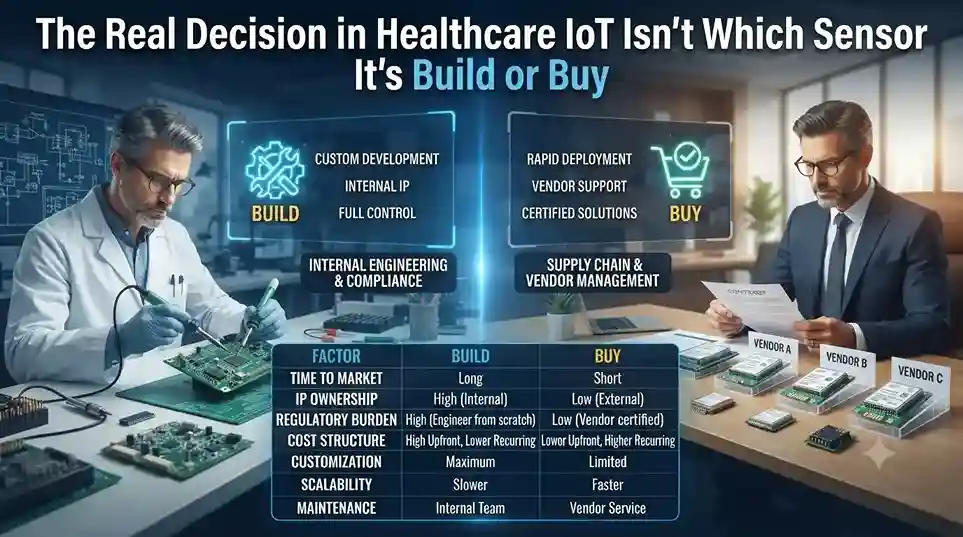
[vc_row][vc_column][vc_column_text]Providers, payors, pharmaceuticals, and life sciences companies are leading the next wave of healthcare innovation by utilizing connected devices. From continuous patient monitoring, to optimizing operations for manufacturers and cold-chain supply tracking for the pharmaceutical industry, the healthcare industry has embraced IoT technology to improve patient outcomes and operations. In our latest IoT Signals for Healthcare research, we spoke with over 150 health organizations about the role that IoT will play in helping them deliver better health outcomes in the years to come. Across the ecosystem, 85 percent see IoT as “critical” to their success, with 78 percent planning to increase their investment in IoT technologies over the next few years. Real-time data from connected devices and sensors provides benefits across the health ecosystem, from manufacturers and pharmaceuticals to health providers and patients. For health providers, IoT unlocks efficiencies for clinical staff and equipment: Reduces human error. Ensures regulatory compliance when exchanging patient health data across systems. Coordinates the productivity of medical professionals across clinical facilities. For manufacturers, IoT creates new digital feedback loops connecting their employees, facilities, products, and end customers. Real-time data can help: Reduce costly downtime with predictive maintenance. Improve sustainable practices by reducing waste and ensuring worker safety. Contribute to improved product quality and quantity. For the pharmaceutical industry, IoT provides greater traceability for inventory along a supply chain: Improved visibility into environmental conditions. Reduced costly inventory spoilage. Increased control against theft or counterfeiting. For end patients, IoT can improve health outcomes with continuous patient monitoring: Reduces the need for unnecessary readmissions. Improves treatment success rates by providing continuous data to care professionals. Personalizes care based on patient needs. In this blog, we’ll cover how our portfolio can support different IoT solution needs for software developers, hardware developers, and healthcare customers. Building healthcare IoT solutions with Azure IoT As Microsoft and its global partners continue to build solutions that empower healthcare organizations around the world, a key question continues to face IoT decision makers: whether to build a solution from scratch or buy an existing solution that fits their needs. From ensuring device-to-cloud security with Azure Sphere to providing multiple approaches for device management and connectivity with Platform as a Service (PaaS) options or a managed app platform, Azure IoT provides the most comprehensive IoT and Edge product portfolio on the market, designed to meet the diverse needs of healthcare solution builders. Solution builders who want to invest their resources in designing, maintaining, and customizing IoT systems from the ground up can do so with our growing portfolio of IoT platform services, leveraging Azure IoT Hub as a starting point. While this approach may be tempting for many, often solution builders struggle when growing their pilot into a globally scalable IoT solution. This process introduces significant complexity to an IoT architecture, requiring expertise across cloud and device security, DevOps, compliance, and more. For this reason, many solution builders might be better suited for starting with a managed platform approach with Azure IoT Central. Using more than two dozen Azure services, Azure IoT Central is designed to continually evolve with the latest service updates and seamlessly accompany solution builders along their IoT journey from pilot to production. With predictable pricing, white labeling, healthcare-specific application templates, and extensibility, solution builders can focus their time on how their device insights can improve outcomes, instead of common infrastructure questions like ingesting device data or ensuring disaster recovery. New tools to accelerate building a healthcare IoT solution Over the past year, we’ve been working hard to create new tools to make IoT solution development easier for our healthcare partners and customers: Azure IoT Central app templates. Internet of Medical Things (IoMT) Fast Healthcare Interoperability Resource (FHIR) Connector for Azure. To help you put all of these tools together, we’ve also published a reference architecture diagram for continuous patient monitoring solutions. Continuous patient monitoring reference architecture IoMT FHIR Connector for Azure Interoperability continues to be a huge challenge and critical for most healthcare organizations looking to use healthcare data in innovative ways. Microsoft proudly announced the general availability of our own FHIR server offering, Azure API for FHIR, in October 2019. We are now further enriching the FHIR ecosystem with the IoMT FHIR Connector for Azure, a connector designed to ingest, transform, and store IoT protected health information (PHI) data in FHIR compatible format. Innovative healthcare companies share their IoT stories In addition to rich industry insights like those found in IoT Signals for Healthcare and our previously published stories from Stryker, Gojo, and Wipro, we are releasing two new case stories. They detail the decisions, trade-offs, processes, and results of top healthcare organizations investing in IoT solutions, as well as the healthcare solution builders supporting them. These case studies showcase different approaches to building an IoT solution, based on the unique needs of their business. Read more about how these companies are implementing and winning with their IoT investments. ThoughtWire and Schneider Electric leverage IoT for hospital operations Clinical environments are managed by traditionally disconnected systems (facility management, clinical operations, inventory management, and more), operated by entirely separate teams. This makes it difficult to holistically manage and optimize clinical operations. Schneider Electric, a global expert in facilities management, partnered with ThoughtWire, a specialist in operations management systems, to deliver an end-to-end solution for facilities and clinical operations management. The joint Smart Hospital solution uses Azure’s IoT platform to help hospitals and clinics reduce costs, minimize their carbon footprint, and promote better staff satisfaction, patient experiences and health outcomes. “We don’t just want to understand how the facility operates, we want to understand how patients and clinical staff interact with that infrastructure,” says Chris Roberts, Healthcare Solution Architect at Schneider Electric. “That includes everything to do with patient experience and patient safety. And when you talk about those things, the clinical world and the infrastructure world start to merge and connect. Working with ThoughtWire, we bridge the gap between those two worlds and drive performance improvements.” To learn more, read the case study here. Sensoria Health creates a new gold standard

Reimagining Healthcare with Azure IoT Read More »

7 Steps to Implement ERP in a Right Way

[vc_row][vc_column][vc_column_text]Enterprise Resource Planning (ERP) systems are utilized by businesses looking to manage their business functions within a centralized and integrated system. ERP is commonly used by companies working within the supply chain to help keep track of all the moving parts of manufacturing and distribution. ERP can be utilized by several different industries including those in Retail, Logistics, Manufacturing, Hospitality, etc. ERP is really important for any organization, it could act as a backbone of any company but you have to keep a lot of things to take full advantage from your ERP which we will discuss in below context. Steps to Implement ERP  1- Finding objective and scope Before ERP implementation recognizing the objective and scope of implementing ERP is very important. You should ask yourself a question that “What should ERP be implemented for” and the Key Performance Indicators (KPI) have to be analysed. You should not focus only on the present objective but you also have to keep in mind the future objectives as well, which enables your business to accommodate changes in your future. As per Panorama’s study, 61.1% of ERP implementations take longer than expected and 74.1% of ERP projects exceed the budget. Blurry definition of the ERP requirement is the main cause of a long time and over budgeting. For that you should know the scope of implementing ERP, the ERP demand list should be generated depending on budget and core necessity. 2- Selecting ERP Vendors In this competitive environment, the election of the ideal product is important to achieve productivity gains. There are over 500 ERP applications in the market. While selecting the perfect ERP application for your business, you should know the vendor’s previous projects, industry vertical and experience. 3- Monitor Foundation  According to Mint Jutras, 23% are unable to grow their business as quickly as they would like and believe this to be because they lack the tools they need in their current ERP system. The infrastructure on which the software will operate has to have the expanse of scalability along with options to update as per the demand. Such a requirement should not be limited. 4- Make Employees Ready for ERP Big changes in any organization could also lead to the retention of employees, this could immensely influence the growth rate of a company, therefore management should involve their employees and develop them psychologically to clarify the critical questions like – HOW will ERP help an organization to rise? OR How would ERP enhance productivity? OR How would an ERP automate back-office functions and save time? A couple of brainstorming sessions will build employees’ confidence and prepare them to welcome the good change with open arms. 5- Technology & Knowledge Transfer  21% of ERP implementations fail to give significant business benefits. The causes vary, beginning with inappropriate customization occurring from ill-trained personnel operating data to the solution. Training is the most important aspect of the ERP software implementation process. It assures there are fewer issues and higher success, especially when ERP is implemented for the first time in the company or when the platform is changed from one ERP solution to another. Decent use of technology and a useful knowledge transfer, along with proper training should be considered. 6 – Testing  According to a Panorama Research study, 40% of ERP implementations cause major operational disruptions after go-live; therefore, proper testing is necessary before implementation. In the testing phase, improvising can be done keeping core objectives in mind simultaneously. Testing is an important phase of the implementation process, which takes care of system and user acceptance testing. 7 – Maintenance Once the ERP solution is properly-checked and implemented, it is the time to go live. After going live you your ERP needs continuous maintenance and updating to avoid any glitches and irregularities. It is a continuous process, not a one-time event. Now the question is out of 500 ERP applications right now in the market, which one is the best to choose?? Trident (Microsoft ERP partner) ERP Software Solutions are one of the best ERP software providers in, India. Our ERP analyses your business individually before coming with an efficiency offer in order to meet the best needs of your business. We provide customized ERP software solutions in cloud & web based environment, which is our strongest value propositions. Our ERP consists of various building blocks, which enables businesses to choose modules according to their exact needs and integrate all of their key processes into a single solution.[/vc_column_text][/vc_column][/vc_row]

7 Steps to Implement ERP in a Right Way Read More »

5 Reasons to Need Restaurant Management Software

[vc_row][vc_column][vc_column_text]The need for restaurant management technology has been recognized by large and expensive restaurants and their chains as most of them use it.On the other side, as of now, just 9 percent of the small restaurants, bars and food trucks use it. They don’t think investing in restaurant management software is worthwhile enough. Therefore they are using manual methods like spreadsheets and paper and not utilizing their time efficiently. So they should realize how important it is because it can help you save time, money and do more with your restaurant. There are a couple of reasons to consider here. 1- Simplify Inventory Management Inventory management is a tough task especially for most SMBs as they are doing it manually. By replacing their manual methods with automated Restaurant management system will help them to track the amount of stock they have, what is it costing them? , and when they need more stock automatically. Integration of POS system and restaurant management software helps in real-time inventory management as every time you input order on POS, the purchased inventory is deducted from the existing inventory. You can understand now why inventory management is so simple by using restaurant management software as if you do it manually then it will become a headache. 2- Reduce Human Error in Restaurant Supply Order It can possibly lead to human error to fill out paper order forms and fax them to your suppliers. For instance 9 items on the form can be misunderstood as 90 items and you’ll get 90 items instead of 9 that will result in loss. Restaurant management system streamlines the connection between the restaurant and the supplier. As it is a fully automated system, the chances of error are reduced and you can even track the status of your order. 3- Simplify Accounting If your restaurant has a box full of invoices and receipts, you’re going to admire how restaurant management system performs. Rather than having to cling on to every piece of paper you get, you just need to click a photo of the invoice and it’s automatically uploaded to your digital filing cabinet through the software. It is filed into your accounting system, where you can pay the invoice before it is due. 4- Gain an Insight into Food Cost Profit perimeters can be small when it comes to the restaurant industry, so you must know each ingredient’s cost, as well as the overall cost of a dish that you serve. A restaurant management system makes reports of the cost of the dishes which you can view at any time. If the cost of onion has risen, thus cutting into your profit margin, so you can decide: do you raise the price for that item or reduce the quantity of that particular ingredient? Staying on top of these expenses helps you keep costs down. 5- Simplify Monitoring  If you carry multiple locations of your restaurant, using a restaurant management system will help you to access data for each location which is helpful and time saving as compared to separate system for each location. You can handle inventory across all locations and place orders with suppliers in bulk to get profit. You can also view menu items which are most successful at each location so that you can deliver what your customers want. A restaurant management system integrates inventory, sales, ordering, and accounting and makes it easier to do your job well. Every SMBs must realize that and should opt for it as it is worth every penny they’ll spend. If you are looking for a restaurant management software to simplify your operations and to make a system which is more efficient then you can contact Microsoft Gold Partner Trident .Trident’s LS Nav solutions provide all the tools your restaurant chain needs to succeed, from front to back of house : the system includes kitchen and restaurant management functions, powerful POS terminals and superior tools for enterprise resource planning. [/vc_column_text][/vc_column][/vc_row]

5 Reasons to Need Restaurant Management Software Read More »

Enterprise Software Solution for Retail, Hospitality & Manufacturing

[vc_row][vc_column][vc_column_text]An organization consists of various departments like Marketing, Finance, Operations Management, Human Resource and IT. So no matter what the size of the company, it becomes difficult for a company to unify or manages its data. Therefore all companies prefer ERP systems to manage their day-to-day activities to follow the business status comfortably and the same goes for the hospitality, retail, and manufacturing industry. For any business in hospitality, retail, and manufacturing, be it bar services, some steel industries or some food court, maintaining all becomes critically important if they want to boost their profits. In the below context, we will discuss how ERP benefits the Hospitality, Retail, and Manufacturing industry.[/vc_column_text][/vc_column][/vc_row][vc_row][vc_column][vc_column_text] Trident’s ERP Benefits 1) Real-Time Data Organization data is dynamic, it varies every day and every company needs a real-time insight on their data so that any change will be reflected uniformly across all the units of an organization. ERP can solve this problem as ERP is all about information. It explores and scatters real-time information to all the relevant units, leaving no scope for error or delay. 2) Point of Sale System A point-of-sale (POS) terminal can be connected to other terminals and a server at another location. It can be expanded with handheld devices wireless linked to the remote area. You can trace several operations in beneficial ways and customize it as your requirements vary over time. 3) Customer Management ERP plays a significant role in customer management and maintenance. You can order the purchase history of customers and choose the most productive ones, offering them reward points or gift vouchers. The customer history gives you an idea of customer practices that enables you to promote accordingly. ERP also assists you to resolve customer complaints promptly.[/vc_column_text][/vc_column][/vc_row][vc_row][vc_column width=”1/2″][vc_column_text] 4) Employee Management Employee management is the main advantage of using ERP in any industry. Apart from the challenges of maintaining data of several employees in any industry, the geographical restrictions make it more difficult. ERP helps in the management of employees through an integrated system. Primary employee details are saved in the ERP system, along with real-time information like shift timings, work hours, their work, etc. All of this helps in managing the employees more efficiently and making interaction with them easier.[/vc_column_text][/vc_column][vc_column width=”1/2″][vc_column_text] 6) Inventory Management ERP saves the data of individual product details so that we can know exactly what is presently in your inventory and which items are out of stock or going to be out of stock. It also traces the expiry date, temperature, etc. and helps in demand forecasting. We have seen the benefits of ERP, now you must be wondering which ERP software is best to use ? Trident’s Dynamic NAV ERP is easy-to-use software, which helps the recording and processing of multiple financial transactions and processes. It is outlined to overcome inadequacy and heighten your organizational productivity. This ERP software for the Hospitality, Retail and Manufacturing industry is easy to learn, scalable and requires low maintenance.[/vc_column_text][/vc_column][/vc_row]

Enterprise Software Solution for Retail, Hospitality & Manufacturing Read More »

Food Manufacturing Industry Need Intelligent ERP to Manage Operations & Manufacturing Process

[vc_row][vc_column width=”1/2″][vc_column_text]Nowadays various food industries providing all kinds of food services are established throughout the world. Now food industries have to focus on concerns like fitness and wellness, changing lifestyles, changing favourites, food protection, sustainability, and technology. Aside from serving their customers, they also are involved in managing their processes short and streamlined. In today’s food market with such an immense competition the investment in technologies like ERP for food & beverage is not only a wise choice but a necessary one. In the below context we will address the needs for ERP for Food Manufacturing and its benefits.[/vc_column_text][/vc_column][vc_column width=”1/2″][vc_column_text] Needs of ERP for Food Manufacturing & Managing Operations    Single Integrated System Streamline Production Management Monitoring of the food Enhance Supply Chain Efficiency Manage R&D for Faster Time to Market Strategic Financial Management [/vc_column_text][/vc_column][/vc_row][vc_row][vc_column width=”1/2″][vc_column_text] Benefits of ERP for Food & Beverage Industry 1) Single Integrated system ERP makes an organization efficient and simplified its management by addressing data from every single distinct zone of the organization, allowing all data to be accessed by employers in real-time. This also helps the administrators to have overall information of the whole organization. Furthermore, most ERP programming is presently accessible on cell phones which makes it’s more easily accessible. 2) Streamline Production Management ERP helps in following up with the seasonal demand with simpler production scheduling tools. Furthermore, it reinforces accuracy with automated barcodes, and RFID tags and track a variety of things including the loss of inventory and ingredients[/vc_column_text][/vc_column][vc_column width=”1/2″][vc_single_image image=”7257″ img_size=”full”][/vc_column][/vc_row][vc_row][vc_column width=”1/2″][vc_single_image image=”6163″ img_size=”full”][/vc_column][vc_column width=”1/2″][vc_column_text] 3) Continuous monitoring of food An ERP ensures the protection of your manufacturing company by continuous monitoring of food for its security, for example, stock details, expiry dates, content properties, and nourishment can be effortlessly observed and verified. 4) Enhance Supply Chain Efficiency ERP helps in making ingredient and raw material sourcing more efficient and economical by purchasing more strategically with an eye on seasonality and Improving forecast accuracy for just-in-time production. Furthermore, it enhances materials and inventory management to maximize shelf life and reduce waste. 5) Manage R&D for Faster Time to Market By knowing what ingredients are included in each order with robust batch and lot tracking, ERP Applies discipline to managing recipes throughout development with revision auditing.[/vc_column_text][/vc_column][/vc_row][vc_row][vc_column][vc_column_text] 6) Enable Strategic Financial Management It helps in Streamlining accounting operations by gaining visibility into trends with built-in sophisticated analytics and reporting and Optimizing profitability with end-to-end costing analysis. For food and beverage companies, these hurdles have been especially acute because of the very vital necessity to balance changes that influence cost-effectiveness and product safety. But such concerns are not new to this industry as today’s business environment has become very competitive and nowadays ERP is not just a choice, it has become a necessity. Without an integrated ERP software system, the task is less effective, less economical and has a greater chance of losing to manage both your business plans and long term aims. An investment now in an ERP system can help you further by having more ROI.[/vc_column_text][/vc_column][/vc_row]

Food Manufacturing Industry Need Intelligent ERP to Manage Operations & Manufacturing Process Read More »