Welcome to Trident Information Systems!
Write us to - info@tridentinfo.com
Let's Socialize

Microsoft Dynamics CRM

Boost Business with Dynamics 365

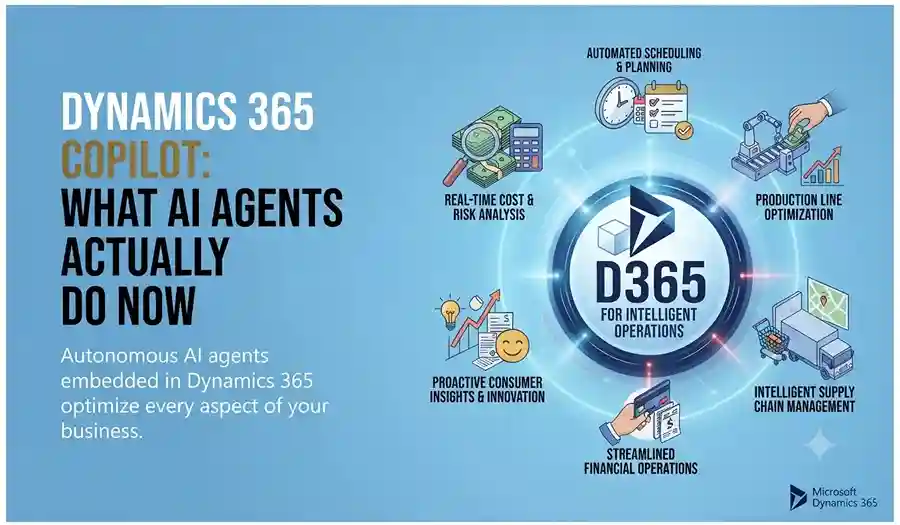
Do you really need a centralized ERP/ CRM? What difference would it make anyway? If that is something you are also wondering about, we have answers to that. Microsoft Dynamics CRM is one of the greatest centralized ERP/CRM service providers offering numerous in-built features and add-ons.    Various entrepreneurs tend to use different software programs designed to manage either of them, or this is where issues emerge. They perceive it as a cost-cutting measure. Nevertheless, they are most likely to fail to achieve it.   Integrating multiple software for ERP and CRM sources has more complications than maintaining harmony. It becomes a pain to manage different software integrations on premises. There is no data safety, once the hardware gives up, you may end up losing all data essential to run your business. Additionally, setting up hardware and carrying out regular upgrades are costly and exhausting affairs.   There are three signs you need centralized ERP/CRM:      Your current system is not helping you scale    You are done dealing with disparate systems     You are unable to fulfil customer expectations.   How Would You Know Dynamics 365 is the One?   There is a pool of CRM products out there. So, how would you recognize if Microsoft Dynamics is the one for you? We have compiled the top six reasons to ensure Dynamics CRM Software efficiency.   Easy to Deploy    Microsoft Dynamics 365 CRM Software avails enough flexibility to deploy in the cloud or the hybrid cloud environment. It is easy to manage deployment in whichever way you want. Since it is a cloud-based technology, it suits best for companies with a BYOD policy. Employees can easily access D365 applications via a web browser, Outlook, or any other mobile app.   Enhances Customer Service    Dynamics 365 for Customer Service collects massive customer data individually. It analyzes websites that each customer visits, how they interact with brands, their community, and background, and their sentiments behind purchasing a specific product. It also collects data that cannot be measured quantitatively but impacts sales significantly.   This data helps customer service representatives to handle each customer precisely on a case-by-case basis. Having this data available in an accessible location, the representatives can deeply connect with the customers.   Ease of Microsoft Products     Employees can enjoy the ease of working with Microsoft since Dynamics 365 for Operations is compatible with other Microsoft products including the complete Microsoft Office suite. Employees can easily communicate via Outlook or teams, use Power-BI for data analysis, or share PowerPoint for documentation.   Customizes with Flexibility        Microsoft Dynamics 365 comprises various in-built features and modules to streamline customer service, sales and marketing, field services, and project management. However, if your requirements are a bit different than what has been provided, you may want to use the customizable tool designed to add additional fields and new objects to the system.   Your Customization does not finish here, you can still add or remove certain features to meet your budget, goals, and Key Performance Indicators.   Reduces Sales Cycle      Your team handles a great deal of customer data every single day- whether they are working in the field or the office. It is a complicated and time-consuming process. Dynamics 365 for Sales and Marketing ensures sales cycle reduction with real-time easy data transfer, providing a complete view of each aspect of your sales journey to relevant people.   Boosts Productivity      Instead of accessing different applications individually like CRM, ERP and Office applications, etc. access data anytime with Dynamics 365. Forget those times when data searching was a tedious project, where different data was stored in different applications. Instead, with Microsoft, you can even avail yourself of real-time data from any device. Get real-time visibility and boost productivity.    Microsoft Modules    Microsoft’s D365 Modules ensure smooth business operations, continuity, data backup and safety, and automatic updates, resulting in increased efficiency and output.   Sales      Identify the exact customer to engage, shorten sales cycle within a unified environment, get insights from LinkedIn Sales Navigator, access contextual LinkedIn profiles and insights as a part of lead, account, contact, and opportunity record. Get visibility on the accurate data via Microsoft teams. Cut down routine tasks and get frequent suggestions to create new records such as meetings, contact tasks, and so on.   Marketing     Engage customers in real-time, understand customers based on their interactions across mobile, email, social media, custom channels, and in-person touchpoints. Use AI recommended unique content and offers to increase engagements. Optimize delivery times, channels, and journey steps so they are unique to the customer. Unify and share customer data more securely. Align teams throughout the company with a real-time single view of customer context over your D365 applications.   Service     Get visual assistance for modern self-service solutions, resolve issues quickly with AI-powered virtual agents. Get a complete view of your customers, avail your agents of a holistic view of the customer’s profile and their past interactions. Help agents get faster answers with AI-Powered suggestions. Analyze comprehensive support insights with built-in AI. Detect emerging trends and automation opportunities over agents, support topics, engagement channels, and so on.   Finance     Get real-time and accurate reports on your cash flow. Monitor cash flow, spot current as well as future trends and make more data-driven decisions. Automatically process vendor invoices. Save time and labor costs by submitting invoices automatically. Deploy new subsidiaries and product lines in record time. Adapt to the dynamic regulatory environment fast. Optimize a guided, rules-based chart of accounts and low/ no-cost globalization services.   Supply Chain       Centrally manage product information across global sites and subsidiaries. Forecast demand and streamline sales via AI, ensuring accurate on-time delivery to customers. Enhance inventory visibility, deliver cross-channel real-time inventory visibility, minimizing overstocking or stock-outs. Manage the shop floor with the current view on production and stock to enhance throughput.   Human Resource     Seamlessly work with Microsoft Teams to and keep a record of time-off balances while submitting leave requests. Create compliant and creative programs meeting dynamic global regulations. Create compliant and competitive programs meeting changing global standards. Connect with other effective HR solutions including payroll, talent management, LinkedIn, and recruiting to create an HCM ecosystem check-marking all your boxes.   Why Trident?   Trident has served multiple businesses since 1999. Backed up with an experience of 22+ years and a full-fledged team of experts, we have been ordained with multiple awards for our efforts and efficiency.

Boost Business with Dynamics 365 Read More »

Customer Story : CRANE Worldwide Logistics centralised their sales platform with Microsoft Dynamics 365

As it approached its 10-year anniversary and its first billion in revenue, global logistics and freight company Crane Worldwide Logistics looked for a modern platform that brought all its sales tools into one place. With the Microsoft Relationship Sales solution, which brings together LinkedIn Sales Navigator and Microsoft Dynamics 365 for Sales, its salespeople have the tools to drive more meaningful engagements with customers, convert opportunities faster, and create more revenue. Just by getting the team using the platform, we’ve seen an uplift in activity in all areas. We’ve had record growth since implementing Microsoft Relationship Sales—the last quarter was excellent for us. John Jergens: Vice President of Global Sales Crane Worldwide Logistics A global sales team From a startup created in the risky business climate of the 2008 recession, Crane Worldwide Logistics has become a major player in the global transport and logistics industry, on track to hit USD1 billion in revenue in 2019. Created by former Eagle Global Logistics executives and headquartered in Houston, Texas, Crane Worldwide aims to provide customers with full transparency into its supply chains by coupling talented people with game-changing technology. But with salespeople spread across the globe, Crane Worldwide found itself with a visibility problem. “We weren’t all working on a common platform, so we were lacking in visibility,” says John Jergens, Vice President of Global Sales at Crane Worldwide. “We knew we had a vast sales pipeline out there, but there wasn’t much data available on it—so we couldn’t see how robust it was.” From data silos to connected visibility A key part of the Crane Worldwide ethos is providing customers with meaningful interactions—and that relies on having a customer relationship management (CRM) solution that salespeople can use to build and maintain relationships and convert opportunities more effectively. But, with a seven-year-old siloed CRM system that it had simply outgrown, the company lacked the tools its salespeople needed. “The previous system never had very good adoption,” Jergens adds. “It just wasn’t very functional.” So, the team went looking for a platform that could replace it. With implementation support from Microsoft Partner Network member PowerObjects, Crane Worldwide deployed the Microsoft Relationship Sales solution, a powerful combination of Microsoft Dynamics 365 for Sales and LinkedIn Sales Navigator, to support personalized, meaningful customer engagements. The team was already using LinkedIn Sales Navigator and Microsoft Office 365, so Dynamics 365 for Sales was the ideal addition to the Crane Worldwide ecosystem. “We saw how Microsoft Relationship Sales could help us focus on being easy to work with from a customer’s perspective,” explains Jergens. “So this whole deployment was part and parcel of becoming easier to do business with.” Now, just six months into deployment, Crane Worldwide has 300 Microsoft Relationship Sales users in its ranks, including 150 direct sellers along with employees from its marketing and account management teams. New processes, simpler sales Using the Microsoft Relationship Sales solution, Crane Worldwide salespeople have already changed the way they work. And they’re reaping the benefits of the visibility they’ve gained into the sales pipeline. “Once we rolled out Microsoft Relationship Sales, the overwhelming response was that it’s really easy to use, and it doesn’t take much time,” says Jergens. “We created a very simple weekly routine where our sellers spend about 30 minutes adding new data into Dynamics 365 for Sales. That’s just six minutes a day to keep everything up to date.” With faster processes freeing up more time for the sales team, sellers can focus their energy where it matters most—building the customer relationships that turn into revenue. And, at the end of each week, management can analyze activity through a global dashboard, which combines CRM and customer interaction data into detailed executive reports that show how salespeople are turning relationships into revenue. “With Microsoft Relationship Sales, we can generate KPIs that tell us what a healthy pipeline should look like. We look at the number of prospects and targets, how long the sales cycle takes, and the time from when we close an account to the time it generates revenue,” explains Jergens. “And if the pipeline isn’t where it should be, we can support the sellers with the resources that they need—it’s more productive all around.” A centralized sales platform Because Microsoft Relationship Sales brings together so many sales capabilities, Crane Worldwide sellers have everything they need to do their jobs in one place. Previously, they had to manage a relationship from scoping to sale across disconnected tools and platforms, far from an efficient process. “It’s difficult to put a number on what it’s like to manage 30 or 40 customers with an email folder and a spreadsheet,” says Jergens. “Now, once the salesperson finds a prospect using LinkedIn Sales Navigator, they use Dynamics 365 for Sales to easily track those conversations. Instead of creating and referencing a lot of notes, they can quickly link activities and discussions through Microsoft Relationship Sales.” With LinkedIn Sales Navigator and Dynamics 365 for Sales together, salespeople can start building the context they need to deliver a meaningful interaction before the first contact even occurs. Insight into potential prospects’ roles, connections, and priorities through LinkedIn Sales Navigator is fed straight into Dynamics 365 for Sales—increasing conversion chances from the very start. “It’s had a direct impact on the time it takes to develop customer relationships, because we have true visibility into those opportunities now,” explains Jergens. A built-in assistant also sends prompts to help sellers accelerate the sales cycle, reminding them to contact a lead that might go cold or nudge an opportunity as it approaches its estimated close date. A roadmap for integration In businesses the world over, sales and marketing teams struggle to communicate and collaborate effectively. As the sales team adapts to Microsoft Relationship Sales, Crane Worldwide is already adopting more of the solution’s capabilities to help sales and marketing stay on the same path. “The marketing teams are able to work in tandem with the sales team to help them understand how marketing activities can help nurture their

Customer Story : CRANE Worldwide Logistics centralised their sales platform with Microsoft Dynamics 365 Read More »

New AI features connect and extend insights across the organization

Today we’re unveiling new and enhanced artificial intelligence (AI) capabilities across Dynamics 365 applications, as well as a new solution to help project-centric services organizations transform their operations. Joining more than 400 new and updated features in the 2020 wave 1 release, these new capabilities expand a fast-growing set of applications powered by AI-driven insights, and further propel our vision to empower every organization to unify data across the business and use it to power personalized customer experiences and processes. Personalize customer experiences with unified data and unmatched time to insight Customers expect personalized and consistent experiences across every touchpoint. Many organizations, however, struggle to modernize the customer experience, often due to disconnected systems and data siloes that can’t deliver the full picture of the customer’s journey across websites, purchases, service calls, and mobile apps. Updates to Microsoft Dynamics 365 Customer Insights, Microsoft’s customer data platform (CDP), will help solve these issues. We’re introducing new first and third-party data connections to further enrich customer profiles that can be updated and activated in real-time, as well as enabling deeper insights with Microsoft Azure Synapse Analytics. Customer Insights will now uniquely enrich profiles with a combination of proprietary audience intelligence and 3rd party data sources such as demographics and interests, firmographics, market trends, and product and service usage data. Customers can also integrate Microsoft Forms Pro, the simple, powerful enterprise survey solution, to bring in the valuable voice of the customer across channels, allowing organizations to act on insights based on changing customer behavior and perception. All of this comes together to create a holistic, 360-degree view of a customer and to update those customer profiles and activities in real-time enabling organizations to know their customers and improve engagement. Customer Insights is built on a powerful and flexible platform that enables full extensibility. Organizations can derive deeper insights by using Azure Synapse Analytics, which combines customer data with enterprise and streaming data to improve data completeness, run high-speed analytical processing, and build custom machine learning models. This allows organizations to predict customer needs with insights and get guidance on the next best action to reduce churn and capitalize on revenue opportunities for the lifetime of a customer relationship. Organizations can act upon these insights in real-time across multiple destinations through prebuilt APIs to enable onsite clienteling, website personalization, dynamic marketing campaigns, and effective ad targeting. As part of the wave 1 release, we’re expanding the availability of Customer Insights to government cloud computing (GCC) environments helping to improve the citizen experiences essential to modern government. This means our government and public customers with higher compliance needs can now leverage Customer Insights to better understand and interact with citizens, empower employees, and transform cities at scale. Automate sales forecasting with predictive analytics In addition to expanded AI capabilities on our customer data platform, we’re extending the ability for sales professionals to forecast sales more accurately and introducing a new, unified engagement center for inside sales representatives. Available now for Dynamics 365 Sales and for Dynamics 365 Sales Insights, new manual and predictive forecasting capabilities empower sales organizations to have a better understanding of the pipeline, more accurately predict results, and gain visibility into future performance. The predictive forecasting capabilities enable the proactive decision-making needed to meet sales goals. Dynamics 365 does this by extracting patterns from customer relationship management (CRM) data, current and historical leads, won or lost opportunities, contacts, accounts, customer interactions such as emails and calls, and more data sources, and then projecting these patterns into the future. Best of all, anyone can access the insights, no data scientists or tech experts needed (a big change from some other forecasting systems). With a new engagement center designed to accelerate sales, we’re giving each inside seller a streamlined way to quickly triage, research, and engage new leads or opportunities. This provides them with their own prioritized work queue to take action on the highest priority leads and tasks based on built-in predictive scoring from Dynamics 365 Sales Insights and new, configurable sales cadences. The experience helps sellers stay in the context of Dynamics 365 and quickly move from one lead or opportunity to the next in an AI-prioritized work queue, without needing to switch views to take the next best action. Additional embedded AI capabilities offer sellers a path to a warm introduction, and guidance from the assistant. Transform the back office with AI-infused finance insights Not only are we expanding AI capabilities for customer and sales insights, we’re also bringing the power of AI to the finance department. Microsoft Dynamics 365 Finance Insights, coming to preview in May, accelerates your digital transformation by bringing the power of AI into your finance processes. As organizations look to make decisions rapidly, reduce risk, and focus on strategic initiatives, it’s critical to free finance from repetitive, time consuming and low value daily activities. Leveraging the power of AI, Finance Insights enables you to not only quickly understand and act on your company’s cash position, but also to take proactive action to improve it. Menial tasks are automated or removed, the barrier of developing or hiring AI-expertise is bypassed, and you’re left with insights to move your business forward. Our continued investment in expanding AI capabilities across Dynamics 365 helps your organization accelerate digital transformation initiatives while empowering employees with insights to drive better business outcomes every day. Optimize project success and profitability with the ability to drive operational excellence across service-centric organizations How people work today has changed, as has the way organizations run their business operations. Companies across all industries are innovating business models to support project-centric service offerings. And while business optimization has gotten easier with the rise of mobile and cloud technology, organizations continue to stitch together systems and struggle with managing data across disparate systems. These data silos within project-centric businesses and teams are negatively impacting business model transformation, customer acquisition, employee retention, project delivery, and business profitability. Today we’re announcing a new Dynamics 365 application that connects cross-functional project teams, providing the visibility, collaboration, and insight needed to drive the success of project-centric organizations. Microsoft Dynamics 365 Project Operations, which will be generally available on October 1,

New AI features connect and extend insights across the organization Read More »

Turn prospects into engaged customers with intelligent sales and marketing

[vc_row][vc_column][vc_column_text] The selling landscape is undergoing fundamental changes, many of them driven by the effects of B2B customers’ experience as everyday consumers. Many retailers have created personalized, nearly immersive, online experiences for each customer. Consumers shopping for goods and services continually experience fresh and delightful interactions, from highly customized offers and recommendations to frictionless channels to 24/7 interactions. Using Microsoft Dynamics 365 for Marketing and Microsoft Dynamics 365 for Sales organisations are improving  their profit margins. The impact of B2C on B2B Today’s B2B buyers have high expectations, and those expectations will not be met if B2B buyers are accustomed to sophisticated consumer interactions in their personal lives. Executive B2B buyers are not impressed by marketing driven by large, relatively impersonal data analysis that leads to inconsistent and conflicting interactions or sales outreach that doesn’t cater specifically to their needs at the right time. The source of the problem may be largely invisible to the companies perpetuating this issue. Many organizations believe themselves to be customer-centric, while their buyers may not agree. That’s a significant disconnect. Clearly, B2B has much to learn from B2C companies. Customer experience – the rewards for getting it right Many B2C organizations have strategically embraced modern technologies like customer data platforms (CDP) and artificial intelligence (AI) to gain a 360-degree view of their customers and follow through on those insights to optimize customer engagement. The rewards for getting this engagement right are substantial. Many buyers are willing to pay more for a better customer experience. In terms of the potential benefits a great experience can have on sales success, a McKinsey study reported that organizations can expect: 10-15 percent lower customer churn 20-40 percent increase in the win rate of offers Up to 50 percent lower service costs Take a new approach B2B companies must move away from their legacy approaches based on large, relatively impersonal data analysis and move to solutions that unify relationship data across the full customer lifecycle. That way, they can gain insights that help build credibility and trust with buyers. They can run multi-channel campaigns to increase sales-ready leads, create personal experiences, and use guided process and AI to anticipate and respond faster to customer needs. They can build the ongoing, high-quality relationships that are necessary for long-term success. Four principal goals Turning prospects into engaged customers is a process. In order to achieve these goals, organizations must focus on 4 key priorities: Nurture more demand Personalize buyer experiences Build relationships at scale Make insight-driven decisions Each of these drives results by using deep reservoirs of data in making technology feel more human. Nurture more demand Relying only on conventional, basic email marketing as the primary source of leads is simply not effective enough. In fact, the more focused and demanding the customer universe is, the more essential it is to gain deep insights into what those customers expect. Northrop & Johnson,  a leading global yacht brokerage, competes for multi-million dollar customers using technology its industry has been slow to adopt. Using Microsoft Dynamics 365 for Marketing has created a decided competitive advantage: Vital insights into their customer base have helped to drive a 70 percent increase in charter sales. In any industry, companies need to generate leads across multiple channels, nurture large numbers of leads while prioritizing each one, and use data-driven insights to deliver leads that are sales-ready. Nurturing more demand is critical to growth. Personalize buyer experiences It’s time to end friction, inconsistencies, and the “do you know who I am?” part of the customer experience. Companies can acquire a holistic view of buyers, predict buyer intent, and orchestrate a connected, personalized journey for customers. In an era where guests have more choices than ever for leisure and entertainment, Tivoli delights its guests by using Dynamics 365 Customer Insights to stay one step ahead of expectations and transform the guest experience. With its deeper understanding of guests, it can add new chapters to its long tradition of imagination and innovation. Build relationships at scale Mutually beneficial relationships don’t simply happen with more data. Companies need to build credibility to establish and grow relationships with customers. Together, Dynamics 365 and LinkedIn enable the company to have increased information about, and impact on the sales relationships that are added to its sales pipeline, even as that pipeline experiences exponential growth month over month. Make insight-driven decisions Here’s where sales and marketing can truly align: utilizing data to uncover insights that lead to better-informed decisions throughout the sales process. This can improve performance, empower employees, and enable the company to gain increasingly effective strategic insights. With more than 1,500 pubs serving guests throughout the UK, Marston’s launched a business transition by bringing together guest data that was scattered across multiple systems into Dynamics 365. With their locations’ guest data now unified, Marston’s will gain a complete view of guests, which can be harnessed to generate customer satisfaction and strategic insights. This approach helps drive improved performance throughout the company, including the opportunity to empower employees – an often-overlooked aspect of a company’s success. Aligning sales and marketing: The intelligent way to succeed It’s possible to create exceptional experiences, drive more qualified leads, and increase revenue if an organization has the vision, process, and technology to harness all the data available. This requires high-level technology with well-defined business goals and sales and marketing applications fueled by keen intelligence. We have a compelling offering to accomplish just that with Microsoft Dynamics 365. Get in touch with our representative to request a demo for Microsoft Dynamics 365 for Sales & Microsoft Dynamics 365 for Marketing Blog Reference : https://cloudblogs.microsoft.com/dynamics365/bdm/2019/09/19/turn-prospects-into-engaged-customers-with-intelligent-sales-and-marketing/[/vc_column_text][/vc_column][/vc_row]

Turn prospects into engaged customers with intelligent sales and marketing Read More »

5 ways to find appropriate CRM solution for your organisation

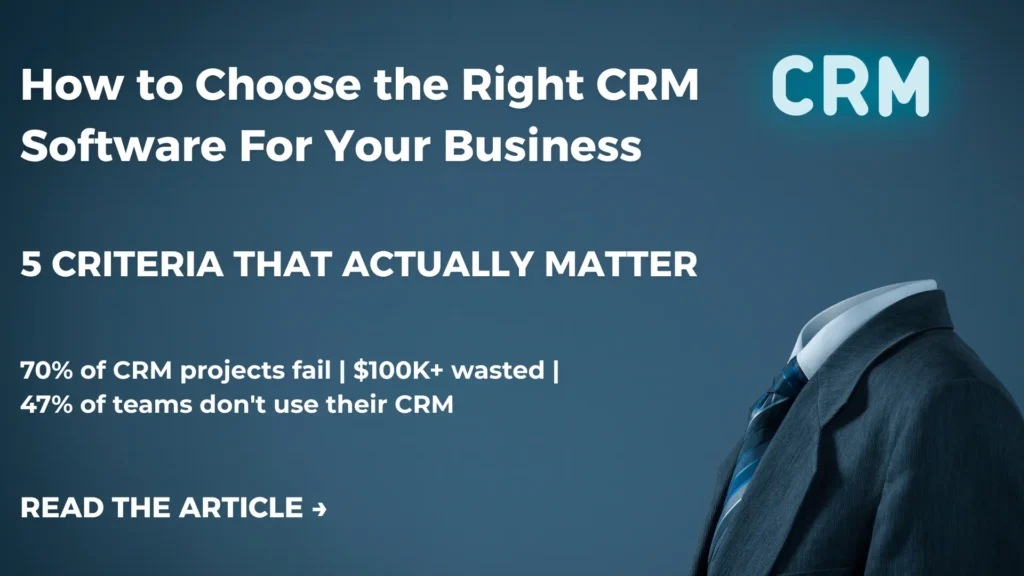
A quality CRM is created to efficiently handle data across various customer profiles, while also providing you the courage to relate to each in an organized and professional manner. It is the number one device for the sales team and will facilitate building and sustaining long-term relationships with customers. It assures higher lead generation, and boost overall sales. When a business does choose to invest in a CRM system, it needs to invest in the right one. It is very crucial to examine that it gives a perfect match with your daily business practices. That’s why in this context, we will discuss the 5 ways to examine before investing in the CRM software. 1) Impeccable Approachability and Scalability Aside from various platform approachability, the top CRM should be cloud-friendly, providing passage anywhere and whenever you want, and less overhead expenses compared to on-premise solutions. The various famous CRM companies facilitate access to the cloud when needed apart from the phone, desktop, and any smart device. Not only does this improve connectivity and comfort of use, but also performance and productivity; users can then have the liberty to pick the platform which they find most beneficial at any given time. Another thing to consider is scalability; will you be able to simply add users as your organization develops? Market-leading CRM that is Trident’s Microsoft Dynamics 365 offers the most relevant features, vital to businesses with multi-platform accessibility. 2) Not Restricted to only Sales There are several CRM’s in the marketplace, however, the one that is an ideal fit for you is the one that complements how you work. Your team will be benefitted in every step of the sales process through it, from taking a lead to closing a deal. It should update itself automatically if any changes that may happen in the future through its built-in flexibility. And most importantly, it should not only restricted to sales but also flatter every aspect of the business process like customer accounts, marketing, or customer service. A strong CRM solution should create solid inbound tactics to transform any leads to potential clients. Connecting smart features and functionality, it will connect several departments, and increase productivity. 3) Customization and Reporting Departmental procedures of different businesses can vary greatly. Therefore a good CRM should be customizable to match each company’s needs. Customization right down to the level of every user can be very beneficial for any organization. You do require software that can provide you penetrations into your data through reporting that occurs across the board, enabling you to boost your profitability.  4) Past Record of the Provider There are a lot of CRM choices obtainable in the market today which makes it difficult to opt for the best. Research and reviews indicate that price can’t be the reliability factor for selecting CRM, then what should be the reliability factor?? The answer is the track record of an organization. Picking a firm with a demonstrated track record vs. a fresher one always serves to benefit by ensuring all your data is secure in the present and the future. 5) Cost of the CRM Small, and medium-sized firms need to consider the pros and cons of pricing when picking a CRM. Firms must thoroughly review what features the cost will cover, and what may need additional investment. The budget must take into account training, after-sales service, future upgrades along with the initial payment. Any important integration, customization or any new equipment that may be required, and come with a price tag. There are many cost-effective CRM solutions accessible to suit every budget need. All you need to do is some research, and look for feedback from the listings, user databases or forums, so you can narrow down the right choice at your given budget. Other options include Trident’s Microsoft Dynamics CRM that combine the best for both functionality and pricing. If you are looking to improve customer satisfaction levels through Microsoft Dynamics CRM? Talk to Trident’s CRM experts to know what features you can use according to your organization (big or small) to make your CRM process more efficient and productive. Trident’s Microsoft Dynamic CRM is a great example of remarkably flexible software that is fairly effortless to use for small and medium businesses, as well as large-scale, multi-stage operations. Aside from customization, it also blends smoothly with third-party products to provide you total command over your sales.

5 ways to find appropriate CRM solution for your organisation Read More »

Customer service team using Microsoft Dynamics 365 to improve productivity and response times.

How SMRT Doubled Customer Service Productivity With Microsoft Dynamics 365: A Real-World Case Study

What does it look like when Microsoft Dynamics 365 Customer Service genuinely transforms an organization’s service capability? Not in theory — but in practice, at scale, with measurable outcomes that can be independently verified? It looks like SMRT — Singapore’s largest transport network operator, managing over one billion rail and bus journeys per year — handling 2.3 times more customer service cases with the same team after implementing Dynamics 365. It looks like new innovation projects going from concept to live deployment in under three months. And it looks like over 1,000 customer service staff moving from manual case sorting to automated, dashboard-driven service management — delivering faster, more personal service across email, calls, WhatsApp, Facebook, SMS, fax, and letters simultaneously. The SMRT case study is one of the most compelling documented proofs of what Microsoft Dynamics 365 Customer Service can deliver when implemented correctly — and it remains highly relevant today, because the core challenge SMRT faced in 2016 is the same challenge that customer service organizations across every industry face in 2026: managing rising contact volumes across an ever-expanding range of channels, with the need for real-time visibility, automated case management, and the agility to launch new service initiatives quickly. This article covers the full SMRT story — the challenge, the solution, and the results — and contextualizes it against what Microsoft Dynamics 365 Customer Service delivers in 2026, with the addition of AI-powered Copilot capabilities that make those 2016 results a baseline rather than a ceiling. About SMRT: Singapore’s Largest Transport Network Operator One Billion Journeys Per Year — and the Customer Service Challenge Behind Them SMRT is Singapore’s principal public transport network operator — responsible for the rail and bus infrastructure that keeps one of the world’s most efficient cities moving. With 102 train stations and over 1,400 buses, SMRT delivers more than one billion journeys per year — making it one of the highest-volume public transport operations in Southeast Asia. Behind that operational scale sits an equally significant customer service operation. Every day, more than 1,000 employees are involved in managing customer enquiries, complaints, compliments, and feedback — across multiple channels, in real time, with the expectation of world-class responsiveness that Singapore’s residents and visitors demand. For Dave Ong, Head of Passenger Service at SMRT, the mission is clearly defined: “Our mission is to enhance the lives of Singapore citizens with a transport system that is safe, reliable and customer-centric.” Delivering on that mission — consistently, at scale, across every channel a customer might use — required a technology transformation. The Challenge: Managing 1,000+ Customer Service Staff Across Fragmented Channels Multi-Channel Complexity: Email, Calls, WhatsApp, Facebook, SMS and More By 2016, SMRT’s customers were contacting the organization through a wide and growing range of channels — email, phone calls, fax, letters, WhatsApp, Facebook, and SMS. Each channel represented a different queue, a different workflow, and a different set of management challenges. Without a unified system to aggregate all of these interactions, SMRT’s customer service team faced the challenge that faces every organization managing multi-channel contact at scale: the risk that cases fall through the cracks, response times vary by channel, and management has no real-time visibility into how the overall operation is performing. “Today, customers contact us through many different ways — emails, calls, faxes, letters, WhatsApp, Facebook and SMS,” says Dave Ong. “We need a case-handling system that helps us manage new processes for handling all these interactions, and a reporting system that helps us visualize our performance in real time.” The manual effort involved in sorting, routing, and tracking cases across all these channels was consuming staff capacity that should have been directed toward actual customer service. Hundreds of lost-and-found cases added further complexity — requiring dedicated workflows and tracking across multiple teams and locations. The Innovation Problem: New Projects Taking Too Long to Deploy Beyond day-to-day customer service management, SMRT had an ambition to launch a series of innovation projects — new service initiatives that required custom business applications, document management, stakeholder engagement workflows, and reporting capabilities. Under the old approach, each new project required SMRT to source, evaluate, procure, and deploy new technology — a process that was slow, expensive, and required capital investment in new infrastructure. The organization needed a platform that would let them build, test, and deploy new applications quickly, without infrastructure overhead. “When setting up an innovation project, we want a system that would allow us to adapt and be more creative,” says Mr. Ong. The Solution: Microsoft Dynamics 365 Customer Service in the Cloud Why SMRT Chose Dynamics 365 Over Other CRM Platforms In late 2016, SMRT selected Dynamics CRM Online — now part of Microsoft Dynamics 365 Customer Service — as the foundation for its enterprise customer service and engagement transformation. The cloud-based deployment provided three critical advantages that on-premises alternatives could not: With implementation support from Customer Capital Consulting, SMRT configured Dynamics 365 to serve as the single, integrated system for all customer interaction management across the organization. One Unified System for Every Customer Interaction The implementation transformed how SMRT’s customer service operation handled the full volume of interactions it received every day. The new Dynamics 365 environment: Results: How Dynamics 365 Transformed SMRT’s Customer Service Operation 2.3x Productivity Increase: Managing More Cases With the Same Team The headline result from SMRT’s Dynamics 365 implementation is one of the most compelling productivity metrics documented in any CRM case study: a 2.3-times increase in the volume of customer cases managed by the same team. “Our ability to handle public feedback volume has increased 2.3 times,” says Dave Ong. “Dynamics 365 reduces manual effort and frees up customer-service staff to handle cases with a personal touch. This helps us achieve our strategic goal of making all interactions with our contact centre more personal.” This result is not primarily about working faster — it is about eliminating the non-productive overhead that was consuming staff capacity before the implementation. When automated workflows handle case sorting, routing, reminders,

How SMRT Doubled Customer Service Productivity With Microsoft Dynamics 365: A Real-World Case Study Read More »

Microsoft Dynamics 365 Customer Service dashboard managing support tickets and customer interactions.

Microsoft Dynamics 365 Customer Service: Deliver Effortless Experiences That Build Lasting Loyalty

Every customer interaction is either building loyalty or destroying it. There is no neutral ground. And in a world where customers have infinite alternatives and a global audience for their complaints, the brands that win are those that make service feel effortless — every time, on every channel. Microsoft Dynamics 365 Customer Service gives organizations the tools, intelligence, and agility to deliver exactly that. Whether your customers reach out via phone, live chat, email, social media, or self-service portal — Dynamics 365 ensures every interaction is personalized, consistent, and resolved with minimal customer effort. For businesses still running disconnected CRM tools, reactive support queues, and knowledge bases that nobody trusts, the gap between where your customer service is today and where it needs to be is costing you — in churn, in reputation, and in revenue. Trident helps brands close that gap, fast. Why Customer Service Is Now Your Strongest Competitive Advantage The Real Cost of Poor Customer Service in 2026 Poor customer service is not just a satisfaction problem — it is a revenue problem. Research consistently shows that customers who have a negative service experience are significantly more likely to switch to a competitor, leave a public review, and never return. Meanwhile, customers who receive fast, personalized, effortless service are more likely to spend more, refer others, and remain loyal for years. The numbers are stark: acquiring a new customer costs five times more than retaining an existing one. Every unresolved ticket, every long hold time, and every agent who cannot access the right information is a direct threat to your bottom line. What Modern Customers Actually Expect From Support Teams Today’s customers do not want to repeat themselves. They do not want to be transferred three times. They do not want to wait 48 hours for an email response. They want fast, accurate, personalized support — on whatever channel they choose — from an agent who already knows their history. Meeting that expectation consistently, at scale, is impossible without the right technology platform powering your service operation. That is precisely what Microsoft Dynamics 365 Customer Service is built to deliver. Key Benefits of Microsoft Dynamics 365 Customer Service Earn Customer Loyalty Through Personalized Service Experiences Loyalty is no longer earned through products alone — it is earned through experiences. Microsoft Dynamics 365 Customer Service enables brands to deliver personalized, contextual interactions across every device and every channel, whether the customer chooses self-service or assisted support. By surfacing the right customer data at the right moment, Dynamics 365 empowers your team to treat every customer as an individual — not a ticket number. The result is a service experience that feels effortless for the customer and builds the kind of advocacy that drives long-term business growth. Empower Agents to Resolve Issues Faster With Unified Tools Agent performance is directly tied to the tools they have access to. When agents are toggling between five different systems to find customer history, product information, and resolution guidance, response times suffer — and so does the customer experience. Microsoft Dynamics 365 consolidates everything an agent needs into a single, unified interface — customer history, knowledge base articles, case management tools, and escalation workflows — all contextually surfaced based on the live interaction. The outcome is faster resolution, reduced handle time, and a significantly better experience for both the agent and the customer. Stay Agile With Real-Time Insights and Actionable Analytics Customer expectations change fast. New channels emerge. Support volumes spike without warning. The organizations that adapt quickest are those with real-time visibility into what is happening across their service operation — and the ability to act on it immediately. Dynamics 365’s built-in service intelligence tools give managers and executives actionable insights into case trends, agent performance, customer satisfaction scores, and emerging issues — before they escalate into crises. Core Capabilities of Dynamics 365 Customer Service Omnichannel Engagement: Meet Customers Where They Are Modern customers do not think in channels — they think in problems that need solving. Microsoft Dynamics 365 Customer Service enables seamless, end-to-end service engagements across every channel your customers use: Live chat, email, phone, and social media — all managed from one unified platform Field service integration — when issues require onsite resolution, Dynamics connects your remote teams to the same customer context Context continuity — customers never have to repeat themselves when switching between channels A unified platform ensures consistent, personalized service with minimal customer effort at every touchpoint Self-Service and Community Portals That Reduce Agent Workload The majority of customers today prefer to find answers on their own before contacting support. Microsoft Dynamics 365 enables branded self-service portals that deliver: Consistent, up-to-date answers without requiring agent involvement Personalized information based on the customer’s account history and preferences Community forums where customers can connect with peers and subject matter experts Reduced inbound ticket volume — freeing agents to focus on complex, high-value interactions When self-service works well, everybody wins: customers get instant answers, agents handle fewer repetitive queries, and your cost-per-resolution drops significantly. Agent Enablement: One Interface, Every Tool They Need Dynamics 365 delivers a role-tailored agent experience through a single dynamic interface that contextually surfaces the tools, guidance, and data each agent needs — based on the live case in front of them. No switching between applications. No hunting for information. Just fast, focused, effective service delivery. Unified case management with full customer history visible at a glance Guided resolution workflows that reduce errors and training time Real-time supervisor visibility for coaching and quality management Differentiated support tiers — ensuring your most complex cases reach your most capable agents HUnified Knowledge Management: One Source of Truth Inconsistent answers destroy customer trust. When one agent says one thing and another says something different, confidence in your brand erodes fast. Dynamics 365’s unified knowledge management system ensures that every agent and every self-service portal draws from the same verified, up-to-date source of truth. Capture, publish, and maintain knowledge across all content channels from one place Measure knowledge article

Microsoft Dynamics 365 Customer Service: Deliver Effortless Experiences That Build Lasting Loyalty Read More »