Welcome to Trident Information Systems!
Write us to - info@tridentinfo.com
Let's Socialize

microsoft erp for transportation

How to Streamline Inbound and Outbound Logistics with Microsoft Dynamics 365?

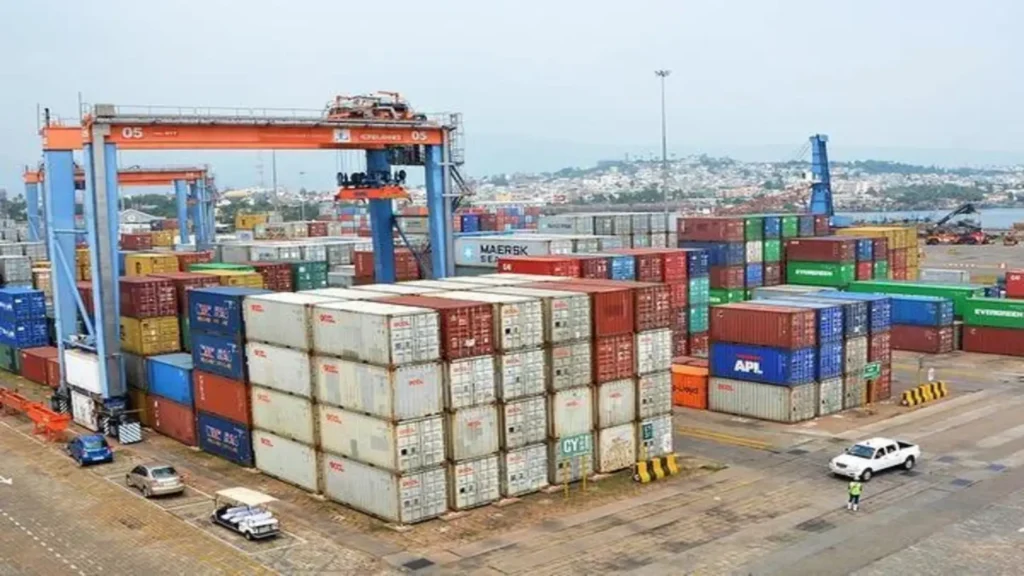
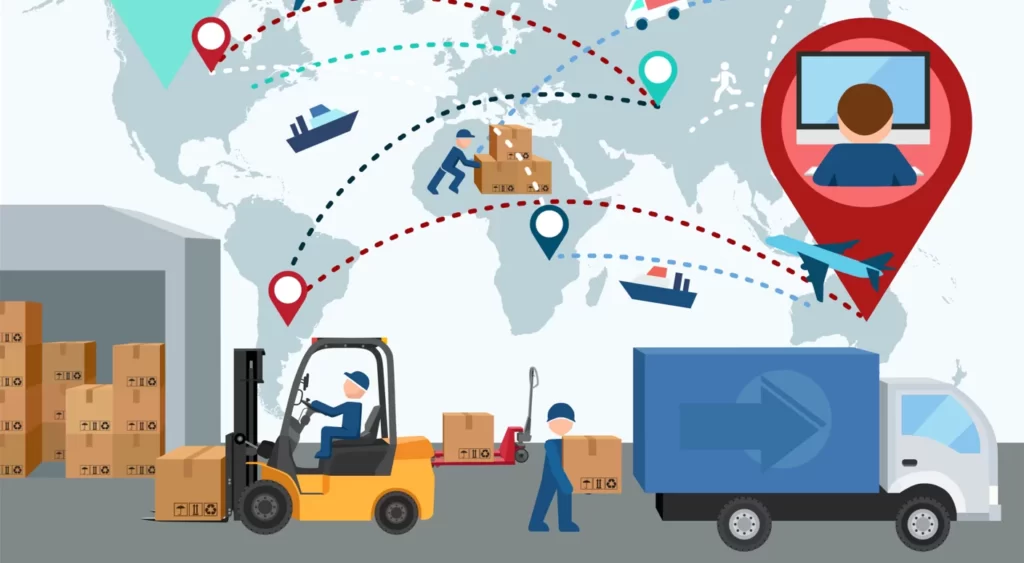
Transportation is one of the most flourishing businesses globally. Imagine a world without logistics? How would a manufacturer supply product to the retailer and top it off how would he access raw material for production anyway? Logistics plays a vital role in the supply chain. If managed properly, it can tremendously help cut costs and add to your profit margin. Dynamics 365 for Transport is the best Transport Management Software which can help in this case. If you also face challenges in managing transportation and logistics, Dynamics 365 for Transport can give you a hand. It helps provide more competitive offers for your freight forwarding services.   Receiving material from the supplier and delivering the finished product/ end product to the customer are different things: inbound and outbound. Both need to be managed optimally. Dynamics 365 Supply Chain Management helps manage warehouse processes in manufacturing, retail industries, and distribution.   There are three mediums for freight forwarding i.e., by the ocean, ground, and air. And they are come various challenges that include but are not limited to:   Excessive transportation costs  Inefficiency with providing visibility to the customer   Dealing with driver shortages   Finding the shortest route possible    Inability to achieve sustainability   Complying with government regulations  Improving Coordination with the supplier and partner    Finding a technology that streamlines logistics processes  What is Inbound logistics?  Inbound logistics is responsible for organizing material and information flow in a company. It controls the asset movement within a warehouse and also the stock control. It includes:   Inbound transportation  Inventory  Procurement and purchasing of raw material  Storage   Packaging   What is Outbound?  Outbound logistics refers to the network used by businesses to bring their products to their customers. In simple words, logistics that link between a business’s finished products and their customers are outbound. It includes:   Storage   Inventory Management  Transportation   Last-Mile Delivery   How does Microsoft Dynamics 365 Help Streaming Inbound and Outbound logistics?  Having effective supply chain management is crucial as managing logistics without suitable technology can be a pain. D365 offers ERP for Logistics Operations, a single solution that streamlines Transportation planning, rating, execution, routing, freight reconciliation, settlement, and financials across the organization and transportation providers. Some of the services it offers include but is not limited to:    Services to Inbound Logistics   Quality Check: With this feature, one can quickly check the product quality, right when it is received, to the inbound dock area.   Put Away Cluster:  One can pick distinct license plates at once and take them for a put away to distinct locations. This is especially useful for retailers, where many license plates are not complete pallets of inventory.   Packaging Product Dimensions: One can have various sets of dimensions for when an item is being stored in a warehouse, then packed into a box for packaging and packed into a box with more of itself (nested packing).   Location Utilization: This is a tool that allows warehouse managers to easily view and filter the volumetric utilization of resources throughout the warehouse.   Flexible Warehouse-level Dimension Reservation: This feature introduces more elasticity in the inventory reservation policy and enables businesses who run their logistics as WMS-enabled operations as-well-as, sell batch-tracked products, to register special requests by customers for specific batches on sales orders.   Services to Outbound Logistics  Small Packaging Shipping: Small packaging shipping adds functionality for setting up carrier login credentials, charging freight from customer’s third-party accounts, printing labels received back from the carrier web services, additional freight accessorial delivery types, and additional freight terms.   System-Directed Work Sequencing: this feature decides on the work orders that are to be presented in front of the customers.   Wave Load Building: The user can assign the shipment to an existing load in case the existing one meets the criteria or generates a new load whenever required.   Warehouse Slotting: depending upon the order demands, you can create replenishment work anytime. You can replenish location selection before the order has been placed.   Planned Cross Docking: This feature ensures the correct value of inventory as ordered will be directed to the accurate outbound dock or staging area, right from the receipt or creation. Thus, the remaining inventory will be safely directed to the storage location through the put-away process.   Inbound and Outbound operations are the essence of logistics. However, this is where several organizations find themselves stuck without suitable technology. Businesses can save a great deal of investments if they operate logistics smartly. Microsoft Dynamics 365 offers ERP for Logistics with a suite of tools that ensures seamless logistics operations. Trident Information Systems is a Gold Microsoft Partner and has specialized in Inbound and Outbound logistics management. Contact us for further information.   As the festive season arrives, it brings boundless joy, parties, and massive opportunities for retailers to strengthen their bond with the existing and new customers. This is the time when retailers can reinforce their eCommerce availability most probably with an ERP software for Ecommerce, since shoppers are predicted to make 65% for their purchases from eCommerce platforms.   Indeed, they are going to purchase from the tangent store as well, as eCommerce cannot provide the striking display, employee suggestions, live inspection, etc. that physical stores have, still shoppers are most likely to purchase items online. Therefore, retailers need to use every facility at their disposal to ensure an excellent eCommerce shopping experience.   Retailers must use an AI-based Platform to optimize their resources. One of the most common questions during the festive season is going to be “where is my order” and agents need to be as quick as possible during the heavy customer traffic. 19% of their time is dedicated to looking across an enterprise’s content sprawl or asking other officials to help them with the data.   This situation must be avoided, or else the customer might cancel his order and look for the services elsewhere. We have accumulated a few tips to enhance the eCommerce shopping experience.    Reinforce Your Workforce with the Right Tools and Support   As more customer service agents are working from home, they need the right tools and support in order to maximize their efficiency. In fact, 42% of remote workers claim that their efficiency is directly proportional to the system they have been provided. As holiday shopping ramps up, they need to be quicker and more efficient with the growing customer traffic. Easy access to the relevant data will do the job.   Customize Data-Based Recommendation   Your eCommerce storefront might be more convenient than shopping in a tangent store, yet it cannot offer the aesthetics of a brick-and-mortar store such as employee assistance, real touch inspection, and signage. Therefore, you have to make sure they come across the products that are right

How to Streamline Inbound and Outbound Logistics with Microsoft Dynamics 365? Read More »
Key Aspects of Intelligent Supply Chain Management

Developing an effective supply chain is an issue that various businesses face. Many of the difficulties show up in the shape of inventory optimization, demand forecasting, Inventory Tracking, communication, and so on. Some businesses manage their Supply Chain Operations with Supply Chain Management.   Supply Chain comprises various elements such as operations management, logistics, procurement management, etc. Having these elements integrated, businesses can successfully streamline the flow of products and services: from raw material to the final product, through the pipeline, and to the end client.   When a business is capable of designing, planning, implementing, executing, controlling, and monitoring supply chains via interlinked systems, they create value, boost their competitiveness, and get even more leverage.   Getting an intelligent supply chain can help tremendously. You can get insights into aspects you did not know existed. With such reports at hand, you will figure out how to shun unnecessary costs. Moreover, with an integrated software service such as Microsoft Dynamics, the entire organization is connected to one another. Therefore, communication becomes seamless.   You need intelligent supply chain management as your business needs to keep up with the following aspects:     Delivering Accurate Products and Services Whenever they are Needed    Many businesses might not realize but, product as a service adds up to the supply chain woes. These days, the traditional supply chain management alone is no longer responsible for manufacturing and delivering the product. Instead, it needs more coordination of parts going into products, conducting predictive maintenance, and updating software to products. To achieve this level of synchronicity, an organization needs instrumentation across a multifaceted dynamic network that usually spans the globe.    Balancing Between the Customer Service Level and Budgeting Requirements  Manufacturers face a tough time maintaining a balance between cost and services. Using a product as a service, one cannot calculate customer satisfaction effectively. It usually computes customer reports based on the number of products or services a company has sold instead of the actual performance of the same. Providing these services at any cost does not reflect their effectiveness. In addition, cutting costs by decreasing inventory can even cause some unexpected downtime and sometimes penalties. You must adopt a smart way to make a balance between customer service and budgeting requirements.   Enabling Tighter Upstream and Downstream  With a shorter product life cycle, speed and innovation are the key ingredients to thrive in the marketplace. Therefore, you need a faster and smarter collaboration across the value chain to innovate and to bring the latest market products and services to stay ahead in the competition while meeting your customer’s expectations.   The most exciting news among all these is that you can seek assistance from technologies like cloud computing, IoT, and AI, which offer real-time visibility while helping you attain these three imperatives.   An intelligent supply chain offers the following features that help your organization streamline the supply chain:   Integrated Business Planning  You can connect teams on a collaborative planning form providing real-time and transparent visibility into your business’s future and current states. You can align teams, initiatives, and strategies, use real-time data to adapt dynamically and plan effectively.   Demand Forecasting  Organizations can make better decisions with real-time data of markets, demands, services, and products. Make an amalgamation. Analyze factors impacting your business from the outside such as data available in the public domain, weather, customer spending pattern, what is popular on social media, and so on. Such data amalgamating with your company’s data lets you validate your current strategies, figure out hidden performance drivers and get a 360-degree view of future demands.   Real-Time Tracking and Tracing   Product as a service produces various complexities. Therefore, it becomes even more essential to track and trace a product and services connected to it followed by its overall journey. Be it preventing counterfeit products from going to the customer, impeding fresh food from spoilage, or ensuring product safety by confirming maintenance.   Multi-Grade Inventory Optimization    You can even increase customer satisfaction and lower costs at the same time with automated demand modeling as-well-as inventory management throughout the supply chain. You can then analyze your current data intelligently, use advanced analytics and optimize inventory, and eventually boost service levels and working capital.   Partner Integration   You can even integrate your systems with the vendor while accurately predicting fulfillment times, bringing products to the market faster, and perhaps offering more competitive pricing to the customer.   An intelligent Supply Chain Management fights supply chain woes while assisting with seamless operations. Offering unified supply chain management software, Microsoft Dynamics 365 accelerates time markets and resolves product quality issues, optimizes logistics and stock, and much more. If you are looking for a Microsoft Implementation Partner, contact Trident Information Systems.  

Key Aspects of Intelligent Supply Chain Management Read More »

Trends That are Most Likely to Dominate Manufacturing in 2022

Technology has already been introduced to the manufacturing industry i.e., industry 4.0. It has already revolutionized how manufacturing processes operate, enabling opportunities to tap into more innovative and flexible technical platforms impacting the overall product lifecycle.   Having a bright future ahead, the manufacturing industry in India added the Gross Value of $350.27 billion during the first half of 2021, as per the statistics released by IBEF. India is rapidly emerging as the preferred country for foreign manufacturers, and several research conducted claim that India is most likely to cross $ 1 trillion by 2025.   However, 2021 brought various challenges to the industry like the following:  Inefficient Labor Productivity   Improving efficiency in manufacturing plants  Unanticipated Domestic and Foreign Market  Poor Collaboration among distinct departments  Complying with government regulations on COVID-19   Travel Restrictions causing delivery failures   Such challenges triggered trends that are most likely to follow 2022 prominently.     IoT will Continue to Be the Big Thing   Despite the Internet of Things (IoT) getting more common in the manufacturing industry due to its flexibility, reliability, and scalability, it remains on the top of the list after so many years of its adaptability and innovation. Hence, the following year is no exception either.   IoT connects unique devices within an internet infrastructure while enabling manufacturers to be more strategic while making decisions, use real-time data and track the organizational situations, cut costs with its various innovative features. It also drives product innovation, improved safety, and enhanced efficiency. According to MPI Group, about one-third of production processes now incorporate embedded intelligence and intelligent devices.     A New Approach to ERP   Enterprise Resource Planning (ERP) has become essential for manufacturers due to its reliability, Scalability, real-time information availability, and cost-efficiency. However, COVID-19 has changed how fundamentally manufacturers would implement their ERP: they would rather mount additional applications on their existing ERP than let it handle everything on its own.   A manufacturer-centered ERP like Microsoft Dynamics 365 scales with your business.  Depending upon the requirements, it can add more power apps to the ERP for everything, from employee’s safety apps to back-to-work systems. Such solutions help cope with the temporary issues without having to go through a multi-layer development project.  Manufacturers these days are even inclining towards data-driven approaches to ERP upgrades. It allows them to move data forward, consolidate around modern data platforms and construct tangent data around their existing data model. This trend is most likely to continue in 2022.    Production Balancing with Predictive analysis  Properly functioning equipment is one of the primary requirements while manufacturing. Shortage or disruption of such assets can be a costly affair in terms of repairs, productivity, and downtime. According to a report, 98$ organizations have reported that one hour of downtime costs them more than $100,000.   Therefore, it is necessary for manufacturers to ensure the good conditioning of all their equipment. Predictive maintenance can reduce downtime, sudden outage and even extend the machinery life cycle by years. The predictive analysis enables manufacturers to watch-over equipment performance and to automate the data accumulation with IoT. Such insights allow a better understanding of equipment functioning and where they are most likely to face damages. These insights are essential for better and more logical asset management.   Big Data Becomes More Eminent   Having IoT and predictive maintenance trends on the rise, big data becomes even a bigger deal for manufacturers than ever before. You can expect every surface to become a data extracting sensor to generate real-time insights. The art of pulling data from multiple sources, amalgamating with robust cloud computing capacities, and making it possible for manufacturers to dice and slice in a way to deliver a more extensive understanding of their business.    Platform-as-a-Service Trend Will Rise  Companies usually focus on the key areas driving revenue while outsourcing everything else. There is a fairly good reason companies avoid handling payrolls exclusively in-house. There are a lot of factors contributing to it such as constantly changing law requirements and the business owner might have to pay a heavy price in case, he fails to comply with it. There could be legal actions taken against the owner, financial penalties charged, or some other reputational punishments. To avoid such consequences, businesses are implementing platform-as-a-service. Companies can tap into a comprehensive development environment via the cloud and pay only for the services they consume. Their payment increases only if your business requirements increase, and your growing business requires more resources     It is time for manufacturing businesses to level up their technology and tap into some amazing trends making their place in the market. Microsoft Dynamics 365 provides a unified software service every business needs to thrive in 2022. Trident Information Systems has been a Gold Microsoft Partner since 2004 and provides the latest adaptable and scalable technology services complementing the business environment. Contact us for further information.  

Trends That are Most Likely to Dominate Manufacturing in 2022 Read More »

How does Dynamics 365 Intelligent Order Management Ensure Supply Chain Resiliency?

Various organizations have to go through supply chain issues that can easily be addressed by technical advancements. However, due to certain industrial limitations and challenges, some businesses are unable to adopt technical advancements entirely.   Some businesses might fail to get real-time end-to-end stock visibility in the supply chain. Whereas outdated technology can create a shortage of business continuity when there is a disruption or any other issue. There can be an inability to adapt to the rapidly changing dynamics without a suitable supply chain management system.   Any latest technology that enables data-driven decision-making should center the strategy designing while coping with these challenges. Microsoft Dynamics 365 Intelligent Order Management is a modern and nimble, open platform that promotes businesses to do the exact thing.   Microsoft Dynamics 365 Intelligent Order Management is a robust feature that comes with an incredible fulfillment optimization engine that seamlessly manages order complexities, while also ensuring end-to-end real-time visibility into each inventory and order stream.   A survey has found out that the companies that ship products directly to the customers such as retailers, manufacturers, and distributors, face certain challenges in this area and believe in the need for digital transformation in their supply chain. An Intelligent Order Management ensures Supply Chain Resiliency, given below are some points delivering the same.   Incredible Fulfillment Optimization  There is a combination of factors causing these issues to arise such as e-commerce, marketplaces, call centers, and physical stores. Apart from this, there are a lot of fulfilling options such as distribution centers, supplier dropshipping, and logistics providers. And ultimately any location possessing inventory that allows them to pull from there to complete customer orders.    The best part of this rule-oriented and event-driven infused technology is that it allows you to connect to any of these enterprise apps via straightforward API interfaces. As a result, the companies can seamlessly connect to their current order management system such as WMS and ERP hence allowing the client to experience a better flow while keeping up with their comfort.   Robust Connectors   One of the most interesting things about the Intelligent Order Management system is that it is a standalone SaaS solution without any other D365 application dependencies. It contains an open, interoperable and modular technical construction, so your business could benefit from an expansive ecosystem of order source management systems such as online mobile applications, online e-commerce, social platform as well as brick and mortar channels.   One of the most significant uses of this program is that it allows its users to configure order intakes visually from one of the most common sources by influencing already built connectors in a no-code application while making quick integration and implementation a real thing.   ShipStation Integration   This ShipStation is a cloud-based e-commerce shipping platform specially designed to generate shipping labels. Users can automatically create labels with discounts, import e-commerce orders, send out shipping notifications, and resend shipping details to the order source. With the integration of ShipStation and Order Management, users can combine all of their orders and order sources within the same platform.   When the user receives an order while selecting Shipstation for use, they can catch real-time delivery timeline and carrier service from the ShipStation with intelligent Order Management to provide users with visibility of shipment details.   Tax Compliance  Another great feature of Intelligent Order Management is its robust tax determination and compliance. This system enables you to connect to the third-party tax engines and automate tax calculation based on the product classifications, location’s regulations, files, and remit tax payments to jurisdictions. It can automatically omit tax from exempt sales while taking care of the exception documentation. You can pick from various pre-built partner connectors, Intelligent order Management allows your organization the medium to effortlessly scale tax order compliance globally for value-added tax, sales tax, lodging and occupancy tax, seller’s use tax and consumption tax, etc.   Bottom Line   Companies that ship direct-to-customer can heighten their supply chain resiliency with end-to-end visibility into their supply chain. In an order management solution, the digital transformation part comprises a fulfillment optimization engine. Microsoft Dynamics 365 Intelligent Order Management comes up with a robust Fulfillment system. Trident Information Systems is a Gold Microsoft Partner who has served multiple business ventures so far. Contact us for further information.  

How does Dynamics 365 Intelligent Order Management Ensure Supply Chain Resiliency? Read More »

Streamline Transport and Logistics with Trident’s Warehouse Management System

Being one of the major aspects of a transportation and Logistics business, warehouses can never be left unattended. Proper warehouse management is essential for streamlining business operations. With suitable Warehouse Management Software, you can attain proper organization, management, and maintenance. However, be cautious about the ERP for Warehouse Management you pick.   Warehouses are complex in structure and might even stumble upon operational issues, just like any other business aspect. It can impact the speed, productivity, and overall efficiency of either a particular warehouse operation or the entire chain. Certain issues tag along, For Instance:  Most warehouses are likely to perform multiple operations on a single item, which can lead to redundancy issues. In other words, you may end up performing the same operation multiple times on a single item. These are very common amongst unorganized warehouses. It eats double the cost to revert the mistakes, and do not forget the time you have lost so far.   Over the years, storage costs have risen to a considerable value, due to which many warehouse managers decided to optimize their storage. However, they fail to do so and use up to 68% of the total capacity. This happens due to unstructured warehouse layouts. Proper Warehouse Management Software can be useful in this case.   According to some studies, 43% of small business owners do not follow proper inventory management. They either do not pay attention to accurate item tracking or do not have access to a robust inventory management system. Hence, leading to visibility issues.   There are specific product streaming demands for a fixed period of the year. Whereas, other items might cover the rest of the duration. Sometimes a sudden influx of demand might also occur surprisingly and, for which your warehouse might be unprepared. This usually happens due to a lack of current market demand analysis.   And the list goes on. However, you need to find a foolproof solution for this cause. Try Trident’s warehouse management services, designed specifically to overcome warehouse management issues so you can operate your business seamlessly.   The Ultimate Warehouse Management System by Trident   Get ready to embrace everything your industry demands! Trident Information systems have brought to you the Best Warehouse Management ERP. Claim wireless receiving, replenishment, direct put away, order planning and fulfillment, task interleaving, and much more.   With our solution, you can cover all the warehouse-oriented operations starting from the cargo arrival to dispatch, everything within the same technical environment.  Get a comprehensive set of tools for modern warehouse management, complying with general cargo, temperature control, agro products, etc.   Avail Inward and outward Truck dock and queue management features.   Access Tools to handle multiple customers and warehouses for 3PL enabling location transfer within/ intra-warehouse.   Create Advance Shipment Notice (ASN) via inbound systems to   Claim Location management tools for space optimization.   Generate barcodes and assign them for cargo.   Optimize a Built-in Business intelligence.   How does Trident Add Value to Your Warehouse Operations?  Trident’s warehouse management system can be easily deployed over the web. You can either get it On-Demand (SaaS) or On-Premise, whatever suits you. We are renowned for our flexible and customized solutions. With our WMS, you can get the following features:   Real-time visibility   Embedded Radio Frequency   Real-time Mobile Transactions  Order Completion    Labor Optimization   Advanced Operating Support   Real-Time Visibility   Visibility issues can land your logistics and transportation business some serious issues. Improper inventory tracking can cause overstocking or understocking and replenishment issues. With Trident, you can get real-time inventory visibility, replenishment, cycle counting RF adjustments, and Movements. Also, license plates control configurable inventory status and so on.   Embedded Radio Frequency   It is okay if you cannot access your computer all the time. Our Warehouse Management Software supports mobile devices along with Windows CE/ Windows, allowing all the PC-supported features. Process transactions in real-time, manage inventory and production, capture labor statistics, etc. everything within the same technical environment.   Real-Time Mobile Transactions  Optimize the configurable process workflow while processing transactions. Operate as per configuration as well as customizations. Our flexible software solution gives you enough elasticity to work more conveniently using your mobile device. Customize your workflow steps and ensure rules-driven allocation and storage.   Order Completion  Complete orders more efficiently with our product. Wave load planning and try deferred reservation strategies. Experience Radio Frequency directed systems, pick, pack stag and you are ready to go. Get value-added services such as Advanced Pick Flows: batch pick, cluster pick and pick and pass. Plan the best possible route for the fastest delivery with carrier routing and of course quality control.   Labor optimization   Human resource is the most complex yet the most valuable resource of any business no matter how technically advanced an organization becomes. Your output depends on how much you optimize your labor. With Trident’s Warehouse Management System, you can spot when your labor interleaves, set priority assignments, access real-time RF work completion, eliminate manual errors with complete automation, benchmark work rates, estimate time for work completion, catch tasks real duration and report labor.   Advanced Operations Support   Tap into our advanced operation support where you can electronically interchange Inbound / Outbound data, generate documents, compliant labeling, cross-dock, and flow-through, distribute retail, and integrate MHE.   Trident’s Customer Support Service   Our responsibility is not over once you go live with our software, but initiates from there. Despite all the testing you might face technical issues just like with any other software. Instant support becomes crucial in an environment where everything is interdependent and a minute disruption can hamper the entire workflow process.   You can access our 24/7 online helpdesk support portal. Schedule a booking and get responses in a predictable time. Scheduled requests are prioritized before the unscheduled customers.   What Benefits does Trident’s WMS Provide to your Business?  Trident Warehouse Management Services can provide tremendous benefits to your business. Our system provides efficiency to both your physical space and labor via work process monitoring and enhancing asset utilization. Our WHS manages your inventory in a way that enhances accuracy, throughput, and speed.   Optimize Space and Cut Costs   Our WHM system optimizes your warehouse flow and identifies the best use of floor spaces as per your tasks and material characteristics. Our software determines how the space can be optimally used while minimizing waste – waste of premium floor space and waste of time.   Inventory Visibility   We provide visibility and real-time inventory levels. This way you can securely estimate supply and

Streamline Transport and Logistics with Trident’s Warehouse Management System Read More »

How to Optimize Transportation and Logistics with Microsoft Dynamics 365?

Need an ideal solution to manage your transportation and logistics? Microsoft Dynamics is just for you. This software showers tremendous benefits like routing, vehicle tracking, temperature tracking, and warehousing within a unified platform. You can identify vendors and routings to cover inbound and outbound orders or get the cheapest shipping rates.   Cutting Transportation costs holds the top position as far as the logistics industry is concerned, other pain points do not add any less to the challenges. Microsoft Dynamics 365 offers solutions to bust pain points such as:    Fuel Costs: When it comes to cost-cutting, fuel cost is the major concern of all time. Increased fuel rates add up to higher transportation costs and escalate surcharges, resulting in hiked freight rates and other included charges.   Economic Crisis: Hyped fuel prices bring greater credit issues and raise inflationary demands that take a greater toll on an economy. The industry is mounted by complying with regulations, additional capacity, and declining demands with the increase in key cost centers.   Technological Issues: Even though this industry recognizes the need for advanced technology, business owners fail to find the right solution to manage their transportation and logistics. Most of them either work in silos or adopt multiple software, which might even complicate their operations.   Why Microsoft Dynamics 365 is the perfect solution for Your Transportation or logistics business?  Work smarter and embrace greater flexibility in your daily operations. With a suitable service provider, having over a decade of experience such as Trident Information Systems, you can easily plan routes and identify vendors for inbound and outbound orders. Apart from this, you can claim other benefits like:   Efficient Inbound and Outbound Planning   As soon as you are in the game, you cannot avoid extreme pricing. Therefore, it becomes even more essential to drive down your operational costs by enhancing inbound and outbound operations. Microsoft Dynamics 365 helps in optimizing the shipping process when you order items from the vendors and transfer them to the end customers. Get end-to-end visibility from order to payment, claim substantial lead time reduction and enhance the overall manufacturing process.   On-Time Delivery   When you have an item to accept or dispatch from/to the vendor or customer, you get multiple shipping options on your plate which show up with delivery restrictions such as delivery time, costs, or distance. With Microsoft Dynamics 365, you can ensure timely delivery no matter what route you choose. It identifies all the factors that have a direct or indirect impact on the final delivery and ensures the fastest route possible.  Real-Time Visibility  Transportation management exceeds transportation concerns and includes real-time visibility into the entire order and delivery process to every individual who needs it, from procurement, production scheduling, warehousing to supply chain and staff. Real-time visibility classified under individual departments within a unified platform helps you cut costs and make more logical decisions. Apart from this, you can use this data to fill the process gaps causing variability in the supply chain.   Warehouse Management  Integrate supply chain with Microsoft Dynamics 365 and stay agile while receiving, picking, staging, and loading. Cut down on excess inventory and get visibility when the item was shipped, how much was shipped, and when it will arrive in real-time. End-to-end data on orders and shipments help you plan and maintain optimum inventory levels.   Accurate Replenishment  Inventory replenishment is one of the most crucial operations in transportation management. Microsoft Dynamics 365 optimizes this task and allows you to set up replenishment strategies based on the minimum/maximum criteria. Identify when you need to add up more inventory as soon as it hits the minimum level. Additionally, you can also set up demand-driven replenishments.   Yard and Terminal Management  With Microsoft Dynamics 365, you can eliminate manual processing that slows your progress down. Get real-time visibility in your yard and terminal to minimize waiting times, increase outputs and reinforce regulations. Claim a secured, safe, and optimally productive yard.   Spot the Most Appropriate Carrier   With cutting-edge business intelligence, access the large network of suppliers and carriers existing right now. Browse through thousands of vendors and suppliers and pick up the one that suits you the best. Get a unified view of all carriers and identify where they stand against one another, also analyze their performance over time.   Why Would You Choose Trident Amongst All the Partners?  Trident Information Systems, being the gold partner of Microsoft Dynamics 365, boasts decades of experience with various transportation and logistics firms. We research your business and assemble tools to customize the perfect solution. We assist in managing schedules, analysis, errors, integrations, capacity plans, and workflow.   Trident’s Logistics suite includes Rail Operations, Yard Management, transportation management, warehouse management, billing solutions, and fleet management. Additionally, this suite collaborates with our globally recognized HCM and Finance Modules. It integrates with your organization’s operational aspects and provides a smooth workflow.  

How to Optimize Transportation and Logistics with Microsoft Dynamics 365? Read More »

Microsoft Dynamics 365 Customer Service dashboard managing support tickets and customer interactions.

Microsoft Dynamics 365 Customer Service: Deliver Effortless Experiences That Build Lasting Loyalty

Every customer interaction is either building loyalty or destroying it. There is no neutral ground. And in a world where customers have infinite alternatives and a global audience for their complaints, the brands that win are those that make service feel effortless — every time, on every channel. Microsoft Dynamics 365 Customer Service gives organizations the tools, intelligence, and agility to deliver exactly that. Whether your customers reach out via phone, live chat, email, social media, or self-service portal — Dynamics 365 ensures every interaction is personalized, consistent, and resolved with minimal customer effort. For businesses still running disconnected CRM tools, reactive support queues, and knowledge bases that nobody trusts, the gap between where your customer service is today and where it needs to be is costing you — in churn, in reputation, and in revenue. Trident helps brands close that gap, fast. Why Customer Service Is Now Your Strongest Competitive Advantage The Real Cost of Poor Customer Service in 2026 Poor customer service is not just a satisfaction problem — it is a revenue problem. Research consistently shows that customers who have a negative service experience are significantly more likely to switch to a competitor, leave a public review, and never return. Meanwhile, customers who receive fast, personalized, effortless service are more likely to spend more, refer others, and remain loyal for years. The numbers are stark: acquiring a new customer costs five times more than retaining an existing one. Every unresolved ticket, every long hold time, and every agent who cannot access the right information is a direct threat to your bottom line. What Modern Customers Actually Expect From Support Teams Today’s customers do not want to repeat themselves. They do not want to be transferred three times. They do not want to wait 48 hours for an email response. They want fast, accurate, personalized support — on whatever channel they choose — from an agent who already knows their history. Meeting that expectation consistently, at scale, is impossible without the right technology platform powering your service operation. That is precisely what Microsoft Dynamics 365 Customer Service is built to deliver. Key Benefits of Microsoft Dynamics 365 Customer Service Earn Customer Loyalty Through Personalized Service Experiences Loyalty is no longer earned through products alone — it is earned through experiences. Microsoft Dynamics 365 Customer Service enables brands to deliver personalized, contextual interactions across every device and every channel, whether the customer chooses self-service or assisted support. By surfacing the right customer data at the right moment, Dynamics 365 empowers your team to treat every customer as an individual — not a ticket number. The result is a service experience that feels effortless for the customer and builds the kind of advocacy that drives long-term business growth. Empower Agents to Resolve Issues Faster With Unified Tools Agent performance is directly tied to the tools they have access to. When agents are toggling between five different systems to find customer history, product information, and resolution guidance, response times suffer — and so does the customer experience. Microsoft Dynamics 365 consolidates everything an agent needs into a single, unified interface — customer history, knowledge base articles, case management tools, and escalation workflows — all contextually surfaced based on the live interaction. The outcome is faster resolution, reduced handle time, and a significantly better experience for both the agent and the customer. Stay Agile With Real-Time Insights and Actionable Analytics Customer expectations change fast. New channels emerge. Support volumes spike without warning. The organizations that adapt quickest are those with real-time visibility into what is happening across their service operation — and the ability to act on it immediately. Dynamics 365’s built-in service intelligence tools give managers and executives actionable insights into case trends, agent performance, customer satisfaction scores, and emerging issues — before they escalate into crises. Core Capabilities of Dynamics 365 Customer Service Omnichannel Engagement: Meet Customers Where They Are Modern customers do not think in channels — they think in problems that need solving. Microsoft Dynamics 365 Customer Service enables seamless, end-to-end service engagements across every channel your customers use: Live chat, email, phone, and social media — all managed from one unified platform Field service integration — when issues require onsite resolution, Dynamics connects your remote teams to the same customer context Context continuity — customers never have to repeat themselves when switching between channels A unified platform ensures consistent, personalized service with minimal customer effort at every touchpoint Self-Service and Community Portals That Reduce Agent Workload The majority of customers today prefer to find answers on their own before contacting support. Microsoft Dynamics 365 enables branded self-service portals that deliver: Consistent, up-to-date answers without requiring agent involvement Personalized information based on the customer’s account history and preferences Community forums where customers can connect with peers and subject matter experts Reduced inbound ticket volume — freeing agents to focus on complex, high-value interactions When self-service works well, everybody wins: customers get instant answers, agents handle fewer repetitive queries, and your cost-per-resolution drops significantly. Agent Enablement: One Interface, Every Tool They Need Dynamics 365 delivers a role-tailored agent experience through a single dynamic interface that contextually surfaces the tools, guidance, and data each agent needs — based on the live case in front of them. No switching between applications. No hunting for information. Just fast, focused, effective service delivery. Unified case management with full customer history visible at a glance Guided resolution workflows that reduce errors and training time Real-time supervisor visibility for coaching and quality management Differentiated support tiers — ensuring your most complex cases reach your most capable agents HUnified Knowledge Management: One Source of Truth Inconsistent answers destroy customer trust. When one agent says one thing and another says something different, confidence in your brand erodes fast. Dynamics 365’s unified knowledge management system ensures that every agent and every self-service portal draws from the same verified, up-to-date source of truth. Capture, publish, and maintain knowledge across all content channels from one place Measure knowledge article

Microsoft Dynamics 365 Customer Service: Deliver Effortless Experiences That Build Lasting Loyalty Read More »

Microsoft Dynamics 365 dashboard managing transportation, logistics, and delivery operations in real time.

Microsoft Dynamics 365 for Transportation & Logistics: Smarter Operations, Lower Costs, Faster Delivery

The global logistics industry does not forgive inefficiency. With razor-thin margins, volatile fuel prices, increasingly complex regulatory environments, and customers who expect real-time visibility into every shipment — transportation and logistics businesses that rely on disconnected, outdated systems are fighting with one hand tied behind their back. Microsoft Dynamics 365 for transportation and logistics changes that equation entirely. By unifying fleet management, warehouse operations, yard control, rail logistics, billing, and financial management into a single intelligent platform, Dynamics 365 gives logistics organizations the real-time visibility, operational agility, and data-driven decision-making capability they need to compete — and win — in today’s volatile markets. Trident’s Logistics and Transportation Solutions, built on Microsoft Dynamics 365, have been helping organizations across the supply chain realize measurable value from their technology investments for over a decade. Whether you are a third-party logistics provider managing complex multi-modal operations, a fleet operator focused on on-time delivery, or a warehouse operator building toward smart fulfillment — Trident has the modular, scalable solution your operation needs. The Growing Challenges Facing Transportation & Logistics Businesses The transportation and logistics sector is under pressure from every direction simultaneously. Understanding these challenges is the first step toward building a technology strategy capable of addressing them. Rising Operational Costs: Fuel, Warehousing and Shrinkage Operational cost management is the defining challenge for most logistics businesses. Elevated warehousing costs, fluctuating fuel prices, product loss from errors and shrinkage, and the compounding effect of a stagnant economy on profit margins create a financial environment where inefficiency is simply not survivable. Even the best-managed logistics operations bleed revenue through manual processes, scheduling errors, poor route optimization, and inventory inaccuracies. The businesses that are protecting and growing their margins are those that have replaced manual intervention with intelligent automation — and reactive management with predictive analytics. Intensifying Competition Across National and Global Markets Across both domestic and international markets, competition in the transportation and logistics industry has never been more intense. Manufacturers, suppliers, and distributors are constantly evaluating their logistics partners — and they are increasingly choosing those that offer the best combination of speed, visibility, reliability, and cost efficiency. For 3PL companies in particular, the pressure to deliver innovative, cost-reducing solutions to clients while maintaining their own operational profitability requires a technology platform that scales with demand and adapts to shifting client requirements without constant reconfiguration. Regulatory Compliance: A Growing Cost of Doing Business Environmental regulations, cross-border customs requirements, driver hours-of-service rules, and government mandates at local, national, and international levels add layers of complexity and cost to every logistics operation. Non-compliance is not just expensive — it can ground fleets, halt shipments, and damage client relationships irreparably. The right ERP platform does not just help you comply with current regulations — it gives you the infrastructure to adapt quickly when regulations change, without rebuilding your operational processes from scratch. How Microsoft Dynamics 365 Addresses Logistics Industry Challenges Microsoft Dynamics 365 is not a generic ERP platform adapted for logistics — it is a powerful, configurable business management solution with deep capabilities across every function critical to transportation and supply chain operations. Real-Time Visibility Across Your Entire Supply Chain In logistics, information delayed is opportunity lost. Dynamics 365 gives every stakeholder in your operation — from dispatchers and warehouse managers to executives and end customers — real-time visibility into shipment status, asset location, inventory levels, and operational performance. When a delay occurs, your team knows immediately. When demand spikes, your system adapts automatically. When a compliance issue emerges, it is flagged before it becomes a crisis. That is the operational intelligence that separates logistics leaders from logistics laggards. Smarter Scheduling, Capacity Planning and Workflow Automation Manual scheduling, spreadsheet-based capacity planning, and paper-driven workflows are productivity killers in any logistics environment. Dynamics 365 automates the routine operational decisions that consume management time — optimizing routes, allocating resources, triggering reorder points, and flagging exceptions — so your team can focus on the strategic decisions that actually grow the business. Trident’s Modular Logistics Suite Built on Microsoft Dynamics 365 Trident’s Logistics Suite is modular by design — meaning your organization can implement the specific capabilities you need today, and scale into additional modules as your operation grows. Every module is tightly integrated with Trident’s globally recognized HCM and Finance modules, creating a single unified processing and analysis interface across every functional area of your business. Yard and Terminal Management: Put Productivity on the Fast Track Yard inefficiency is a silent revenue drain. Every minute a trailer sits in the wrong position, every gate check that requires manual processing, and every asset that cannot be located in real time costs your operation money. Trident’s Yard and Terminal Management solution — powered by Zebra’s electronic asset tracking — eliminates the manual processes that slow down yard operations and gives your team the live visibility they need to: Rail Operations: Connecting Shippers Without Direct Rail Access Rail transportation remains the most efficient and cost-effective mode for moving large quantities of bulk commodities over long distances. But not every shipper or receiver has direct rail service — and that gap creates significant logistical complexity. Trident’s Rail Operations solution transforms rail transload terminals into seamless links in the supply chain, enabling shippers without direct rail access to access the cost and efficiency benefits of rail transportation through a managed, technology-enabled transload operation. Warehouse Management: Enabling the Smart, Connected Warehouse Modern warehouse operations demand more than basic inventory tracking. From receiving and putaway through picking, staging, and loading — every process must be optimized, compliant, and connected to real-time operational intelligence. Trident’s Warehouse Management solution integrates your supply chain end-to-end, enabling: Fleet and Delivery Management: Nonstop Optimization for Any Operation Fleet performance is the heartbeat of any transportation business. Every vehicle off the road, every missed delivery window, and every compliance violation is a direct cost to your operation and a risk to your client relationships. Trident’s Fleet and Delivery Management solution keeps drivers on the road and assets moving with: Billing, HCM and

Microsoft Dynamics 365 for Transportation & Logistics: Smarter Operations, Lower Costs, Faster Delivery Read More »