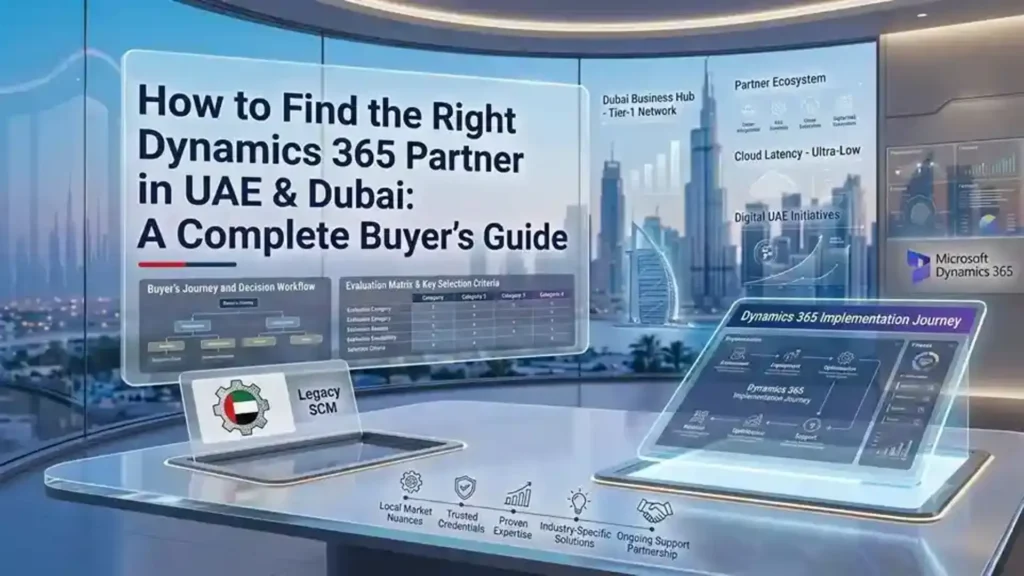
How to Find the Right Dynamics 365 Partner in UAE & Dubai: A Complete Buyer’s Guide
Choosing a Dynamics 365 partner in UAE is one of the most important technology decisions your business will make. The right partner accelerates your digital transformation; the wrong one drains budget, delays timelines, and delivers a system your teams resist using. With dozens of Microsoft partners operating across Dubai, Abu Dhabi, and the wider Gulf region, how do you separate genuine expertise from marketing claims? This buyer’s guide gives you a practical framework for evaluating Microsoft Dynamics implementation partners in Dubai, UAE, and Saudi Arabia. Why Partner Selection Matters More in the UAE The UAE business environment presents unique challenges that generic partners struggle to handle: A Dynamics 365 partner in UAE must understand these realities. Partners without regional experience often deliver technically correct implementations that fail operationally. What to Look For in a Dynamics 365 Partner in UAE 1. Microsoft Solutions Partner Designations Verify the partner holds current Microsoft designations—particularly Business Applications for Dynamics 365. Legacy “Gold Partner” status has evolved into Solutions Partner designations, which require verified customer success, certified staff, and performance metrics. Ask directly: Which designations do you hold, and when were they last validated? 2. Proven UAE and GCC Project Experience Request references from businesses operating in the UAE or Saudi Arabia. Ask about: Partners with genuine regional experience will provide specific, verifiable references. 3. Full Dynamics 365 Product Coverage Microsoft Dynamics implementation partners in Dubai should support the complete stack: If your business runs legacy NAV, AX, or GP, confirm the partner has migration experience—not just new implementations. 4. Local Presence with Delivery Capability The best partners maintain offices in Dubai or Abu Dhabi while offering delivery resources across time zones. Local presence ensures responsive support; global delivery keeps costs competitive. 5. Industry-Specific Expertise Dynamics 365 requirements vary significantly by industry. A retail implementation differs fundamentally from manufacturing or financial services. Choose a partner with demonstrated experience in your sector. 6. Transparent Implementation Methodology Ask to see the partner’s methodology before signing. A structured approach should include discovery, solution design, configuration, data migration, testing, training, and hypercare support. Partners who cannot articulate their methodology clearly will likely struggle to execute it. 7. Ongoing Support and Managed Services Implementation is the beginning. Confirm what post-go-live support includes: Evaluating Microsoft Dynamics Implementation Partners in Dubai Dubai’s business landscape demands partners who understand enterprise complexity. When evaluating Microsoft Dynamics implementation partners in Dubai, focus on: Scale Experience: Have they delivered projects for organizations similar to yours in size and complexity? Compliance Knowledge: Can they configure D365 for UAE VAT, corporate tax, and e-invoicing requirements? Integration Capability: Can they connect D365 with local banking systems, government portals, and third-party applications? Change Management: Do they provide user training and adoption support tailored to multicultural teams? Evaluating Microsoft Dynamics Implementation Partners in UAE Beyond Dubai, the wider UAE market includes Abu Dhabi, Sharjah, and free zone businesses with distinct requirements. Microsoft Dynamics implementation partners in UAE should demonstrate: Evaluating Microsoft Dynamics Implementation Partners in Saudi Arabia Saudi Arabia’s Vision 2030 initiatives are driving rapid ERP modernization. Microsoft Dynamics implementation partners in Saudi Arabia must handle: Partners serving both UAE and Saudi Arabia offer efficiency for businesses operating across the GCC. Step-by-Step Buyer’s Process Step 1: Define RequirementsDocument your current systems, pain points, growth plans, and must-have integrations before approaching partners. Step 2: Shortlist PartnersUse the Microsoft Solutions Partner directory to identify partners with relevant designations and UAE presence. Step 3: Request Capability PresentationsAsk each partner to present their experience, methodology, and team credentials specific to your project. Step 4: Check References ThoroughlySpeak with at least two clients per partner. Ask about timeline accuracy, budget adherence, and issue resolution. Step 5: Review Commercial TermsCompare total cost of ownership—not just initial quotes. Confirm training hours, support duration, and customization boundaries. Step 6: Assess Cultural FitImplementation projects last months. Choose a partner whose communication style and availability align with your team. Red Flags to Avoid Questions to Ask Every Partner Final Thoughts Finding the right Dynamics 365 partner in UAE requires diligence, but the effort pays dividends. Prioritize partners with verified Microsoft credentials, proven regional experience, transparent methodologies, and strong support models. The best Microsoft Dynamics implementation partners in Dubai, UAE, and Saudi Arabia will challenge your assumptions, recommend best practices, and deliver a system your teams actually use. That combination of technical skill and business partnership turns ERP investment into competitive advantage. Ready to evaluate your options? Request designations, references, and a discovery session from your shortlisted partners. The diligence you invest now determines your success for years to come.
How to Find the Right Dynamics 365 Partner in UAE & Dubai: A Complete Buyer’s Guide Read More »