Welcome to Trident Information Systems!
Write us to - info@tridentinfo.com
Let's Socialize

supply chain management software

How to Overcome Apparel Manufacturing Challenges  

The apparel industry is one of the most challenging industries of all time. It demands innovation, creativity, and experiments every now and then. Fashion changes every season, maybe even quicker than them. Apparel manufacturers need to adopt extensive technology to support and coordinate their customers’ dynamic changes. Manufacturers usually rely on collections of different Garment Software systems. This is where the risk lies; relying on disparate systems fosters a high risk of data loss.  In the apparel industry, your production massively depends upon the market data and exactly what customers demand these days. An in-fashion thing is most likely to make you a lot more profit than an out-of-fashion item. Modern customers get bored easily, making it harder to satisfy them. ERP Software for Garment Manufacturing Company which supports robust AI-driven tools, Business Intelligence tools, finance management, vendor management, and more.   The apparel and textile manufacturing industry become even more challenging, especially when it comes to the production part where things start getting more complex. Furthermore, an expanding global supply chain makes it difficult to maintain product control. There are certain challenges commonly faced by the garment industry.   Challenges in Apparel Manufacturing Industry   A legacy solution with different workarounds cannot offer a unified end-to-end solution to cope with modern challenges in the apparel and textile manufacturing industry. It eventually leads to effort duplication, slower response, and unnecessary workload. There are some common challenges that the apparel industry typically comes across such as:   Raw Material Sourcing Issues   When it comes to raw materials, the apparel industry has to face a lot of problems. Manufacturers rely heavily on the supply for the required color, texture, and type of fabric sourcing. Sometimes lack of fabric knowledge and lack of stock availability hand out raw material issues. Vendors often supply poor quality or wrong products causing supply chain and production disruptions.   Issues with Inventory Management  It is important to track your inventory, preferably live, as it defines how much stock is needed and how much goes to waste. Inefficient inventory management adds costs and waste. Many manufacturers, however, despite knowing this, prefer outdated inventory management methods such as Excel. They usually write down the details on a piece of paper and use manual methods to track the items.   Production Delays   Production delays are very common in apparel manufacturing and can occur due to many factors such as human errors, slow production, wrong raw material, lack of transparency, using outdated technology, disparate Garment Software systems, and so on.   Order Processing Difficulties   The apparel order passes through a lengthy step-by-step process. From the beginning to the end, the product demands quality approval. There are various challenges garment manufacturers go through while order processing. Half-baked products lying in the warehouse shift to the following jobber. Sometimes, improper follow-ups with jobbers cause production delays.   Garment Defects  Garment defects are also one of the most common issues an apparel manufacturer comes across. After completing a product, certain defects may reside such as loose buttons, holes, discoloration, stains, inappropriate trimming, loose threads, poor ironing, and so on.   Since these challenges are going to follow the manufacturers for years to come, the only solution is to embrace Digitalization in your business. A Garment Software like Dynamics 365 which is an Apparel ERP System. It ideally provides end-to-end control and visibility on textile and apparel manufacturing and drives greater profitability.   How Microsoft Dynamics 365 Garment Software Can Combat Apparel Manufacturing Challenges?  A unified Garment Software such as Microsoft Dynamics 365 is reinforced with AI, Power BI, finance management, real-life inventory tracking, and a lot more. Given below are the top five reasons how a Dynamics 365 Garment Design Software can combat apparel manufacturing challenges:   Multi-dimensional Item Management   Microsoft Dynamics needs no customization when it comes to color, size, style, etc. It may sound simple but if you have ever tried to appropriate this concept into the usual “part number” item method in a typical Garment ERP solution, you would know it is not that easy. The system comes with item numbers and four dimensions. It supports various size scales, and configuration dimensions such as packaging followed by the standard size and color requirements. This concept stretched to other types of items such as roll goods, raw material, findings, and cut parts.   Unified Solution to Manage Global Business   Since the boom of globalization, most textile businesses have stretched their reach to multiple countries, and the number is increasing with time. Therefore, making it harder for manufacturers to maintain a smooth supply chain and manage costs. One of the biggest advantages of Microsoft Dynamics 365 is that it can manage global business processes solely. It includes managing different currencies, time zones, multiple banking and reporting standard compliance, and languages.   Multiple Channel Management    Be it retailers, wholesalers, or eCommerce, manufacturers use different platforms to sell their products. This increases channel complexities and hence drives wholesalers to an agile supply chain methodology. D365 Garment ERP integrates multiple channels straight into your ERP. It adds wholesale, e-commerce, and retail consecutively into the Garment Management Software. In addition to it, sharing customer data, inventory details, and supply chain visibility.   Supply Chain Visibility   Apparel and textiles are global and demand multiple levels of manufacturing. It challenges the capabilities of the most agile Supply Chain ERP Systems. In this case, Microsoft Dynamics 365 steals the light. It has a straightforward multi-site model that handles different vendors, lead time variations, different raw material suppliers, and so on. It forecasts customer demands using Business Intelligence tools such as Power BI that gives a competitive edge and keeps up with customer demands beforehand.   Data Security and Data Loss Prevention   Those worried about data loss can take a sigh of relief because Microsoft ensures ultimate security from hacking, data theft, malware attack, and virus invasion. It also backs up your data to the Microsoft Azure Cloud. The users can either back up their data manually or let Microsoft automatically back it up for them.   To cope with the complexities of the apparel manufacturing industry, you need to introduce modern Garment Software that supports multiple layers of production. Microsoft Dynamics 365 is one of the most popular, agile, and affordable Garment Manufacturing ERP Software. It eases business forecasting with Power BI and provides Azure

How to Overcome Apparel Manufacturing Challenges   Read More »
This Why You Need Supply Chain Management Cloud ERP ASAP! 

The world is facing supply chain disruptions. But what exactly is the reason? Technology has helped us enjoy instant gratification; be it instant delivery, or product tracking, everything is a piece of cake. However, over the past two years, these services have been witnessing disruption. Many businesses shifted their approach to Supply Chain ERP Systems to manage their business with full efficiency. Dynamics 365 for Finance and Supply Chain Management System is one of the best Supply Chain Management Software.   However, what is the reason behind this? Certainly, a lot of factors, but businesses pulling out their interest in China is the major reason. Even though it is not a new thing, it still seems to have caught pace in recent years (after the COVID-19 outbreak).   An Overview of the Current Situation  For over two decades, China has dominated the manufacturing industry, contributing to shipping lanes and affordable labor rates. Therefore, working in or with China-made economic sense. However, over the last two years, China was hit with massive ordeals including COVID-19, increased geopolitical tensions, and high traffic. These factors lead to the departure of large manufacturing organizations from across the globe.   Innovation in technology even for supply chains such as Supply Chain ERP Systems has promoted remote work. Anyone can work efficiently without having to move abroad. Credits to AI (Artificial Intelligence) advancements and robotic developments, for more manageable labor costs. COVID-19 has so far pushed Chinese manufacturing to the verge of shutting down. Upstream suppliers failed to get raw materials on time, which caused delays. When China opened again, US and Europe were now shut down leading to another out-of-sync scenario.   COVID-19 impacted everyone in the world, irrespective of their industry. From teachers to doctors, to waiters, to childcare takers, to baristas, nobody could escape from this. Manufacturing perhaps hit the hardest due to supply chain issues. However, many manufacturers still managed to survive. They embraced more advanced technology such as Manufacturing ERP Software, and CRM for Manufacturing Industry. Some adopted a unified platform that provides ERP and CRM on the same platform such as Dynamics 365 for Finance and Supply Chain.   Supply Chain ERP Systems for Your Rescue  Having an enterprise system that can cope with demand and supply variability has become a must-have in today’s scenario. Hence, Supply Chain ERP Systems like Dynamics 365 for Finance and Supply Chain, Cloud Supply Chain ERP Software can help you with this. With this Top Supply Chain Management Software, you can manage multiple suppliers. Furthermore, you can seamlessly manage data with automation, which is time-consuming, frustrating, and impossible using disparate systems in current scenarios. Flexibility and foresight are critical requirements to tackle uncertainties.   Cloud Supply Chain ERP Systems provides a digital supply chain network that enables a single source of truth. Followed by artificial intelligence to power prescriptive and predictive analysis. Companies can easily source inventory and raw materials to stay afloat and ahead of the competition. Using Dynamic technology helps with planning and execution.   Business owners need to tackle disturbances and stay ahead of troubleshooting solutions for new processes. New technology comes up with new challenges along with its solutions. D365 solutions are reinforced with Power BI tools which analyze the customer’s spending pattern, also how the product moves throughout the supply chain.   Logistics play a vital role in the supply chain. Without efficient logistic management, the supply chain is bound to face inconveniences. ERP for Transport and Logistics offers complete logistics management. The user can find the shortest route possible to save time and fuel. You can also track and trace your vehicle’s current location, as well as check your driver’s background. Track your vehicle’s mileage with Transport ERP Software.   How can cloud ERP Help in Successfully Forging Links in the Supply Chain?  Having a global supply chain is one of the biggest achievements over the past three decades. To think of it, just about a few decades ago, it was unbelievable to experience an organized and coordinated system of raw materials, fabrication shops, and component manufacturers across the globe.  However, this convenient and connected system was as well delicate. It withstood all the natural outrages; be it earthquakes, typhoons, hurricanes, closed ports, and so on. Supply Chain ERP Systems contribution to withstand the shocks and uncertainties. With robust and connected supply chain management, you can streamline this chain and overcome all the hurdles.   Tackle the Great Resignation Enforced by COVID   Firstly, the COVID-19 outbreak was detected and reported in China, the region where most of the world’s raw materials and finished goods come from. This outbreak led major manufacturing plants to shut down throughout the world. As the pandemic forced lockdowns everywhere, certain products became scarce. Therefore, producers raced to search for an alternative.   However, the pandemic continued, and what was once a problem in an isolated region became a global issue. Followed by more factories and mines being shut down, raw material became limited, and for some, unavailable. Even among producers with adequate raw material, laborers began falling sick. Agonized by the hard-working environment, entered what has been depicted as the great resignation.    Supply Chain ERP Systems assists in streamlining manufacturing processes by automating manual and monotonous tasks while relieving staff from too much hard labor. It can even tackle labor shortages as it automates a pretty good sum. Therefore, allowing you to engage your labor in other profit-generating activities. This Cloud ERP Solution needs less training, as it works on an intuitive interface. Hence adapting to this ERP in Supply Chain Management is easier than other software.   Win the Battle Against Uncertainty with Cloud ERP   Cloud Supply Chain ERP Systems help beat frequent uncertainties. ERP like Dynamics 365 has embedded Power BI which collects data from different touchpoints and brings them all into the center. Then, it created insightful and actionable reports on the business and customers. Further, allowing you to understand your strengths and weaknesses more in-depth. Leveraging this data defines how you quickly respond to perspective and sudden threats.   You can

This Why You Need Supply Chain Management Cloud ERP ASAP!  Read More »

How Does Microsoft Dynamics 365 Help to Create an Intelligent and Adaptable Supply Chain Management? 

 Before the pandemic, flexibility in the supply chain was a luxury, a differentiator. Now we realize that it may be the key between survival and failure. While we are not anticipating another event of magnitude and speed with COVID, which impacted supply chains, it can be expected that our industries will continue to revolutionize. With the right technology such as Dynamics 365 for Supply Chain, you can present yourself as a new competitor or business model, the most important thing will be to have the flexibility to navigate unknown seas.   The pandemic has undoubtedly been an event that has transformed the world. Its drastic arrival, the uncertainty it generated, and the continued speculation about what a new normal will has had us guessing the direction in which we should continue as companies. More than anything, the crisis evidenced our ability to react quickly. Those businesses that were prepared and could adapt succeeded, those who did not face the harsh reality: they are not flexible. There are various challenges that the supply chain comes across such as:     Cost Management: Costing plays a vital role in supply chain management, especially in the current era where the cost of energy, raw material, and labor has increased due to economic constraints. If the cost is not properly done, it gets hard to keep up with continuous production and providing customers with excellent quality products at affordable rates.   Unforeseen Delays: It might be easier to procure materials and products than delivering them. As one of the major and most common issues in supply chain management, you are most likely to face delayed deliveries which are going to impact your business in one way or another. You may even deteriorate your market reputation or even worse, your customers might hop on to your competitors in search of better services.   Improper Forecasting Techniques: You cannot expect a calculator and speculation to be a comprehensive demand forecasting toolset. If you are still holding up to these stale and outdated methods, you are much likely to encounter losses. There is an urgent need to adopt a solution that offers smart and reliable tools to make demand forecasts.    Inventory Management: Lack of visibility of your inventory and being unaware of your inventory levels can cause serious obstacles. Even with the technology available, many businesses are still following outdated inventory management which often provides inaccurate data.   Beef Up Your Supply Chain with Microsoft Dynamics 365 for Supply Chain   In current scenarios, the best way to upgrade your supply chain management is to adopt a unified Supply Chain ERP Software such as Dynamics 365 for Supply Chain, it has all the flexibility and agility you need to get rid of these issues within the same environment. It is recommended to upgrade your current ERP to the cloud and reap maximum benefits. You can upgrade your Supply chain with the help of the following measures:    Get Real-Time Visibility    Visibility is as important for your business as profit. Having a disrupted information flow from one of the supply chains to another can lead to chaotic outcomes such as poor customer services, excessive investment in inventory, revenue loss, and so on. This is also known as the “bullwhip effect.” Having better data matching the actual demand and supply can reduce the bullwhip effects to a great extent. This works for both internal and external company effects.   D365 for Supply Chain is a suitable supply chain software that can extract real-time data and present it in the shape of graphical dashboards for a better simple interpretation.   Adopt Smart Inventory Management   Managing inventory is one of the most crucial tasks of all time. Adopting advanced inventory management technology can eliminate the risk of storing excess inventory, obsolescence and enhance flexibility and responsiveness. Microsoft Dynamics 365 for the supply chain offers a set of tools and data for effective inventory management. You can have first-hand smooth and effective inventory control.   Make Replenishment Strategies    Inventory replenishment is also known as stock replenishment, which refers to moving the inventory from reserve storage to primary storage and then to picking sites. Keep in mind that replenishment might refer to both raw materials as well as the product. Adopt suitable inventory replenishment methods and keep up with the balanced inventory level which is crucial to provide customer satisfaction. Get an appropriate ERP for the supply chain to make replenishment strategies. Preferably pick a unified solution to save yourself from excessive costs and technical complications.    Plan and Forecast Demand    Consider real or projected customer requirements and distribution networks to plan and forecast demands. Adopt forecasting techniques suitable for each classified product. Associate sales and operational planning to assess future demands. Spot customer demand driving factors such as promotions, discounts, product mix, etc. to strengthen future demands. Compare the actual results with the forecast to make necessary adjustments. Also, share the statistics on demand with the supplier and customers.   Optimize Inventory Management    Upgrading to a smart technology such as Microsoft Dynamics 365 for Supply Chain to optimize inventory management, on ground level, inventory management seeks answers to three simple questions, what needs to be stocked, its quantity band, when does it needs to be ordered. Upgrading to such technology you can get better insights into your inventory using the actionable intelligence from the previous sales, supply chain, and purchasing data.   Improve Product Quality    With an increase in product complexity and the emergence of product variations, the supply chain is influenced globally. With Microsoft Dynamics 365 for Supply Chain you can get better control and visibility into the lifecycle and evolution of the product. Automate the product release and acceptance operations and make the right people at the right place to take orders and make modifications.   Conclusion   Being a massive operational task, supply chain management is prone to multiple challenges. However, there are suitable solutions available in the markets such as Dynamics 365 for  Supply Chain. We recommend choosing a well-experienced partner such as Trident Information Systems, one of the oldest and most renowned

How Does Microsoft Dynamics 365 Help to Create an Intelligent and Adaptable Supply Chain Management?  Read More »

How does Microsoft Dynamics 365 Supply Chain Management Help Planning and Raw Material Sourcing? 

Manufacturers can no longer rely on traditional methods to manage supply chains but a sophisticated Supply Chain ERP System. In this digital era where everyone is using technology to their benefit, it becomes mandatory to stay on the latest technology for optimizing supply chains.   A supply chain consists of planning, sourcing raw materials, manufacturing, delivery, and returns. Planning is the primary aspect of supply chain management and then comes raw material sourcing. Both contribute majorly to adding or cutting costs. Without a legit plan, raw material sourcing can cause issues like excessive costs, overstocking, and understocking. Furthermore, a lack of proper raw material sourcing, planning can be disturbed as well. Microsoft Dynamics 365 for Supply Chain helps tackle challenges like:  Lack of demand forecasting leading to stocking problems: overstocking and understocking.   Poor business insights lead to poor strategies.   Sudden change in customer demands causes running out of a particular inventory.   Material scarcity fosters raw material sourcing.   Poor vendor management and insufficient documentation.  Dynamics 365 Supply Chain Management for Planning and Raw Material Sourcing  Dynamics 365 Supply Chain ERP System enables businesses to get a centralized view on the warehouse, inventory, manufacturing, services, and logistics using predictive analysis which converts information into business insights while helping businesses to reach their goals via the most efficient routes.   Priority Based Planning   One of the greatest challenges that manufacturers have to come across is when multiple orders for the same item are in front of them, and they lack stocks on hand to fulfill every demand. Management plays a key role in this. However, it is often hard to decide which store or center should be filled and in what order? While guesswork can lead to adverse repercussions.    It might be easy to manually review and allot accordingly. However, it still lacks a systematic process to automate these decisions. Hence, a systematic and automated approach is required. Planning Optimization helps with master planning for manufacturers. The priority-based planning feature can ensure the configuration of optimal replenishment based on priority, not dates. This way businesses can boost their service levels, cut on-hand inventory and optimally prioritize replenishment orders in their supply chain. Therefore, enabling fulfilling more important demands first.   The Supply Chain ERP System calculates inventory levels for minimum, reorder, maximum, and projected on-hand which consists of planned receipts and distributions. The data is then utilized to compare more important orders throughout locations and products.   The organization can perform the following with Dynamics 365:  Calculate, default or edit manually on planning priorities.   Sets reorder point parameters and help check handle replenishment.   Uses planning ranges to spit and optimize allocation.   The firming group planned orders.   Apply planning priority capabilities to intercompany ordering.   Predictive Insights for Demand Forecasting   This Supply Chain ERP System uses Power BI to get demand forecasts. It calculates historical data from different points and generates a report on forthcoming demands. This is one of the crucial functions that support effective decision-making. The raw material is sourced in accordance with demands. It becomes a lot easier to allocate them according to the right store or center. Predictive insights prevent understocking and overstocking as well as spending on unnecessary items.   Cost Management   Dynamics 365 uses valuation methods of the user’s choice to evaluate and account for costs of raw material. It helps improve product costing by assessing the cost ramifications of your items. The user can handle manufacturing accounting and inventory accounting within a single application.   Quick and Easy Vendor Collaboration  The Vendor Collaboration Interface in Dynamics 365 Supply Chain Management facilitates vendors to confirm orders and request quotes. They can also view and modify typical company data with circumscribed exposure to information about orders, invoices, etc.   Dynamics 365 Supply Chain Management Software is a robust and assemblable ERP in Logistics and Supply Chain solutions that transform your company’s productivity. It facilitates retailers, manufacturers, and distributors to form an interconnected, digital, and resilient supply chain management with enhanced operational visibility, boosting planning agility and maximizing asset uptime. It extracts data from almost any source and creates real-time reports by leveraging AI and Machine Learning. It also detects opportunities. If you’re looking for a Supply Chain Management Service Provider, contact Trident Information Systems. We are a Gold Microsoft Dynamics 365 Implementation Partner.  

How does Microsoft Dynamics 365 Supply Chain Management Help Planning and Raw Material Sourcing?  Read More »

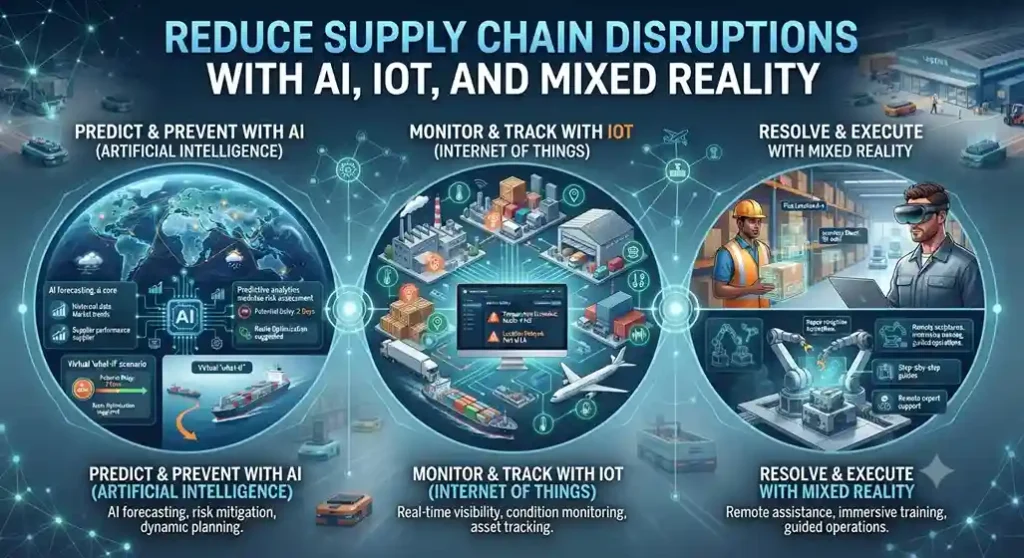
Reduce supply chain disruptions with AI, IoT, and mixed reality

Disruptions in global supply chains have significantly increased over the last decade, fueled by a myriad of triggers ranging from trade wars, demand surges from social marketing, natural disasters, and most recently, the recent COVID-19 pandemic. Updates to Microsoft Dynamics 365 Supply Chain Management in the 2020 release wave 1 help organizations proactively transform every aspect of manufacturing and supply chain operations to reduce disruptions. These new and updated capabilities drive automation and reduce downtime using IoT and mixed reality, and provide the agility to re-plan production in real time to dynamically changing demand. In fact, the agility enabled by Supply Chain Management is currently being leveraged by a consortium of major UK industrial, technology, and engineering businesses from across the aerospace, automotive, and medical sectors that has come together to produce medical ventilators for the NHS. Reducing the risk of supply chain disruptions As the threat of disruptions increase, companies are pressured to ask if the supply chain is ready for the next event, pushing them to build a more resilient supply chain to ensure business continuity for them and their customers in the most cost-effective manner. More companies will start buffering for risks and move from a “Just-in time” mentality to a “Just-in case” mentality. Factories will need to transform rapidly to adapt to change, serving a wider range of products produced in smaller batches with lower set up time, faster throughput, and the ability to quickly respond to fluctuating demand and customer expectations. Companies are likely to move from single supplier to multi-supplier and single location to multi-location models for mission critical parts even if it is cost prohibitive in order to reduce the impact of supply chain disruptions. To reach this optimal state of agility and delivery speed, manufacturers need to adapt every aspect of the supply chain to enable tools, equipment, and people to become instrumented, interconnected, and intelligent—a state of persistent adaptive learning and optimization as more data is available to tighten links between manufacturers, suppliers, and customers. The latest release from Dynamics 365 Supply Chain Management enables customers to reach this optimal state by proactively transforming their manufacturing and supply chain with predictive insights and intelligence from AI, IoT, and mixed reality—across planning, production, inventory, warehouse, and transportation management—to maximize operational efficiency, product quality, and profitability. Train workers faster with integrated mixed reality learning experiences Dynamics 365 Supply Chain Management is now integrated with Dynamics 365 Guides to help mainstream mixed reality for manufacturing. Companies can deliver a faster ROI by getting the workforce trained sooner with fewer trainers and with an interactive learning experience. Workforce efficiency can skyrocket with step-by-step instructions that guide employees to the tools and parts they need and how to use them in real work situations, available at a glance on a Microsoft HoloLens device that keeps their hands free to do the work. Dynamics 365 Guides can not only eliminate costly errors in production but also improve workforce safety. Companies can significantly reduce asset downtime by making asset maintenance skillset-agnostic and avoid costly waiting time for a specific expert to perform maintenance on an asset. The guides are extremely easy to author and do not require any coding. A guide can be authored by simply writing the step-by-step instructions on a PC followed by picking and placing the holographic parts and inbuilt icons on the machine where the work is happening. Introducing Dynamics 365 Guides for HoloLens 2 Dispatch the right resources at the right time Dynamics 365 Supply Chain Management is now integrated with Microsoft Dynamics 365 Field Service. Customers can significantly reduce downtime of geographically dispersed mission critical assets by automating field service operations so that the right resources—workforce, machines, parts, and tools—are available at the right place, at the right time, to proactively maintain them. Companies can improve the overall equipment effectiveness (OEE) of their geographically dispersed mission critical assets by performing predictive maintenance based on real-time performance data from IoT and field data from Dynamics 365 Field Service. Traditionally, disparate systems hinder the ability to accurately forecast demand for critical and expensive parts frequently used in both service and new production. Due to lack of forecasting for service demand, companies constantly take parts from production to fulfill the service demand, and vice versa, to deliver good customer service. This often creates a shortage for new production and significantly impacts on time delivery to new customers. As a result, the company is unable to deliver a delightful customer experience on both fronts. This integration will eliminate the need for disparate systems and significantly improve the forecast accuracy of these mission-critical parts due to real time tracking in the service supply chain. Seamlessly integrate IoT capabilities Dynamics 365 Supply Chain Management now offers out-of-the-box IoT capabilities that leverage Microsoft Azure IoT Hub to connect signals from mission-critical assets with business transaction data. Manufacturers can improve uptime, throughput, and quality by proactively managing shop floor and equipment operations with a real-time view of their entire production and stock. This will significantly reduce costly downtime of business-critical equipment by performing predictive maintenance before disruptive failures occur. There is no coding required to implement these out-of-the-box IoT scenarios on your manufacturing floor today. Dynamics 365 Supply Chain Management and IoT Intelligence customer spotlight with Majans Improve on-time delivery with real-time production planning The Planning Optimization Add-in for Dynamics 365 Supply Chain Management enables companies to improve on-time delivery by performing production planning in real time, accounting for dynamically changing customer demand, material availability, and capacity constraints across multiple sites and warehouses. It also enables customers to improve inventory turns by right-sizing inventory levels based on dynamically changing customer demand and capacity constraints. This helps eliminate excess and reduces slow moving inventory. Planning Optimization Add-in for Retail and Distribution is available and Production planning is currently in preview.

Reduce supply chain disruptions with AI, IoT, and mixed reality Read More »

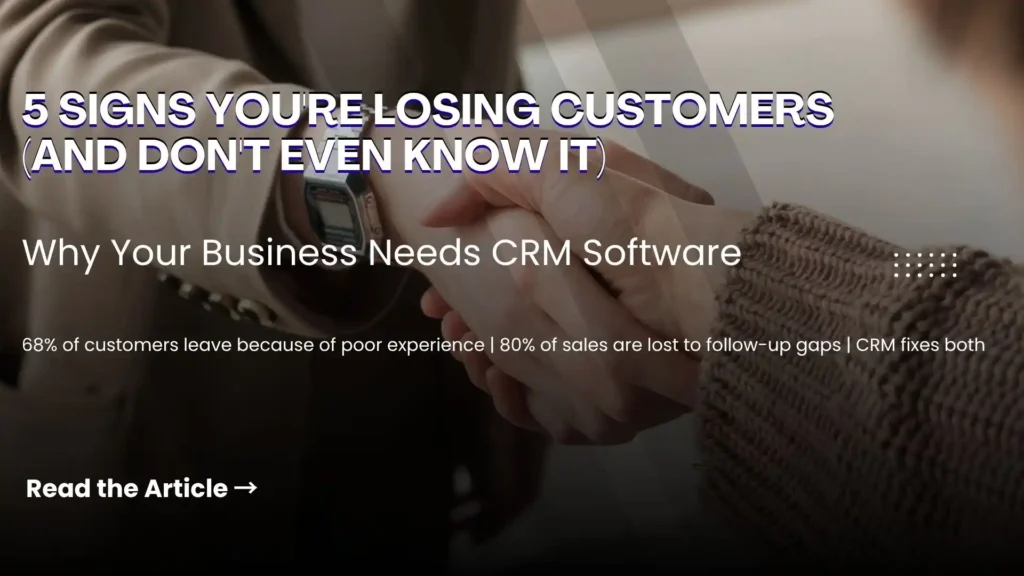
When do you know that your business needs a CRM software?

[vc_row][vc_column][vc_column_text]Customer Relationship Management is a process of managing or organizing prospects throughout the sales life cycle. The more the advancement in serving the clients, the more will be the payment stream for the Company. Trident’s CRM software solutions happen to be one of the most effective and efficient CRM software that could easily cut overhead costs and give highlights which demonstrate helpful to different business firms. Many CRM software programs available have several features that can be used or restricted – so in effect a business can modify to make their own CRM software. However, utilizing CRM software gives various advantages to both organizations and customers and that is the reason each genuine business has implemented some of the other CRM applications. So who can opt for Trident’s CRM software? A simple response to that question would be “Any business with customers would utilize CRM“. However, in the real world, it is not just as simple as that. Choosing an appropriate CRM software solely depends upon the business process along with a range of profitable features. Below are the type of Businesses that could gain benefit from using Trident’s CRM software solutions. 1- The business that uses any form of Marketing:  For any business that uses marketing campaigns to promote, sell or advertise their products or services in the market through various communication mediums such as phone, email, etc. Reaching to customers in bulk within a short period as well as recording the response on the go makes it more effective to manage the marketing process. 2- A business that deals with B2B and B2C Sales: For any business that tends to cope up with the Customers to sell or cross-sell the products. Maintain relevant sales data such as documents, communication records, etc. Identify the process flow starting from Lead up to the deal gets closed. 3- A business that creates Quotations & Invoices:  Built-in invoicing module to track the quotations and invoices generated against an opportunity. Efficiency to merge the billing details into the document which can further be mailed to the customer right from the CRM software without any need to switch between the applications. 4 – A business that deals in Customer Service:  For any business that believes in increasing customer satisfaction by helping them in tracking as well as resolving the issues completely. Managing the cases within CRM as well as auto – escalations triggered on a timely basis not only guarantees better customer satisfaction but at the same helps the Management to track resource performance. 5- A business that wants to increase efficiency:  Well-organized business results in better output which can be ultimately tracked with the help of various Reports, Dashboards, etc. Well-improved or say the advance level of features incorporating in CRM with the latest release of versions has enhanced the CRM which has ultimately proved beneficial for Business growth. Thus using CRM software gives you numerous benefits to enrich both Business and Customer Relations by serving your customers better with stronger service and support. To know more about how can CRM software help you, you can check out our CRM software solution on https://tridentinfo.com/microsoft-dynamics-crm-software-solution/ and contact to our experts on https://tridentinfo.com/contact/.[/vc_column_text][/vc_column][/vc_row]

When do you know that your business needs a CRM software? Read More »

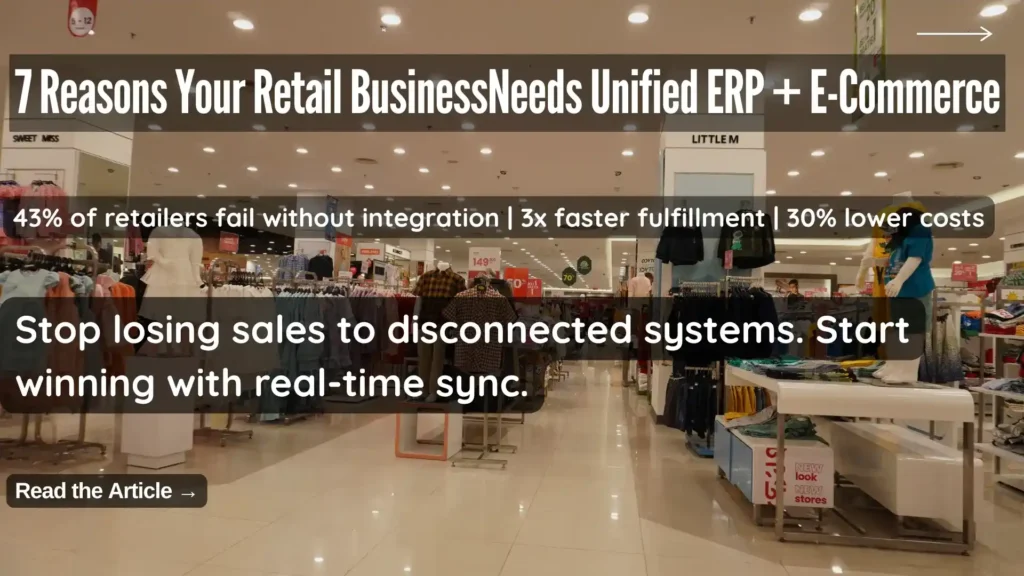
7 Reasons to have a Retail-oriented Solution to Unite E-commerce and ERP

[vc_row][vc_column][vc_column_text]Solely brick-and-mortar retail is gradually have become the exception rather than the norm. Increasing numbers of consumers have welcomed the convenience of online retailers, allowing them to evaluate items in less time and make purchasing decisions rather than visiting various physical stores. In everyday market research, 81 percent of consumers use phones and tablets. In reply to these developments, businesses try to boost revenues by embracing ecommerce and spreading to other platforms. Yet each new site introduced by marketers raises the difficulty of their distribution chain. To integrate all channels information to make good enterprise-wide choices, they need new digital resources. To establish a consolidated database of all purchases, clients, and goods, several retail businesses prefer to incorporate their ERP implementation services with each of their distribution channels. There are however some clear benefits of using an integrated solution designed specifically for the retail sector over integration solutions for common use applications. Below are some features of built-in retail integration solutions that show the requirement of customization for a common integration framework: 1- Flexibility Over Retail Vhannels All businesses move toward cohesive user experiences. Retail-specific integration solutions enable different systems, like your point-of-sale (POS) and ecommerce system, to import and then use product descriptions into your Retail ERP Software. It means you have the same range of products throughout all the product lines, while constantly pricing and discounting those items. 2- Omni Channel Experience Retail integration solutions offer services for Omni channel purchase-online pickup-in-store (BOPIS) fulfilment which enables customers to buy an item from one channel and deliver it from another platform. They might buy a product at a retail outlet, for instance, and have it shipped to their house, or they might order it online and pick it up at a local retail outlet. The retail-specific integrated system manages ZIP-code searches for shop inventory, and shares shop pickup information between systems. 3 – Inventory Clarity Retail connectivity solutions provide an accurate representation of product availability by synchronization of inventory data throughout networks and systems on a routine basis. Entities can even merge individual warehouses and shops into satisfactory groups to enhance the control of the distribution chain. 4- Client Information Integration Your Retail ERP system will exchange customer data with your online store and other channels, using a retail-specific implementation solution. Customer data must stay consistent over digital and physical platforms and will avoid redundant information. Such knowledge could be used to generate and monitor purchase requests, and to improve loyalty program management. 5- Unified Loyalty Program A retail integration solution makes it much easier to operate a single loyalty program with consumer, pricing, and discount information integrated into your Retail ERP system. You will receive and redeem coupons, gift cards, and loyalty points across all platforms, creating better customer satisfaction and higher participation levels than a channel-specific rewards program. 6 – Single Integration Solution for Payment A retail-specific integration approach increases time to value by offering preloaded integration with major payment service vendors. The use of one integrated system for processing payments, order processing, customer data, and product inventory offers greater efficiency and lower production costs than multi-integrator dependence. 7 – Managing Multiple Languages and Currencies Retail integration technologies are planned for retail operations around the world. They have help for managing multiple languages and currencies, so you can quickly set up physical or online stores in new geographical regions. Conclusion Integration solutions intended for the retail sector provide many out of the box that would involve many months of costly customization to accomplish using platforms for general purpose integration. Trident Information Pvt Ltd provides a flexible and versatile integration solution which many international retailers use. For more information on the power of retail-specific integration, contact Microsoft ERP Partner Trident Information Pvt Ltd on https:/tridentinfo.com/contact/     [/vc_column_text][/vc_column][/vc_row]

7 Reasons to have a Retail-oriented Solution to Unite E-commerce and ERP Read More »

Turn prospects into engaged customers with intelligent sales and marketing

[vc_row][vc_column][vc_column_text] The selling landscape is undergoing fundamental changes, many of them driven by the effects of B2B customers’ experience as everyday consumers. Many retailers have created personalized, nearly immersive, online experiences for each customer. Consumers shopping for goods and services continually experience fresh and delightful interactions, from highly customized offers and recommendations to frictionless channels to 24/7 interactions. Using Microsoft Dynamics 365 for Marketing and Microsoft Dynamics 365 for Sales organisations are improving  their profit margins. The impact of B2C on B2B Today’s B2B buyers have high expectations, and those expectations will not be met if B2B buyers are accustomed to sophisticated consumer interactions in their personal lives. Executive B2B buyers are not impressed by marketing driven by large, relatively impersonal data analysis that leads to inconsistent and conflicting interactions or sales outreach that doesn’t cater specifically to their needs at the right time. The source of the problem may be largely invisible to the companies perpetuating this issue. Many organizations believe themselves to be customer-centric, while their buyers may not agree. That’s a significant disconnect. Clearly, B2B has much to learn from B2C companies. Customer experience – the rewards for getting it right Many B2C organizations have strategically embraced modern technologies like customer data platforms (CDP) and artificial intelligence (AI) to gain a 360-degree view of their customers and follow through on those insights to optimize customer engagement. The rewards for getting this engagement right are substantial. Many buyers are willing to pay more for a better customer experience. In terms of the potential benefits a great experience can have on sales success, a McKinsey study reported that organizations can expect: 10-15 percent lower customer churn 20-40 percent increase in the win rate of offers Up to 50 percent lower service costs Take a new approach B2B companies must move away from their legacy approaches based on large, relatively impersonal data analysis and move to solutions that unify relationship data across the full customer lifecycle. That way, they can gain insights that help build credibility and trust with buyers. They can run multi-channel campaigns to increase sales-ready leads, create personal experiences, and use guided process and AI to anticipate and respond faster to customer needs. They can build the ongoing, high-quality relationships that are necessary for long-term success. Four principal goals Turning prospects into engaged customers is a process. In order to achieve these goals, organizations must focus on 4 key priorities: Nurture more demand Personalize buyer experiences Build relationships at scale Make insight-driven decisions Each of these drives results by using deep reservoirs of data in making technology feel more human. Nurture more demand Relying only on conventional, basic email marketing as the primary source of leads is simply not effective enough. In fact, the more focused and demanding the customer universe is, the more essential it is to gain deep insights into what those customers expect. Northrop & Johnson,  a leading global yacht brokerage, competes for multi-million dollar customers using technology its industry has been slow to adopt. Using Microsoft Dynamics 365 for Marketing has created a decided competitive advantage: Vital insights into their customer base have helped to drive a 70 percent increase in charter sales. In any industry, companies need to generate leads across multiple channels, nurture large numbers of leads while prioritizing each one, and use data-driven insights to deliver leads that are sales-ready. Nurturing more demand is critical to growth. Personalize buyer experiences It’s time to end friction, inconsistencies, and the “do you know who I am?” part of the customer experience. Companies can acquire a holistic view of buyers, predict buyer intent, and orchestrate a connected, personalized journey for customers. In an era where guests have more choices than ever for leisure and entertainment, Tivoli delights its guests by using Dynamics 365 Customer Insights to stay one step ahead of expectations and transform the guest experience. With its deeper understanding of guests, it can add new chapters to its long tradition of imagination and innovation. Build relationships at scale Mutually beneficial relationships don’t simply happen with more data. Companies need to build credibility to establish and grow relationships with customers. Together, Dynamics 365 and LinkedIn enable the company to have increased information about, and impact on the sales relationships that are added to its sales pipeline, even as that pipeline experiences exponential growth month over month. Make insight-driven decisions Here’s where sales and marketing can truly align: utilizing data to uncover insights that lead to better-informed decisions throughout the sales process. This can improve performance, empower employees, and enable the company to gain increasingly effective strategic insights. With more than 1,500 pubs serving guests throughout the UK, Marston’s launched a business transition by bringing together guest data that was scattered across multiple systems into Dynamics 365. With their locations’ guest data now unified, Marston’s will gain a complete view of guests, which can be harnessed to generate customer satisfaction and strategic insights. This approach helps drive improved performance throughout the company, including the opportunity to empower employees – an often-overlooked aspect of a company’s success. Aligning sales and marketing: The intelligent way to succeed It’s possible to create exceptional experiences, drive more qualified leads, and increase revenue if an organization has the vision, process, and technology to harness all the data available. This requires high-level technology with well-defined business goals and sales and marketing applications fueled by keen intelligence. We have a compelling offering to accomplish just that with Microsoft Dynamics 365. Get in touch with our representative to request a demo for Microsoft Dynamics 365 for Sales & Microsoft Dynamics 365 for Marketing Blog Reference : https://cloudblogs.microsoft.com/dynamics365/bdm/2019/09/19/turn-prospects-into-engaged-customers-with-intelligent-sales-and-marketing/[/vc_column_text][/vc_column][/vc_row]

Turn prospects into engaged customers with intelligent sales and marketing Read More »

What Considerations Should be taken into Account when Implementing the New ERP for Food Manufacturing?

[vc_row][vc_column][vc_column_text]Usually, the decision-making process for ERP for Food Manufacturing is long and complex. From deciding which functionality is most vital to your business, to choosing a system that will make rapid and meaningful changes, it may seem daunting to decide on the appropriate ERP solution for your organization. But don’t worry, Microsoft gold partner Trident got you covered. As we have 20+ years’ experience and  implemented ERP food manufacturing various satisfied customers like Haldirams, Nik Bakers, etc. Through sharing tips on how to pick and incorporate the right food production ERP solution for your food company, we will make the decision-making process of implementing an appropriate ERP for food manufacturing a bit easier for your organization. 1) – Food Specific Approaches Tons of ERPs and business solutions are available to choose from. But as a food manufacturer or supplier, you should understand that it is complex to manage a food business effectively and comes with its own set of unique complexities. Many of the integrated software systems in the marketplace for small to medium-sized enterprises provide the functionality you would expect for sales, acquisitions, operations, accounting and inventory management only. But what about the extra features distinctive to food manufacturing? Once you settle on a standardized ERP solution, ask yourselves how much modification and flexibility a food-specific system will have to go into implementing the following characteristics: Food safety and compliance Manufacturing and quality Recipe development and management Food recall and trace-ability 2) – Functionality Recalling that not all food businesses run in the same manner is also relevant. A supermarket bakery operates much differently than a manufacturing frozen food, and a meat processor will have a completely different set of software specifications than a broad line dealer. So where are you going to start? Try to address the features and functions that your existing system currently lacks. Create a “wish list” of elements that would make operations run better if you had them in the spot. From there, you can filter a lot of ERP providers and can concentrate on only those solutions that are suitable for your organization. 3) –  Easy to Use Suppose: at your job you’re a warehouse worker or a machine technician. Now your management team has decided to introduce a new software platform throughout the organization, and you are responsible for learning it as soon as possible (and as precisely as possible). Too much load, right? Moving from manually managing stuff or from a legacy system to a fully integrated ERP solution can be terrifying for everyone in the company. The accounting department now needs to learn how to use a new system to enter figures and run calculations. The QA department now has a new way to set up quality controls and audits. If a new process is too complex, your staff might feel frustrated, disheartened, and underappreciated. Look for an ERP running on a system that is probably already familiar with most of your workforce (such as, for example, Microsoft Dynamics) 4) – Customer Support Working with a vendor of an ERP solution is so much more than just buying and using the product to run your business. The ERP solution is implemented, which usually takes five to nine months, and then continued support and facilities will proceed across your software’s life cycle. It is therefore essential to ensure that the ERP you choose is assisted by a team of people who are committed to ensuring that you are successful. This means for the food industry you need experts who are not only professionals in software but also food specialists. You wouldn’t recruit somebody to work in your warehouse that wasn’t a good choice, correct? Think the same way about the people who are working for your ERP provider. Because they are also responsible for your business ‘ success. It is easy to get confused as there are too many ERP for food manufacturing service providers, so remember to remain vigilant and consistent with what you want to get out of your solution. Selecting the right ERP means choosing software to help you enhance food security, simplify efficiency or productivity and handle the progress of the enterprise. If you still have any doubts left in your mind then you can contact to Trident’s ERP for food manufacturing providers on https://tridentinfo.com/contact/[/vc_column_text][/vc_column][/vc_row]

What Considerations Should be taken into Account when Implementing the New ERP for Food Manufacturing? Read More »

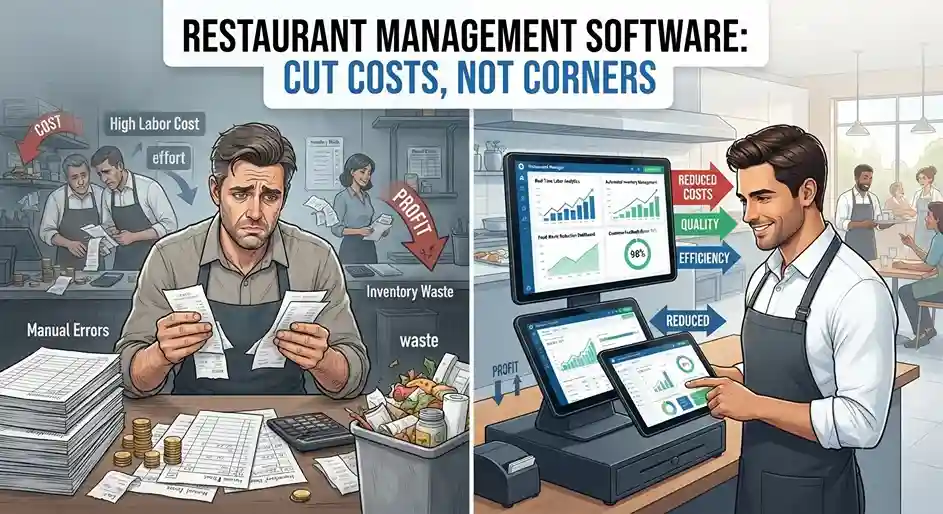
Slash costs in your restaurant with the right software system

[vc_row][vc_column][vc_column_text]How do you manage costs in your restaurant business? Are you operating as efficiently as you could be? We know how difficult it can be to maintain optimal efficiency and make money in a time of razor-thin margins and intense competition. By their very nature, restaurants are characterized by predictable, seasonal factors as well as by unpredictable ones, including changing customer preferences and fluctuating running costs. But there are ways to get a better handle of your business, helping you to plan ahead more effectively, become leaner and reduce costs in the process. For many restaurant owners, the answer lies in choosing a modern unified technology platform that provides a complete overview of your business operations from Point of Sale (POS) to back office. Indeed, research by the National Restaurant Association in the US found that over 80% of restaurants are turning to technology like online ordering and reservations and restaurant analytics to help them run their business successfully and efficiently. The same report found that four in five restaurant operators agreed that: Technology helps increase sales Technology makes their restaurant more productive Technology provides a competitive advantage. If you’re in two minds as to whether a restaurant management system could help your business grow, rather than simply cost you money, here are some specific areas in your business where the right technology can make a real difference: Optimize staff management If your staff schedules are currently handled manually, in spreadsheets or even on paper forms, you could be missing out on a trick. Staff management software has the capabilities you need to ensure rosters correspond with table bookings and helps you plan for the right amount of labor you need. The result is optimized schedules, which means you don’t have too many employees at work during quiet periods, and yet you have enough on hand to see you through the busy times. If you select a unified system for your restaurant, the staff management functionality can be part of the same platform used to manage the rest of your business. This allows you to make truly informed decisions using historic sales data and drilling down by location, day of the week and time to see patterns emerging and better determine when you will be busy or quiet. Another factor to consider is how you can use the software to keep track of your budgets and make sure you’re not paying out more than you should be. We know how difficult it can be to check and confirm the hours worked by each of your employees, especially when you are likely dealing with so many. But a staff management system can automate this for you, confirming actual hours worked are the same as those planned and highlighting any discrepancies for you to follow up on, minimizing errors and costs. With the functionality to analyze how much you are spending by employee, work code, shift and role, you can compare actual costs and performance against your business plan, and minimize unnecessary extra expenses, such as overtime. Simplify staff training In this industry, we know that workers tend to be transient – maybe you have lots of students or temporary workers on your payroll. High staff turnover can be a real pain point and loss maker for your business, especially as recruiting and training staff is both time consuming and costly. But there are ways technology can help you control this better, and reduce the costs and pain of getting new staff on board. If the systems you use are intuitive and easy for all employees to understand, you won’t have to spend as long training them on how to use them in the first place. Some retail management systems allow you to set up your POS so it mirrors your menu, making it far simpler for staff to find their way around while also helping to reduce mistakes. To simplify training even further, it could pay off to choose a system that uses a logic your staff is already familiar with. The LS Retail restaurant solutions, LS First and LS Central, are built on well-known Microsoft technology. This means new employees can be up and running quickly, as any experience with Microsoft software such as Office or Windows means they already know where to find menus and information in the system. Having one enterprise-wide platform, rather than multiple software solutions strung together, also means you only need to train your staff up once. This not only saves time and cost but gives you greater flexibility too. If you need to move staff from the bar to the restaurant floor, you can do so with ease. No extra training required to use a separate system; no time wasted. Increase table turnover and order value Is your restaurant floor running as smoothly as it could? There are some steps you can put in place to subtly speed up the process, allowing you to serve more customers without making your diners feel rushed. Mobile POS devices are a great way of doing this. As they connect your servers directly to the kitchen, kitchen staff can act on orders as soon as they are taken at the table, speeding up food preparation. Your waiters can get an alert on their POS devices when orders are ready, and they can also take payments on the device as soon as diners are ready to leave – no waiting for card readers or an available cash register. If you select the right mobile POS, your staff can also handle conversational ordering, where they take orders in the same way that customers reel them off – extra cheese on their burger and no mayo, with large chips, for example. Everything can be quickly inputted into the POS, speeding up service time and reducing errors. At the same time, because staff have all menu information right in front of them, they can improve their upselling potential by suggesting upsell items and upgrades as they take orders. Streamline kitchen operations A unified platform complete with a kitchen management system could help your restaurant serve up food more quickly and efficiently than ever. In the kitchen, having Kitchen Display System (KDS) screens connected to the

Slash costs in your restaurant with the right software system Read More »