Welcome to Trident Information Systems!
Write us to - info@tridentinfo.com
Let's Socialize

Search Results for: Supply chain

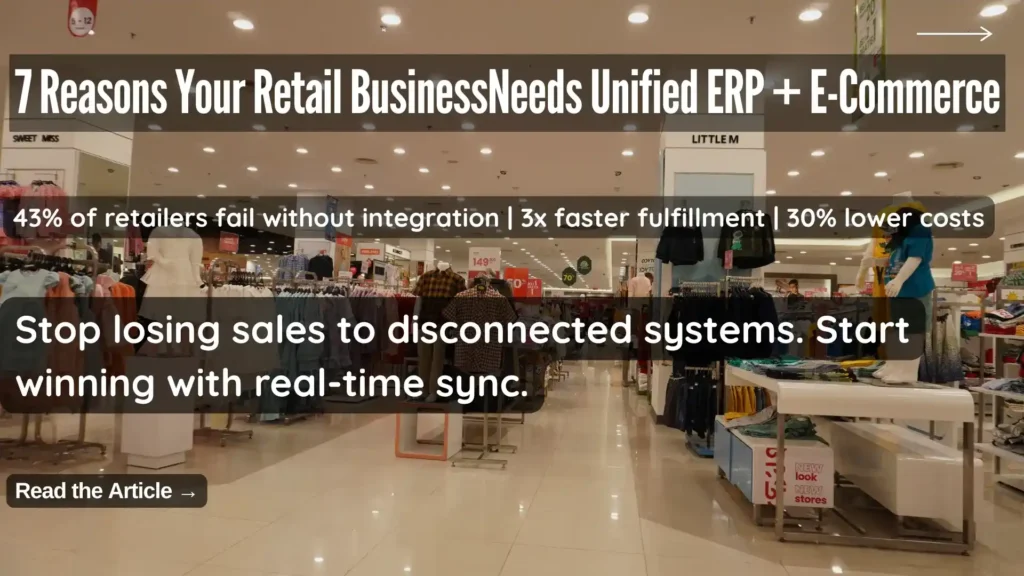
Redefining shopping excellence with an unified E-commerce solution

[vc_row][vc_column][vc_column_text]Over the last decade, the retail sector has experienced enormous change and transition. Many have suggested that conventional brick and mortar retail is dying and that for the everyday needs, consumers switch entirely to online platforms. However, this is not the case. As per a survey from the National Retail Federation, since 2010 retail storefronts in the US have continued to expand at approximately 4 percent annually along with the consistent double-digit growth of online shopping. Almost all of the top 50 online retailers have brick and mortar stores, as well. Although progress in e-commerce tends to outpace physical stores, the rate of progress in physical retail outlets is still much higher. E-commerce is also not a stand-alone medium in most cases but used in combination with conventional and new platforms to meet consumer needs such as buying online pick up in-store or Click and Collect. Physical outlets are still a big part of consumer spending patterns, but with this, we also have seen that consumer priorities have changed around shopping. Trident is offering Retail ERP Software for an outstanding commerce experience that helps in gaining maximum profits. Gone are the days when store employees are the only experts in information about goods. Consumers already have greater access to product details, price clarity, and accessibility. This means that retailers have to look at customer engagement across all platforms to make sure that their enterprise is capable of delivering on these recent high requirements. E-commerce will no longer be a major differentiator for retailers in the next few years, but will instead allow integrated retail trade to compete in the ever more challenging customer needs worldwide. So Trident ( dynamics 365 partner) & solution dynamics 365 for marketing not confined to e-commerce, but aims to streamline the process of unifying consumer shopping experiences through an end-to-end business framework that puts together e-commerce, in-store, back office, and call centre. Let’s discuss furthermore how Dynamics 365 for marketing solution helps retailers meet those dominant business requirements. 1)- Grant Excellent and Customized Consumer Experience Consumer experience is not only one of the top growth factors in the retail sector, but according to the recent survey by Microsoft and Forbes, 33 percent of retail managers are also considered a great business priority. The main task is to identify what constitutes outstanding customer experience for each individual business, as expectations of customers differ by micro-vertical retail, product category, and consumers themselves. It is up to the retailers to better define how their marketing commitment aligns with the experience. When customer experience is established, retailers need to be able to deliver on this commitment by providing technology that allows customer engagement in the next generation and does not limit their ability to evolve and build differentiating consumer experience. As per the report by Microsoft and Forbes, providing customized shopping has become increasingly popular and over 49 percent of customers aged between 18 and 24 stating they are more likely to purchase from retailers offering custom shopping experiences. The aim of personalization is to form a bond between both the retailer and the consumer by delivering goods and/or services across all retail channels based on past interactions. It enhances the relationship to an encounter more similar to an interaction with a trustworthy friend or partner than a simple transaction. There is a significant technological dependence to reach this next stage of customization. Networked and real-time visibility into consumers and activities are needed by retailers. Dynamics 365 put together all facets of customer interaction through e-commerce, call centre and in-store as well as simple incorporation into new channels to enable retailers to gain a holistic customer perspective. Couple this with out-of-the-box integration with Dynamics 365 Consumer insights and retailers can not only deliver AI-driven suggestions based on customer shopping history, likes, and patterns but also provide store agents with tools for presenting the customer’s 360-degree view and facilitating rich interaction throughout the selling journey.  2) Omni Channel Experience    Nowadays Customers expect to be able to purchase anywhere they want, and by whatever platform. Retailers also acknowledge the importance of Omni channel as one of their top three priorities, with 47 percent of Microsoft and Forbes survey executives rating this. Most retailers are still struggling in having an Omni channel experience because of the complexity of internal infrastructure and disconnected or fragmented systems. Trident’s Dynamics 365 NAV makes it much easier to offer a native Omni channel solution for retailers, as it was built in the cloud. 3) Flexibility An integrated solution is important not just for customers to engage and shop in retail, but also for how a unified solution can allow first-line employees to take part better and make sure ideal operational efficiencies across your supply chain. Dynamics 365 for marketing offers retailers the ability to streamline their operations with enriched knowledge that characterizes their business. Employees at the store can gain greater information and insight into stock availability, cross-application support for task management, as well as trade analytics that enable managers to monitor performance and insights to help them make informed decisions.[/vc_column_text][/vc_column][/vc_row]

Redefining shopping excellence with an unified E-commerce solution Read More »

Enterprise’s secret flavor to success- Microsoft Dynamics 365

As Fourth Industrialization spreads throughout the world, it ultimately reshapes the way enterprises operate and their staff work and food manufacturing is a key example. Digitization at the root of this revolution — supported and driven by cloud computing and likewise technologies such as artificial intelligence (AI), the Internet of Things, and machine learning — is enabling food manufacturers to always use information-driven intelligence to change their business operations and expand their business offerings by integrating innovative products with value-added services. Trustworthy Microsoft’s cloud offerings as Microsoft Dynamics 365—provide manufacturers new and better ways of growing, innovating, and boosting operational efficiencies. For Food & Beverage, Microsoft Dynamics 365 has all the spices you need to handle your complex tasks, financial and compliance needs. Industry-rich features are provided in the cloud & on-premise, which makes an enterprise more agile. Food safety provisions, traceability of ingredients, shelf-life monitoring, recipe management and seasonal demand predicting are some of the challenges faced daily by food and beverage manufacturers. With the industry-specific Microsoft Dynamics 365, whether you are dealing in foods, drinks, frozen entrees or canned goods, food manufacturers are acquiring the resources required for success and prosper. Microsoft Dynamics 365 provides a complete solution, ensuring that every part of your enterprise is fully connected, from human resources and financial management to warehouse operations and quality control. Add in industry-specific food and beverage manufacturing apps, then add a touch of advanced digital and shop floor technologies, and Microsoft Dynamics 365 will provide you with a formula for success. The benefits of Microsoft Dynamics 365 for food manufacturing industry include: The flexibility of recipes with batch processing technologies and industry-specific BOMs to help reformulation Supports multiple Units of measure (volume, weight, pounds, cases, etc.) Seasonal demand forecast for individual and multi-plant Precise and clear consumer inventory management, including batch, lot and serial number traceability to automate turns and monitor expiry or best-in-time dates The functionality of private labelling Strong scheduling engine for planning volumes, advanced sequencing, waiting times and other dynamic scheduling criteria. Conquering of the laws of the food and beverage industries Two-way lot monitoring (from fields to grocery stores and back) for a clear and precise supply chain, including the purchase of raw materials and rapid identification of recall Expiry, cross-contamination and shelf-life monitoring, first-OUT (FEFO) logic to reduce waste and streamline your stock Strong labelling options to avoid unnecessary error labelling and regulatory fines Microsoft Dynamics 365 provides some clear business advantages for the food industry, whether you need to boost your teamwork skills, improve productivity or protect your data, it will be there for you. Now the question is out of too many Microsoft Dynamics 365 service providers, which service providers to opt for?? For that, you can blindly trust dynamics 365 partner Trident Information Pvt Ltd. It is one of the renowned names in the market. For more information, you can go to https://tridentinfo.com/contact/[/vc_column_text][/vc_column][/vc_row]

Enterprise’s secret flavor to success- Microsoft Dynamics 365 Read More »

7 Steps to Implement ERP in a Right Way

[vc_row][vc_column][vc_column_text]Enterprise Resource Planning (ERP) systems are utilized by businesses looking to manage their business functions within a centralized and integrated system. ERP is commonly used by companies working within the supply chain to help keep track of all the moving parts of manufacturing and distribution. ERP can be utilized by several different industries including those in Retail, Logistics, Manufacturing, Hospitality, etc. ERP is really important for any organization, it could act as a backbone of any company but you have to keep a lot of things to take full advantage from your ERP which we will discuss in below context. Steps to Implement ERP  1- Finding objective and scope Before ERP implementation recognizing the objective and scope of implementing ERP is very important. You should ask yourself a question that “What should ERP be implemented for” and the Key Performance Indicators (KPI) have to be analysed. You should not focus only on the present objective but you also have to keep in mind the future objectives as well, which enables your business to accommodate changes in your future. As per Panorama’s study, 61.1% of ERP implementations take longer than expected and 74.1% of ERP projects exceed the budget. Blurry definition of the ERP requirement is the main cause of a long time and over budgeting. For that you should know the scope of implementing ERP, the ERP demand list should be generated depending on budget and core necessity. 2- Selecting ERP Vendors In this competitive environment, the election of the ideal product is important to achieve productivity gains. There are over 500 ERP applications in the market. While selecting the perfect ERP application for your business, you should know the vendor’s previous projects, industry vertical and experience. 3- Monitor Foundation  According to Mint Jutras, 23% are unable to grow their business as quickly as they would like and believe this to be because they lack the tools they need in their current ERP system. The infrastructure on which the software will operate has to have the expanse of scalability along with options to update as per the demand. Such a requirement should not be limited. 4- Make Employees Ready for ERP Big changes in any organization could also lead to the retention of employees, this could immensely influence the growth rate of a company, therefore management should involve their employees and develop them psychologically to clarify the critical questions like – HOW will ERP help an organization to rise? OR How would ERP enhance productivity? OR How would an ERP automate back-office functions and save time? A couple of brainstorming sessions will build employees’ confidence and prepare them to welcome the good change with open arms. 5- Technology & Knowledge Transfer  21% of ERP implementations fail to give significant business benefits. The causes vary, beginning with inappropriate customization occurring from ill-trained personnel operating data to the solution. Training is the most important aspect of the ERP software implementation process. It assures there are fewer issues and higher success, especially when ERP is implemented for the first time in the company or when the platform is changed from one ERP solution to another. Decent use of technology and a useful knowledge transfer, along with proper training should be considered. 6 – Testing  According to a Panorama Research study, 40% of ERP implementations cause major operational disruptions after go-live; therefore, proper testing is necessary before implementation. In the testing phase, improvising can be done keeping core objectives in mind simultaneously. Testing is an important phase of the implementation process, which takes care of system and user acceptance testing. 7 – Maintenance Once the ERP solution is properly-checked and implemented, it is the time to go live. After going live you your ERP needs continuous maintenance and updating to avoid any glitches and irregularities. It is a continuous process, not a one-time event. Now the question is out of 500 ERP applications right now in the market, which one is the best to choose?? Trident (Microsoft ERP partner) ERP Software Solutions are one of the best ERP software providers in, India. Our ERP analyses your business individually before coming with an efficiency offer in order to meet the best needs of your business. We provide customized ERP software solutions in cloud & web based environment, which is our strongest value propositions. Our ERP consists of various building blocks, which enables businesses to choose modules according to their exact needs and integrate all of their key processes into a single solution.[/vc_column_text][/vc_column][/vc_row]

7 Steps to Implement ERP in a Right Way Read More »

Food Manufacturing Industry Need Intelligent ERP to Manage Operations & Manufacturing Process

[vc_row][vc_column width=”1/2″][vc_column_text]Nowadays various food industries providing all kinds of food services are established throughout the world. Now food industries have to focus on concerns like fitness and wellness, changing lifestyles, changing favourites, food protection, sustainability, and technology. Aside from serving their customers, they also are involved in managing their processes short and streamlined. In today’s food market with such an immense competition the investment in technologies like ERP for food & beverage is not only a wise choice but a necessary one. In the below context we will address the needs for ERP for Food Manufacturing and its benefits.[/vc_column_text][/vc_column][vc_column width=”1/2″][vc_column_text] Needs of ERP for Food Manufacturing & Managing Operations    Single Integrated System Streamline Production Management Monitoring of the food Enhance Supply Chain Efficiency Manage R&D for Faster Time to Market Strategic Financial Management [/vc_column_text][/vc_column][/vc_row][vc_row][vc_column width=”1/2″][vc_column_text] Benefits of ERP for Food & Beverage Industry 1) Single Integrated system ERP makes an organization efficient and simplified its management by addressing data from every single distinct zone of the organization, allowing all data to be accessed by employers in real-time. This also helps the administrators to have overall information of the whole organization. Furthermore, most ERP programming is presently accessible on cell phones which makes it’s more easily accessible. 2) Streamline Production Management ERP helps in following up with the seasonal demand with simpler production scheduling tools. Furthermore, it reinforces accuracy with automated barcodes, and RFID tags and track a variety of things including the loss of inventory and ingredients[/vc_column_text][/vc_column][vc_column width=”1/2″][vc_single_image image=”7257″ img_size=”full”][/vc_column][/vc_row][vc_row][vc_column width=”1/2″][vc_single_image image=”6163″ img_size=”full”][/vc_column][vc_column width=”1/2″][vc_column_text] 3) Continuous monitoring of food An ERP ensures the protection of your manufacturing company by continuous monitoring of food for its security, for example, stock details, expiry dates, content properties, and nourishment can be effortlessly observed and verified. 4) Enhance Supply Chain Efficiency ERP helps in making ingredient and raw material sourcing more efficient and economical by purchasing more strategically with an eye on seasonality and Improving forecast accuracy for just-in-time production. Furthermore, it enhances materials and inventory management to maximize shelf life and reduce waste. 5) Manage R&D for Faster Time to Market By knowing what ingredients are included in each order with robust batch and lot tracking, ERP Applies discipline to managing recipes throughout development with revision auditing.[/vc_column_text][/vc_column][/vc_row][vc_row][vc_column][vc_column_text] 6) Enable Strategic Financial Management It helps in Streamlining accounting operations by gaining visibility into trends with built-in sophisticated analytics and reporting and Optimizing profitability with end-to-end costing analysis. For food and beverage companies, these hurdles have been especially acute because of the very vital necessity to balance changes that influence cost-effectiveness and product safety. But such concerns are not new to this industry as today’s business environment has become very competitive and nowadays ERP is not just a choice, it has become a necessity. Without an integrated ERP software system, the task is less effective, less economical and has a greater chance of losing to manage both your business plans and long term aims. An investment now in an ERP system can help you further by having more ROI.[/vc_column_text][/vc_column][/vc_row]

Food Manufacturing Industry Need Intelligent ERP to Manage Operations & Manufacturing Process Read More »

How Dynamics 365 ERP Helping in Manufacturing Industry

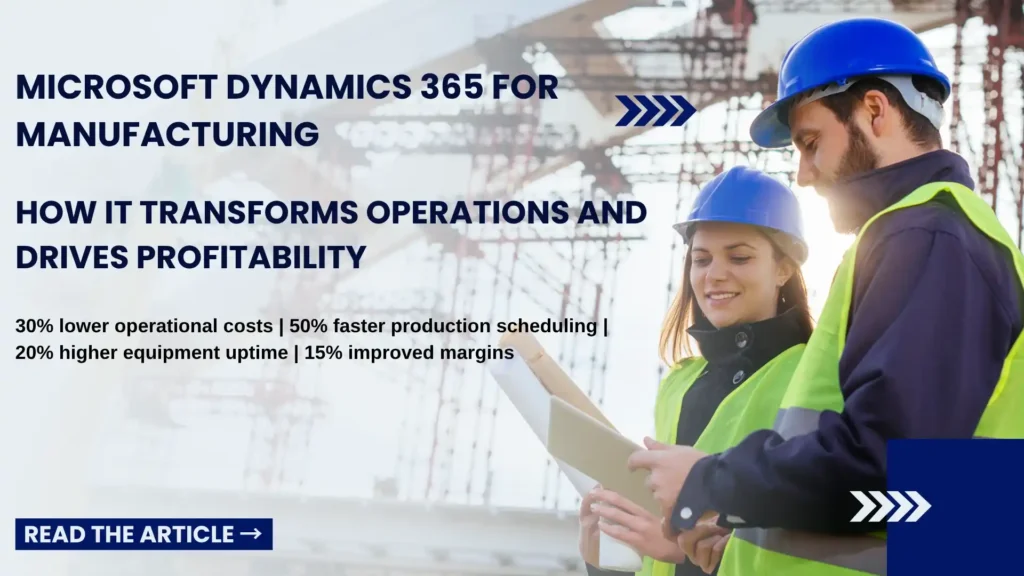
[vc_row][vc_column width=”1/2″][vc_column_text]With the advancement in technology, manufacturers are under pressure to live at top-level productivity throughout their supply chains in the phase of a transforming industrial landscape. Transforming operations and enhancing productivity is a top preference for many manufacturing businesses, but if manufacturers have to build more efficient and productive organization industrial overhaul, they necessitate to have a sound business management solution at their foundation. This is where an ERP like Microsoft Dynamics 365 for manufacturing can make all the difference. The Microsoft Dynamics suite has long been a favourite of manufacturing businesses, with Manufacturing ERP Software solutions Dynamics NAV and Dynamics AX, in particular, offering a range of tools and processes for manufacturers of all types. Microsoft Dynamics for manufacturing has been aiding manufacturers to streamline and enhance their processes for two decades, and now, in the phase of massive digital transformation across the industry, it is rendering customers with modish tools to assist them to do more[/vc_column_text][/vc_column][vc_column width=”1/2″][vc_single_image image=”7014″ img_size=”full”][/vc_column][/vc_row][vc_row][vc_column][vc_column_text] Benefits of Microsoft Dynamics 365 for manufacturing 1) Heighten supply chain operations It can be challenging to gain a complete, real-time survey of procedures. Data from sales, suppliers, order fulfilment, product performance, and customer service all need to be acknowledged while sweating to advance supply chain processes. By linking your business data, supply chain data, and public data like maps and weather forecasts in a system instilled with artificial intelligence and machine learning, manufacturers can better readjust to changes and developments which ultimately cut down the wasted time and resources. A cloud-based, mobile-enabled solution like Dynamics 365 for manufacturing assists businesses to implement a holistic system that acts as a “single source of truth” can help create more accurate schedules, forecasts, and budgets, which in turn power a more efficient business.[/vc_column_text][vc_row_inner][vc_column_inner width=”1/2″][vc_column_text] 2) Slick asset management Dynamics 365 for manufacturing enables manufacturers to closely observe their machinery by processing and gathering data in real-time. Performance, usage, and machine lifecycle information can be viewed anytime, anywhere, and any issues can be resolved accordingly. Combination of an innovative ERP like Dynamics 365 with IoT-ready parts, manufacturers can keep an even closer eye on their assets, spot broken or inefficient components, and use collected data to work accordingly.   4) Make better use of business data  The growth of the IoT is not only enabling manufacturers to better sync their equipment and processes, but it’s also producing impressive amounts of data. How businesses use that data is crucial to their success in the new age of industry. Combining this centralized intelligence with Dynamics 365’s built-in AI capabilities supports manufacturers obtain actionable insights from their data, forecasts based on previous actions and events, and graduate from being reactive to staying one step ahead.[/vc_column_text][/vc_column_inner][vc_column_inner width=”1/2″][vc_column_text] 3) Enhance innovation  In any type of business, time is money, and manufacturers are under relentless pressure to reduce production cycles and get products to market more quickly. Dynamics 365 for manufacturing allows greater insight into business operations, highlighting sections that can be optimized, processes condensed, and costs cut. With product, customer, and performance data being examined in real-time, manufacturers have more freedom and scope to enhance the way they work and respond to changes quickly. Having data on hand to able to innovate and reinvent not only empowers employees but also shortens the time to market and enhance manufacturing process automation.   5) Boost profitability By equipping manufacturers with the tools and intelligence to make their services better, faster, and more customer-focused, Dynamics 365 for manufacturing enables users to eliminate waste, reduce errors, and provide more value to their customers; all of which will result in higher profits, and a healthier future.[/vc_column_text][/vc_column_inner][/vc_row_inner][/vc_column][/vc_row]

How Dynamics 365 ERP Helping in Manufacturing Industry Read More »

Microsoft Dynamics 365 Business Central dashboard managing finance, inventory, and business operations.

Microsoft Dynamics 365 Business Central: The All-in-One ERP Solution for Growing Businesses

Growing businesses reach a point where spreadsheets, disconnected accounting software, and manual processes stop being inconveniences and start being strategic risks. Inventory decisions made without real-time stock data. Financial close processes that take weeks instead of days. Sales teams working from customer records that do not reflect the latest service interactions. Supply chain planning that cannot see production capacity in real time. These are not just operational frustrations — they are competitive vulnerabilities in a market where speed and accuracy determine which businesses grow and which ones stall. Microsoft Dynamics 365 Business Central is built for exactly this inflection point. It is an all-in-one business management solution that connects finance, sales, supply chain, manufacturing, project management, and service operations on a single, intelligent platform — giving growing businesses the end-to-end visibility, automation depth, and real-time intelligence they need to make better decisions and accelerate growth. As the evolution of Microsoft Dynamics NAV — one of the world’s most widely deployed mid-market ERP platforms — Business Central combines the deep functional capability that NAV users trusted with the cloud-native architecture, embedded Power BI analytics, and Microsoft 365 integration that modern businesses require. Trident Information Systems is a certified Microsoft Dynamics 365 Business Central implementation partner — helping businesses across manufacturing, retail, professional services, and distribution implement, configure, and maximize the value of Business Central across India. This guide covers every major capability of Dynamics 365 Business Central — what it does, how it works, and what it delivers for growing businesses. What Is Microsoft Dynamics 365 Business Central? Microsoft Dynamics 365 Business Central is an all-in-one cloud ERP solution designed for small and mid-size businesses that need a single, integrated platform to manage their entire operation — without the complexity and cost of enterprise-grade ERP systems like Dynamics 365 Finance and Operations. The Evolution of Dynamics NAV: Built for Modern Business Business Central is the direct successor to Microsoft Dynamics NAV — one of the most successful mid-market ERP platforms in the world, with hundreds of thousands of deployments across more than 170 countries. If your organization is currently running Dynamics NAV, Business Central is your natural upgrade path — preserving the functional depth and business logic you depend on while adding cloud delivery, embedded AI, real-time analytics, and modern Microsoft 365 integration. For new implementations, Business Central offers the fastest path to a fully integrated business management platform — with preconfigured industry templates, rapid deployment methodology, and no-code customization tools that allow businesses to adapt the system to their specific processes without expensive custom development. Who Is Dynamics 365 Business Central Designed For? Business Central is designed for: Financial Management: Real-Time Intelligence Across Every Account Financial management is the operational core of Business Central — built to give finance teams the real-time visibility, automation, and control they need to close faster, report more accurately, and forecast with confidence. Make Informed Decisions With End-to-End Financial Visibility Business Central connects data across accounting, sales, purchasing, inventory, and customer interactions — creating a single, continuously updated financial picture of your business. Built-in Power BI dashboards display financial performance in real time, with drill-down capability from summary KPIs to individual transaction level: Accelerate Financial Close and Reporting Manual financial close processes consume weeks of finance team capacity every period — reconciling accounts, chasing documentation, and correcting errors that automated systems would have caught immediately. Business Central streamlines the entire close cycle: Improve Forecast Accuracy With Multi-Dimensional Analysis Business Central’s forecasting capabilities give finance and leadership teams the tools to model future performance with confidence: Core Financial Capabilities: GL, Fixed Assets, Receivables, and More Business Central’s financial module covers every dimension of business accounting: Customer Relationship Management: Deliver Value at Every Touchpoint Business Central includes integrated CRM capabilities — giving sales teams the customer intelligence, opportunity management tools, and productivity features they need to close more deals and build stronger relationships. Prioritize Leads, Track Interactions, and Close More Deals Boost Sales Productivity From Within Microsoft Outlook One of Business Central’s most practically impactful capabilities is its deep integration with Microsoft Outlook — the tool most sales professionals already spend the majority of their working day in: Dynamics 365 Business Central and Dynamics 365 Sales Integration For organizations that require deeper CRM functionality than Business Central’s native capabilities provide, Dynamics 365 for Sales integration is available natively — synchronizing sales orders, item availability, units of measure, and currencies between the two platforms in a few straightforward steps. Supply Chain Management: Automate, Optimize, and Protect Margins Business Central’s supply chain capabilities give purchasing, inventory, and operations teams the intelligence and automation to maintain optimal stock levels, avoid costly shortages, and protect margins through smarter procurement. Optimize Inventory Levels With Built-In Intelligence Avoid Stockouts and Lost Sales With Automated Replenishment Stockouts are one of the most costly and preventable operational failures in any product-based business. Business Central eliminates them through: Purchase and Sales Order Management Warehouse Management: Basic and Advanced Business Central’s warehouse management can be configured at different complexity levels — from basic order-by-order processing for simpler operations to advanced multi-order consolidation for high-volume distribution environments: Manufacturing: From Planning to Production to Delivery Business Central provides integrated manufacturing capabilities for companies that produce goods — from simple assembly operations through complex multi-level production with subcontracting. Production Planning and Capacity Optimization Subcontracting and Assembly Management Service Order Management: From After-Sales to Contract Management Business Central provides a complete service management framework — giving service operations teams the tools to manage service requests, service contracts, field technician dispatch, and pricing across the full service lifecycle: Project Management: Stay on Budget, Deliver on Time Business Central’s project management capabilities give professional services organizations and project-based businesses the tools to plan, track, and deliver customer projects profitably: Job Costing, Timesheets, and Resource Planning Analyze Project Profitability in Real Time Human Resources and Expense Management Business Central includes foundational human resources and expense management capabilities — giving HR and finance teams a single system for employee data and expense processing: Power

Microsoft Dynamics 365 Business Central: The All-in-One ERP Solution for Growing Businesses Read More »

Microsoft Dynamics 365 Integration Services: Connect Your Applications, Data, and Processes — Seamlessly

Every enterprise runs on more applications than it can easily count. A CRM here. An ERP there. A website that does not talk to either. A mobile app that syncs to a database once a night. A marketing platform that receives a weekly export. A finance system that requires manual reconciliation with the sales data that should be feeding it automatically. This is not a technology problem. It is a strategy problem — and it compounds with every new system your business adds. Microsoft Dynamics 365 integration services solve this at the architectural level. By connecting your Dynamics 365 environment — and every other application, data source, and process in your business ecosystem — through Microsoft Azure, Power Automate, and Microsoft Dataverse, Trident enables your organization to operate with the speed, accuracy, and agility that modern business demands. Whether you are implementing Dynamics 365 for the first time, upgrading from a legacy ERP, or trying to rationalize a complex multi-system environment that has grown organically over years — Trident’s integration consultants will architect a solution that ensures your data flows where it needs to, when it needs to, without manual intervention, without data loss, and without the security risks that come from poorly designed integration architectures. This is not about connecting systems. It is about connecting your business. Why Seamless Integration Is Now a Business Imperative The Hidden Cost of Disconnected Systems and Data Silos Most businesses underestimate the cost of their disconnected systems — because the cost is distributed across dozens of daily processes that have been manual for so long, nobody questions them anymore. The sales team copies data from the CRM into a spreadsheet to send to operations. The finance team waits for the month-end export from the sales system to reconcile revenue. The warehouse team checks inventory in one system and updates orders in another. The marketing team sends campaigns to a list that was last synchronized three days ago. Each of these manual steps is a cost: time spent, errors introduced, decisions delayed, and opportunities missed. At enterprise scale, the aggregate cost of data silos is enormous — and entirely preventable with the right integration architecture. What True Integration Looks Like in a Modern Business True integration is not connecting two systems with a point-to-point API that breaks every time either system updates. It is a resilient, scalable integration architecture that: This is the integration architecture that Trident designs, builds, and maintains for organizations running Microsoft Dynamics 365 across India. Trident’s Microsoft Dynamics 365 Integration Approach Right Data, Right Place, Right Time — Every Time The success of any ERP or CRM implementation depends fundamentally on data quality and data availability. A Dynamics 365 deployment that does not receive accurate, timely data from every connected system is a Dynamics 365 deployment that is not delivering its full value. Trident’s integration philosophy is built around a simple principle: the right data, in the right place, at the right time. Our integration consultants work with your team to understand every data flow your business depends on — and architect an integration solution that makes those flows automatic, reliable, and auditable. Our most common integration scenarios include: On-Premises, Cloud, and Hybrid Integration Capabilities Not every business is ready to move everything to the cloud simultaneously — and not every system can be. Trident’s integration capabilities cover the full deployment spectrum: Microsoft Azure: The Integration Foundation Azure Integration Services: Power, Security, and Global Scale Microsoft Azure is the cloud platform that powers Trident’s integration solutions — providing the security, scalability, and global infrastructure that enterprise integration requires. Azure’s integration services give organizations access to: Hybrid Cloud Connectivity: Maximize Value From Existing Investments One of the most compelling capabilities of Azure’s integration platform is its hybrid connectivity — allowing organizations to connect on-premises systems to cloud services without replacing existing infrastructure. The Azure On-Premises Data Gateway enables secure, encrypted connectivity between cloud-based Power Automate workflows and on-premises data sources — including databases, file systems, and legacy applications — without opening inbound firewall ports or compromising on-premises security posture. For organizations managing a mixed environment of legacy on-premises systems and modern cloud applications during a digital transformation journey, this hybrid connectivity is the bridge that makes a phased approach viable. Microsoft Power Automate: Automate Workflows Without Code Microsoft Power Automate (formerly Microsoft Flow) is the workflow automation layer that connects everyday business applications and automates repetitive processes — without requiring any code. For business users who need to automate a specific process and for IT teams building enterprise integration workflows, Power Automate provides a no-code interface for creating automated workflows between hundreds of supported applications and services. Multi-Step Workflows and Conditional Logic Power Automate’s workflow engine goes far beyond simple “if this then that” automation. Enterprise-grade workflows can include: Practical examples of Power Automate integration for Dynamics 365: Secure Data Management and Loss Prevention Data security is not an afterthought in Power Automate — it is built into the architecture: On-Premises Data Gateway: Connect Legacy Systems to the Cloud The On-Premises Data Gateway for Power Automate enables secure connectivity to on-premises data sources — including SQL Server, Oracle, SharePoint on-premises, and file system sources — without exposing those systems directly to the internet. This capability is critical for organizations in the middle of a digital transformation journey — where some systems have moved to the cloud but others remain on-premises for operational, compliance, or cost reasons. The gateway acts as a secure bridge — enabling cloud-based workflows to access on-premises data as if it were a cloud service. Microsoft Dataverse: The Single Source of Truth for Your Business Data Microsoft Dataverse (formerly Common Data Service) is the unified data platform at the heart of the Microsoft Dynamics 365 and Power Platform ecosystem — providing a standardized, secure, and governed data layer that every connected application can use as a shared source of truth. A Unified Data Layer Across Every Business Application Rather than each application maintaining its own separate database

Microsoft Dynamics 365 Integration Services: Connect Your Applications, Data, and Processes — Seamlessly Read More »

LS Retail software dashboard managing POS, inventory, sales, and retail operations in real time.

LS Retail Software Solution: The All-in-One Retail ERP and POS Platform That Sharpens Your Competitive Edge

The retailers growing fastest right now are not the ones with the most stores or the biggest marketing budgets. They are the ones with the best technology — and specifically, the best-connected technology. When your POS system, inventory management, loyalty program, e-commerce platform, and head office operations run on separate, loosely integrated systems, you are not just managing inefficiency. You are making every strategic decision with incomplete, delayed, or conflicting data. You are losing sales to stockouts that a connected inventory system would have prevented. You are losing customers to competitors whose personalized offers are powered by data you are collecting but cannot use. LS Retail — the industry-leading end-to-end retail management solution built on Microsoft Dynamics 365 Business Central — solves this at the architectural level. Rather than patching together multiple applications, LS Retail gives retailers a single platform that covers every aspect of the retail operation: from the POS terminal on the shop floor to the head office dashboard, from online store management to supplier replenishment, from loyalty program management to loss prevention. One application. One database. One unified view of your entire retail business — in real time. Trident Information Systems is a certified LS Retail and Microsoft Dynamics 365 implementation partner, helping retail businesses across India implement, configure, and maximize the competitive value of LS Retail. Why Retail Competition Demands a Smarter Technology Platform The Real Cost of Running Retail on Disconnected Systems Most retail businesses grow into their technology problems gradually. A standalone POS system here. An inventory management tool there. An e-commerce platform that syncs to the ERP once a night. A loyalty program that does not talk to the in-store system. By the time the fragmentation becomes visible, it is deeply embedded in daily operations. The cost of this disconnection is significant — and largely invisible until you try to measure it: Every one of these costs is preventable — with the right unified retail platform. What Today’s Shoppers Expect — and What Legacy Systems Cannot Deliver The modern retail customer moves fluidly between channels. They browse online, check in-store availability on their phone, visit the store, and expect the sales associate to know their purchase history and loyalty status instantly. They want personalized offers based on what they actually buy. They want flexible fulfillment — buy online, collect in-store, or return anywhere. Legacy retail systems — designed when online and offline were separate channels — cannot deliver this experience. Only a platform that unifies every channel on a single application can give customers the seamless, personalized experience that earns loyalty and repeat business in today’s market. What Is LS Retail? The End-to-End Retail Management Solution LS Retail is an internationally deployed, end-to-end retail software solution designed for independent stores, retail chains, and multi-format retail operations of every size. It is one of the world’s most widely used retail management platforms — covering POS, store management, inventory, merchandising, demand planning, loyalty, and all head office functions within a single, unified application. Single Application From POS Terminal to Head Office The defining characteristic of LS Retail is its single-application architecture. Unlike retail technology stacks built from multiple integrated products, LS Retail operates on a single database and a single application framework — meaning: This architecture is what makes true omnichannel retail — and true real-time retail management — operationally achievable. LS Retail on Microsoft Dynamics 365 Business Central LS Retail is built on and powered by Microsoft Dynamics 365 Business Central — giving retailers the combined benefit of LS Retail’s deep retail-specific functionality and the enterprise-grade financial management, supply chain, and analytics capabilities of Business Central. This means your retail operation runs on a platform that: Why Retailers Choose LS Retail Software Solutions Fully Integrated All-in-One Software: No More Disconnected Systems LS Retail eliminates the technology fragmentation that plagues most retail operations by delivering every retail management function within a single, centrally managed platform: Omnichannel Retail Strategy: One Experience Across Every Channel Consumer behavior changes faster than most retail systems can adapt. LS Retail’s omnichannel capabilities ensure your business can deliver a consistent, personalized customer experience across every touchpoint — without rebuilding your technology for each new channel: Superior Customer Experience That Builds Loyalty and Repeat Business The competitive advantage in retail increasingly comes down to the quality of the customer experience — and that experience is only as good as the data and technology powering it. LS Retail gives your team the tools to deliver outstanding service at every touchpoint: LS Retail Head Office Capabilities The head office module is the operational brain of the LS Retail platform — giving merchandising, buying, marketing, and operations teams centralized control over every aspect of the retail business. Product Lifecycle and Item Management Pricing, Promotions, Campaigns, and Loyalty Pricing and promotional management is one of the most operationally demanding functions in retail — particularly for chains managing multiple price zones, complex promotional mechanics, and loyalty reward structures simultaneously. LS Retail delivers: Replenishment, Vendor Performance, and Loss Prevention LS Retail Back Office Capabilities The back office module gives store managers and operations teams the tools to run their specific location efficiently — with full visibility into store performance, inventory, and cash position. Store Operations Dashboard and POS Management Cash Management, Stock Control, and End-of-Day Processing LS Retail Store Front Office and POS Capabilities The POS module is where LS Retail’s integration advantage is most immediately visible to customers — and most commercially valuable to retailers. A fast, reliable, feature-rich POS that is connected to real-time inventory, loyalty, and product data transforms the checkout experience from a transaction into a service touchpoint. Fast Checkout and Flexible Payment Options Loyalty Programs, Cross-Selling, and Special Orders at POS LS Retail Mobile Device Capabilities Mobile capability in LS Retail extends the power of the platform beyond fixed POS terminals and back office workstations — giving store staff the tools they need anywhere on the shop floor or in the stockroom: LS Retail for Retail Chain Management: Multi-Site Control From One

LS Retail Software Solution: The All-in-One Retail ERP and POS Platform That Sharpens Your Competitive Edge Read More »

Microsoft Dynamics 365 AI and Mixed Reality Applications: How They Are Transforming Business Operations in 2026

In September 2018, Microsoft made a set of announcements that signaled a fundamental shift in how business applications would work — not just for Dynamics 365, but for enterprise software as a category. The introduction of Microsoft Dynamics 365 AI applications — covering Sales, Customer Service, and Market Insights — and the launch of Dynamics 365 Mixed Reality applications including Remote Assist and Layout, represented the beginning of a journey from static, report-based business software to intelligent, predictive, and spatially-aware business applications. Six years later, that journey has accelerated beyond what even Microsoft’s 2018 roadmap envisioned. The AI capabilities that required specialist data science teams to configure in 2018 are now available out-of-the-box through Microsoft Copilot — embedded natively across the entire Dynamics 365 suite. The mixed reality applications that required a dedicated HoloLens device are now extended through mobile AR, remote collaboration, and digital twin technologies that connect physical and digital operations at scale. This guide covers the full arc — from the original 2018 announcements through the 2026 state of Microsoft Dynamics 365 AI and mixed reality applications — and what it means for organizations evaluating or expanding their Dynamics 365 investment today. The Vision Behind Microsoft Dynamics 365 AI: Breaking CRM and ERP Silos From Disconnected Systems to Unified Intelligent Business Applications The foundational problem that Dynamics 365 AI was built to solve has not changed since 2018 — it has only become more urgent. Organizations continue to struggle with data locked in disconnected systems, decisions made without real-time intelligence, and employees spending productive capacity on tasks that AI can now handle automatically. Microsoft’s original vision for Dynamics 365 was to tear down the traditional silos between CRM and ERP — creating unified, intelligent, adaptable business applications built natively on Microsoft Azure and integrated with Office 365. The AI and mixed reality announcements of 2018 were the first major expression of what “intelligent” would actually mean in practice. The core requirements then — and now — are: How Microsoft’s AI Philosophy Has Evolved From 2018 to 2026 In 2018, Microsoft’s AI for Dynamics 365 was primarily about surfacing insights from existing data — pipeline analysis, customer sentiment, social listening. It was impressive for its time, but required significant configuration and data science expertise to realize its full potential. By 2026, the model has fundamentally changed. Microsoft Copilot — built on large language model AI and integrated across every Dynamics 365 application — makes AI assistance accessible to every user, in every role, without configuration, code, or specialist expertise. The shift is from AI that produces insights to AI that takes action alongside the user — drafting emails, summarizing cases, generating forecasts, reconciling accounts, and guiding complex tasks in real time. Microsoft Dynamics 365 AI Applications: Then and Now Dynamics 365 AI for Sales: From Pipeline Analysis to Copilot-Assisted Selling In 2018: Dynamics 365 AI for Sales introduced AI-powered pipeline analysis — helping sales managers understand deal health, prioritize their team’s time, and surface coaching opportunities based on sales data patterns. It was analytical: telling sales leaders what had happened and what was likely to happen. In 2026: Dynamics 365 Sales with Microsoft Copilot is operational: AI that actively assists sellers in real time. Copilot for Sales now: The progression from analytical to operational AI in Dynamics 365 Sales represents one of the most significant improvements in sales productivity technology in the past decade. Dynamics 365 AI for Customer Service: From Virtual Agents to Generative AI Support In 2018: Dynamics 365 AI for Customer Service introduced natural language understanding to surface automated insights for customer service agents — and introduced the concept of virtual agents that could handle common customer inquiries without human intervention, without requiring in-house AI expertise or custom code. In 2026: Dynamics 365 Customer Service with Copilot has transformed what AI-assisted customer service means: Dynamics 365 AI for Market Insights: From Social Listening to Predictive Intelligence In 2018: Dynamics 365 AI for Market Insights gave marketing teams a tool to monitor web and social data — understanding brand sentiment, tracking competitor conversations, and identifying emerging trends in customer discussions. In 2026: The market insights and intelligence capabilities within Dynamics 365 have evolved significantly — now embedded within Dynamics 365 Customer Insights and Dynamics 365 Marketing (now Customer Journey): Microsoft Copilot in Dynamics 365: The Next Generation of Business AI Microsoft Copilot represents the most significant evolution in Dynamics 365 AI capability since the original 2018 announcements — and it changes the fundamental model of how AI is used in business applications. Where 2018 AI required users to navigate to an insights dashboard and interpret what the AI had found, Copilot is embedded directly in the workflow — present at the moment a user is doing their work, offering assistance, generating content, and taking action without requiring the user to switch context or interpret a separate analytical tool. What Microsoft Copilot Does Across the Dynamics 365 Suite Copilot is now embedded across every major Dynamics 365 application: Dynamics 365 Application What Copilot Does Sales Meeting prep, email drafting, deal summaries, pipeline coaching Customer Service Case summaries, knowledge search, response drafting, sentiment analysis Finance Anomaly detection, reconciliation assistance, variance explanation Supply Chain Disruption alerts, demand forecast adjustment, supplier risk flagging Field Service Work order summarization, next-best-action, scheduling optimization Marketing Content generation, segment suggestions, campaign performance explanation Project Operations Risk identification, resource recommendation, status report generation Copilot for Sales: AI-Assisted Deal Management and Coaching Copilot for Dynamics 365 Sales gives sales professionals a capable AI collaborator that works alongside them throughout every stage of the sales process. Before a meeting, Copilot generates a preparation brief. During a call, conversation intelligence captures key moments. After a meeting, Copilot drafts the follow-up email and updates the CRM record automatically. For sales managers, Copilot surfaces team performance insights, identifies coaching opportunities, and flags deals that need attention — without requiring the manager to manually review every opportunity in the pipeline. Copilot for Customer Service: Generative AI That Resolves Faster The

Microsoft Dynamics 365 AI and Mixed Reality Applications: How They Are Transforming Business Operations in 2026 Read More »

LS Hospitality dashboard managing restaurant POS, kitchen operations, inventory, and guest services.

LS Hospitality: The Restaurant Management Software That Connects Your Entire Food Service Operation on Microsoft Dynamics 365

Running a restaurant has always been demanding. Running one in 2025 — where customers expect online ordering, mobile payments, personalized loyalty rewards, and flawless service simultaneously — demands technology that was simply not available to most operators a decade ago. The gap between what guests now expect and what most restaurant technology delivers is widening. Customers who order through an app on Tuesday expect the same loyalty points when they walk in on Friday. A table of four who order separately expect the split bill to process in seconds. A kitchen managing 200 covers on a Saturday night cannot afford miscommunication between the floor and the pass. LS Hospitality — the restaurant and food service management solution built on Microsoft Dynamics 365 Business Central — is designed for exactly this operational environment. It connects your POS terminals, kitchen management, table service, menu configuration, loyalty programs, online ordering, and head office operations on a single unified platform — giving every member of your team the real-time information they need to deliver outstanding hospitality, every service. Whether you operate a single fine dining restaurant, a chain of quick-service outlets, a café group, or a multi-concept hospitality business, LS Hospitality delivers the operational intelligence, service speed, and customer engagement tools that modern food service demands. Trident Information Systems is a certified LS Hospitality and Microsoft Dynamics 365 implementation partner — helping restaurants and hospitality businesses across India implement and maximize the value of this industry-leading platform. Why the Restaurant and Food Service Industry Needs Smarter Technology Now The Five Forces Reshaping How Restaurants Operate in 2026 The restaurant industry is navigating a convergence of five simultaneous shifts — any one of which would require a technology response on its own. Together, they are making the case for a unified, modern hospitality management platform more urgent than ever: 1. The omnichannel expectation — online ordering, mobile payment, in-app loyalty, table ordering via QR code, and dine-in service are no longer separate experiences. Guests expect them to work together seamlessly — with their preferences, history, and rewards recognized across every format. 2. The experience standard — in hospitality, the product is the experience. Operators who deliver consistently high-quality, frictionless service build the loyalty and word-of-mouth that sustains a restaurant long-term. Operators who do not — regardless of food quality — lose customers to those who do. 3. The pace of change — consumer preferences, dietary requirements, delivery platforms, payment methods, and social media dynamics change faster than ever before. Restaurant operators need a technology platform that evolves continuously — not one that requires expensive custom development every time the market shifts. 4. The social dining phenomenon — from food photography on Instagram to review platforms like Google, TripAdvisor, and Zomato, dining has become a social experience that extends far beyond the restaurant walls. Operators who manage their digital presence actively and use data to improve the experience will consistently outperform those who do not. 5. The analytics imperative — the restaurants making the best decisions about menu engineering, staff scheduling, promotional pricing, and customer retention are the ones with access to real-time, accurate data about their operation. Analytics is no longer a back-office function — it is a frontline competitive tool. The Real Cost of Running a Restaurant on Disconnected Systems Most restaurant operations have grown their technology stack organically — a standalone POS here, a reservation system there, a separate loyalty app, an accounting system that receives a manual export at the end of the week. This fragmentation has hidden costs that compound over time: A unified hospitality management platform eliminates every one of these costs. What Is LS Hospitality? Restaurant Management Software Built for Every Format LS Hospitality is an end-to-end restaurant and food service management solution — connecting POS, kitchen management, table service, menu management, loyalty, online ordering, and head office operations within a single unified application built on Microsoft Dynamics 365 Business Central. From Fine Dining to Quick Service: One Platform for Every Hospitality Setup LS Hospitality is designed to serve the full spectrum of food service formats — with configurable workflows that adapt to the operational requirements of each format without requiring separate systems: LS Hospitality on Microsoft Dynamics 365 Business Central LS Hospitality is built on and powered by Microsoft Dynamics 365 Business Central — giving hospitality operators the combined benefit of deep restaurant-specific functionality and enterprise-grade financial management, supply chain, and analytics capabilities. This means your restaurant operation runs on a platform that: Point of Service — Not Just Point of Sale The POS in a restaurant is fundamentally different from a retail POS. It is not just a payment terminal — it is the primary communication hub between the guest, the floor team, and the kitchen. LS Hospitality is built with this reality at its core. A POS That Informs, Orders, Pays, and Manages — All at Once The LS Hospitality POS is designed as a complete point of service — not simply a point of sale. From a single interface, your floor staff can: Superior Customer Service From Every Corner of the Restaurant LS Hospitality’s mobile POS capability means the point of service moves with your staff — not the other way around. Orders can be taken tableside on a handheld device, payments processed at the table without the guest leaving their seat, and loyalty enrollments completed during the dining experience rather than as an afterthought at checkout. This mobility transforms the service dynamic — reducing the friction between guest request and staff response, eliminating the queues at fixed POS terminals, and giving your team the tools to deliver genuinely attentive hospitality rather than transaction-focused service. Table and Guest Management: Maximize Covers, Minimize Wait Times Effective table management is the operational foundation of a profitable restaurant. Every table turn represents revenue. Every guest left waiting represents a potential lost visit. LS Hospitality gives your front-of-house team the visual tools and real-time information to optimize seating, service, and turnover across every service. Graphic Table Management for

LS Hospitality: The Restaurant Management Software That Connects Your Entire Food Service Operation on Microsoft Dynamics 365 Read More »