Welcome to Trident Information Systems!
Write us to - info@tridentinfo.com
Let's Socialize

Retail POS Solutions

4 Reasons to choose Retail apps to reshaping customer experience & loyalty programs

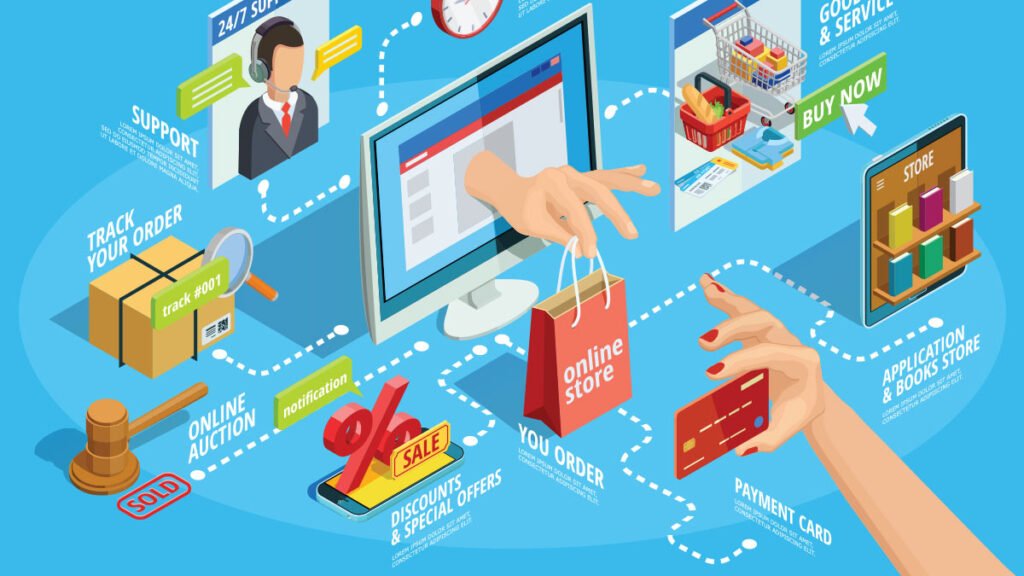
[vc_row][vc_column width=”1/2″][vc_column_text]Smartphones are no more a luxury, and the convention means of shopping are not the only means. Research revealed that in the US, sales that occurred via smartphones swelled by 126 percent in 2018’s first quarter. The basis of any mobile app development company is to rebuild the traditional shopping exercise consequently improving the model of mobile marketing. A mobile app, for now, is not just the way to e-commerce but also for retail. For clients to satisfy their gratification as what they want, smartphone apps serve as a personal browsing and comparison tool in their hands. Mobile shopping is increasing its horizon for the convenience it provides. As an outcome, Trident Information Systems Pvt Ltd offer high-quality and cost-effective technology solutions[/vc_column_text][/vc_column][vc_column width=”1/2″][vc_single_image image=”7071″ img_size=”full”][/vc_column][/vc_row][vc_row][vc_column][vc_column_text]It’s m-commerce, not e-commerce. A recently conducted survey, e-commerce carries more of 30 percent of the entire e-commerce and will grow exponentially. Mobile utilization is increasing at a lightning-speed rate than any of Google’s internal forecasts. The most paramount benefit of m-commerce to users is that it takes few seconds in transacting. Also, users can do transactions from remote area and at any time of the day. Users prefer more in swiping the relevant curated images as retailers make several kinds of offers for the business promotion. This is all because mobile app developers recognize the end-user needs and create customized apps that fulfil user expectations. People spend more time on Mobiles Apps than PCs. The m-commerce is thriving at an escape velocity that provides a platform for this kind of technology shift. As per statistic, 90 percent of all buyers spent most of their time on mobile apps. Buyers get access to ample of information about the business products or services quickly. 63% of Americans today like to use a mobile app for the smooth convenience that it offers. More engaging user experience UI-UX are key element of retail app development. User’s value using apps as each of them has their unique features, which often follow industry standards. Research reveals that most of the buyers and customers give an app a chance once or twice. Creating a feature-rich retail app by the developers is growing increasingly successful as it delivers an instant contact on the first-time users. Plethora of apps are available in the play store, but only a few of them make a difference. Mobile App growth is flaming There is a regular switch from mobile web to mobile app-based buying, which means that apps are more accessible and acceptable. The growth is increasing day by day, inspired by a massive ballooning in the number of mobile devices. Buyers use their smartphones to analyse what is around them, and retailers today needs to be smarter on efficient application of mobile app and satisfying the needs of mobile-empowered buyers Conclusion Developing successful and high-traffic mobile apps is the end-purpose of the development companies like Trident Information Systems Pvt Ltd. Numerous buyers still relish the in-store experience as they consider touch, see, and try products that they can’t do online – but that’s a less number of users. Retail app development benefits buyers with up-to-date market era. Mobile retail is entirely replacing the traditional retail as the favoured shopping means.[/vc_column_text][/vc_column][/vc_row]

4 Reasons to choose Retail apps to reshaping customer experience & loyalty programs Read More »

Let’s find, is IoT the Future of Mobile Applications?

[vc_row][vc_column width=”1/2″][vc_column_text]This is call of the hour, that people are showing enthusiasm for the technology and buying it to make their life effortless. On paramount side, adopting IoT in an organizations can also make themselves several steps ahead in terms of speed, precision, controllability, remote-operability, productivity, etc. In fact, IoT has begun to get the attention of people for both personal and business applications. Discussing IoT, talking about establishing a wireless network between devices, storing information from them and then taking decisions. The system encourages us in communicating with things and accessing them remotely, even from remote locations. This system can take over for home appliances, connected cars and many other things which can be controlled, and managed through embedded software, sensors, RFID’s, and the other type of connectivity[/vc_column_text][/vc_column][vc_column width=”1/2″][vc_single_image image=”7062″ img_size=”full”][/vc_column][/vc_row][vc_row][vc_column][vc_column_text]The IoT has built a positive digital disruption in the technology world and is ready to touch base every aspect of our life, including our business concern. Here are some practical uses of IoT in businesses: Agriculture: Its years now, there is no innovation in this sector, moreover, this segment, almost has no technology used to keep the strength of crop up. However, now number of organizations are thinking of the using IoT techniques purposely designed and created for agriculture practices. At the critical level, IoT can help farmers effectively set the soil moisture, limit, controlling water usage and choosing the best fertilizer solution.   Ecommerce: Shopping experience for customer is now fundamental necessity for the organisation who are in ecommerce sector. Need to earn more money, then IoT will help you. It enables customers to effortlessly differentiate them from competitors. Ecommerce businesses use IoT to get insights about products popular on social engagement. Merchants can also use IoT in inventory management, logistics management, etc.   Healthcare: There are countless use cases of IoT in the healthcare segment. It can serve boom for patients, families, doctors, and other staff. We can see a rapidly growing market of IoT based healthcare apps ranging from remote patient monitoring checking to Equipment Monitoring solutions.   Enterprises: IoT has provided enterprises with an approach to connect employees, systems and other things and get more insight of every operation. IoT based enterprises enable organizations to boost their efficiency and chop down operational expenses.   Transportation: The transportation industry has spotted IoT as a technology made for them only. They can track things remotely, monitor how goods are being transported, and keep an eye on drivers and vehicles, their speed, and a lot more.   Manufacturing: IoT is profitable in the fields where both faster development, as well as the quality of products, are the critical factors for a higher Return on Investment (ROI). One of such fields is the manufacturing industries, and IoT has transformed it with things like big data, artificial intelligence (AI) and machine learning. As everything in the industry are running at great pace in order to be a part of competition and be best in this competitive world, therefore Trident Information Systems Pvt Ltd help to improve and resolve your pain points in your business routine,[/vc_column_text][/vc_column][/vc_row]

Let’s find, is IoT the Future of Mobile Applications? Read More »

Close the gap between the retail experience you offer and the one your customers expect

[vc_row][vc_column][vc_column_text] Close the gap between the retail experience you offer and the one your customers expect In the fight against the e-commerce giants, brick-and-mortar retailers have a winning card: customer experience. Many factors contribute to making an in-store experience unique and compelling. A curated product selection, an exciting and fresh atmosphere, and personal, one-on-one service are just some of the elements retailers can use to their advantage. Unfortunately, not all retailers seem to be playing their cards well. Last year alone, Accenture reports, 61% of customers stopped doing business with at least one company because of poor customer experience. Research by Omnico Retail Gap Barometer reveals an even darker figure: 72% of consumers actually see all shopping as a frustrating experience! Brick-and-mortar shopping was found to produce even more irritations than online, with over a quarter of respondents describing the average in-store shopping experience as poor. Going back to basics When talking about modern customer experiences, one of the most popular topics is in-store innovation. In the past few years, the availability of increasingly advanced, and affordable, technology has utterly transformed shopping. Today’s in-store experiences are a far cry from last decade’s weekly trips to the mall. However, the kind of tech some of the most innovative brands are experimenting with – from augmented reality, to holograms, to immersive multi-sensorial experiences – seem to be light years away from the bog-standard, uninspired customer journeys that too many retailers still offer. Most of the frustrating shopping experiences customers describe and report are attributable to one or more of the following factors: Unhelpful sales associates. Inconsistent cross-channel experiences. Poor personalization. Let’s take a closer look at each factor, and see what tools can help close the gap between what consumers expect and the current, disappointing experiences many retailers still offer. 1. Unhelpful sales associates The majority of retailers (61%) are confident that their store associates deliver great value and best-in-class assistance to customers, according to research by Forrester. Shoppers, however, disagree. Most (51%) consumers surveyed in the very same research believe that salespeople are not as knowledgeable about products as they should be. It is unsurprising, then, that very few consumers – less than one out of three – decide to rely on stores associates when they need to find a product. How can you fix this? Do you want your employees to deliver helpful, knowledgeable service? Then empower them to do so. This means giving them constant training, and the right technology. Training: Learning about products and excellent service should not be limited to the onboarding stage. Keep your staff up-to-date with what stock is coming in, and help them understand how each item can suit different customer needs. A shopper looking for new running shoes doesn’t want to hear “here is what we have” – or wait around while the sales associates tries to read the boxes to understand the difference between two pairs of sneakers. What the customer expects is solid, competent advice on what sole is better for rough terrains, or which model has the best arch support. The in-depth knowledge needed for this level of service does not come cheap: you need to invest time and resources in constant, thorough, focused training. Technology: Even with constant training, you can’t expect your employees to memorize your whole catalog and all your products’ features – especially in the days of endless aisles. A simple and affordable way to empower your employees to give more personal service is mobile Point of Sale. With a mobile POS in their hands, your employees can walk around the shop floor and give product information and one-on-one service to your customers where they are. On the POS, salespeople can quickly find all information on product details, variants, prices, and even real-time availability across all your locations. And it doesn’t end here. The best mobile POS systems also enable your employees to view, and show to customers, your whole product range, not just what you have in-store. A customer is looking for a specific type of paintbrush? Use the tablet to show the products available in your other locations and compare items side by side, with details and pictures. And to finish, you can close the sale on the spot. Yes – the best mobile POS take payments, too. 2. Inconsistent cross-channel experiences In today’s hyper-connected world, the points of interaction and purchase just keep on multiplying. People can buy the t-shirt their favorite rapper wears straight from the music video. They can purchase a necklace on the jewelry designer’s Facebook page. They can replenish their kitchen detergent by pushing the Amazon Dash button they keep next to the sink. They can buy a new pair of headphones on their mobile, and select to pick them up in their favorite store location, or at a delivery box close to their home. They can use voice recognition to ask Alexa about the best wine pairing with ossobuco – and get the bottle sent home. Across these increasingly diverse shopping moments, customers expect their experience with each retailer to be smooth and consistent – no glitches, no hitches, no disconnects. As consumer expectations keep on growing, the gap with what most retailers offer gets larger. According to BRP’s latest Customer Experience/Unified Commerce Survey, the majority of retailers still don’t offer basic cross-channel capabilities such as stock visibility, start-to-end order tracking, or cross-channel returns. A case in point: none of the retailers interviewed by BRP said they could offer effective “start anywhere, finish anywhere” (shared cart across channels) services. At the same time, almost 3 out of 4 (73%) consumers believe that this is a key capability. How can you bridge the gap? Unified commerce is the latest tendency in retail management systems. Unified commerce replaces all the separate, badly connected software solutions and databases retailers use across their business with just one, centralized, enterprise-wide software platform combining POS, mobile, Web, inventory management, customer information, and more. Within a unified commerce system, all information is maintained in one place, and shared and distributed instantly to all touchpoints. This means both your staff and customers can have access to the same, real-time data, including prices and offers, which and how much stock is available in each location, as well as customers’ shopping

Close the gap between the retail experience you offer and the one your customers expect Read More »

It’s all about connecting data to make smart decisions to improve manufacturing

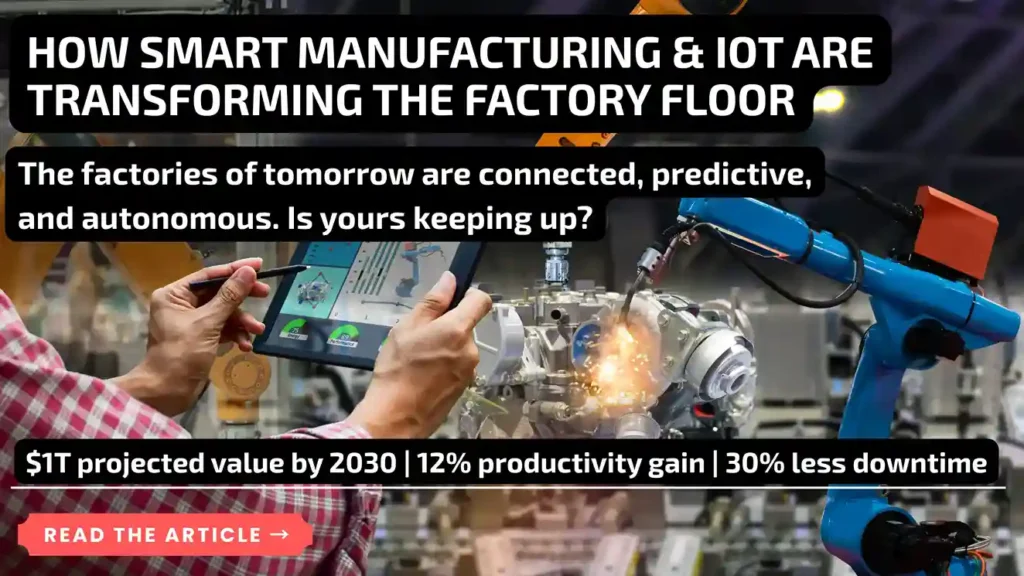
The term IoT was first originated by Peter T. Lewis to narrate “the combination of people, processes, and technology with connectable devices and sensors to activate remote monitoring, status, manipulation, and evaluation of trends of such devices.” So the entitle has been around for a while now, but the idea still continues to develop and evolve as technology continues to facilitate through new hardware like sensors, and through the collection and analysis of data. So, how have the advancements in smart manufacturing affected the manufacturing business? Benefits of Smart Manufacturing Smart factories deploy smart manufacturing to gain production efficiencies, improve production quality and lower reaching to market. Machines can now address failure points and collect data that can be used to increase predictive and preventative maintenance, which in the long run improves uptime. Data analysis is used to predict and prevent failure; it indicates when intervention is required and suggest the necessary corrective actions. Troubleshooting is more systematic, which benefits both manufacturers and customers. Sensors, Connectivity and Data The entire concept of smart manufacturing plays around collecting and analysing the data. Sensors collect the data and networks transfer the data. If a device or piece of equipment on the floor is independent, it will not contribute to the collective understanding of the smart factory. Devices and machinery equipped with sensors have the ability to monitor, collect, exchange and analyse data – all without human interference. The sensors collect data, and communicate with correct information on the plant floor, as well as outside the plant (or from the outside in) faster, in order to make easier decisions. Every device that has the ability to collect intelligence needs to be on a backbone of some type that allows it to produce data or have data pulled out of it. New sensor with networks can be established, or sensors and data networking can be added to existing devices. As for the data itself, decisions need to be made that make the most sense for the manufacturing plant. How and where to house the data is one such decision – should it be kept in-house, or outside of the organisation walls? Data security is of important concern, so if data is stored off premises, remote connectivity and how to safely get into your system from the outside needs to be addressed. Auto component, in Particular Since automotive component manufacturing is the largest sector in the manufacturing industry, it permits special consideration in the IoT as it impacts manufacturers and their customers. In terms of complex components, the data gathered and analyzed can help ensure maximum replication in the process, consistent quality, and low defects. And again, the data also helps determine preventative machine maintenance which helps avoid unplanned break down. From the customer perspective, smart manufacturing provides various benefits for communication and visibility. Machine data collection and reporting provides the customer important timing information on project and production order status. And so it goes. The drive to glean more – and better – data from industrial equipment and systems will continue to improve productivity in all the sector as technology, sensors, and systems continue to evolve, to the benefit of the moulders and their customers.

It’s all about connecting data to make smart decisions to improve manufacturing Read More »

Dynamics 365 Business Central – Connect and Grow your Business

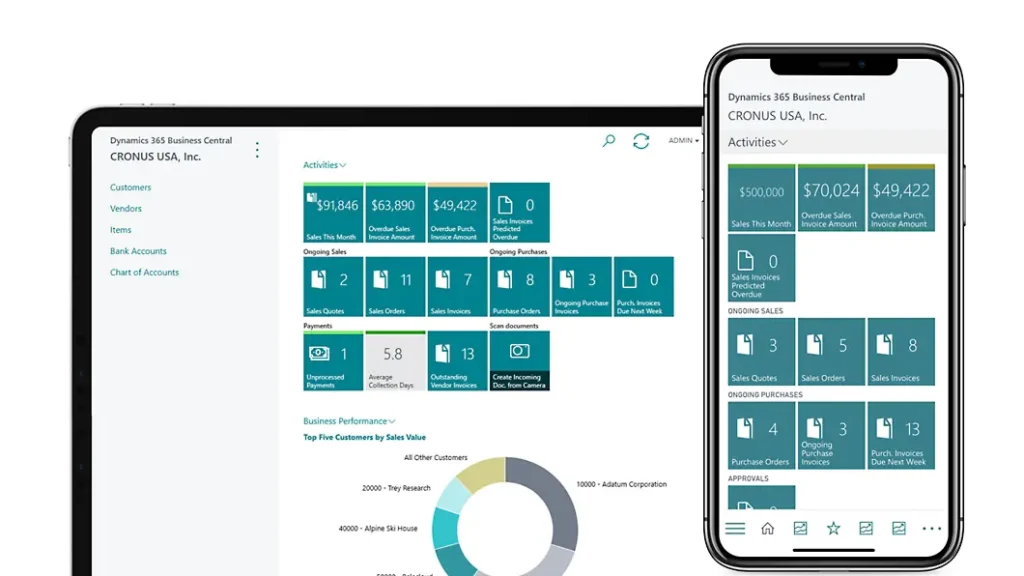
[vc_row][vc_column][vc_column_text] Dynamics 365 Business Central Dynamics 365 Business Central Modernize your business operations across finance, manufacturing, and supply chain to drive new growth. Dynamics 365 Business Central is designed for businesses looking for an all-in-one business management solution that’s easy to use and adapt. Connect your finances, sales, service, and operations to streamline business processes, improve customer interactions, and enable growth. An all-in-one business management solution An evolution of Dynamics NAV An intelligent and unified solution A member of the Dynamics family An application and a platform [/vc_column_text][vc_row_inner][vc_column_inner width=”1/2″][vc_column_text] Financial Management Make Informed Decisions Connect data across accounting, sales, purchasing, inventory, and customer interactions to get an end-to-end view of your business. Chart financial performance in real time with built-in Power BI dashboards. Accelerate Financial Close and Reporting Streamline accounts receivables and payables, and automatically reconcile accounts to close and report on financials quickly and accurately, while maintaining compliance. Improve Forecast Accuracy Refine financial forecasts by modeling and analyzing data across multiple dimensions. Customize reports using seamless Microsoft Excel integration. Basic General Ledger Set up a company and start posting to the general ledger, chart of accounts, general journals, VAT facilities, recurring journals, and source codes. Budgets Work with budgets in general ledger accounts. Deferrals Set up deferral templates that automate the process of deferring revenues and expenses over a pre-defined schedule. Basic Fixed Assets Keep track of fixed assets and related transactions such as acquisitions, depreciations, write-downs, appreciations, and disposals. Basic Receivables Post sales transactions in journals and manage receivables; register customers and manage receivables using general journals. Dimensions Add unlimited dimensions to any ledger for advanced transaction analyses. Audit Trails The system automatically assigns audit trails and posting descriptions to every transaction. In addition, users can define reason codes to create complementary audit trails. Bank Account Management Create, operate, and manage multiple bank accounts for catering to your diverse business needs and across different currencies. Reconciliation Reconcile your bank statement data automatically to open bank account ledger entries end to keep track of all your bank statements. Currencies Manage multiple currencies throughout the system, including payables and receivables, general ledger reports, resource and inventory items, and bank accounts. [/vc_column_text][vc_column_text] Human Resource Employees Group and track employee information and organize employee data according to different types of information, such as experience, skills, education, training, and union membership. Expense Management Post expenses against employee cards to track and reimburse their expenses.[/vc_column_text][vc_column_text] Project Management Stay on Budget Create, manage, and track customer projects using timesheets along with advanced job costing and reporting capabilities. Develop, modify, and control budgets to ensure project profitability. Plan with Precision Manage resource levels by planning capacity and sales. Track invoicing for customers against planned costs on orders and quotes. Analyze Project Performance Make effective decisions with real-time insight on project status, profitability, and resource-usage metrics. Resources Register and sell resources, combine related resources into one resource group or track individual resources. Estimates Monitor resource usage and get a complete overview of your capacity for each resource with information about availability and planned costs on orders and quotes. Jobs Keep track of usage on jobs and data for invoicing the customer. Manage both fixed-price jobs and time-and-materials jobs. Timesheets Timesheets are a simple and flexible solution for time registration with manager approval and integrate with Service, Jobs, and Basic Resources. Multiple Languages Switch languages on the client in real time provided that the desired language is available. Reason Codes Define a set of reason codes that can be assigned to individual transactions throughout the system, providing user-defined audit trails. Extended Text Set up an unlimited number of lines to describe inventory items, resources, and general ledger accounts. Intrastat Reporting Automatically retrieve the necessary data to report Intrastat information to statistics authorities. Local customs authorities can inform you whether your company is obligated to file such a report. Outlook Integration Synchronize your to-do items and your contacts with your meetings, tasks, and contacts in Outlook. [/vc_column_text][vc_column_text] Empower Everyone with Ictionable insight with Power BI Make Data Driven Decisions See all your data through a single pane of glass. Live Power BI dashboards and reports include visualizations and KPIs from your data in the cloud and on-premises, offering a consolidated view across your business, regardless of where your data lives. Build Intelligence into your Apps Make all your apps smarter when you collect and infuse all the data captured across your organization. Bring the power of the Business Application Platform, Power BI, and your apps together to deliver actionable insights. Use Common Data Service for Analytics Remove data silos to drive intelligence across your organization by connecting data from Dynamics 365 and your other business apps with Common Data Service for Analytics. Apps that Transform the Way you do Business Create An App for Every Task Build visually stunning apps that take advantage of device capabilities like cameras, GPS, and pen controls, run on any device, and are completely customized for your business requirements. Incorporate Powerful Workflow Automation Integrate Microsoft Flow workflows to automate virtually any process including notifications, data collection, and approval routing—all without writing a single line of code. Use Common Data Service for Apps Consolidate your data in Common Data Service for Apps. It’s the foundation for your apps and includes a set of over 200 standard business entities and relationships. [/vc_column_text][/vc_column_inner][vc_column_inner width=”1/2″][vc_column_text] Customer Relationship Management Deliver Value at Every Touch Point Prioritize sales leads based on revenue potential. Keep track of all customer interactions and get guidance on best upsell, cross-sell, and renewal opportunities throughout your sales cycle. Boost Sales Productivity Accelerate the quote to cash process. Act quickly on sales-related inquiries, manage service requests, and process payments—all from within Outlook. Maximize Profitability Gain a comprehensive overview of your service tasks, workloads, and employee skills to effectively assign resources and accelerate case resolution. Contacts Maintain an overview of your contacts and record your contact information for all business relationships. Campaigns Organize campaigns based on segments of your contacts that you define. Opportunity Management Keep

Dynamics 365 Business Central – Connect and Grow your Business Read More »

Connect Anything, Change Everything – Seamlessly Integrate Data and Processes

Digital transformation is a business reality. As a growing business, you want to make sure that implementing or upgrading a new system will have minimal interference to your operations and infrastructure. Trident can help seamlessly integrate applications, data, and processes. This will enable you to operate at exceptional speed and agility in an ever-changing world. Leverage the power, security, and flexibility of Azure — Microsoft’s integrated cloud services platform that IT professionals use to build, deploy, and manage applications through a global network of datacenters. With Azure, you can deploy anywhere with your choice of tools — connecting to the cloud or on-premises with hybrid cloud capabilities for maximum portability and value from your existing investments. Microsoft Flow – Automate Process & Tasks Work less, do more.  Create automated workflows between your favorite apps and services to get notifications, synchronize files, collect data, and more.  The simplified interface removes the need to code secure handshakes between apps, logging rules and mapping, as this is all performed as part of the Flow eco-system. Work Seamlessly with On-Premise Data Flow lets you securely connect to on-premises data and cloud based services, so you can make the most of the data you already have. Multi-Step Flows & Conditions Turn repetitive tasks into multistep workflows. For example, with a few clicks capture tweets and add them as leads in Dynamics 365, subscribers in Mailchimp, and more.  Make decisions in your workflow, like running an action only when certain conditions are met. Secure Prevent sensitive data from leaving your company using built-in or customized data prevention loss.  Inherit the security from your LOB and productivity applications. Right Data, Right Place at Right Time The success of your implementation relies on having the right data, in the right place at the right time.  With multiple integration methods at our disposal, our team of integration consultants will architect a solution that ensures the productivity of your business flows at a rapid rate and that your sales team has all the insights possible to close the deals.  No matter what product you need to integrate, whether on-premise or cloud we have the capabilities for you. Our most common integrations are between Microsoft Dynamics 365 for Sales and Dynamics 365 for Operations. Common Data Service The Microsoft Common Data Service is your place to exchange information both for Microsoft Dynamics 365 as well as other platforms. Having the right organizational data stores that allow you a single view of all your data elements in a service that supports easy interchange of data between applications will allow you to expand your offering rapidly. From website integration, mobile applications, productivity applications and line of business applications – you can have a single source of the truth for all data exchanged. Use the common data service to support your business growth

Connect Anything, Change Everything – Seamlessly Integrate Data and Processes Read More »

Retail Competition is Increasing. Gain the Flexibility you Need to Sharpen your Edge

New solutions based on cloud, mobility, social media and analytics provide the means to keep shoppers loyal. Our solutions deliver the flexibility needed to implement new business models; expand private labels; engage shoppers online; and better manage transportation and delivery. LS Retail LS Retail is an end-to-end retail POS solution for stores or chain of retails, which is powered by Microsoft Dynamics NAV. This integrated solution delivers completed and innovative functionalities to the busiest retailer without the need to build, manage and maintain multiple applications and interfaces. Its unique use of single application covers your whole retail business from the Point Of Sale (POS) terminals to headquarter. The powerful functions including store management, inventory, merchandising, demand planning and all the back office functions that you would expect to find at head office are available in LS Retail. Why LS Retail Software Solutions? Fully Integrated All-in-one Software Solutions Manage your business centrally from end to end with our flexible, custom-designed and cloud-enabled software solutions. Cover your whole operations from headquarters, check your performance in real time and react quickly to change. Enhance Your Omni-channel Strategy Fast-changing consumer habits demand innovative business systems. With LS Retail’s cutting-edge omni-channel software solutions you can offer a seamless, personalized consumer experience across all channels and touch-points, including social media. Offer Superior Customer Experience Give your customers an outstanding shopping experience across all your sales channels and their loyalty and repeat business. Grow your clientele and margins by offering a fast and accurate service in-store, online and on-the-go, including personalized deals and more. Meets Your Most Specific Needs The rich functionality provides endless possibilities for enhancement of performance. Head Office Product Lifecycle Management Manual and Automated Item Maintenance Dynamic Hierarchy, Attributes and Other Grouping of Product Price, Offer, Coupon and Campaign Managment Automobile Replenishment Replenishment by Allocation Serial / Lot Number Support Member Management – Loyalty Program Vendor Performance Sales Reporting and Analyzing Sales Commision Loss Prevention Back Office Dashboard for Store Operations POS Management Cash Management Stock counting and Adjustments by Simple Worksheets Store Replenishment by Stock Request, Purchase and Transfer Orders Sales History Simple End of Day Statements Receiving and Picking Goods Flexible Architecture Serial / Lot Number Support Gift Registration Mobile Device Mobile POS Receiving / Picking Stock Counting Stock Changes Label Ordering Stock Counting and Adjustment Store Front Office (POS) Fast Checkout Simple Operation Multiple Interface Broad POS Hardware Support Item Cross Selling item Finder Member Management – Loyalty Program Serial / Lot Number Support Multiple Payments Special Order Entry at POS Item Configurator Operate locally – Configure Centrally

Retail Competition is Increasing. Gain the Flexibility you Need to Sharpen your Edge Read More »

Announced new AI and mixed reality business applications for Microsoft Dynamics

Our vision for business applications at Microsoft We live in a connected world where companies are challenged every day to innovate so they can stay ahead of emerging trends and repivot business models to take advantage of new opportunities to meet growing customer demands. To innovate, organizations need to reimagine their processes. They need solutions that are modern, enabling new experiences for how they can engage their customers while making their people more productive. They need unified systems that break data silos, so they have a holistic view of their business, customers and employees. They need pervasive intelligence threaded throughout the platform, giving them the ability to reason over data, to predict trends and drive proactive intelligent action. And with adaptable applications, they can be nimble, allowing them to take advantage of the next opportunity that comes their way. Two years ago, when we introduced Dynamics 365 we started a journey to tear down the traditional silos of customer relationship management (CRM) and enterprise resource planning (ERP). We set out to reimagine business applications as modern, unified, intelligent and adaptable solutions that are integrated with Office 365 and natively built on Microsoft Azure. With the release of our new AI and mixed reality applications we are taking another step forward on our journey to help empower every organization on the planet to achieve more through the accelerant of business applications. Specifically, today we are making the following announcements: Dynamics 365 + AI First, I am happy to announce the coming availability of a new Dynamics 365 AI offering — a new class of AI applications that will deliver out-of-the-box insights by unifying data and infusing it with advanced intelligence to guide decisions and empower organizations to take informed actions. And because these insights are easily extensible through the power of Microsoft Power BI, Azure and the Common Data Service, organizations will be able to address even the most complex scenarios specific to their business. Dynamics 365 AI for Sales: AI can help salespeople prioritize their time to focus on deals that matter most, provide answers to the most common questions regarding the performance of sales teams, offer a detailed analysis of the sales pipeline, and surface insights that enable smarter coaching of sales teams. Dynamics 365 AI for Customer Service: With Microsoft’s AI and natural language understanding, customer service data can surface automated insights that help guide employees to take action and can even leverage virtual agents to help lower support costs and enable delightful customer experiences, all without needing in-house AI experts and without writing any code. Dynamics 365 AI for Market Insights: Helps empower your marketing, social media and market research teams to make better decisions with market insights. Marketers can improve customer relationships with actionable web and social insights to engage in relevant conversations and respond faster to trends. To help bring this to life, today we released a video with our CEO, Satya Nadella, and Navrina Singh, a member of our Dynamics 365 engineering team, showing examples of ways we’re bringing the power of AI to customer service organizations. Dynamics 365 + Mixed Reality Our second announcement of the day centers on the work we are doing to bring mixed reality and business applications together. Since the release of Microsoft HoloLens over two years ago, the team has learned a lot from customers and partners. The momentum that HoloLens has received within the commercial space has been overwhelmingly positive. This has been supported by increased demand and deployment from some of the world’s most innovative companies. We recognize that many employees need information in context to apply their knowledge and craft. Not only on a 2-D screen — but information and data in context, at the right place, and at the right time, so employees can produce even greater impact for their organizations. Mixed reality is a technology uniquely suited to do exactly that. This is a whole new kind of business application. And that’s precisely what we’re introducing today, Dynamics 365 Remote Assist and Dynamics 365 Layout. Today, we also showcased for the first time how Chevron is deploying HoloLens to take advantage of Dynamics 365 mixed reality business applications. Chevron is already achieving real, measurable results with its global HoloLens deployment. Previously it was required to fly in an inspector from Houston to a facility in Singapore once a month to inspect equipment. Now it has in-time inspection using Dynamics 365 Remote Assist and can identify issues or provide approvals immediately. In addition, remote collaboration and assistance have helped the company operate more safely in a better work environment, serving as a connection point between firstline workers and remote experts, as well as cutting down on travel and eliminating risks associated with employee travel. Here is a peek into the work Chevron is doing with mixed reality: Unlock what’s next with the Dynamics 365 October 2018 release Next week at Microsoft Ignite and Microsoft Envision we’ll be in Orlando talking with thousands of customers, partners, developers, and IT and business leaders about our October 2018 release for Dynamics 365 and the Power platform that will be generally available Oct. 1. The wave of innovation this represents across the entire product family is significant, with hundreds of new capabilities and features. We will have a lot more to talk about in the weeks and months ahead. We look forward to sharing more!   Note: Original Content Source is Microsoft Official Site : https://blogs.microsoft.com/blog/2018/09/18/announcing-new-ai-and-mixed-reality-business-applications-for-microsoft-dynamics/

Announced new AI and mixed reality business applications for Microsoft Dynamics Read More »

Retail customer using a loyalty program at checkout for a personalized shopping experience.

How to Use Your Loyalty Program to Create a Standout In-Store Customer Experience

Loyalty programs are one of the most powerful — and most underused — tools in retail. The data is unambiguous: 81 percent of consumers say loyalty programs make them more likely to continue doing business with a brand, and 66 percent actively adjust their spending habits to maximize loyalty benefits. These are not passive participants — they are your most engaged, highest-value customers. And yet, despite that enormous goodwill, only 22 percent of loyalty program members currently feel they receive a better experience than non-members. That means nearly eight out of ten of your most loyal customers — the people who have opted in, shared their data, and demonstrated their commitment to your brand — cannot tell the difference between being a member and not being one. That gap is not just a missed opportunity. It is a competitive vulnerability. Because the retailers who are closing it — who are using loyalty program data to create genuinely personalized, memorable in-store customer experiences — are building the kind of deep brand affinity that no promotional discount can replicate. This guide covers three proven strategies for using your loyalty program to create an in-store experience that makes your best customers feel exactly what they are: truly valued. Why Your Loyalty Program Is Your Most Underused In-Store Asset The Loyalty Gap: Why 78% of Members Feel No Different From Regular Shoppers Most retail loyalty programs are built around a simple value exchange: spend money, earn points, redeem rewards. And while that model generates enrollment numbers, it rarely generates the deeper emotional connection that drives genuine long-term loyalty. The problem is that points and discounts are table stakes — not differentiators. When every retailer in your category offers a similar earn-and-burn structure, membership in your program stops feeling special. Customers collect points, but they do not feel seen, recognized, or valued in any way that a non-member would not experience. The loyalty program members who stay loyal longest — who spend more, visit more frequently, and refer others — are those who feel a genuine personal connection to the brand. And that connection is built through personalized experiences, exclusive privileges, and meaningful recognition — not just through reward points. What Closing the Loyalty Experience Gap Is Worth to Your Business The business case for investing in loyalty experience is compelling. Research consistently shows that increasing customer retention by just 5 percent can increase profits by 25 to 95 percent. Loyalty program members who feel genuinely valued spend more per visit, respond more positively to new product launches, and are significantly less likely to defect to a competitor — even when that competitor offers a lower price. Your loyalty program already gives you everything you need to close the gap: the data, the permission, and the direct communication channel. What most retailers are missing is the strategy and the technology to activate it effectively in-store. 3 Proven Strategies to Use Your Loyalty Program In-Store 1: Deliver Personalized Rewards That Feel Made for Each Customer Personalization is the single most powerful driver of in-store loyalty experience — and it starts with the data your loyalty program already collects. Every purchase, every browse, every interaction your customer has across your touchpoints is a signal that, when analyzed correctly, tells you exactly what that customer values, what they are likely to want next, and how to make them feel understood. How to implement personalized in-store loyalty rewards: The key ingredient that makes all of this possible at scale is artificial intelligence. AI-powered loyalty platforms can analyze thousands of data points per customer in real time — surfacing the right offer, for the right person, at the right moment — without requiring your team to manually configure individual customer journeys. 2: Make Loyalty Members Feel Genuinely Privileged The most effective loyalty programs do more than reward spending — they confer status. When loyalty membership feels like belonging to an exclusive group — not just enrolling in a discount scheme — the emotional bond between customer and brand deepens significantly. How to make loyalty program members feel privileged in-store: 3: Create Exclusive In-Store Events That Loyal Customers Remember Nothing creates an emotional connection to a brand faster than a genuinely memorable shared experience. Exclusive in-store events for loyalty program members transform a transactional relationship into a social one — and social connections to a brand are among the most durable forms of loyalty that exist. How to create in-store loyalty events that members talk about: The Technology That Makes In-Store Loyalty Personalization Possible AI-Powered Loyalty Apps: From Data to Real-Time Personalization The strategies above are only achievable at scale with the right technology. Manually creating personalized offers for thousands of loyalty members is not operationally viable — but AI-powered loyalty platforms make it not just viable, but automatic. An AI-enabled loyalty system continuously analyzes each member’s purchase history, browsing behavior, redemption patterns, and cross-channel interactions — and uses that analysis to generate personalized offers, product recommendations, and engagement triggers in real time. The result is a loyalty experience that feels genuinely individual to each customer, delivered consistently across thousands of members simultaneously. GPS and Mobile Loyalty: Reaching Customers Before They Walk Through the Door Location-based loyalty technology is one of the most underutilized capabilities in retail. When a customer has your loyalty app installed and location permissions enabled, you have the ability to engage them at the precise moment when a visit to your store is most likely — when they are physically nearby. GPS-triggered loyalty notifications that surface personalized, time-sensitive in-store offers create a sense of immediacy and relevance that generic email campaigns cannot match. And when your staff are briefed in advance with a customer’s preferences and loyalty status before they arrive, the in-store greeting feels less like a sales interaction and more like being welcomed by someone who genuinely knows you. Tying It All Together: The Unified Platform Behind a Great Loyalty Experience Delivering a consistently excellent in-store loyalty experience is not possible when your loyalty

How to Use Your Loyalty Program to Create a Standout In-Store Customer Experience Read More »

Retail CEO analyzing unified commerce dashboard integrating data, strategy, and technology.

The Retail CEO’s Guide to Unified Commerce: Data, Strategy and the Technology That Ties It All Together

Only 31% of retail industry experts believe that today’s retail CEOs have the technical skills needed to lead a data-driven, unified commerce operation. That means nearly seven out of ten retail leaders are navigating one of the most complex, fast-moving industries in the world without the technology literacy or strategic tools they need to make confident, informed decisions. That gap is not just a personal challenge — it is a competitive vulnerability. According to the World Retail Congress’s DNA of the Future Retail CEO, the two most critical technical competencies for retail leaders — today and in the future — are a deep understanding of digital commerce and omnichannel strategy, and a genuinely data-driven approach to decision-making. Not data-aware. Not data-informed. Data-driven in the extreme. The good news is that no retail CEO has to master every technology trend personally. The right unified commerce platform does the heavy lifting — connecting every sales channel, every business function, and every data source into a single system that gives retail leaders the real-time intelligence they need to set strategy, track performance, and pivot confidently when the market demands it. This guide covers exactly what retail CEOs need to know — and do — to lead their organizations into a unified commerce future. What the Data Says About the Future Retail CEO The Two Technical Skills Every Retail CEO Needs Right Now Two independent bodies of research point to the same conclusion about what separates tomorrow’s retail leaders from today’s: The World Retail Congress identifies the top two technical skills for retail CEOs as understanding of digital commerce and omnichannel operations, and a data and insight-driven approach to strategy and decision-making. These are not IT skills — they are leadership skills, because the decisions that flow from digital commerce and data intelligence are ultimately strategic, not technical. The Korn Ferry Institute’s study of UK retail CEOs reinforces this, finding that the new retail CEO must be experienced across both budget management and strategic planning — a combination that is only possible when financial and operational data are fully visible, accurate, and real-time. Research at Harvard Business School adds a third dimension: the ability to cope with change and lead organizational adaptation is the defining characteristic of high-performing CEOs — and it is directly linked to better business outcomes. In retail, where technology, consumer behavior, and competitive dynamics shift constantly, this capacity for agile leadership is not optional. Why Only 31% of Retail CEOs Are Prepared — And How to Be in That Group The 31% statistic from the World Retail Congress is not just a data point — it is a strategic warning. The retail CEOs who are building unified commerce capabilities now are creating a compounding advantage: better data leads to better decisions, which leads to better performance, which creates the financial headroom to invest in further capability. The 69% who are not yet there are not necessarily failing — but they are accumulating a technology debt that will become increasingly costly to address as the gap between digital commerce leaders and laggards continues to widen. The path forward starts with the right technology platform — and the strategic clarity to use it. Why Unified Commerce Is Now a CEO-Level Priority What Unified Commerce Actually Means (And How It Differs From Omnichannel) Omnichannel retail means giving customers a consistent experience across multiple channels — online, in-store, mobile, social. It is a customer experience standard, and it is now the baseline expectation in most retail categories. Unified commerce goes further. It is not just about the customer-facing experience — it is about the technology architecture that powers it. A true unified commerce platform brings every sales channel, every business function, and every data source together on a single integrated system — eliminating the silos, the data lags, and the reconciliation headaches that plague retailers running separate e-commerce, POS, ERP, and inventory platforms. When your systems are unified, data flows freely across channels. When a customer returns an online purchase in-store, the inventory updates instantly. When a promotion launches on your mobile app, the margin impact is visible in your financial reporting in real time. That is what unified commerce delivers — and it is why it is now a CEO-level strategic priority, not just an IT project. The Real Cost of Pieced-Together Retail Systems Many retailers are operating on a patchwork of integrated-but-separate systems — an e-commerce platform here, a POS system there, an ERP that talks to both of them most of the time. The integrations work, mostly. But “mostly” is not good enough when strategic decisions depend on accurate, real-time data. Pieced-together systems cost more than a unified platform in ways that are easy to underestimate: A unified commerce platform eliminates every one of these costs — and replaces them with the real-time, reliable intelligence that enables genuine data-driven leadership. 4 Things Every Data-Driven Retail CEO Must Do in 2025 1. Unify Your Sales Channels on a Single Commerce Platform No matter what your retail business sells or where it sells it — physical stores, e-commerce, mobile commerce, marketplace, or social commerce — your technology should be a single-platform solution that manages every channel simultaneously. A unified sales channel platform gives your leadership team: 2. Connect Front-End and Back-End Operations Seamlessly Unified commerce is not just a customer-facing concept. The most powerful version of it connects your customer-facing sales operations directly to your back-office business functions — financials, inventory, supply chain, HR, and analytics — in a single, seamless system. What feels almost impossible when a business is running separate ERP, POS, and inventory platforms — consistent, real-time financial and operational reporting — becomes straightforward with the right unified technology. Data flows freely between functions. Financial results reflect operational reality instantly. And the retail CEO has a complete, accurate picture of business performance at any given moment, without waiting for someone to compile a report. 3. Set a Clear Vision — But Build in the Agility to Pivot Richard Branson,

The Retail CEO’s Guide to Unified Commerce: Data, Strategy and the Technology That Ties It All Together Read More »